11 min read
Edible Oil Filling Machine: Winter Viscosity & Accuracy
Cold mornings change how mustard, groundnut and soyabean oils flow, so the right piston, gear-pump or load-cell setup protects pack weight and label accuracy.
Read articleNew Vision Machines / Indore, Madhya Pradesh
Comprehensive buyer guides, maintenance checklists, and operational best practices for filling, batch coding, continuous sealing, and bottle labeling automation.
Practical insight for better packaging lines
Showing 1–9 of 82 articles
Page 1 of 10
11 min read
Cold mornings change how mustard, groundnut and soyabean oils flow, so the right piston, gear-pump or load-cell setup protects pack weight and label accuracy.
Read article13 min read
Use a 12.7mm TIJ head for pouch codes, and a 25.4mm head when USP, FSSAI and QR codes push the block past four lines — with solvent ink for BOPP, PET and foil.
Read article9 min read
This TIJ guide covers CPCB EPR traceability, IS 15495 ink rules, scannability on BOPP film, and VFFS versus conveyor mounting for Indian plants.
Read article10 min read
Mono-material films leave no room for copied jaw settings. This guide explains the narrow window, dwell-time calibration, and web controls for pouches.
Read article8 min read
Evaluate unit economics between 1L oil pouches and PET bottles. Covers 100-micron film yield math, Legal Metrology rules, and cross-seal troubleshooting.
Read article8 min read
Shoulder or chute? This guide compares collar and chute FFS formers, shows the 320 mm film-width calculation, and helps you choose the right pouch line.
Read article13 min read
Worked antiscalant math for 500–2000 LPH RO skids at 55% recovery — feed-flow arithmetic, dosing-pump drawdown targets, and CIP thresholds for 8040 membranes.
Read article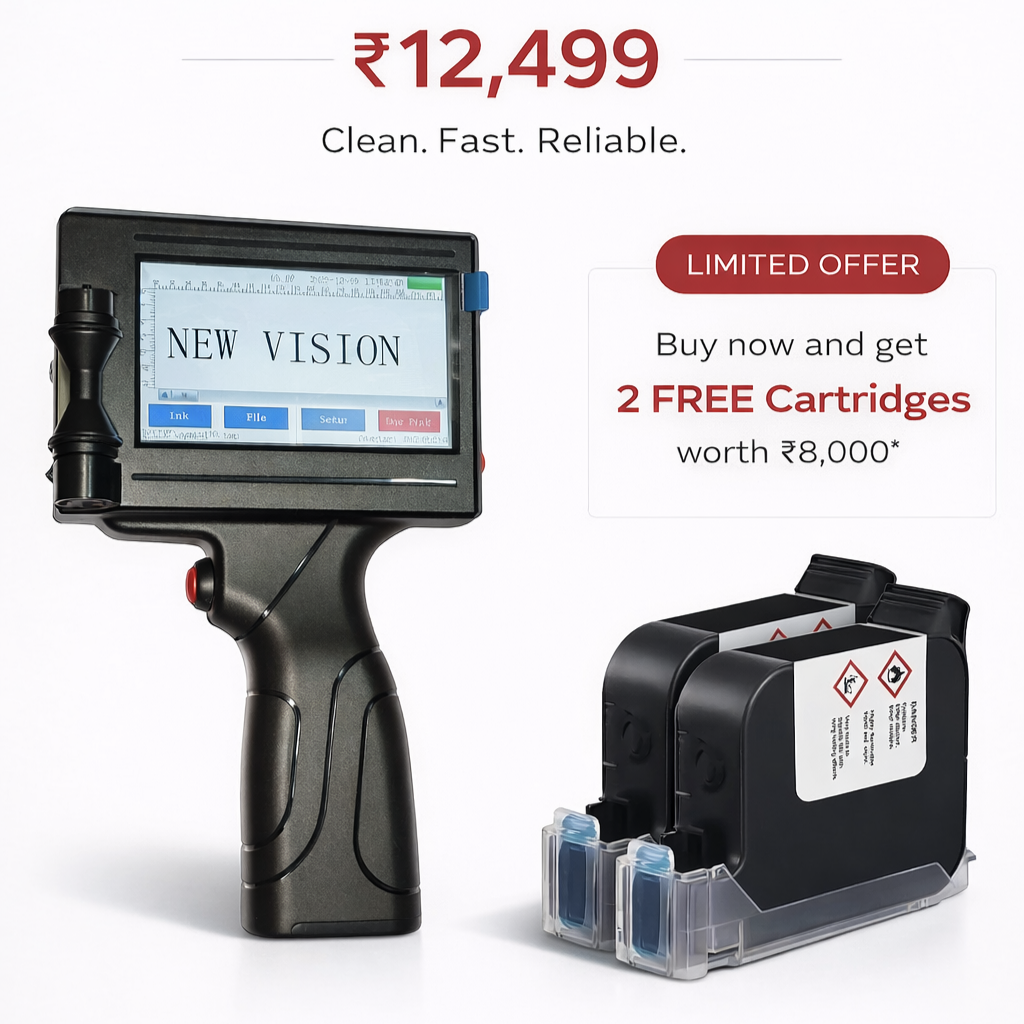
10 min read
USP is mandatory on every Indian pack since 1 April 2022. A TIJ setup guide for fitting batch, dates, MRP and USP into a 12.7mm print window.
Read article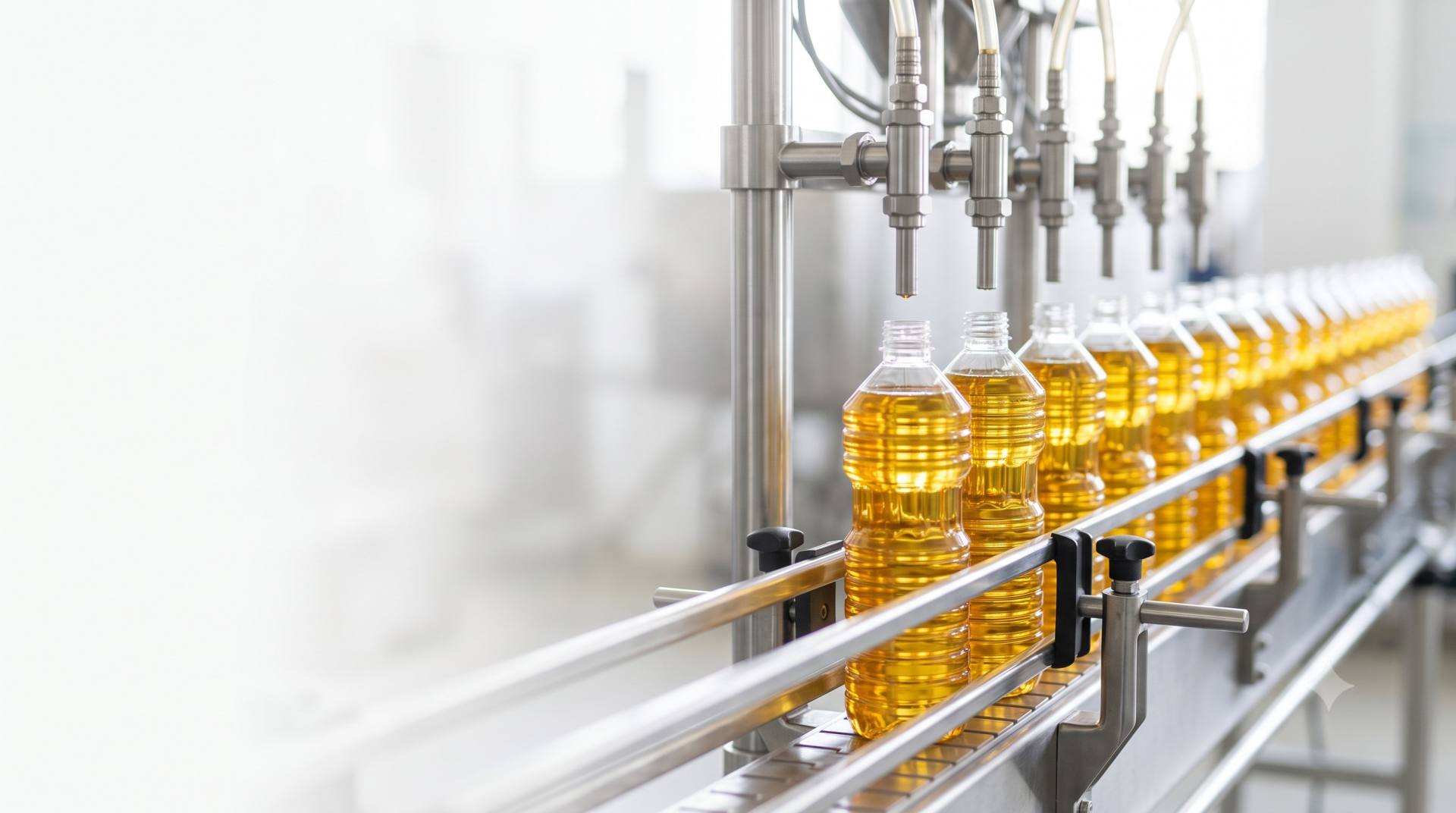
17 min read
Compare pneumatic piston, gear pump, and flow meter edible oil fillers across winter viscosity shift, mustard oil foaming, and 2026 pack rules.
Read articlePiston fillers are best suited for viscous to semi-viscous liquids (edible oils, lubricants, sauces, pastes) because positive displacement ensures high filling accuracy regardless of viscosity changes. Gravity filling machines work best for thin, non-viscous liquids like water, chemicals, and spirits with consistent head pressure.
TIJ printers require zero solvent maintenance, have no complex pumps or filters, offer instant cartridge swap-outs, and produce ultra-sharp 600 DPI barcodes, 2D QR codes, MRP, and expiry dates without messy ink leaks or pungent solvent smells.
Under standard 8-hour production shifts, Teflon sealing belts should be inspected weekly for wear and replaced every 1-3 months depending on pouch material thickness and sealing temperatures. Heating blocks and thermocouple sensors should be checked monthly for temperature stability.
Yes, our engineering team in Indore provides customized line sizing calculations, speed feasibility assessments, and equipment layout planning tailored to your exact bottle or pouch packaging line.
Our machinery specialists in Indore can test your liquid, bottle, or pouch samples and provide exact line recommendations.