FSSAI's 18 October 2026 advisory requires perishable food packers to use food-grade primary and secondary packaging, maintain consignment traceability records, and fulfil FSSAI batch coding requirements for transport inspections.
What the 18 October 2026 FSSAI Advisory Changed for Food Packers
On 18 October 2026, FSSAI ordered all food business operators (FBOs) handling four high-risk perishables — paneer, khoa, meat and fish — to enforce food-grade packaging, prescribed temperature discipline, and verifiable consignment tracking across every distribution tier.
Published on 18 October 2026 by The Hindu BusinessLine, Business Today, The Statesman and Deccan Chronicle, the directive targets cold-chain breakdowns and sanitation gaps between factory loading docks and retail shelves. Under the tightened FSSAI packaging rules 2026, processing plants face three operational mandates:
- Food-grade primary and secondary materials. Pack in certified food-grade pouches with clean outer protection that blocks moisture, dust, pests and mechanical crushing during transit.
- Consignment traceability and documentation. Every processing, storage and transport link must maintain complete logs, invoices and batch records for instant verification by inspectors.
- Intensified roadside inspections. State Food Safety Commissioners, Regional Directors and railway authorities have been directed to run aggressive transit checks — non-compliant loads face seizure and stock destruction.
What Consignment Traceability Means on a Pouch Packing Line
Consignment traceability links every retail pouch and master carton back to batch logs, cold-room logs and dispatch invoices through unique lot numbers.
When a Food Safety Officer flags a refrigerated truck or rail container carrying paneer, khoa or frozen meat pouches, paperwork alone fails: inspectors match physical pouch codes against driver manifests and tax invoices. Smudged ink or missing lot codes get the entire load flagged as untraceable.
To meet FSSAI batch coding requirements before dispatch, plants need a closed loop:
- Lot generation. Assign unique batch codes encoding production date, shift and sealing-line ID.
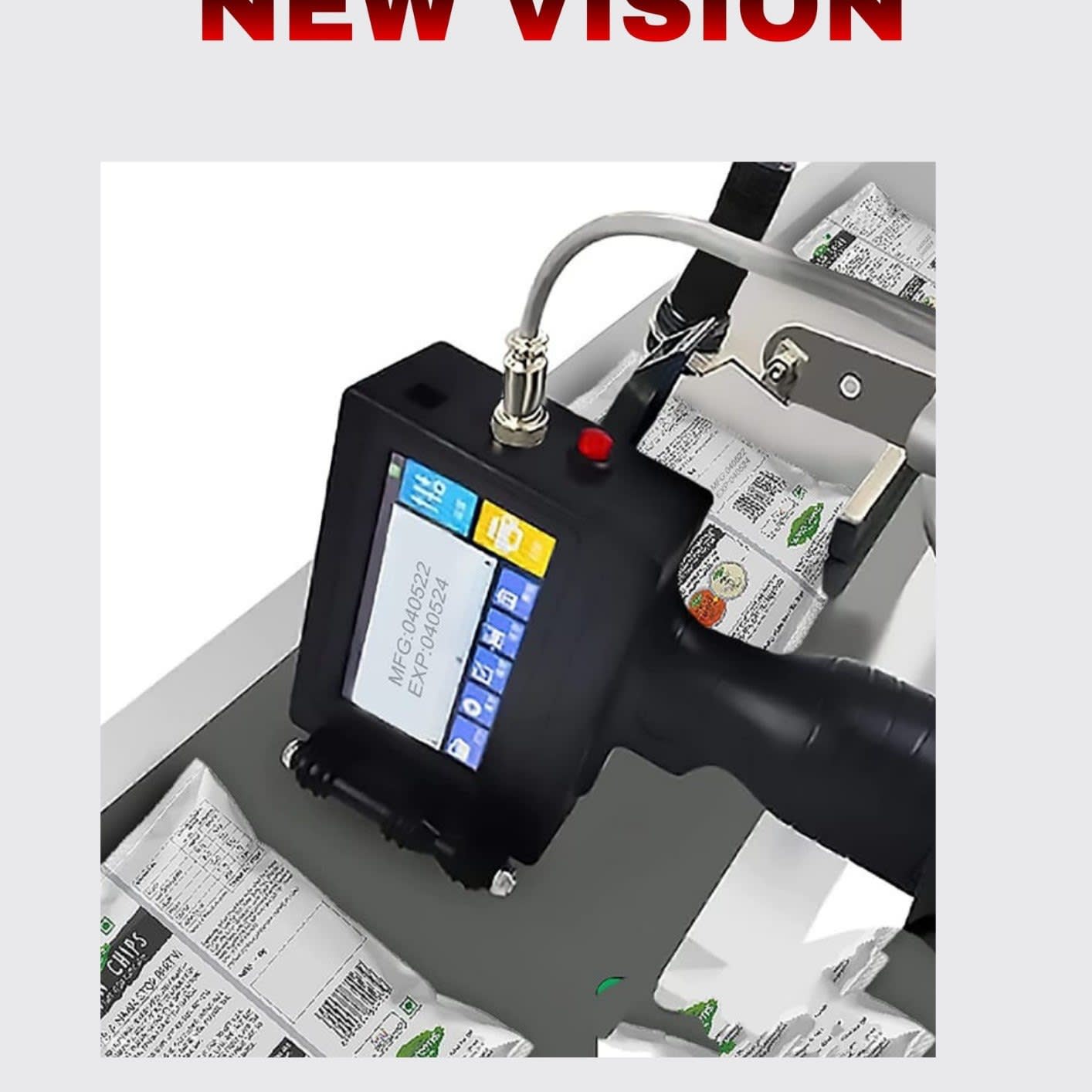
- Primary pouch coding. Print batch number, manufacturing date, expiry date and MRP on every pouch before or immediately after sealing.
- Dispatch record mapping. Stamp the identical batch code on delivery challans, tax invoices and vehicle temperature logs.
How FSSAI Batch Coding Requirements Are Met by On-Pouch Printing
Meeting FSSAI batch coding requirements and the Legal Metrology Packaged Commodities Rules means four permanent declarations on every retail pouch — batch/lot number, manufacturing date (MFG), expiry date (EXP) and Maximum Retail Price (MRP) — plus 2D or QR codes for rapid digital tracking.
Each element serves an audit function during transit and factory inspections:
- Batch/lot number ties pouches to raw-material receiving logs, chilling charts and transport invoices.
- MFG and EXP dates prove shelf-life validity under cold-chain conditions, satisfying both FSSAI and Legal Metrology norms.
- MRP fulfils retail pricing disclosure rules.
- 2D DataMatrix or QR codes compress batch numbers, timestamps and invoice IDs into a scannable matrix for instant verification.
On chilled lines, configure the coder with solvent-based ink: condensation on cold paneer or frozen-meat pouches smudges aqueous prints and destroys the traceability data the advisory demands.
If an inspector can't read it, it doesn't exist. Rub-test printed pouches after 24 hours in your actual cold room — not at room temperature — because condensation is what kills legibility on the truck, and the truck is where the advisory bites.
Batch Coding Technologies for Food Pouches at a Glance
Indian pouch lines use three coding technologies — handheld thermal inkjet (TIJ), online conveyor TIJ and contact ink rollers — differing by integration method and print output.
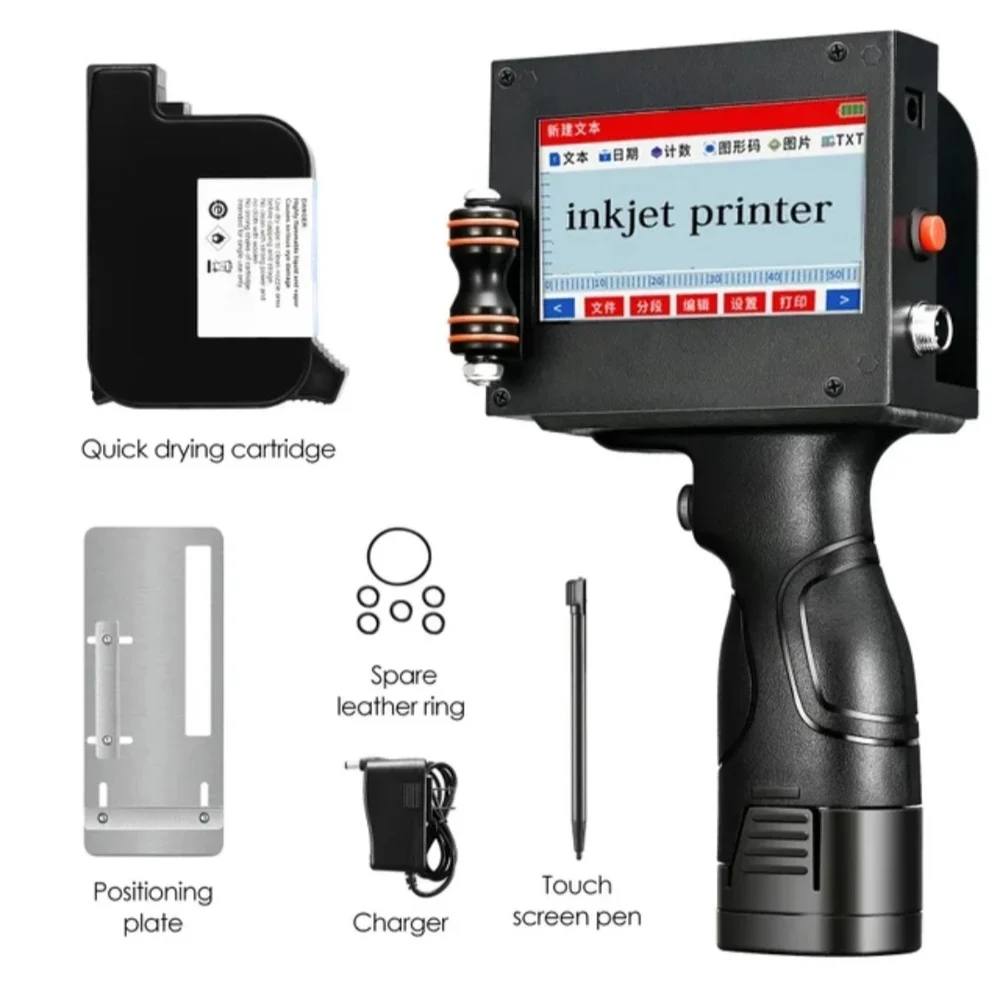
- Handheld thermal inkjet (TIJ). A portable trigger-actuated unit with snap-in ink cartridges printing multi-line text, dates, MRP and high-resolution 2D barcodes on flat pouches or master cartons. A handheld thermal inkjet printer suits manual tables, short runs and outer-case marking.
- Online / conveyor TIJ. A fixed printhead over a conveyor or form-fill-seal frame, triggered by photo-sensors, printing variable codes, timestamps and serialised QR codes at line speed without manual intervention.
- Ink roller coders. Mechanical contact printers on continuous band sealers or intermittent baggers using heated or liquid ink rollers and rubber stereos to stamp fixed batch numbers, dates and MRP.
Swipe or scroll horizontally to view all columns
| Technology | What it prints | Where it fits on the line |
|---|---|---|
| Handheld thermal inkjet (TIJ) | Alphanumeric batch, MFG/EXP, MRP, 2D/QR codes | Manual packing tables, secondary carton dispatch |
| Online / conveyor TIJ | High-speed text, dates, MRP, variable QR codes | Pouch conveyors, rewinders, automated FFS lines |
| Ink roller coder | Fixed batch numbers, MFG/EXP dates, MRP only | Continuous band sealers, mechanical coding brackets |
This guide covers compliance only, not equipment selection — for throughput and substrate comparisons see our batch coding machine buying guide.
What the Advisory Means for Secondary and Transport Packaging
FSSAI's 18 October 2026 advisory requires secondary transit packaging to be clean, food-safe material that shields primary pouches from dust, moisture and impact.
Under the FSSAI packaging rules 2026, moving paneer, khoa, meat or fish in recycled gunny sacks, unwashed crates or open uninsulated trays violates hygienic transport standards. Secondary packaging — corrugated master cartons, food-grade HDPE crates or insulated shippers — must deliver two outcomes: a hygienic barrier against dust, pests, moisture and cross-contamination inside enclosed vehicles, and consignment batch visibility, with lot numbers, pack dates, expiry dates and quantities on outer carton tags so traceability survives across the cold chain.
Compliance Checklist for a Food Pouch Packing Line
Clear these six checkpoints before dispatching any consignment under the enforcement drive:
- Verify food-grade film certificates. Keep supplier migration test reports on file for every laminate film.
- Audit on-pouch print completeness. Every pouch shows a legible batch number, MFG date, EXP date and MRP from a calibrated batch coding machine for food pouches.
- Test ink adhesion against condensation. Rub-test chilled, moisture-covered pouches to confirm the ink resists smearing in refrigerated holding.
- Eliminate non-compliant secondary coverings. Only clean food-safe crates or corrugated boxes on the dispatch floor — no gunny bags.
- Synchronise outer carton codes with invoices. Secondary carton batch markings must match transport challans and invoices exactly.
- Log vehicle hygiene and pre-cooling. Record that vehicles are clean, enclosed and chilled to spec before loading.
Limits and Assumptions
This explainer covers the 18 October 2026 FSSAI advisory as reported by Indian business press on 18–19 October 2026. Verify the official advisory text and your specific FSSAI license conditions — enforcement details vary by food category and state authority, and this article is guidance, not legal advice.
Frequently Asked Questions
Is batch coding mandatory in India?
Yes. Under the Legal Metrology Packaged Commodities Rules and FSSAI labelling and traceability norms, every pre-packaged food pouch must display a legible batch or lot number, manufacturing date, expiry date and MRP before leaving the factory for distribution or retail sale.
What happens during a transport inspection?
Food Safety Officers and railway or state enforcement teams verify vehicle hygiene, prescribed storage temperatures, food-grade primary and secondary packaging, and consignment invoices against printed batch codes. Under the 18 October 2026 advisory, officers can initiate legal action including immediate seizure and destruction of non-compliant perishable consignments.
Do the rules apply to non-perishables?
The 18 October 2026 advisory targets high-risk perishables — paneer, khoa, meat and fish — but mandatory batch coding and food-grade packaging apply to all packaged foods in India. Non-perishable packers must still print batch numbers, manufacturing dates, expiry dates and MRP under ongoing FSSAI and Legal Metrology regulations.
What details must a batch coding machine print on food pouches?
Four mandatory declarations: the batch or lot code, date of manufacture, expiry or use-by date, and Maximum Retail Price (MRP). Many processors add a 2D or QR code linking each pouch directly to its consignment dispatch invoice.
How do food factories link pouch batch codes to transport records?
By recording the printed lot number, manufacturing date and expiry date on every commercial invoice, packing list and vehicle dispatch log — and printing the identical batch code on outer secondary cartons, so inspectors verify traceability in transit without opening sealed primary pouches.
Need to bring your pouch line up to FSSAI batch coding requirements with smudge-proof date, batch and QR printing? Contact New Vision Machines, Indore at +91-9981604279 for an expiry date printing machine India food plants trust on laminated pouches and secondary cartons.