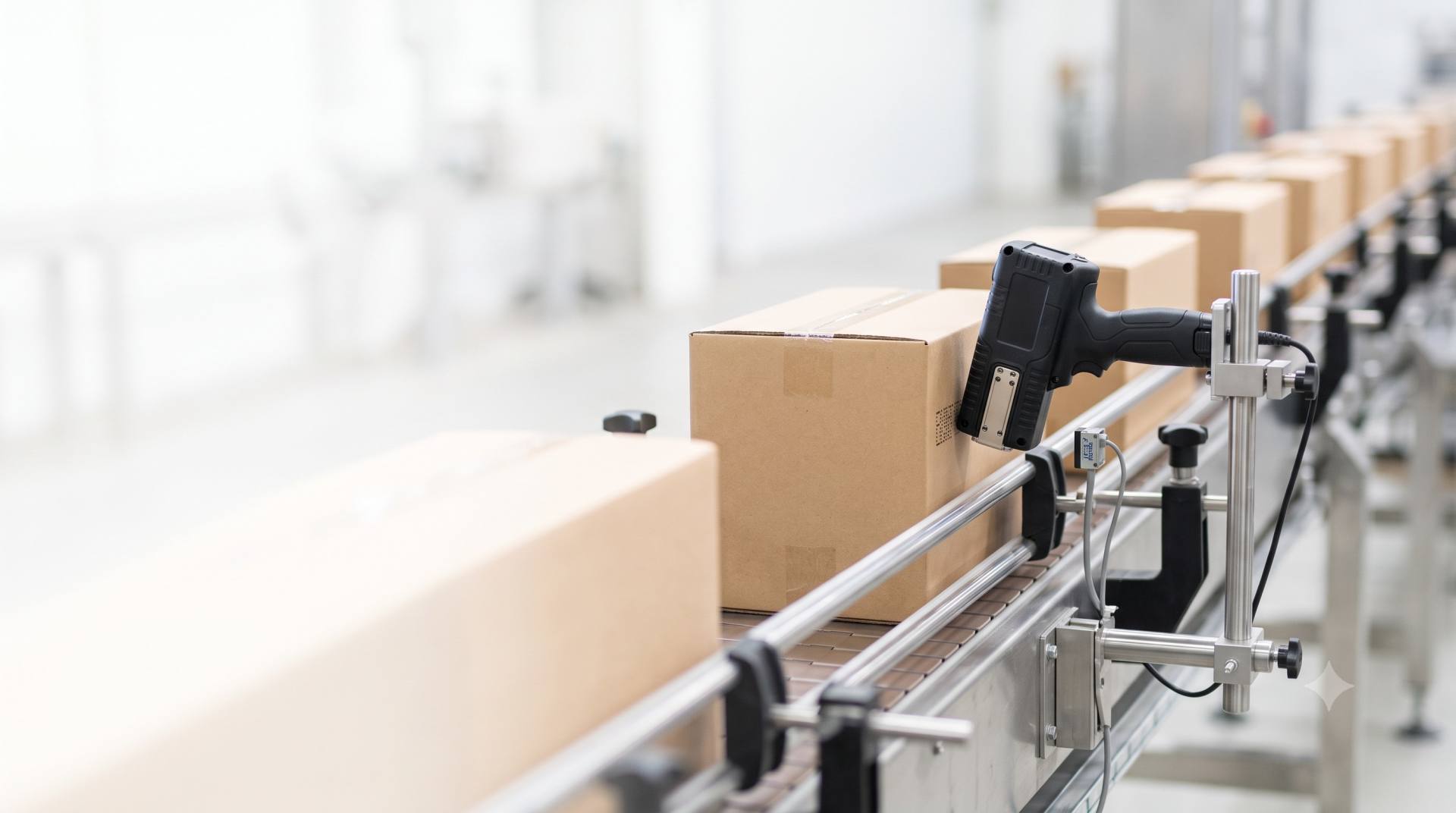
To print EPR QR codes inline on plastic pouches, mount a thermal inkjet printhead — an epr qr code printing machine for plastic packaging — over your film web or outfeed conveyor, firing fast-drying solvent ink before sealing or packing.
Plant managers running flexible packaging lines in India face a practical squeeze. State pollution control inspectors want verifiable plastic recovery trails, brand owners need clear compliance markers, and plant heads cannot afford mechanical bottlenecks or scrapped packaging rolls. Adding inkjet printers directly to packaging equipment gives converters and brand packagers a fast way to apply variable regulatory marks without disrupting daily throughput.
- Plastic Waste Management (Amendment) Rules 2026 sets Category II flexible plastic recycled content at 10% for 2025-26 and 2026-27.
- CPCB EPR traceability uses barcodes or QR codes to prove post-consumer resin use by brand owners.
- FSSAI 2018 regulations Section 3, clause (9) requires printing inks to conform to IS: 15495 without direct food contact.
- Inline TIJ cost per print is simply cartridge price divided by impressions, skipping expensive cylinder changes.
What Data Must Sit Inside a CPCB EPR Traceability Code?
A CPCB EPR traceability code carries the brand owner's official registration number, with dynamic codes adding batch-specific data, to evidence post-consumer plastic use. Under the Plastic Waste Management (Amendment) Rules 2026, brand owners, recyclers, and packaging converters must demonstrate verifiable material loops. Category II flexible plastic packaging carries a mandatory 10% recycled-content target across 2025-26 and 2026-27, stepping up to 20% in 2027-28 (Source: Plastic Waste Management Rules 2026).
Traceability marks give field auditors a direct way to verify that a specific pouch matches genuine recycling credits on the centralized portal. Setting up CPCB EPR registration-number barcode printing ensures that quality teams can substantiate PCR percentages per production run. Investing in a dedicated EPR QR-code printing system helps plants update these markings on the fly alongside mandatory MRP, net weight, and manufacture details outlined in our FSSAI batch coding requirements guide.
Why Choose an EPR QR Code Printing Machine Plastic Packaging Setup Over Pre-Printed Cylinders?
An inline thermal inkjet setup avoids cylinder re-engraving expenses by calculating unit coding cost strictly as cartridge purchase price divided by total impressions. Ordering pre-printed laminates with static regulatory text creates severe inventory lock-in. When recycling percentages adjust or registration numbers update, pre-printed rolls turn into factory waste, and waiting for new rotogravure cylinders can halt production schedules while replacements are made.
Inline thermal inkjet (TIJ) systems eliminate pre-printing lead times by jetting digital data straight onto plain or pre-printed film right at the pouch maker. The operating cost method is transparent:
Cost per Print = Cartridge Purchase Price ÷ Total Yield Impressions
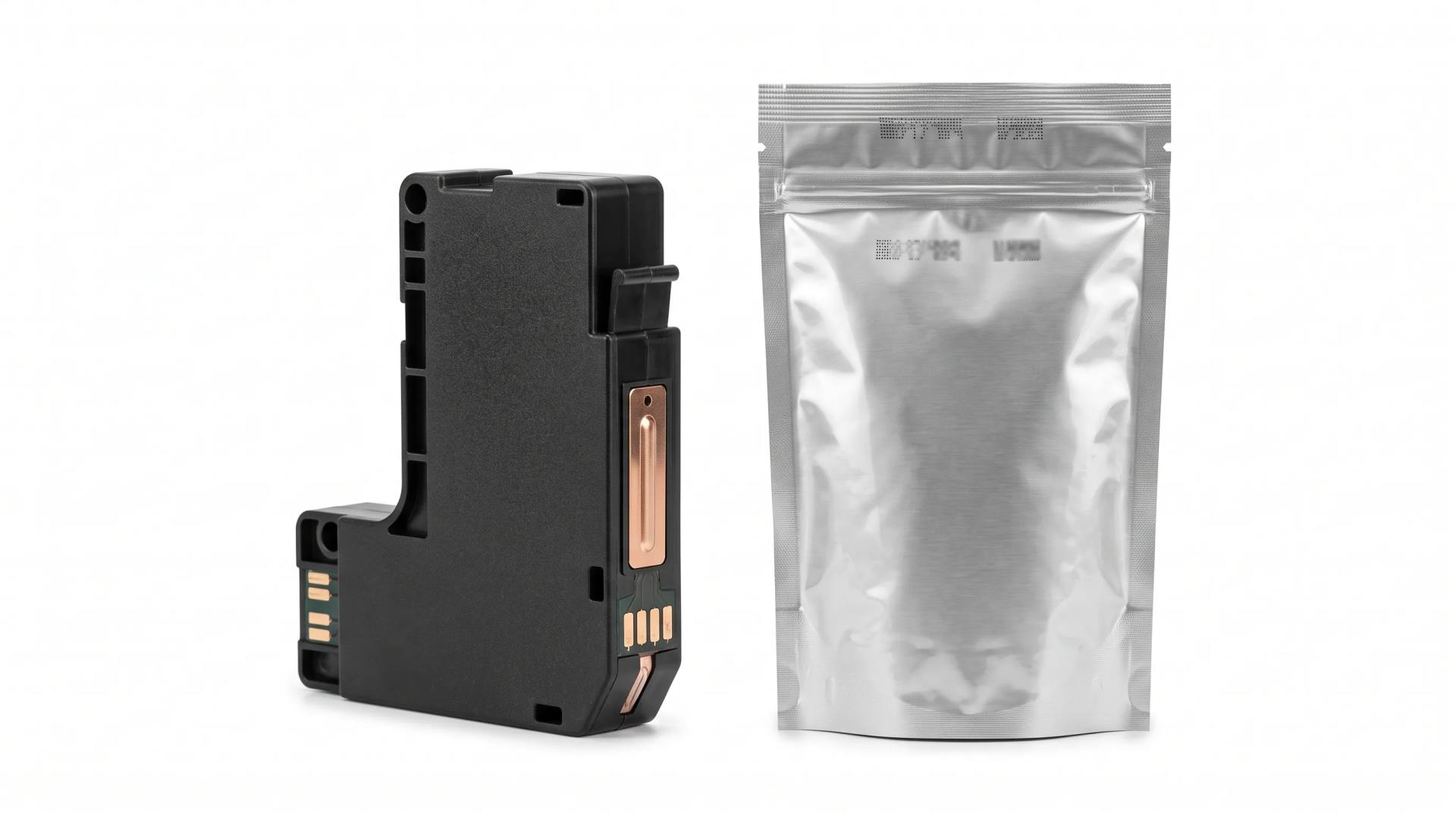
A replacement TIJ solvent cartridge costs ₹4,000 + GST, with two cartridges provided free with the printer. When a regulatory detail shifts, the operator updates the print layout in software within minutes. You avoid scrap film, cylinder tooling charges, and plate-remake delays. We break down consumption patterns across different code layouts in our TIJ cartridge cost per print guide.
Swipe or scroll horizontally to view all columns
| Code Format | Data Carried | Best-For | Risk |
|---|---|---|---|
| Static QR | Fixed CPCB registration number and company details. | Long runs of single-SKU items where resin blends and regulatory details remain identical. | Film rolls turn into scrap or require manual over-stickering if registration numbers change. |
| Dynamic QR | Batch-variable data such as recycled-resin fractions and run identifiers. | Plants handling shifting PCR resin grades across distinct production shifts and package formats. | Requires reliable PLC or line-controller communication to avoid print buffer misalignments. |
How Do You Ensure Optical Scannability on Flexible BOPP Film?
Optical scannability on BOPP film demands an unprinted quiet zone framing the matrix and a typical baseline resolution of 300 DPI to maintain sharp edge contrast. Flexible laminates like gloss BOPP, cast polypropylene, and metallized films reflect plant overhead lighting, which blinds basic hand scanners if the print contrast is poor. Running dynamic QR-code printing jobs on BOPP pouches with TIJ requires matching ink drop throw to web speed so the code doesn't distort.
A typical resolution of 300 DPI delivers clean matrix edge definition on flexible plastic packaging. Plant quality departments audit finished matrix codes against the ISO/IEC 15415 verification standard for 2D print quality. Setting up an EPR QR-code printing line on clear or printed film requires leaving an unprinted margin around the symbol. Selecting between 12.7mm and 25.4mm print cartridges depends on whether you run standalone QR symbols or combined multi-line text blocks, as explained in our 12.7mm vs 25.4mm TIJ printer guide.
What Governs IS 15495 Ink Compliance for Food Pouch Printing?
Food pouch ink safety is governed by FSSAI Food Safety and Standards (Packaging) Regulations 2018, Section 3, clause (9), which mandates that "printing inks for use on food packages shall conform to IS: 15495" and the printed surface shall not come into direct contact with food. Solvents and colorants applied to exterior packaging layers must not migrate through barrier films into snacks, edible oils, or milk powders. Securing IS 15495-compliant ink for food packaging is an essential step whenever food pouches exit the sealing jaw.
Because plastic laminates are non-porous, thermal inkjet systems run industrial solvent inks formulated for rapid carrier flash-off. Fast drying prevents ink offset when pouches stack in packing bins or drag across guide plates. Formulations built for external pouch surfaces protect your product integrity and help meet food safety inspection expectations during routine factory visits.
Should You Mount Online TIJ Heads on VFFS Webs or Conveyors?
Mounting on a VFFS web carriage codes flat film before pouch formation, whereas an online thermal inkjet printer conveyor setup prints onto finished pouches after the sealing station. Bolting the printhead bracket directly to a Vertical Form Fill Seal (VFFS) unwind frame gives the cleanest results. The film moves flat and taut over an idler roller during the packaging cycle, creating a stable plane for the printhead.
Where pouches are filled and sealed before coding, an online thermal inkjet printer conveyor setup provides a simple drop-in station. Conveyor printing handles stand-up pouches, zippered bags, and gusseted packs smoothly. Whether you mount an EPR QR-code printhead on a bracket or a floor stand, adding an incremental encoder ensures the firing rate matches line acceleration without compressing the printed matrix.
What Are the Limits and Assumptions of Inline Thermal Inkjet Systems?
Inline thermal inkjet systems assume stable web tension, accurate encoder synchronization, and regular cartridge maintenance to avoid air-drying during extended line stops. If plastic film flutters or buckles as it passes the cartridge face, code geometry distorts and scan reliability drops. Operators must also cap solvent cartridges when lines stop for maintenance to prevent nozzle dry-out. Inline TIJ units assist internal traceability under plastic waste management rules barcode marking frameworks, but they operate as industrial marking tools rather than regulatory filing platforms.
How Do You Troubleshoot Common Pouch Coding and QR Defects?
Resolving packaging line defects requires widening quiet zones, clearing controller print buffers, switching to fast-evaporating solvent formulations, or realigning encoder wheels.
- Code Fails a Scan Audit: Reflective film surfaces or cramped borders confuse 2D image sensors. Open up a clean, light-colored quiet zone on your pouch artwork and check that the printhead face sits square to the film.
- Dynamic Data Mismatch Across a Run: The print controller fails to refresh variable batch numbers or recycled-content values between runs. Clear the controller print cache, check network triggers from your packaging PLC, and verify sample packs before restarting.
- Ink Smudge or Migration Worry on Film: Wet ink smears against forming shoulders or belt conveyors. Switch to an industrial solvent cartridge engineered for non-porous films, verify drying before pouch accumulation, and keep marks strictly on outer surfaces.
- Web-Registration Drift on the VFFS Carriage: The code shifts position relative to eye-marks and pouch cut points. Mount the print assembly directly against a solid backing roller and tighten web guide tensioners to prevent laminate wander.
Print a first-off pouch, scan it with a phone and a fixed verifier, and keep that pouch with the batch record before releasing the run.
Frequently Asked Questions About EPR QR Code Printing
These are the questions plant heads and compliance officers ask most often before a line trial.
Is a QR code mandatory on plastic packaging in India?
Not across the board. The Plastic Waste Management Rules place legal responsibility on brand owners to substantiate EPR compliance and recycling credits through CPCB registration. While barcodes or QR codes provide the standard digital trail, the exact marking depends on packaging category and registration status. It is not an automatic blanket requirement for every pack.
How do you print an EPR registration number on pouches?
To print an EPR registration number, mount an inline TIJ head on your packaging line. The controller pulls the CPCB alphanumeric code and sprays it as clean text or within a 2D symbol using solvent ink directly onto moving plastic film or finished pouches, eliminating pre-printed film delays.
Which ink complies with IS 15495 for food packs?
Under Section 3, clause (9) of FSSAI 2018 regulations, inks used on food packaging must conform to IS: 15495. For flexible pouches, compliant solvent inks dry rapidly on outer non-porous films, preventing solvent retention and ensuring the printed exterior never migrates or makes direct contact with food contents.
Should you choose static or dynamic QR for pouches?
Pick static QR when you only need to show a fixed CPCB registration number or standard company portal across steady film stocks. Choose dynamic QR when each production run must record lot-specific recycled resin fractions or batch tracking, though dynamic setups require live controller data inputs during packaging runs.
Can a TIJ head mount on a VFFS line or only on a conveyor?
A TIJ head mounts on both setups. On a VFFS line, the bracket clamps near the unwind roll to print flat film during web travel. On an outfeed conveyor, it sits beside guide rails to code pouches right after filling and sealing, offering plant teams flexible integration options.
Talk to New Vision Machines engineers in Indore about your pouch film, code size, and line speed; call +91-9981604279 for an online TIJ setup matched to your VFFS or conveyor line.