
Compare handheld and inline TIJ printers
| Criteria | Handheld USB inkjet printer | Automatic inline TIJ 2.5 printer |
|---|---|---|
| How is the code applied? | Operator moves the printer across a supported print area | Product passes a fixed printhead; compatible triggering must be specified |
| Typical use | Short batches, large cartons, variable workstations and rework | Repeated coding on conveyor-fed packs, cartons or bottles |
| Published print-height range | 2–12.7 mm | 2–12.7 mm, configuration dependent |
| Resolution | Published range 300–600 DPI | Published maximum up to 600 × 600 DPI |
| Main buying constraint | Operator access, repeatability, surface support and ink adhesion | Product presentation, trigger timing, speed/resolution relationship and ink drying |
The published ranges are selection information, not a guarantee that every setting, ink and surface will achieve the maximum performance simultaneously.
The quotation should identify the supplied controller, cartridge, printhead, interfaces and accessories.
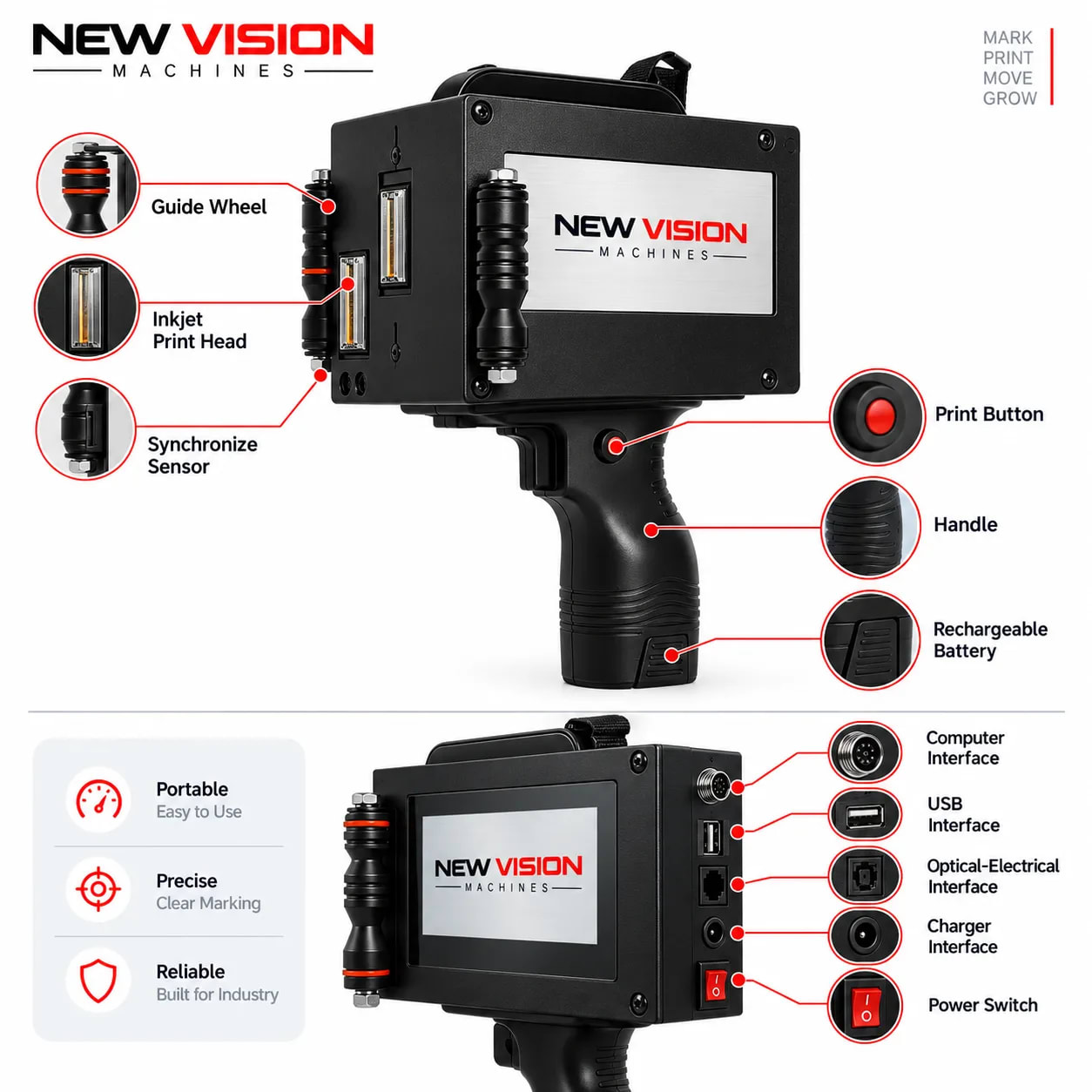
The 12.7 mm USB handheld printer featured above provides a portable route to variable-data coding without a conveyor installation. Its product listing specifies a rechargeable battery, a 4.3-inch touchscreen and USB flash-drive import for supported files.
Use it where the product is stationary and the operator can maintain a consistent print path. It is particularly worth assessing for outer cartons, flat areas on containers and irregular production batches. Small curved bottles or flexible pouches may require a positioning fixture or another coding method; a handheld form factor does not remove the need to control the printing gap.
Before ordering, confirm supported file formats, message editing, included cartridge type, battery/charger specification and which accessories are included. USB connectivity should not be assumed to provide live ERP integration or automatic database printing.
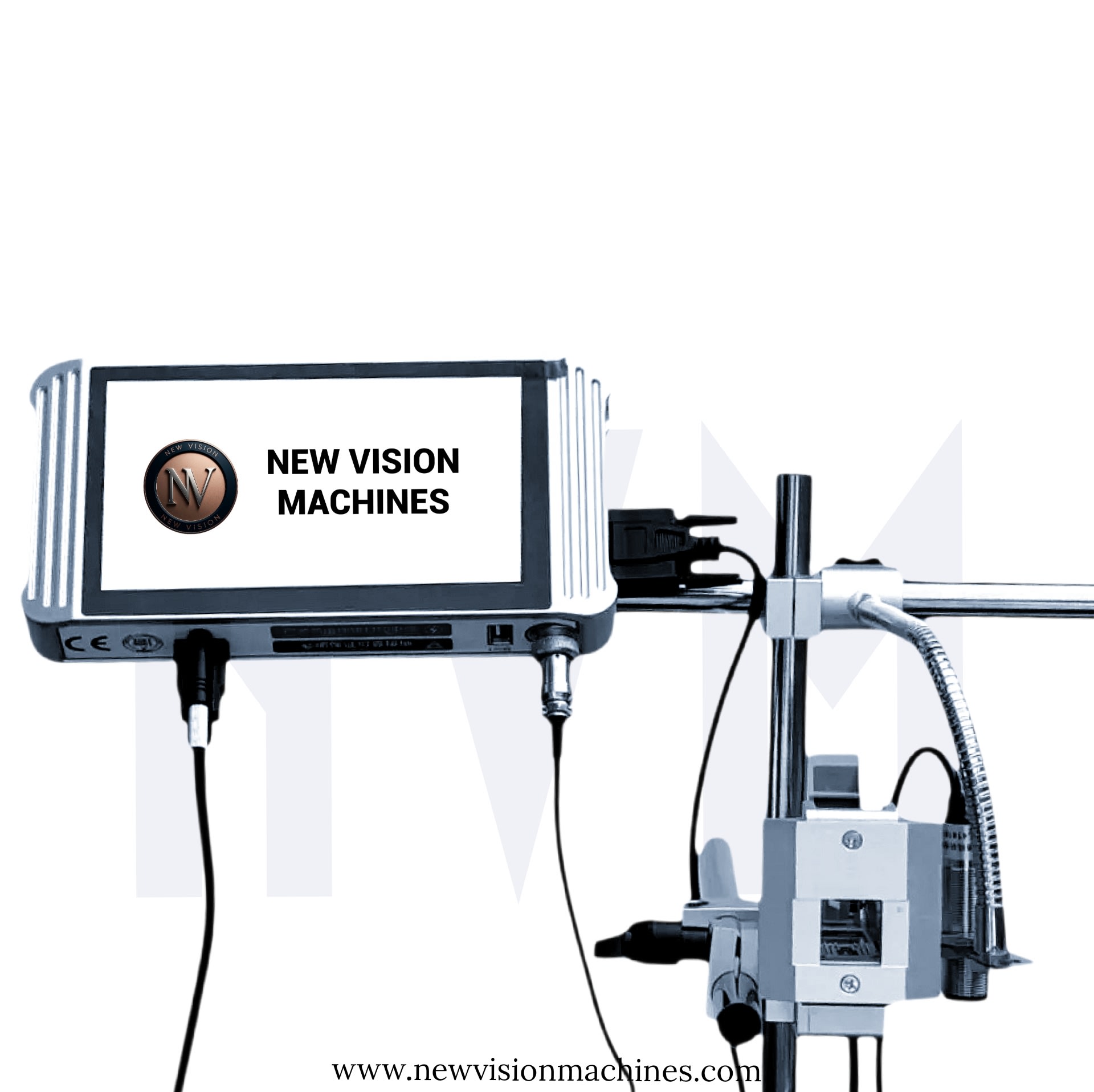
Specify the full inline station, not just the printer
Vibration-free mounting
A mounting arrangement that holds the printhead without vibration.
Product detection & feedback
Product detection and, where the application needs it, compatible speed/encoder feedback.
Stable product presentation
Guide rails or handling that prevent bottles from rotating out of the print position.
Approved code layout
A code layout approved at the required resolution and actual running speed.
Drying distance
Enough distance before rubbing, labeling, shrink wrapping or packing for the selected ink to dry.
The inline product listing gives a typical 60–100 m/min speed range, dependent on setup and content. Do not convert that into a bottles-per-minute promise without bottle pitch and a model-specific trial.
Ask for the speed achievable with your message, substrate and cartridge.
“Prints on plastic” is not a complete specification. PET bottles, HDPE containers, coated cartons and laminated films can behave differently. Surface coatings, moisture, oil contamination and the time before handling all affect adhesion.
Provide unused packaging samples and, where relevant, samples under realistic production conditions. Agree a test covering code readability, drying time, rub resistance and barcode performance. For bottles, show where the code must sit relative to the label, neck and cap. For pouches, identify the printed film surface and whether coding occurs before or after filling.
What to send for an accurate quotation
Packaging sample
Packaging material, photograph and an unused sample.
Code content
Exact code content, print area and preferred position.
Output data
Current and target output; include conveyor speed and product pitch for inline coding.
Batch changes
Batch-change frequency and any data-transfer requirements.
Plant details
Plant location, existing conveyor details and required supply scope.