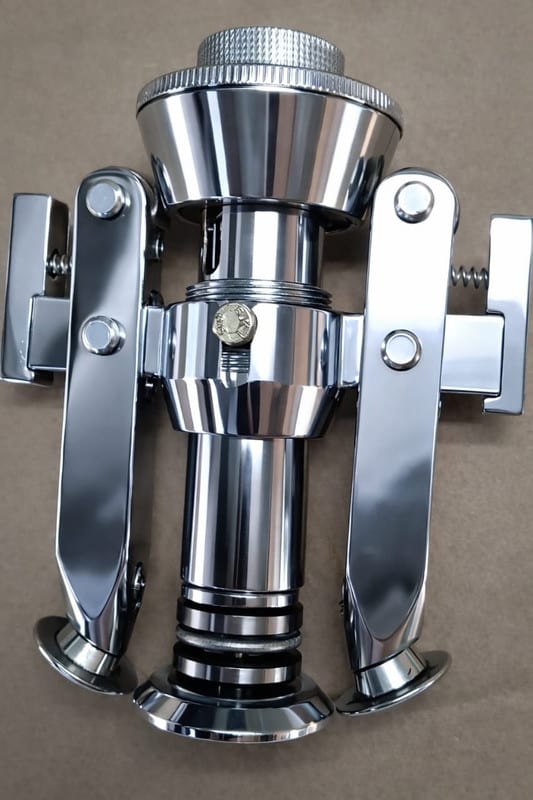
If your spout caps are slipping, getting scratched, or leaking after capping, the issue is often not the cap—it is the sealing chuck (also called a capping chuck) and its liner. In spout pouch lines, a good chuck must grip consistently, apply stable torque, and still protect soft plastic caps from damage. This is where a mechanical spout cap sealing chuck with PU lining becomes a practical upgrade for many Indian manufacturers running high-mix SKUs.
What is a spout cap sealing chuck?
A spout cap sealing chuck is the tool head that holds and tightens the cap onto the spout. It sits on the capping station (manual, semi-automatic, or automatic) and transfers the machine’s rotation and torque to the cap.
- Job 1: Hold the cap firmly without slipping.
- Job 2: Tighten the cap to the correct torque so the seal is leak-resistant.
- Job 3: Avoid cap deformation, scratches, or whitening marks on caps.
How a mechanical PU lined chuck works
A mechanical chuck typically uses a rigid body and a gripping surface inside (the liner). In a PU lined chuck, the inner contact surface is polyurethane which provides controlled friction and cushioning.
- Mechanical gripping: The chuck grips the cap profile and rotates it to tighten.
- PU liner contact: PU increases grip while reducing hard metal-to-plastic contact.
- Repeatable closure: Better grip control usually means fewer under-tight and over-tight caps.
Why PU lining matters for spout caps
Spout caps (especially for edible oil, sauces, detergents, shampoo, and automotive liquids) are often made of softer plastics. A wrong liner material or worn liner can lead to cosmetic defects and leak complaints.
- Reduced cap damage: PU cushioning can help prevent scratches and cap whitening.
- Better slip control: Higher friction helps reduce cap slippage at higher speeds.
- More consistent torque: Stable grip improves repeatability across batches.
- Lower rejection: Fewer “loose cap” and “cap not fully seated” issues during QA.
Top problems a sealing chuck can cause (and how to fix them)
1) Cap slipping during tightening
Symptoms: Cap rotates inconsistently, cap remains loose, or machine “spins” without tightening.
- Check PU liner wear or glazing (smoothening) and replace if needed.
- Confirm cap and chuck profile match (wrong chuck cavity = poor contact).
- Reduce contamination: oil/grease on caps reduces grip—improve cap handling and storage.
2) Cap scratches, whitening marks, or dents
Symptoms: Cosmetic defects, customer complaints, and brand-quality impact.
- Switch to PU lined chuck if using hard/aged rubber or metal contact.
- Verify alignment: off-center chuck contact causes edge rubbing and marks.
- Re-check torque: over-tightening can deform the cap skirt or threads.
3) Leakage after capping
Symptoms: Leaks during transport, pouch swelling/deflation, or seepage near cap threads.
- Confirm torque setting and consistency (too low torque = micro-leak paths).
- Check spout thread quality and cap thread compatibility (mismatch cannot be fixed by chuck alone).
- Inspect chuck liner for uneven wear—uneven pressure can lead to partial seating.
4) Frequent changeover issues (multiple cap sizes)
Symptoms: Long downtime, repeated adjustments, and unstable output after changeover.
- Use dedicated chucks per cap size/profile for faster, repeatable changeovers.
- Keep spare PU liners ready for quick replacement during preventive maintenance.
- Label chucks by cap diameter and cap type (tamper-evident, flip-top, screw, etc.).
How to choose the right mechanical PU lined spout cap sealing chuck
Selection should be based on the cap geometry, required torque, and the type of spout pouch machine (manual/semi/auto). For Indian factories running multiple pack sizes, correct chuck selection is one of the easiest ways to reduce stoppages and rejections.
Key parameters to share before ordering
- Cap type: Screw cap / tamper-evident / flip-top / special profile.
- Cap diameter and height: The chuck cavity must match the cap’s outer geometry.
- Cap material hardness: Softer caps benefit more from PU lining and correct pressure.
- Target torque range: Needed to achieve seal without deformation.
- Machine model interface: How the chuck mounts to your capping head (thread, quick-change, coupling).
- Production speed: Higher speed needs better grip stability and liner quality.
PU lined vs. non-PU chucks (practical view)
- PU lined chucks: Preferred when cap cosmetics matter, slip issues exist, or caps are soft and easily marked.
- Hard rubber/other liners: Can work but may mark caps, harden over time, or slip when oily.
- Metal contact: Generally not ideal for plastic caps due to damage risk (unless it’s a specialized design).
Maintenance tips to increase chuck life
Most chuck failures are not “sudden”—they build up through liner wear, contamination, and alignment drift. A simple maintenance routine saves downtime and reduces rejection spikes.
- Daily: Wipe liner surface; remove oil/grease dust; visually check for cracks or chips.
- Weekly: Check alignment and run a torque consistency check on sample packs.
- Monthly: Inspect liner thickness and wear pattern; replace liner if grip has reduced or wear is uneven.
- Always: Keep one spare PU lined chuck/liner set for critical SKUs to avoid production stoppage.
Price of spout cap sealing chuck in India: what affects it?
Buyers often search “spout cap sealing chuck price” or “cap sealing machine chuck cost”, but pricing depends on customization and interface.
- Cap profile complexity: Custom cavities cost more than standard profiles.
- PU liner grade: Higher-grade PU improves grip and life, especially for oily environments.
- Machine compatibility: Special mounting/adapters can add cost.
- Quantity and spares: Ordering multiple chucks for different cap sizes often reduces downtime and improves ROI.
For an accurate quote, share your cap samples (or drawings), torque requirement, and machine head interface details.
Why manufacturers prefer a mechanical PU lined chuck
- Better cap grip with lower damage risk for common spout cap materials.
- Improved repeatability for consistent tightening and fewer leaks.
- Faster troubleshooting because liner wear is easy to identify and replace.
- Ideal for Indian operating conditions where dust, oil handling, and mixed SKUs are common.
New Vision Machines: PU lined mechanical spout cap sealing chuck
New Vision Machines supplies mechanical spout cap sealing chucks with PU lining designed for reliable grip, cleaner capping, and reduced cap damage in spout pouch operations. These chucks are suitable as spares or replacements when you want to improve capping consistency, reduce slippage, or protect cap appearance.
- Suitable for spout pouch capping and spout cap sealing applications.
- Option to match chuck cavity to your cap profile for better fit.
- Recommended when you face slip, scratches, or repeat leak complaints after capping.
Need the right chuck? Share your cap sample and machine details, and get the correct PU lined chuck specification for your line.
FAQs
Does PU lining work for oily caps like edible oil or lubricants?
Yes, PU lining is commonly chosen to improve grip and reduce slippage, but hygiene, cleaning, and cap handling matter—oil film on caps can still reduce friction if not controlled.
How often should the PU liner be replaced?
Replacement frequency depends on speed, cap material, contamination, and torque. A practical approach is to replace when slip starts, wear becomes uneven, or cosmetic marks increase.
Can one chuck handle multiple cap sizes?
A single chuck can sometimes work across a narrow range, but for stable output and faster changeover, dedicated chucks for each cap profile are recommended.
What should be sent for correct selection?
Send cap/spout samples (or drawings), your machine model/interface, and your required tightening feel/torque target. This ensures the chuck cavity and mounting fit correctly.