Last updated: 10 October 2026
Key Takeaways
- Production benchmark: a standard 100–150 JPH linear unit turns out 800 to 1,200 jars across an 8-hour shift, matching typical local delivery routes.
- Capital outlay tiers: market prices start at Rs 45,000 for manual foot-lever rigs and reach Rs 15.5 lakh for rotary monoblocks; standard automated linear units sit between Rs 4.0 and Rs 5.5 lakh.
- Utility requirements: your floor needs a 415V 3-phase connection (4–20 kW connected load) and dry compressed air delivering 5–7 CFM at 90 PSI.
- Wash hygiene: three distinct wash stages operating at 0.15–0.2 MPa strip road grime and disinfect returned containers before filling begins.
Buying a 20 litre jar filling machine comes down to a simple math problem: route volume versus mechanical uptime. Oversizing your line burns capital on idle steel. Undersizing it forces overtime, burns out operators, and leaves delivery trucks waiting at the bay. The goal is matching the machine's hourly output to your daily distribution fleet while keeping utility draw within your plant's transformer capacity.
Which 20 litre jar filling machine do you need?
Investing in a reliable 20 litre jar filling machine protects your operating margin. Equipment across the Indian market falls into three distinct build categories based on hourly output:
Sub-100 JPH (entry & pilot lines): Manual rigs start near Rs 45,000. Operators load bottles by hand, clean them with foot pedals, and mallet or press caps manually. These suit micro-plants filling under 500 containers daily where low wage costs balance out slow cycle times.
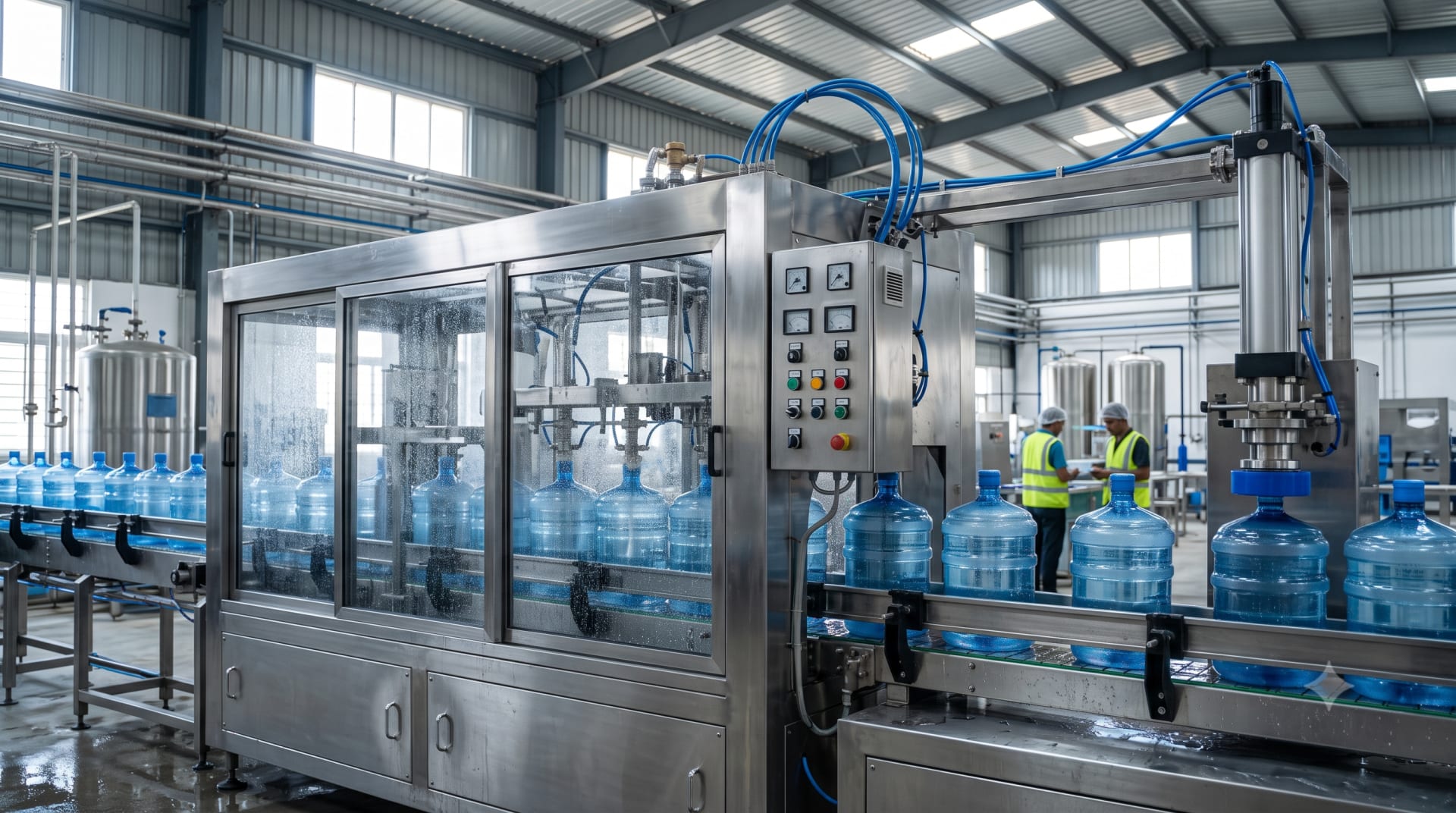
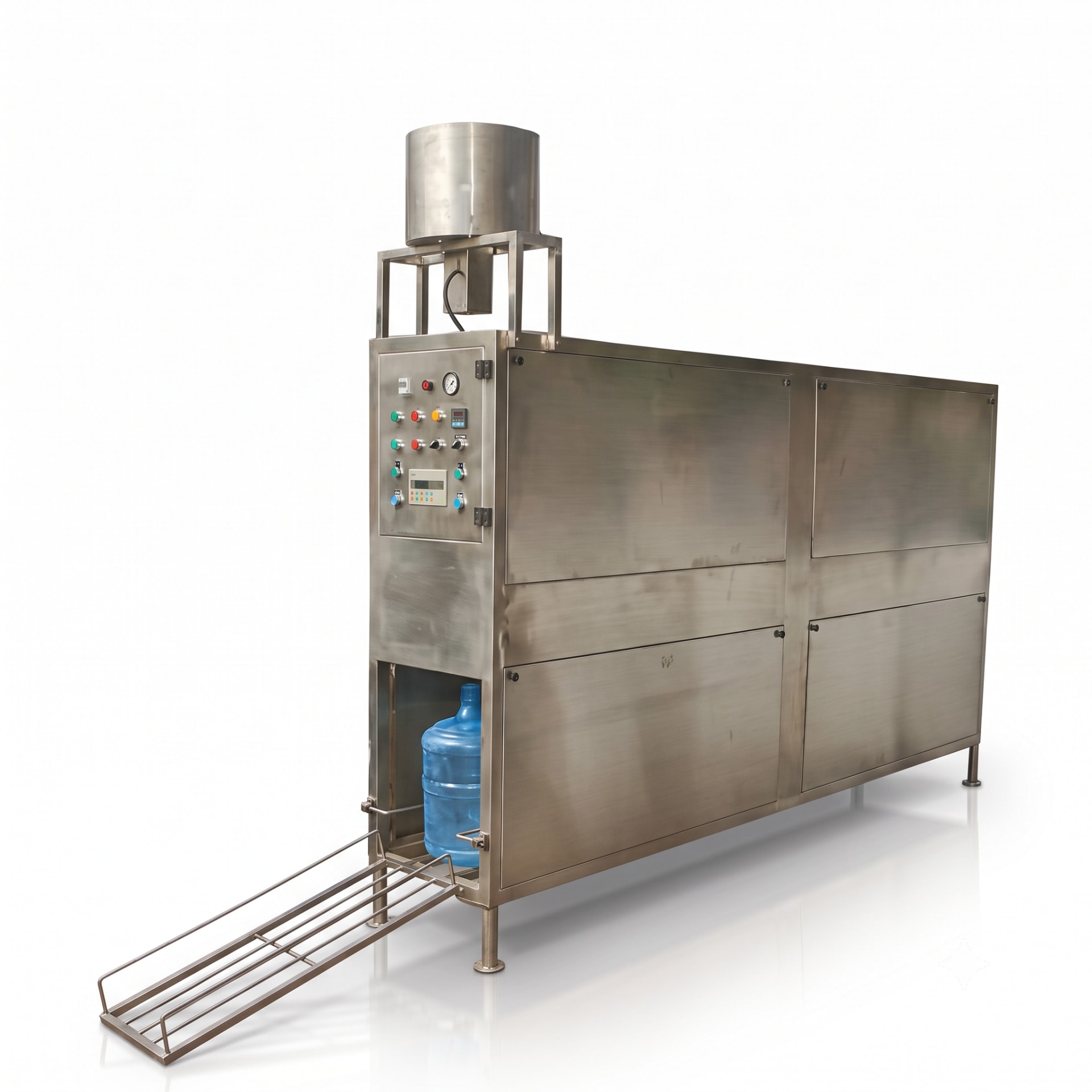
100–150 JPH (regional distribution): Linear automated units run Rs 4.0 to Rs 5.5 lakh. Our featured Automatic 20 litre jar washing, filling & capping machine (100–150 JPH) sits at Rs 4,90,000 ex-works. It moves bottles through washing, coarse-and-fine filling, and mechanical capping on a single continuous track. Two workers manage the entire station.
200+ JPH (high-capacity bottling): Split filler-capper combinations cost Rs 6.0 to Rs 7.5 lakh, while high-speed rotary monoblocks command Rs 9.5 to Rs 15.5 lakh. These heavy units run continuous multi-shift schedules for institutional water contracts and high-volume commercial logistics.
To compare regional equipment pricing and build specifications, review our buyer guide on 20 litre jar filling machine price India.
Swipe or scroll horizontally to view all columns
| Your output target | Machine class | Indicative price (INR) |
|---|---|---|
| < 100 JPH | Semi-automatic manual feed | From ~Rs 45,000 |
| 100–150 JPH | Linear automatic RFC unit | Rs 4,00,000 – Rs 5,50,000 |
| 150–200 JPH | Standalone filler + mechanical capper | Rs 6,00,000 – Rs 7,50,000 |
| 200+ JPH | High-speed automated monoblock | Rs 9,50,000 – Rs 15,50,000 |
What the machine includes: the linear RFC sequence
Operating as a synchronized automatic jar washing filling capping machine, the linear platform moves returned containers through three continuous phases: infeed, 3-stage wash, dual-speed gravity fill, mechanical cap press, outfeed.
1. Three-stage wash tunnel. Returned 20-litre jars arrive caked in road dust and handling grime. The machine grips each bottle neck, turns it upside down, and indexes it across dedicated spray nozzles operating at 0.15–0.2 MPa. Stage 1 (tap water rinse): high-impact external spray clears transport dirt while internal nozzles blast out loose grit. Stage 2 (hot water treatment): internal hot-water spray dissolves dried mineral deposits and strips organic residue. Stage 3 (product water rinse): a final blast of purified RO permeate purges any leftover rinse water before the jar rights itself.
2. Dual-speed gravity filling. Fast filling creates turbulence — turbulent water foams, spills, and leaves inconsistent levels. To prevent this, the dosing station uses sanitary SS316 solenoid valves running coarse-plus-fine logic. The valve opens wide for bulk filling, then drops to a controlled trickle for the final neck volume. No splash, no bottle distortion, exact fill levels inside standard 53 mm neck PET jars.
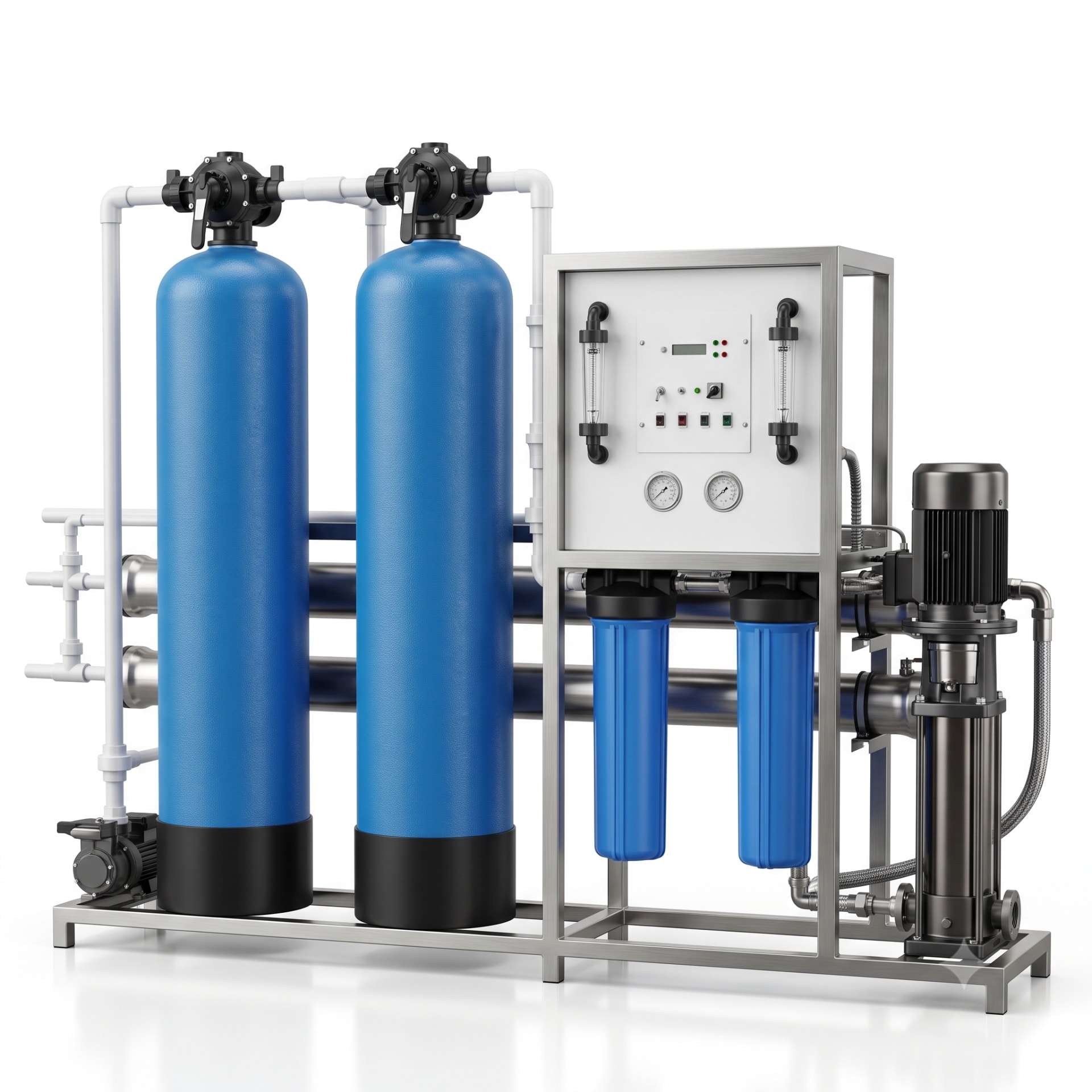
3. Capping and structural frame. Filled jars slide forward and catch suspended caps from an automatic gravity chute. A pneumatic press cylinder then drives the cap down with calibrated vertical pressure, sealing the rim without crushing the bottle shoulder. Contact parts use sanitary SS304 stainless steel. Overall dimensions span approximately 2500–2900 × 500–900 × 1700 mm with machine weights between 250 and 700 kg — enough frame mass to prevent floor vibration creep. Operators manage wash cycle timers, valve actuation, and alarms through a centralized touch-screen HMI and industrial PLC. Every unit includes a 1-year warranty. For plants setting up an end-to-end bottling line, this mineral water jar filling machine pairs with our companion Industrial RO plant 1000 LPH (Rs 1,19,000 ex-works) to keep permeate supply steady.
What it costs to run: utilities and consumables
Running a 20 litre jar filling machine economically means planning your utilities before the equipment unloads at your dock:
- Compressed air: Pneumatic pusher cylinders, indexing gates, and the cap press draw 5–7 CFM of clean, dry air at a regulated 90 PSI. You need a dedicated 2–3 HP reciprocating compressor fitted with an inline moisture separator and refrigerated air dryer. Wet air corrodes solenoid valves.
- Electrical draw: The main panel requires a 415V, 3-phase, 50 Hz line. Total connected load runs from 4 to 20 kW. Wash-water immersion heaters and high-pressure booster pumps account for most of this load. Maintain stable line voltage to avoid PLC tripping.
- Jar & cap tolerances: Machine tracks are calibrated for standard 53 mm neck commercial PET returnables. Use jars with uniform neck rings and consistent wall thickness. Lightweight, thin-walled bottles buckle under the capping ram and leak during transport.
- Rinse water supply: The wash station draws pressurized water continuously at 0.15–0.2 MPa. Ensure raw water storage and RO permeate feed rates can supply both the three wash cycles and the main filling reservoir without dropping line pressure mid-shift.
Specifying your line and securing a formal quotation
Matching a 20 litre jar filling machine to your plant layout ensures clean operator workflows and zero piping rework. Before ordering, verify raw water TDS, incoming transformer capacity, and drainage trench positions.