Last updated: 10 October 2026
Key Takeaways
- Commercial quotes span from Rs 45,000 for manual benchtop rigs up to Rs 15.5 lakh for continuous rotary monoblocks.
- Standard Indian production relies on linear rinsing–filling–capping (RFC) machines that integrate three wash stages, gravity filling, and pneumatic cap pressing on one frame.
- A standard 100–150 jars per hour (JPH) automatic RFC line sells between Rs 4.0 lakh and Rs 5.5 lakh; New Vision Machines prices its unit at Rs 4,90,000 ex-works.
- Factory utilities dictate uptime: you need a 415V 3-phase connection (4–20 kW load) and an external 5–7 CFM compressor holding 90 PSI.
- Line quotes cover bare metal only; buyers must separately fund 53 mm neck PET jars, cap inventory, feed RO water, and BIS/ISI certification.
An automatic 20 litre jar filling machine in India costs Rs 4.0–5.5 lakh for a 100–150 JPH rinsing–filling–capping line; across all automation tiers, quotes run from Rs 45,000 to Rs 15.5 lakh.
20 litre water jar filling machine price by automation tier
A factory buyer will encounter quotes from Rs 45,000 to Rs 15.5 lakh across four distinct machinery categories in India. Assessing the 20 litre water jar filling machine price requires looking past the invoice and examining structural mechanization.
Semi-automatic table fillers (Rs 45,000 – 1.2 Lakh): Built for micro-packers. An operator loads unwashed containers over bare nozzles by hand, presses a mechanical foot pedal to dispense water, and pounds caps on with a rubber mallet.
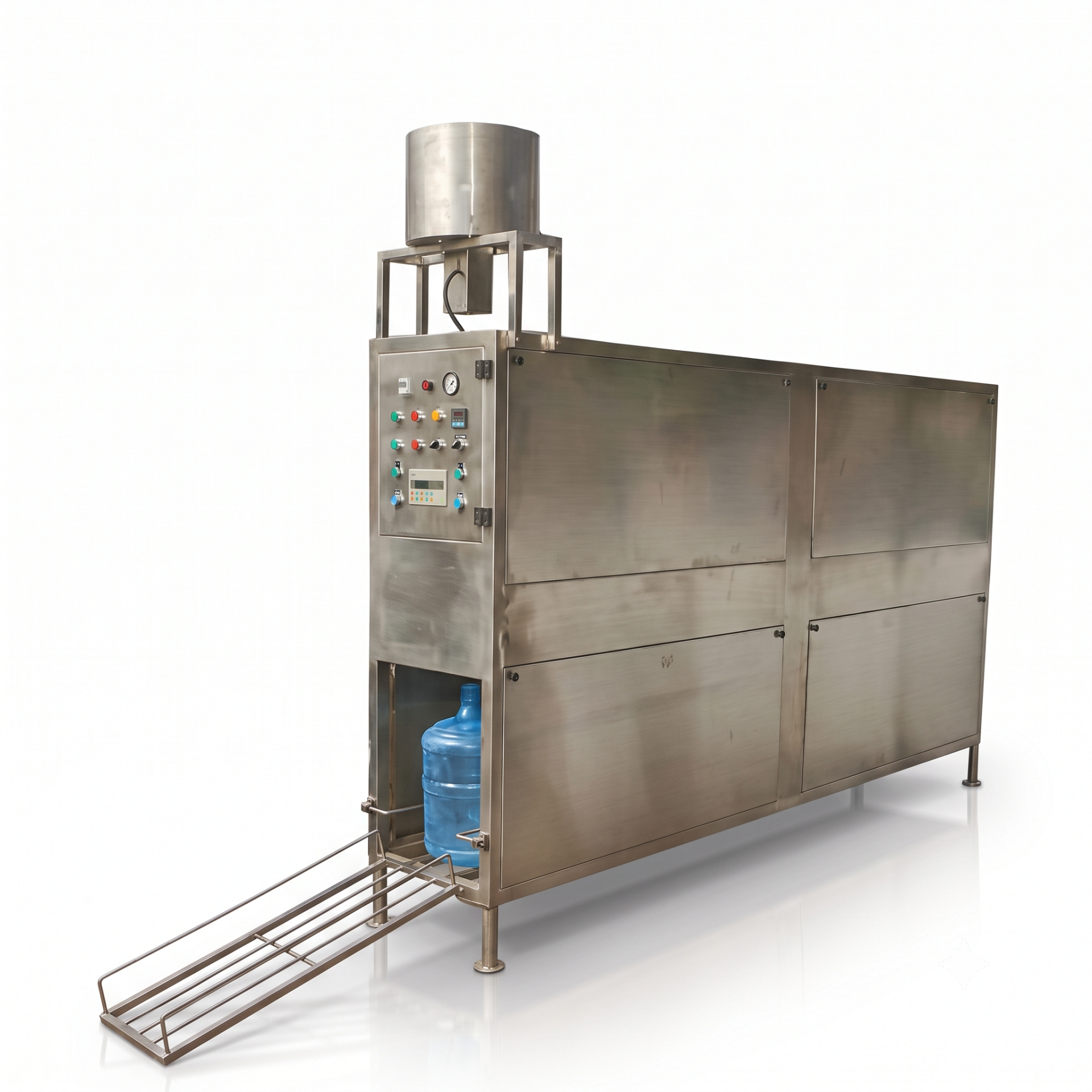
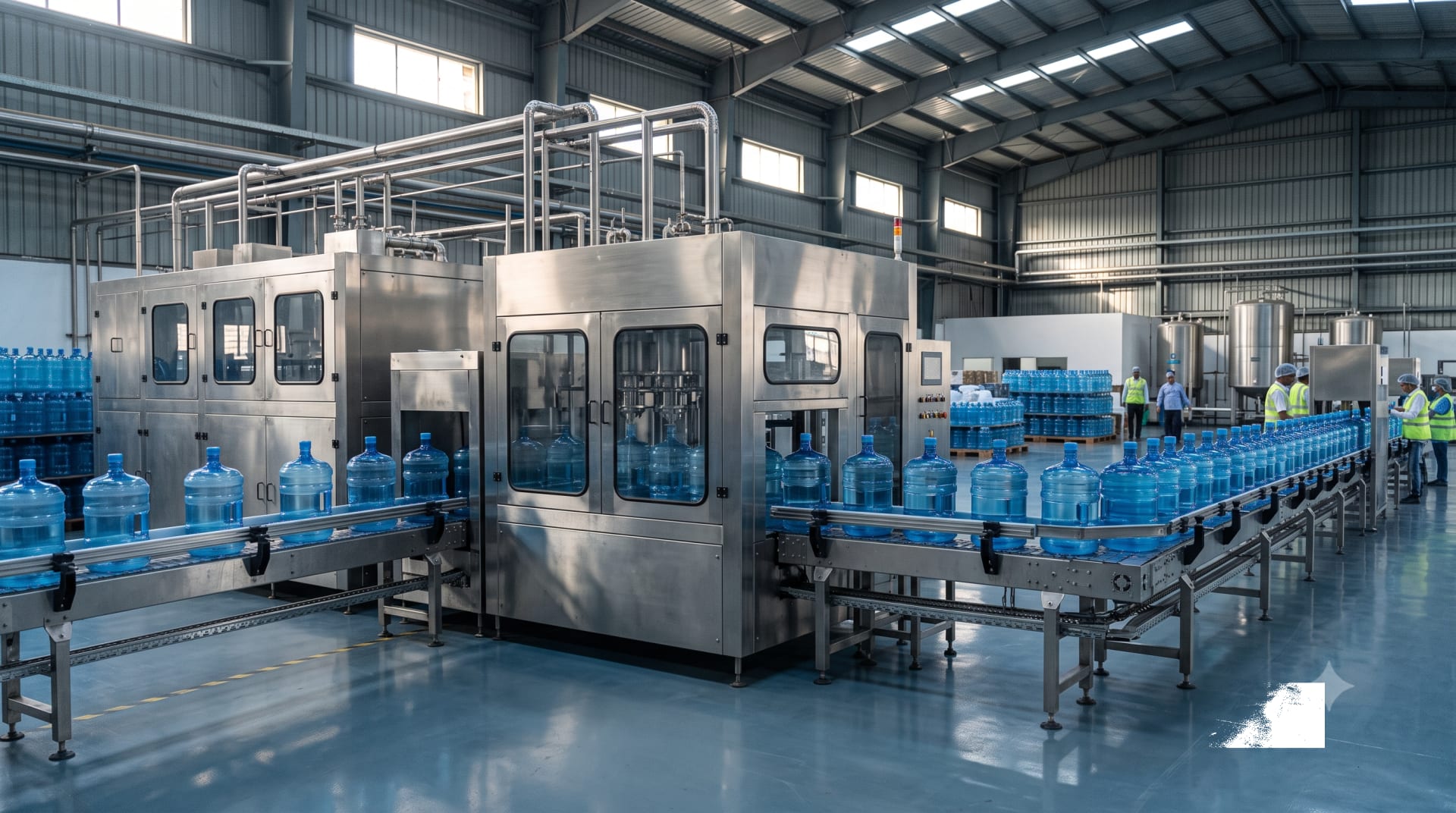
Automatic RFC linear machines (Rs 4.0 – 5.5 Lakh): The backbone of commercial bottling plants across India. One unified linear chassis handles 3-stage sanitization, dual-valve gravity filling, and pneumatic cap pressing at 100–150 JPH. New Vision Machines builds its automatic 20 litre jar washing filling capping machine at Rs 4,90,000 ex-works, providing an engineered mid-range baseline with SS304 product contact zones and a 1-year warranty.
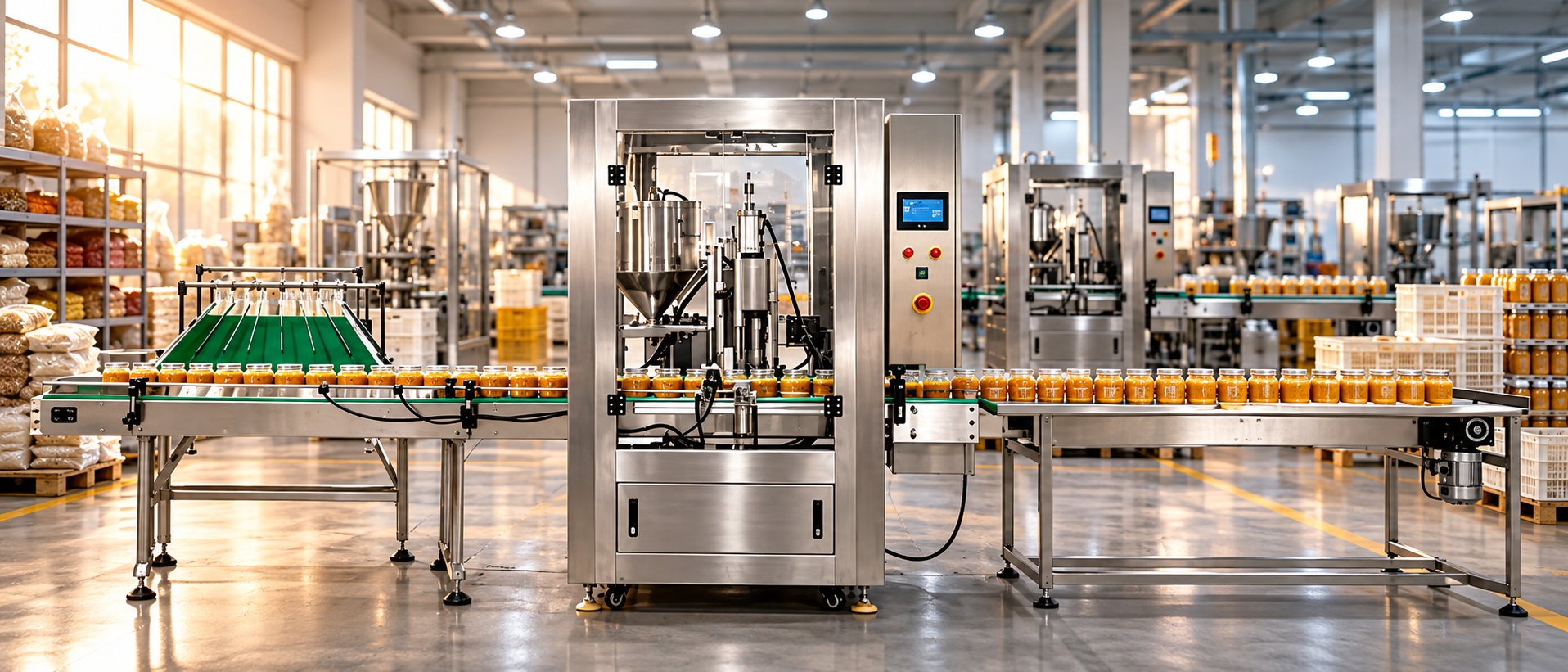
Standalone automatic filler + capper lines (Rs 6.0 – 7.5 Lakh): Designed for medium plants targeting 200–300 JPH. These units add motorized slat conveyors and mechanical cap sorters, but exclude internal bottle washing.
High-capacity rotary monoblocks (Rs 9.5 – 15.5 Lakh): Continuous-motion units turning out 300 to 600+ JPH. They feature synchronized infeed starwheels, rotary rinse turrets, and multi-head mechanical capping chucks.
Swipe or scroll horizontally to view all columns
| Machine type | Output | Wash stages | Indicative price (INR) |
|---|---|---|---|
| Semi-automatic table filler | 40–80 JPH | 0 (Manual rinse) | Rs 45,000 – 1.2 Lakh |
| Automatic RFC linear machine | 100–150 JPH | 3 (Tap, Hot, Product) | Rs 4.0 – 5.5 Lakh |
| Standalone automatic filler + capper | 200–300 JPH | Optional inline | Rs 6.0 – 7.5 Lakh |
| High-capacity rotary monoblock | 300–600+ JPH | 3 to 5 stages | Rs 9.5 – 15.5 Lakh |
What does an RFC water filling machine actually include?
An rfc water filling machine houses internal container sanitization, dual-valve gravity filling, and pneumatic cap pressing on a single rigid linear chassis. Knowing these stations helps plant managers avoid buying stripped-down machines that force manual labor back onto the floor.
1. Three-stage jar sanitization. Sanitization cycles spray inverted 20-litre PET containers through three isolated manifolds operating at 0.15–0.2 MPa pressure. Stage 1 (tap-water wash) cleans internal and external surfaces together to knock off road grime, transit dust, and carton particles. Stage 2 (hot-water wash) flushes the interior with heated water to break down stubborn mineral scale and biological film. Stage 3 (product-water rinse) delivers a final internal spray of treated RO water so no raw municipal tap water contaminates the batch.
2. Dual-stage gravity filling. Gravity filling relies on two SS316 food-grade solenoid valves per head to deliver 20 litres quickly without foaming over. An industrial PLC paired with an operator touch-screen HMI coordinates valve timing. The coarse valve opens fully for high-volume delivery through the first 90% of the jar volume. The fine valve then takes over, throttling liquid flow so the meniscus settles precisely at the neck ring.
3. Automatic cap positioning and pressing. The capping station mechanically drops a standard 53 mm snap-on cap onto the neck before a pneumatic cylinder presses it home. An inclined metal chute aligns each cap over the bottle mouth as it indexes forward. A vertical pneumatic ram drives down with calibrated stroke pressure — seating the seal tightly without crushing the PET shoulder.
How do you calculate real plant output from the JPH rating?
Real-world plant throughput follows a strict formula: Daily Output = JPH × Operating Hours × 0.75 OEE. Do not plan sales around catalog speeds. Catalog ratings assume ideal test conditions. On a working factory floor, budget for roughly 75% Overall Equipment Effectiveness (0.75 OEE) to account for bottle loading pauses, visual batch checks, and cap refilling.
Running a 120 JPH water rinsing filling capping machine across a 12-hour shift yields: 120 × 12 × 0.75 = 1,080 jars/day. Across 26 working days in a month, that setup puts out roughly 28,080 filled units. Base your operational revenue on the 1,080 figure — not the theoretical 1,440. It keeps your 20 litre water jar filling machine price calculation grounded in real cash flow.
What engineering specifications should you verify before buying?
Operating an automatic 20 litre jar washing filling capping machine requires dedicated 415V three-phase power, a continuous 90 PSI dry air line, and a 2900 × 900 mm footprint. Check these machine parameters against your plant drawings before releasing advance payments:
- Pneumatic supply: 5–7 CFM of clean, dry air at 90 PSI. Bottle transfer fingers, rinse head lifters, and capping pistons all run on pneumatics. Inadequate airflow stalls machine indexing.
- Electrical utility: 415V, 3-phase, 50 Hz. Connected motor and control load runs 4 kW to 20 kW. The internal hot-water stage draws an additional 3–4 kW through its immersion heating element.
- Chassis footprint and weight: Typical linear frames measure 2500–2900 mm in length, 500–900 mm in width, and 1700 mm in height. Total dry weight ranges from 250 kg to 700 kg.
- Construction materials: Product contact points must be certified SS304 or SS316 stainless steel. The main structural base should be heavy mild-steel (MS) box section clad in brushed stainless sheet to resist wet-room corrosion.
- Container compatibility: Tooling is engineered specifically for commercial 20-litre PET bubble jars with standard 53 mm snap-fit neck finishes.
What hidden costs sit outside the machine quote?
The machine quote is only part of the capital a plant deploys — compressor, jars, feed-water treatment and licences add a second layer that first-time buyers routinely under-budget. Plan for these before you commit:
- Air compressor package: Machinery quotes do not include the compressor. Budget for a dedicated 5–7 CFM compressor with a refrigerated air dryer to protect pneumatic cylinders from moisture.
- Boiler electrical load: Running the internal hot-water wash continuously pulls 3–4 kW. Verify that your incoming line can handle the heating spike alongside pump motors.
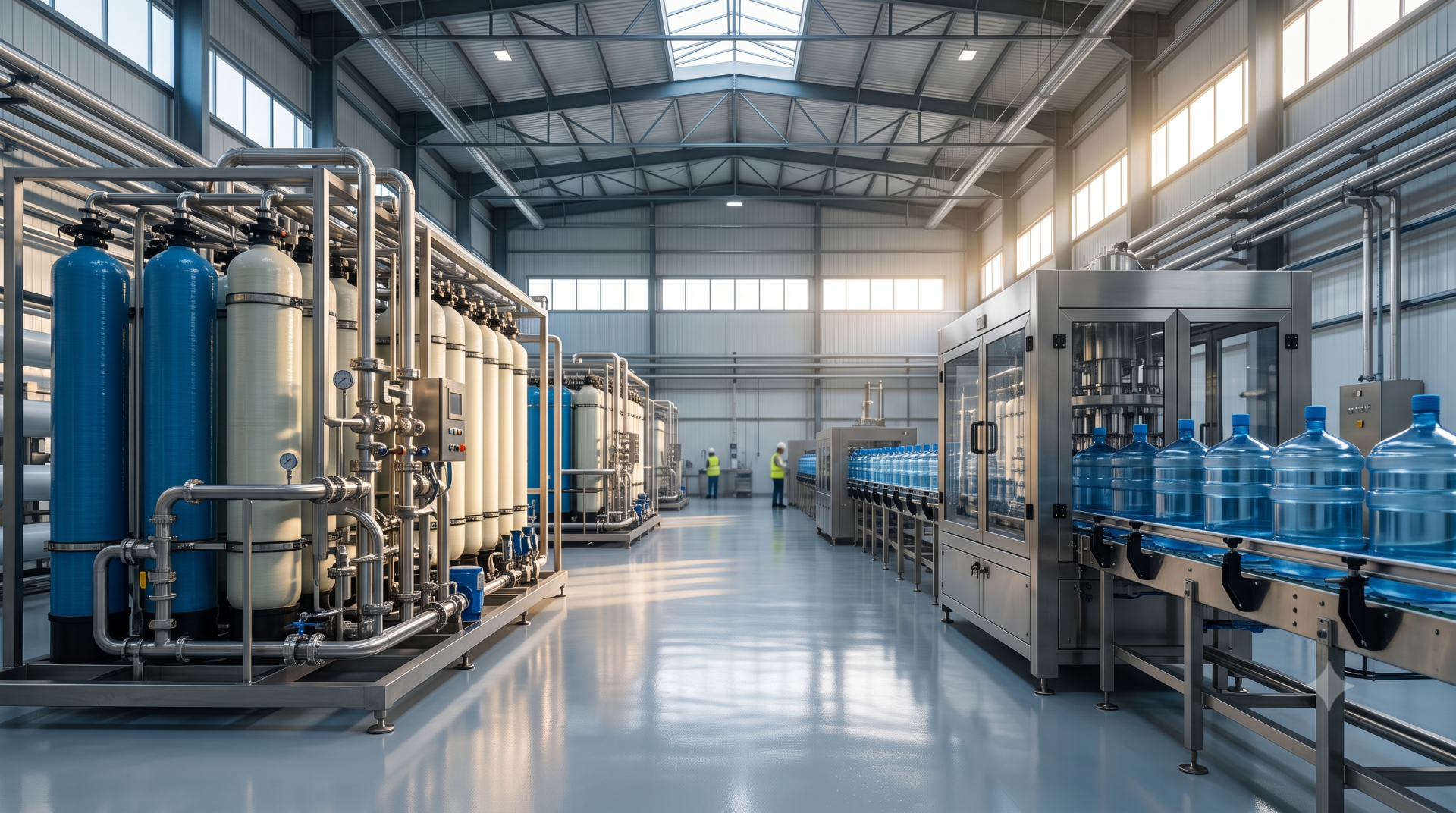
- Feed water purification: Rinsing and filling demand clean water. Pair the machine with an industrial 1000 LPH RO plant to supply both the product-water rinse nozzle and the filler tank.
- Packaging stock: Machines ship dry. You must fund an initial inventory of 53 mm neck PET jars and bulk boxes of tamper-evident snap caps.
- Regulatory compliance: Operating a commercial drinking water plant in India legally requires BIS/ISI certification under IS 14543, an in-house microbiological test lab, and an active FSSAI license.
How do you fix the common filling defects on the plant floor?
Most packaging line errors trace back to unstable air pressure, valve timing drift, or excessive rinse line turbulence. Use these direct operational remedies:
- Underfilled or overfilled jars — Root cause: timer drift between the coarse and fine filling solenoids. Fix: access the PLC interface and program the coarse SS316 valve to fill the first 90% of the jar volume at high flow, then let the secondary fine valve top up the remaining 10% under low turbulence.
- Leaking or cocked caps — Root cause: misalignment between the cap delivery chute and the pneumatic cylinder axis. Fix: align the mechanical chute directly above the conveyor centerline and set the cylinder regulator to 0.4–0.5 MPa; too much force deforms the bottle neck, while too little fails to lock the 53 mm tamper ring.
- Foaming during the fill cycle — Root cause: excessive rinse nozzle pressure or premature bottle transfer. Fix: throttle the final product-water rinse line to 0.15–0.2 MPa and add a 2.5-second drain pause in the PLC so residual rinse water evacuates completely before the jar enters the filling bay.
- Volume variation across consecutive batches — Root cause: air pressure drops at the pneumatic manifold when multiple cylinders fire at once. Fix: check the compressor line; if pressure sags below 90 PSI during peak stroke, mount a 50-litre pneumatic buffer tank directly adjacent to the machine inlet.
For layout planning, utility sizing, or an official quotation, speak with our engineering team at +91-9981604279. You can also inspect operational machinery in person at New Vision Machines, Lasudia Mori, Indore, MP 452010.