The decision in one paragraph
If you fill fewer than ~500 jars or bottles a day of anything thicker than water — creams, sauces, gels, honey, pastes — a manual paste filler does the job at the lowest cost. Past roughly 1,000 units a day, or when two operators are spending their whole shift filling, a semi-automatic piston filler pays for itself in weeks. Between those numbers, the decision comes down to viscosity, container range and how much your labour costs. This guide gives you the framework with real India price bands.
What each machine actually does
Manual paste fillers (indicative ₹10,000–₹30,000): a hopper, a hand- or foot-operated piston, one nozzle. You place the container, pull the lever, the machine doses a fixed volume (typically 5–50 ml). No power, no air, no PLC. Throughput is whatever your arm can do — a few hundred fills a day. Ideal for cosmetics startups, artisanal food brands, and lab-scale batches.
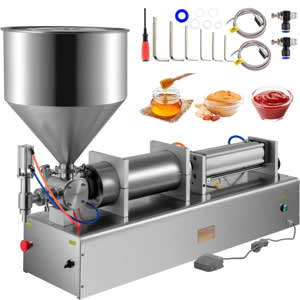
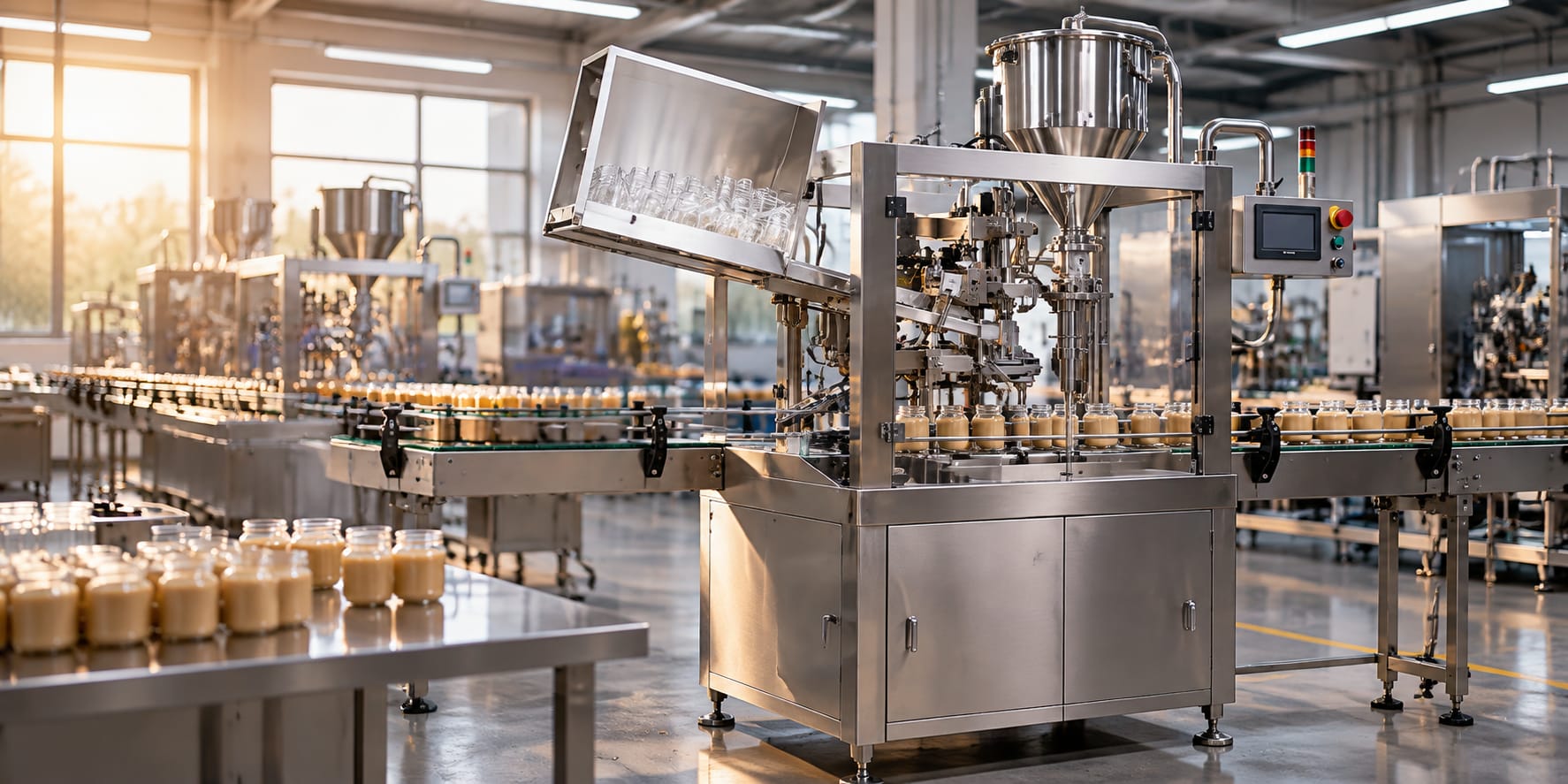
Semi-automatic paste fillers (₹29,000–₹1,50,000): pneumatic or electric piston with a hopper (often 45–50 kg), foot pedal or auto-cycle, 1–2 nozzles, filling ranges like 50–500 ml or 100–1000 ml. The operator only moves containers; the machine doses. Typical throughput: 10–30 containers a minute. This is the workhorse of small-to-mid cosmetic, food and pharma units.
The five factors that decide it
- Daily volume: under ~500 units/day, manual is fine. 500–1,000 is the grey zone — pick manual if the product is seasonal, semi-auto if it runs daily. Above ~1,000/day, semi-auto is the honest answer.
- Viscosity: both handle creams and pastes, but very thick products (peanut butter, balms) fill faster and more accurately on a pneumatic piston semi-auto with a proper hopper. Manual units struggle with the stiffest products.
- Fill range: manual units top out around 50 ml; semi-autos cover 10 ml to 1000 ml with stepless volume adjustment. If your range spans 30 ml jars and 500 ml bottles, you need the semi-auto.
- Consistency: a manual lever varies with the operator's arm; a piston with a fixed stroke does not. If your customers weigh the product or your label declares net quantity, the semi-auto's ±1% repeatability protects you.
- Cost of ownership: the manual unit has almost no wearing parts. The semi-auto needs air (compressor), seal kits and occasional piston service. Add roughly 10–15% of the machine price per year for spares — still far cheaper than a second operator.
What to verify before you buy either
Test with your actual product — honey and face cream behave nothing alike. Ask for: (1) a timed trial — 50 fills, weighed, with your product; (2) the full wearing-parts price list (seals, gaskets, nozzles) and delivery time; (3) whether the nozzle has an anti-drip valve — without it, viscous product strings and drips between fills; (4) hopper material and finish (SS304 minimum for food/cosmetics); (5) who services the machine near your factory.