What the law requires before you fill a single bottle
Before comparing machines, know what the pack has to declare. Under the Legal Metrology (Packaged Commodities) Rules and FSSAI labelling rules, packed edible oil sold in India must carry the net quantity, date of manufacture or packing, expiry or use-by date, and the MRP. An oil filling machine's job is to put an accurate, consistent quantity into every bottle — because a short-fill is a legal problem and an over-fill is money poured down the drain. Buy the machine that holds accuracy on your oil and bottle; everything else is secondary.
The four oil filling technologies — and what they really cost in India
Treat any quote far outside these bands with suspicion.
- Manual / tabletop digital fillers (₹10,000–₹20,000): single or double-nozzle digital units for small batches — operator places the bottle, machine doses a set volume. Fine for a few hundred bottles a day: startups, cold-pressed oil brands, cosmetic oils. No conveyor, no PLC.
- Semi-automatic oil fillers (₹40,000–₹1,50,000): the step up — pneumatic or electric piston/gravity fillers with a hopper, 1–2 nozzles, often a small conveyor. The classic choice for regional edible-oil brands doing 500–3,000 bottles a day.
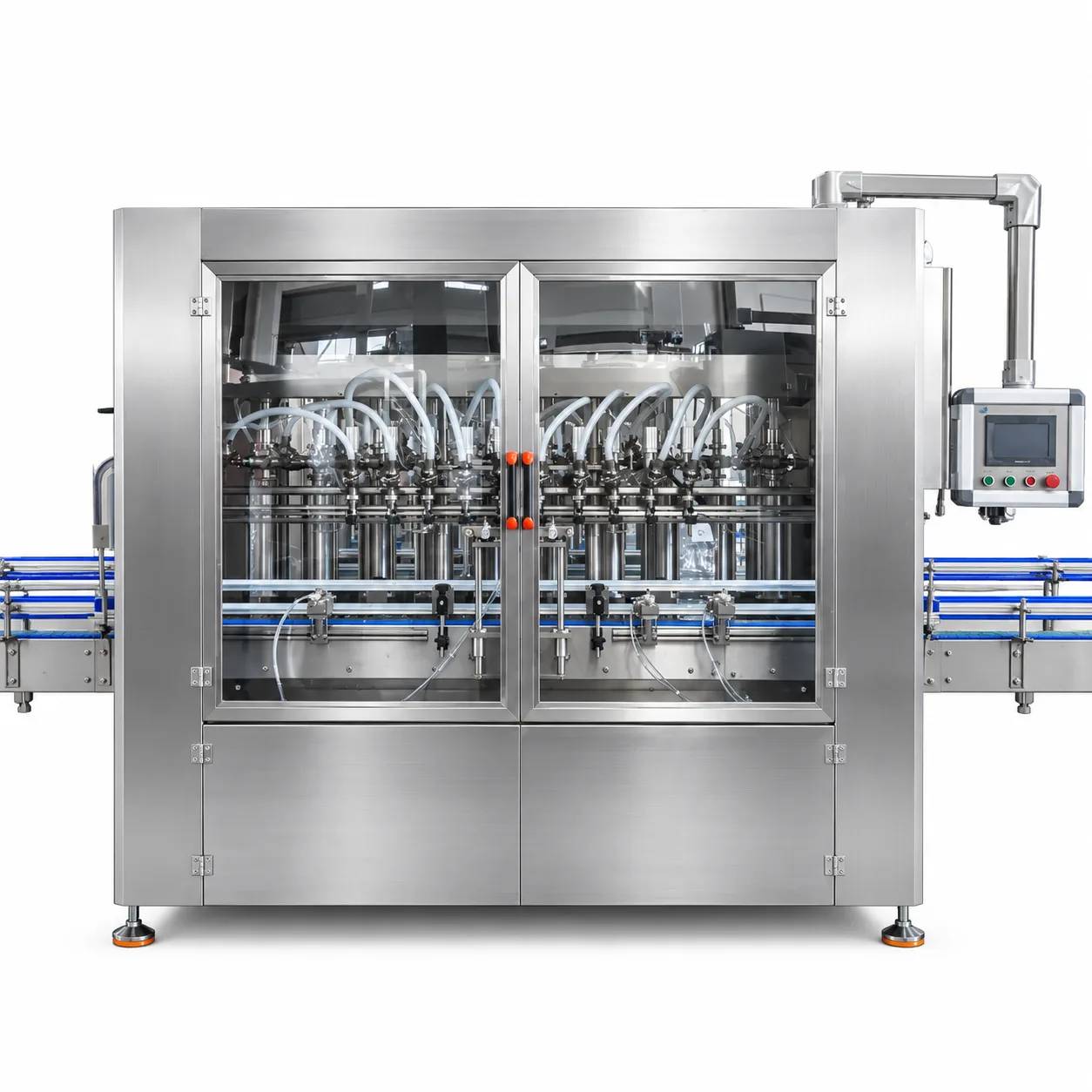
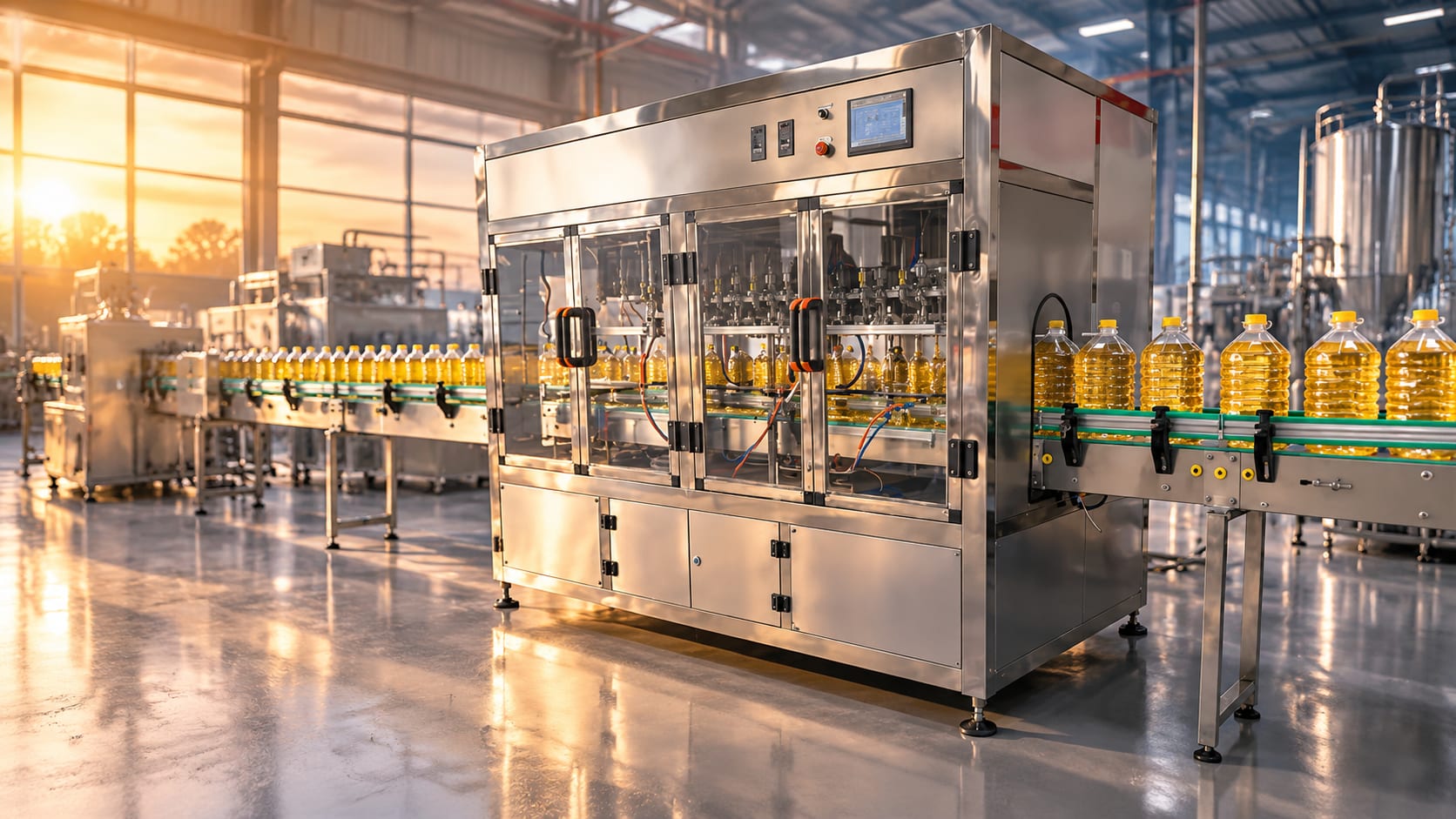
- Automatic multi-head lines (₹3,50,000–₹20,00,000+): 4–8 heads on a conveyor with PLC control, diving nozzles, no-bottle-no-fill sensors. For established brands and contract packers running tens of thousands of bottles a day. The machine cost is only the start — factor in installation, air supply and operator training.
- Oil filling + capping combos (from around ₹3,00,000): fill and cap on one line. Worth it when capping by hand becomes the bottleneck — which it does sooner than most buyers expect.
Seven checks that actually decide the right machine
- Oil viscosity and foaming: mustard and coconut oils behave differently from thin mineral oils. Foaming oils need diving nozzles that fill bottom-up; gravity fillers struggle with thick oils. Test YOUR oil, never water.
- Filling accuracy: ±1% is the standard to demand on a semi-auto; automatics quote repeatability figures. Ask what the accuracy is at YOUR fill volume, not the catalogue's best case.
- Contact materials: SS304 contact parts are the minimum for edible oil; SS316 is specified for pharma-grade and corrosive products. Ask, and get it in writing.
- Container range: 200 ml to 5 litres is the common edible-oil spread. Check the changeover: how long to switch bottle sizes, and what parts must be swapped.
- No-bottle-no-fill and drip control: sensors that stop filling when no bottle is present, and anti-drip nozzles. Without these you lose oil on every cycle and stain every label.
- Cleaning: oil goes rancid in dead corners. Ask how the product path disassembles for cleaning and how long a full washdown takes.
- Service within reach: a filler down is a line down. Confirm who services the machine within 100 km of your plant and what the wearing parts (seals, gaskets, nozzles) cost today.
What to ask any vendor before you pay
Insist on a trial with your actual oil and your actual bottles — a demo with water in a standard PET bottle proves nothing. Ask: (1) fill 50 bottles and weigh the first, middle and last, (2) what is the cleaning procedure and how long does it take, (3) show me the contact-part material certificates, (4) what does the wearing-parts kit cost and how long does it take to arrive, (5) who commissions the machine at my site and what does that cost. A vendor who will only demo on their own samples is telling you something.