If you pack semi-viscous products like creams, sauces, gels, ointments, peanut butter, grease, or herbal pastes, a semi automatic pneumatic paste filling machine (50–1000ml) is one of the most practical upgrades from manual filling. It improves fill consistency, reduces spillage, and helps small to mid-size units in India scale production without the cost and complexity of a fully automatic line.
What is a semi automatic pneumatic paste filling machine?
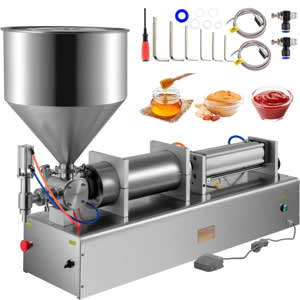
A semi automatic pneumatic paste filling machine is a piston-based filling system powered mainly by compressed air. The operator places the container under the nozzle and triggers the cycle (often via a foot pedal), and the machine dispenses a measured volume of paste into the container.
This machine category is ideal when you want better accuracy than hand filling, but still need flexibility to handle multiple container sizes, frequent SKU changes, and small batches.
How it works (simple working principle)
Most pneumatic paste fillers in the 50–1000ml segment work on a piston dosing mechanism.
- Suction stroke: Paste is drawn from the hopper into the piston cylinder.
- Dispense stroke: The piston pushes the paste through the filling nozzle into the bottle/jar/tub.
- Volume setting: Fill quantity is adjusted by changing the piston stroke/stop position (mechanical adjustment).
Because it is volumetric filling, it performs best when the paste consistency is stable and the product is fairly homogeneous (no large chunks unless the machine is designed for it).
Best applications in India
This machine is commonly used by Indian MSMEs and mid-scale plants that need reliable, repeatable filling for semi-viscous products.
- Food & FMCG: chutney, mayonnaise, honey-like blends, chocolate spread, peanut butter, sauces, ketchup, jam (smooth), fillings for bakery.
- Cosmetics & personal care: creams, hair masks, gels, scrubs (fine), petroleum jelly.
- Pharma & Ayurveda: ointments, balms, gels, herbal pastes, semi-solid formulations.
- Chemical & industrial: grease, adhesives (flowable), putty-like compounds (machine-specific), lubricants (viscous grades).
Key specifications to check (50–1000ml models)
Before finalising any semi automatic pneumatic paste filler, confirm these practical parameters for your product and production targets.
- Filling range: Ensure your pack sizes fall inside the usable range (for example 50ml to 1000ml).
- Paste viscosity suitability: Share your product type (cream/gel/grease/chutney) and temperature conditions during filling.
- Air requirement: Confirm the working air pressure range and air consumption per cycle.
- Hopper capacity: Larger hopper reduces refill frequency and operator downtime.
- Nozzle type: Anti-drip nozzle helps reduce mess and improves presentation.
- Contact parts material: Prefer food-grade SS for food/cosmetic/pharma applications.
- Cleaning method: Ask for tool-less dismantling and easy washdown for quick changeovers.
Air compressor requirement (often overlooked)
Pneumatic paste filling machines require stable compressed air to maintain consistent filling speed and repeatability. If air pressure fluctuates, fill consistency and cycle time can vary.
- Confirm the recommended pressure band (many machines operate around the common factory range of 4–6 bar).
- Choose a compressor with sufficient capacity for continuous cycles, not just peak pressure.
- Add an FRL unit (filter-regulator-lubricator) if advised, especially in dusty shop-floor conditions.
How to choose the right model for your factory
Selection becomes easy when you match the machine to your product behavior, container types, and expected daily output.
Swipe or scroll horizontally to view all columns
Your need |
What to choose / confirm |
|---|---|
Multiple SKUs and frequent size changes |
Fast volume adjustment + easy cleaning + quick nozzle change |
Mess-free premium packaging |
Anti-drip nozzle + stable air pressure + proper container centering |
High-viscosity paste (thick cream/grease) |
Stronger pneumatic cylinder + wider nozzle option + product testing on sample |
Food/pharma compliance focus |
SS contact parts + hygienic design + easy dismantling + documentation support |
Typical price range in India (what affects cost)
The price of a semi automatic pneumatic paste filling machine in India depends on build quality, contact material grade, hopper design, nozzle type, and how thick your paste is. In many cases, 50–1000ml single-head pneumatic paste fillers for small to mid production setups are commonly quoted in the ₹35,000 to ₹1,15,000+ range, depending on configuration and brand.
For accurate costing, always share your product sample, target fill volume range, container type, and your expected shift output so the supplier can recommend the right cylinder size and nozzle.
Installation checklist (to avoid performance issues)
- Keep the machine on a stable, level workbench or platform to avoid vibration and nozzle misalignment.
- Use clean, dry compressed air to prevent valve sticking and inconsistent strokes.
- Maintain a consistent product temperature; many pastes change flow behavior significantly with temperature changes.
- Train the operator on consistent triggering rhythm and proper container positioning.
Maintenance and cleaning tips
Proper cleaning and basic preventive checks keep filling accuracy stable and reduce downtime.
- Clean hopper, piston cylinder (as applicable), and nozzle after each batch to prevent paste drying and clogging.
- Inspect seals and O-rings periodically; worn seals can cause backflow or inconsistent fill volume.
- Check air hoses, fittings, and regulator settings for leaks.
- Lubrication and service schedule should follow the supplier’s guidelines, especially for pneumatic valves.
Common problems and quick troubleshooting
- Dripping after fill: Check nozzle type, paste stringing behavior, and whether cut-off/anti-drip mechanism is provided.
- Inconsistent filling: Verify air pressure stability, seal condition, and ensure paste is not aerated (air pockets).
- Nozzle clogging: Confirm paste has no hard particles, and increase cleaning frequency if product dries quickly.
- Slow cycle time: Check compressor capacity, FRL condition, and any restriction in air line fittings.
When to upgrade to automatic filling
If your demand grows to continuous high-speed output, or you want integration with capping, induction sealing, labeling, and conveyors, it may be time to move from semi automatic to automatic filling. However, many Indian brands successfully use semi automatic pneumatic paste fillers for years because they are flexible, easy to operate, and cost-effective for batch production.
Recommended machine from New Vision Machines
For manufacturers looking to fill a wide range of semi-viscous products, the Semi Automatic Pneumatic Paste Filling Machine (50–1000ml) is a practical choice for controlled dosing, reduced wastage, and cleaner packaging output. It is especially suitable for units that want a reliable shop-floor machine without investing in a full automatic line.
If you want the best recommendation, match the machine configuration to your paste type (food/cosmetic/pharma/industrial), your container size, and your daily output plan.
FAQs
Can one machine fill both 50ml and 1000ml?
Yes, many models are designed with an adjustable volume mechanism across a wide band, but actual performance depends on cylinder sizing and how consistently your paste flows at both low and high volumes.
Is pneumatic filling better than motorised filling for paste?
Pneumatic piston fillers are widely preferred for semi-viscous products because they can provide strong, consistent dosing strokes and generally have fewer complex rotating parts at the filling end.
What containers can be filled?
Common containers include plastic bottles, jars, tubs, and wide-mouth containers. Always check nozzle reach, container height clearance, and whether a platform/height adjustment is available.