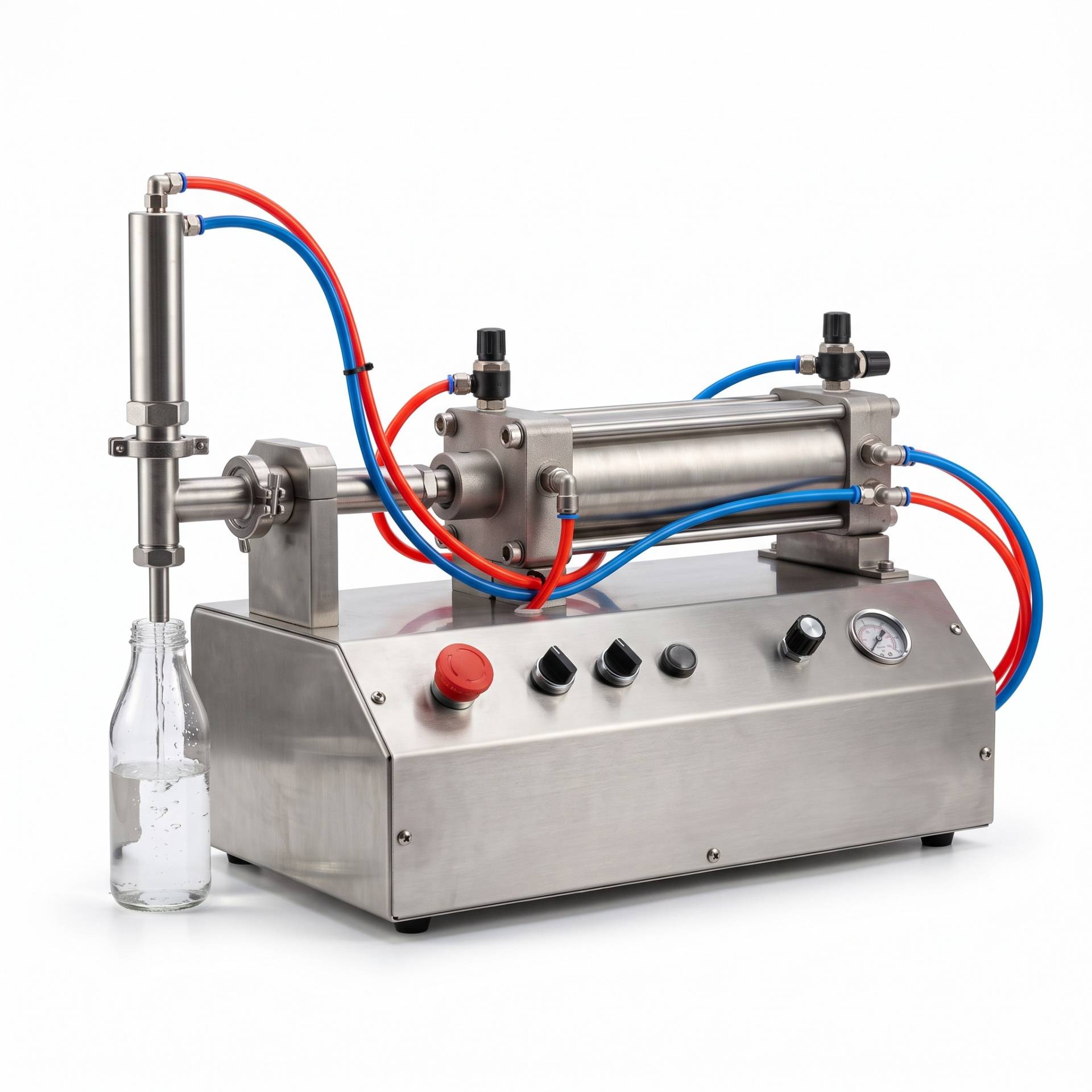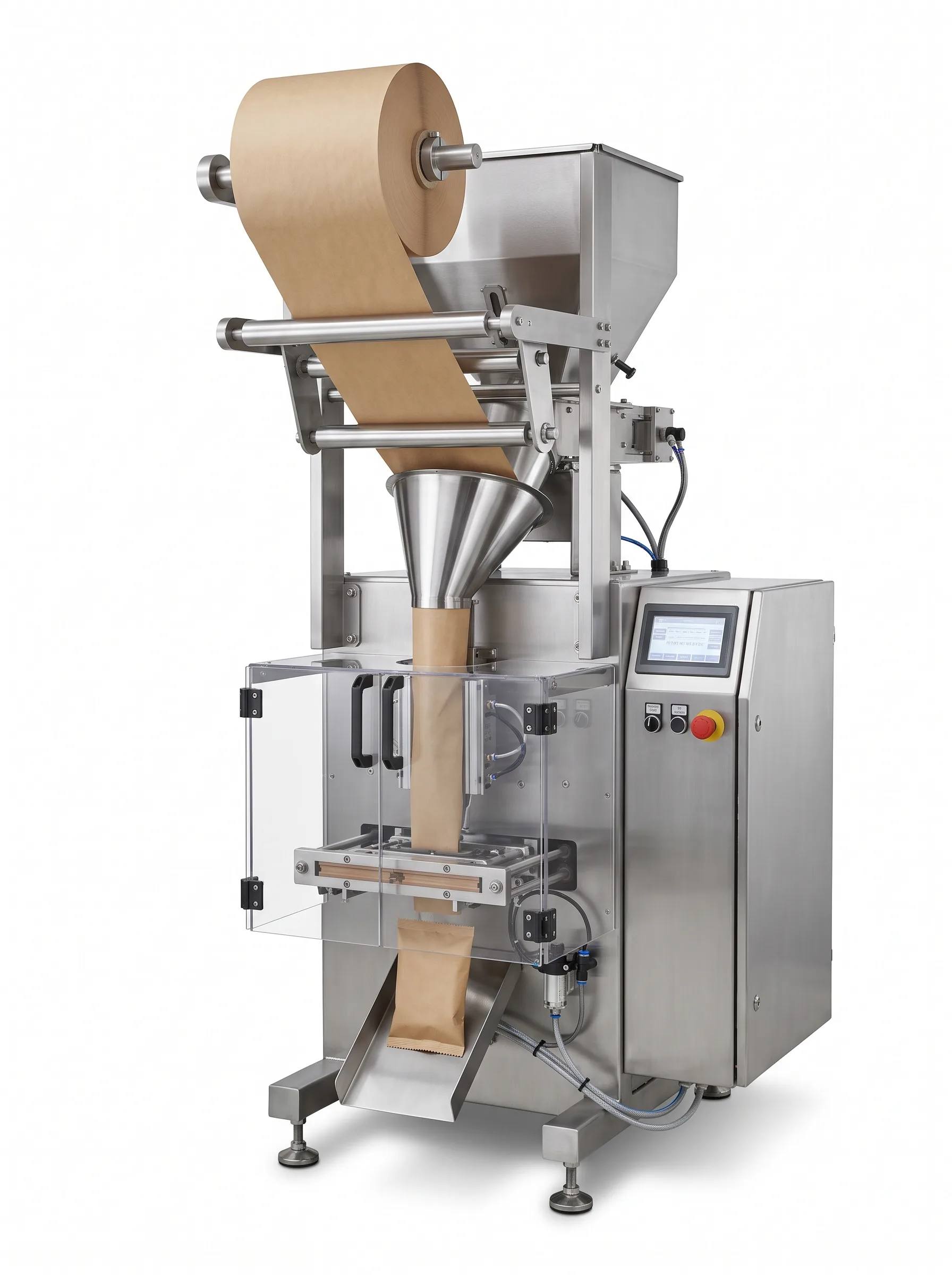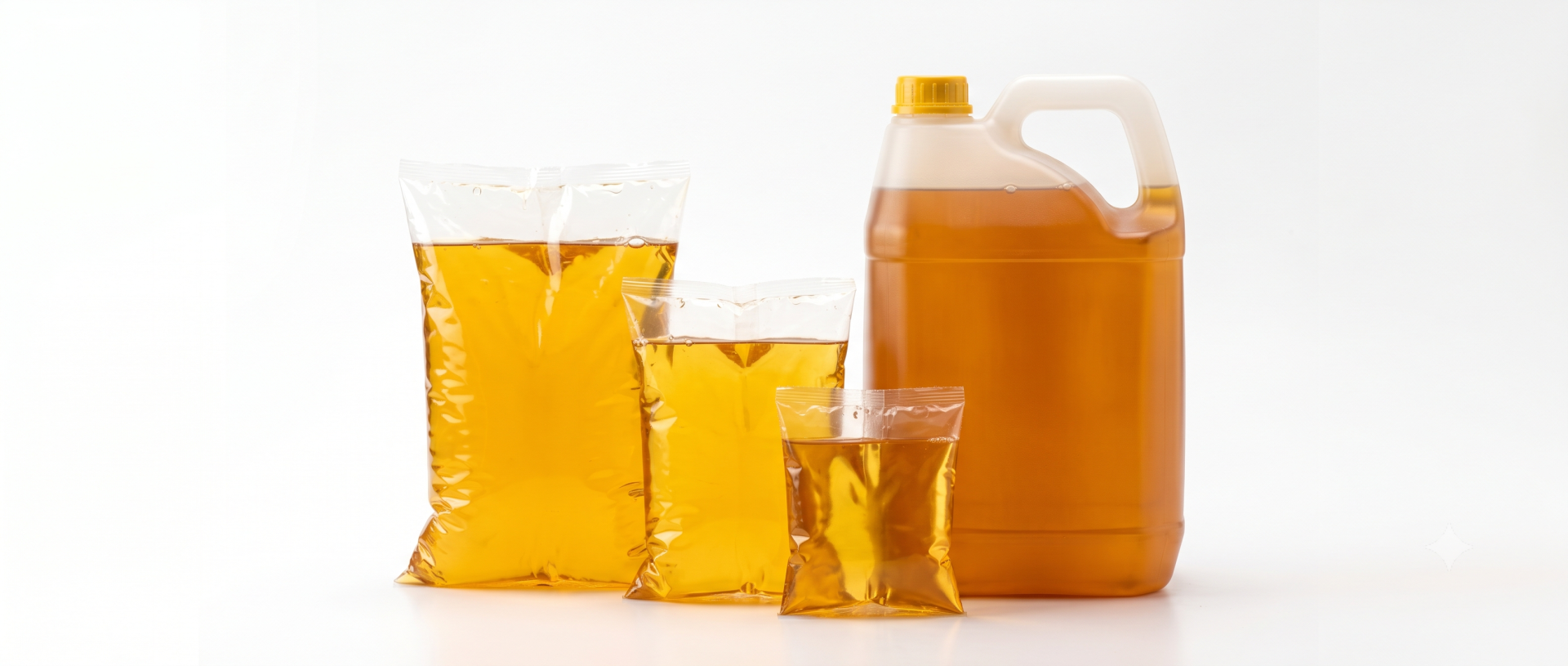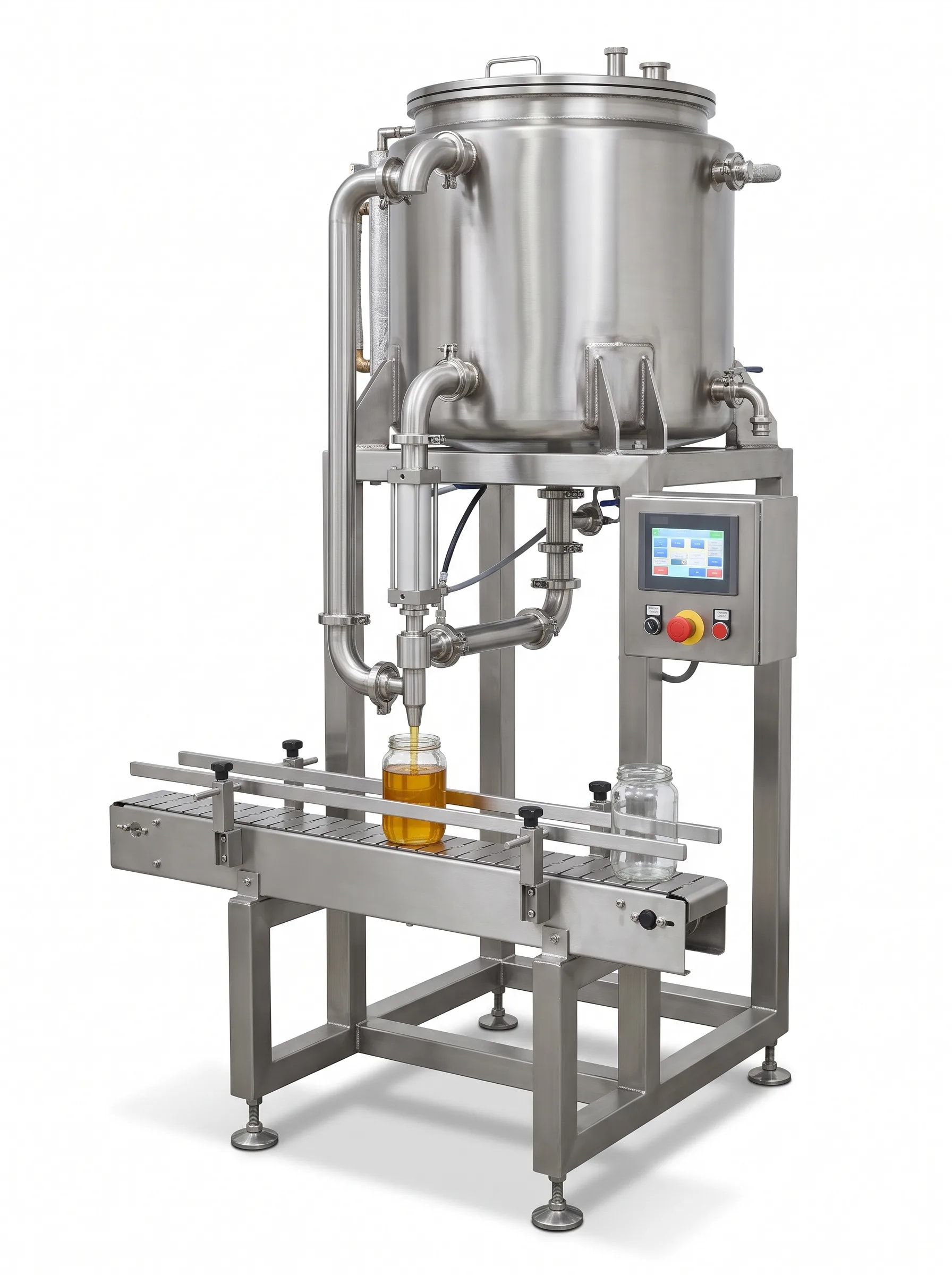
To survive winter crystallization under Legal Metrology rules notified on 6 June 2026 and enforced from September 2026, maintain product at 40–50°C using a heated ghee filling machine India packaging lines rely on.
- Legal Metrology rules enforced from September 2026 mandate dual volume-and-weight declarations across standard edible fat pack sizes.
- Dairy ghee and vanaspati solidify between 28°C and 32°C, freezing check valves and short-filling unheated packaging lines.
- Hot-water jacket balance tanks holding 40–50°C eliminate fat clogging while preserving delicate danedar grain structures.
Two-stage coarse-dribble filling holds ±15–20 g net weight on bulk 15 kg tins, keeping fills inside Legal Metrology permissible error.
What happens to ghee and vanaspati below 30°C inside an unheated filler?
When ambient factory temperatures drop below 28–32°C, dairy ghee and hydrogenated vanaspati begin fractional crystallization, causing unheated pneumatic rotary check valves, cylinder walls, and filling nozzles to clog with semi-solid fat cakes that increase mechanical resistance, induce pneumatic piston stall, and reduce volumetric delivery by 5% to 12%.
Liquid butterfat does not freeze into a clean block like water. Higher-melting-point stearic triglycerides fall out of suspension first, forming a gritty, waxy slush. The cold stainless steel of an unheated machine pulls heat out of the fluid immediately. That chilled boundary layer clings to the honed inner walls of the cylinder barrel, narrowing the bore with every stroke.
On the plant floor, trouble starts fast. Drive cylinders operating at standard 6-bar plant pressure begin to hesitate, labor, and short-stroke. Rotary spool valves seize tight when semi-solid fat binds the narrow tolerance gap between the rotor and casing. At the discharge end, cold product strings out. Instead of cutting off sharply, fat drools down container necks, fouling jar threads and making a mess of conveyor belts.
How does temperature-density drift break Legal Metrology dual-declaration compliance?
Temperature-density drift breaks the Legal Metrology edible-oil rules enforced from September 2026 because hot ghee dosed at 50°C expands to a lower density of 0.895 g/ml, causing volumetric pistons calibrated for room temperature to short-fill the container by 15 to 25 grams as fat contracts to 0.915 g/ml upon cooling.
Under the statutory amendments notified on 6 June 2026, inspectors check retail packs against mandatory dual declarations across standard pack tiers (200 ml/g, 500 ml/g, 1 L/kg, 5 L/kg, and 15 L/kg). If your operators calibrate volumetric pistons during a warm 30°C afternoon, morning runs will short-fill containers. Factoring in winter edible oil viscosity drift keeps your line compliant when inspectors weigh sealed jars off distributor pallets.
Bulk packs face an even tighter margin. Meeting statutory net-weight tolerances on 15 kg oil tin filling lines requires decoupling fill volume from ambient temperature swings. A 15-litre tin filled volumetrically with hot vanaspati at 48°C shrinks noticeably as it cools to 18°C in a warehouse, leaving an underweight tin that will fail tare checks at the wholesale depot. (See 15 kg oil tin filling machine prices and platform options in India.)
How to configure a ghee filling machine India dairies run during winter
Configuring a dependable ghee filling machine India dairies operate through North-Indian cold spells requires fitting an insulated hot-water jacket holding product at 40–50°C, installing silicone heating blankets across the piston cylinder, and running electrical heat tracing along all stainless-steel delivery lines to eliminate cold bridge solidification between cycles.
Pumping hot product through a cold dosing block chills the fat immediately. Cold metal acts like a heat sink. To stabilize your ghee filling machine India winter operations require addressing four thermal trouble spots:
Circulating Hot-Water Jacketing: Raw steam creates hot spots that scorch milk proteins and turn batches dark. A closed-loop circulating hot-water jacket wrapped around the balance tank delivers gentle, uniform heat transfer, keeping bulk ghee steady between 40°C and 45°C.
Cylinder and Valve Heating Blankets: Dosing cylinders need custom 230V silicone heating pads with independent digital PID controllers. This stops product from skinning against bare stainless walls between indexing strokes.
Trace-Heated Manifolds: Product lines connecting the balance tank to the metering unit must be wrapped in self-regulating heat trace tape and sealed with closed-cell elastomeric insulation. This prevents product from setting up during scheduled lunch breaks or line pauses.
Positive Pneumatic Cut-Off Nozzles: Heated shut-off nozzles with internal suck-back pistons pull trailing fat droplets back up into the heated nozzle chamber, eliminating skinning at the discharge tip.
Flexible pouch operations handle this via a ghee pouch packing machine VFFS system using heated impulse jaws, but rigid jar and bottle lines must keep product fluid all the way through the nozzle orifice.
Heated piston filler vs load-cell net-weight filler: which for jars, which for 15 kg tins?
Selecting between filling architectures depends strictly on pack volume, where heated pneumatic piston fillers deliver high-speed volumetric repeat accuracy within ±1% for 200 ml to 1000 ml glass or PET jars, while electronic gross-tare load-cell net-weight fillers hold a steady ±15–20 g net weight across 15 kg bulk tins regardless of temperature-density shifts.
For consumer jars and bottles, a jacketed hopper piston filler maintains fluidity above critical crystallization points without requiring complex load-cell electronics under every nozzle. A properly sized jacketed hopper piston filler shields the metering cylinder from drafty factory air, holding speeds up to 25 jars per minute on single-head configurations.
Bulk canisters are a different story. Stroke displacement cannot guarantee statutory weight limits across 15-litre volumes when product density drifts. Packaging bulk cans requires an automated 15 kg ghee tin filling machine with two-stage load cells to cut off based on actual mass rather than fluid displacement. Across the wider market, listings from October 2026 show that the vanaspati filling machine price in India spans from ₹25,000 for bare-bones manual benchtop pistons, ₹53,500 to ₹60,000 for mid-range semi-automatic units, ₹2,06,000 to ₹3,50,000 for automated conveyor lines, and up to ₹5,50,000 for multi-head servo setups.
How do you protect danedar texture during heated filling?
Preserving the prized danedar granular grain texture of dairy ghee requires keeping jacket holding temperatures strictly below 50°C to avoid remelting crystalline seed nuclei, combined with using slow, low-shear anchor sweep agitation rather than high-speed impellers that mechanically pulverize fragile fat crystal clusters into an undesirable smooth, oily paste.
Commercial Indian ghee commands top rates when it displays a coarse, crystalline grain (danedar texture). That structure develops during slow, controlled cooling as stearic triglycerides nucleate into microscopic grains suspended in liquid olein.
Overheating the holding tank melts those crystal seed nuclei completely. Once destroyed, the fat cools inside the retail jar into a flat, waxy, greasy mass without body. High-speed mixing blades cause just as much damage, shearing delicate crystal clusters into fine silt. Dosing systems must rely on large-radius sanitary elbows and slow, low-shear sweep agitators that keep the batch mixed without grinding the grain.
Cold-shift shutdown and CIP: what is the standard operating procedure?
Executing an end-of-shift shutdown in unheated winter packing halls demands immediate pneumatic purging with dry compressed air, followed by flushing valves and product lines with 70°C hot water or food-grade recirculated caustic solution before lingering fat cools to 28°C and solidifies into immovable, line-blocking crystalline plugs.
Walk away from an unheated line at the end of a shift, and cold fat will seize the dosing hardware overnight. Getting it moving the next morning takes hours with a heat gun. Run this three-step cleaning routine every evening:
Air Displacement Purge: Connect a dry compressed air line to the product inlet manifold. Blow remaining bulk fat out through the cylinder and nozzles straight into a recovery drum.
Heated Caustic / Detergent Wash: Recirculate a 1.0% to 1.5% food-grade alkaline detergent solution at 70°C through the cylinder, rotary valve, and nozzles for 10 minutes to break down and flush out residual fat film.
Hot Water Rinse & Valve Park: Flush the whole fluid path with clean 65°C water until discharge runs clear. Leave the rotary valve parked in the neutral bypass position so silicone seals do not stick to the stainless housing as parts cool down.
Technical comparison: heated piston vs load-cell net-weight vs unheated fillers
Evaluating packaging architectures for edible fats shows that heated piston units excel for small consumer containers under one litre, load-cell net-weight fillers are built to hold legal tare compliance for bulk 15 kg canisters regardless of temperature-density shifts, and unheated pneumatic machines fail catastrophically once ambient seasonal temperatures fall below 28°C.
Swipe or scroll horizontally to view all columns
| Packaging Format / Architecture | Best Pack Range | Winter Failure Mode | Accuracy Behaviour in Cold | Utility Needs |
|---|---|---|---|---|
| Heated Pneumatic Piston | 200 ml–1000 ml jars & bottles | Product skinning if jacket water drops <40°C | ±0.5% to ±1% volumetric repeat | 6 bar air, 2 kW hot-water circulator |
| Load-Cell Net-Weight Filler | 5 kg–15 kg tins & carboys | Dribble nozzle freezing if unheated | Constant ±15–20 g net weight | 6 bar air, 230V single phase, line tracing |
| Unheated Pneumatic Filler | 50 ml–500 ml ambient oils only | Piston stall and rotary valve seizure <28°C | Uncontrolled short-fill (5% to 12% drift) | 6 bar compressed air only |
Operating a reliable ghee filling machine India dairies trust keeps winter packaging lines profitable. High-speed form-fill lines running on a ghee pouch packing machine VFFS setup use continuous film movement to shed heat, but rigid jar and tin fillers must manage heat loss across cold metal contact parts every time container indexing pauses.
Field troubleshooting: four winter fat packaging defects and line fixes
Diagnosing winter filling failures across dairy ghee and hydrogenated fat packing lines requires methodical isolation of product crystallization points, pneumatic pressure drops, thermal calibration offsets, and nozzle cut-off timing to eliminate short-fills, nozzle dripping, valve blockages, and texture breakdown across continuous manufacturing shifts.
1. Pneumatic Rotary Valve Seizure During Morning Startup. Root cause: Product left in the dosing chamber dropped below 28°C overnight, locking the rotor inside the housing. Fix: Disconnect pneumatic air and circulate 50°C water through the jacket for 20 minutes to melt the plug. Never tap the valve with a mallet or force the piston with a crowbar; you will shear the internal alignment dowels.
Root Cause: Product left in the dosing chamber dropped below 28°C overnight, locking the rotor inside the housing.
Fix: Disconnect pneumatic air and circulate 50°C water through the jacket for 20 minutes to melt the plug. Never tap the valve with a mallet or force the piston with a crowbar; you will shear the internal alignment dowels.
2. Net-Weight Short-Fill on Consumer Jars Despite Identical Stroke. Root cause: Winter edible oil viscosity drift and volumetric expansion; warm product filled at 50°C contracts as it cools to factory floor temperatures. Fix: Tare a cooled jar on an external bench scale. Adjust the piston stroke micrometer screw forward by 1.5% to 2.0% to compensate for thermal volume loss.
Root Cause: Winter edible oil viscosity drift and volumetric expansion; warm product filled at 50°C contracts as it cools down to factory floor temperatures.
Fix: Tare a cooled jar on an external bench scale. Adjust the piston stroke micrometer screw forward by 1.5% to 2.0% to compensate for thermal volume loss.
3. Loss of Granular Danedar Texture Resulting in a Greasy Paste. Root cause: Holding tank temperatures creeping past 52°C, melting seed crystals, or high-shear mixing chopping up the grain. Fix: Set jacket water limits between 44°C and 46°C. Replace high-speed propeller mixers with a slow anchor sweep agitator that turns the product without crushing its grain structure.
Root Cause: Holding tank temperatures creeping past 52°C, melting seed crystals, or high-shear mixing chopping up the grain.
Fix: Set jacket water limits between 44°C and 46°C. Replace high-speed propeller mixers with a slow anchor sweep agitator that turns the product without crushing its grain structure.
4. Stringing and Nozzle Dripping Across Container Rims. Root cause: The nozzle tip cooled below 30°C from room air, keeping residual fat from snapping off cleanly. Fix: Mount a 24V silicone band heater around the nozzle body and increase pneumatic suck-back stroke on the return cycle by 3 to 5 mm.
Root Cause: The nozzle tip cooled below 30°C from room air, keeping residual fat from snapping off cleanly.
Fix: Mount a 24V silicone band heater around the nozzle body and increase pneumatic suck-back stroke on the return cycle by 3 to 5 mm.
Do your winter calibration check on the coldest expected shift, not a warm afternoon. Tare a jar that has cooled to hall temperature — thermal contraction hides 15–25 g on every litre between a 50°C fill and a 20°C warehouse, and that hidden gap is exactly what Legal Metrology inspectors weigh for.
Operating limits and plant assumptions
Parameters specified across this engineering guide assume standard commercial grade cow or buffalo ghee and hydrogenated vanaspati fats exhibiting melting ranges between 28°C and 44°C, ambient factory warehouse temperatures ranging from 8°C to 18°C, and clean compressed air supply maintained at 6.0 bar constant line pressure.
Field performance depends on your facility conditions and incoming batch variables:
Fat Profiles: Pure cow ghee melts cleanly between 28°C and 32°C. Hydrogenated vanaspati can hold solid crystalline shapes all the way up to 41–44°C. Dial in jacket temperatures to match the melting curve of your specific blend.
Ambient Hall Temperatures: Uninsulated North-Indian packing sheds drop below 10°C on December and January night shifts. At those temperatures, unheated pipes freeze up during 15-minute tea breaks unless heat tracing runs continuously.
Can Fabrications: Target weights on a 15 kg ghee tin filling machine depend on rigid tinplate dimensions matching standard tinplate dimensions. Warped bases throw off gross-tare tare zeroing on high-speed load platforms.
Frequently asked questions about winter ghee and vanaspati filling
Factory owners and procurement managers retrofitting edible oil facilities for winter production confront complex technical challenges surrounding pneumatic valve freeze, thermal jacket temperature thresholds, marketplace pricing discrepancies, load-cell dribble calibration, and fat crystallization dynamics across single-head and automatic packaging systems.
Why does vanaspati seize pneumatic check valves faster than dairy ghee?
Vanaspati seizes unheated pneumatic check valves faster than dairy ghee because its trans-fatty acid and saturated triglyceride composition produces a steep crystallization curve with a higher melting point between 36°C and 41°C, forming dense, rigid crystalline structures almost immediately when touching unheated 15°C stainless-steel valve chambers.
Dairy butterfat solidifies across a broad, forgiving curve. Vanaspati hardens abruptly. The moment it hits cold steel, it builds dense fat plugs that stop standard pneumatic actuators in their tracks.
What hot-water jacket temperature prevents short-filling without scorching ghee?
Maintaining circulating water temperature inside the tank jacket between 45°C and 50°C keeps dairy ghee in a completely liquid state keeping the fat fully fluid for precise volumetric piston recharge while preventing the scorching, flavor loss, and grain nucleus destruction caused by steam temperatures above 60°C.
Water circulators prevent hotspots. Direct electric heating rods or high-pressure steam jackets scorch the boundary layer, burning dairy solids and leaving bitter off-flavors in the finished package.
Can a standard unheated piston filler be converted for winter operation?
A standard unheated pneumatic piston filler can be retrofitted for winter operation by wrapping the cylinder body with custom 230V silicone heating jackets, replacing the unheated feed hopper with a jacketed hot-water reservoir, and installing heating cords along the rotary valve housing and positive shut-off nozzle assembly.
Every retrofit kit needs digital PID controllers to prevent thermal overshooting. If you run pneumatics in an unheated room, add an inline air lubricator to keep cylinder packings from dragging in cold air.
Why do marketplace ghee filling machines under ₹60,000 fail in cold weather?
Budget semi-automatic ghee fillers listed on online marketplaces between ₹25,000 and ₹60,000 feature thin unjacketed single-wall hoppers, unheated cast stainless-steel cylinders, and small pneumatic actuators that lack the mechanical force and thermal stability required to cycle viscous, semi-crystallized fat without stalling during cold morning shifts.
When comparing quotes for a ghee filling machine India buyers often get tempted by benchtop units designed for mustard or refined soybean oil. Run semi-crystallized fat through those light cylinders, and the seals bind, stall, and short-fill every second jar.
How does two-stage dribble filling help 15 kg tins hold Legal Metrology weight tolerances?
Two-stage dribble filling helps 15 kg canisters hold statutory Legal Metrology weight tolerances by dispensing 90% of the bulk oil volume at high flow through fully opened dual pneumatic valves, then throttling to a controlled fine dribble stream that cuts off on reaching the target weight within ±15–20 grams.
Single-stage valves force a compromise: open them wide for speed and you splash and overshoot; choke them down for precision and your hourly output plummets. Two-stage valves deliver high line output while protecting you during official gross-tare audits.
For machinery consultation and factory retrofits, contact New Vision Machines at +91-9981604279. Works: Lasudia Mori, Indore, MP 452010.
New Vision Machines verified catalog
- Single Head Pneumatic Liquid Filling Machine 500–5000ml: ₹58,500 ex-works Indore (MRP ₹70,000). Piston dosing for jars and bottles; pair with a jacketed hot-water reservoir for winter ghee duty.
- Single Head Pneumatic Liquid Filling Machine 50–500ml: ₹26,000 ex-works Indore (MRP ₹32,500). Compact piston filler for small jars and sample packs.
All New Vision Machines prices are quoted ex-works Indore; GST is extra.
Maintain ghee filling accuracy and prevent winter valve freeze. Learn how to configure jacketed lines and satisfy strict Legal Metrology rules.
An engineering guide to solving cold-shift fat solidification, cylinder stalling, and Legal Metrology net-weight drift across commercial ghee packaging lines.