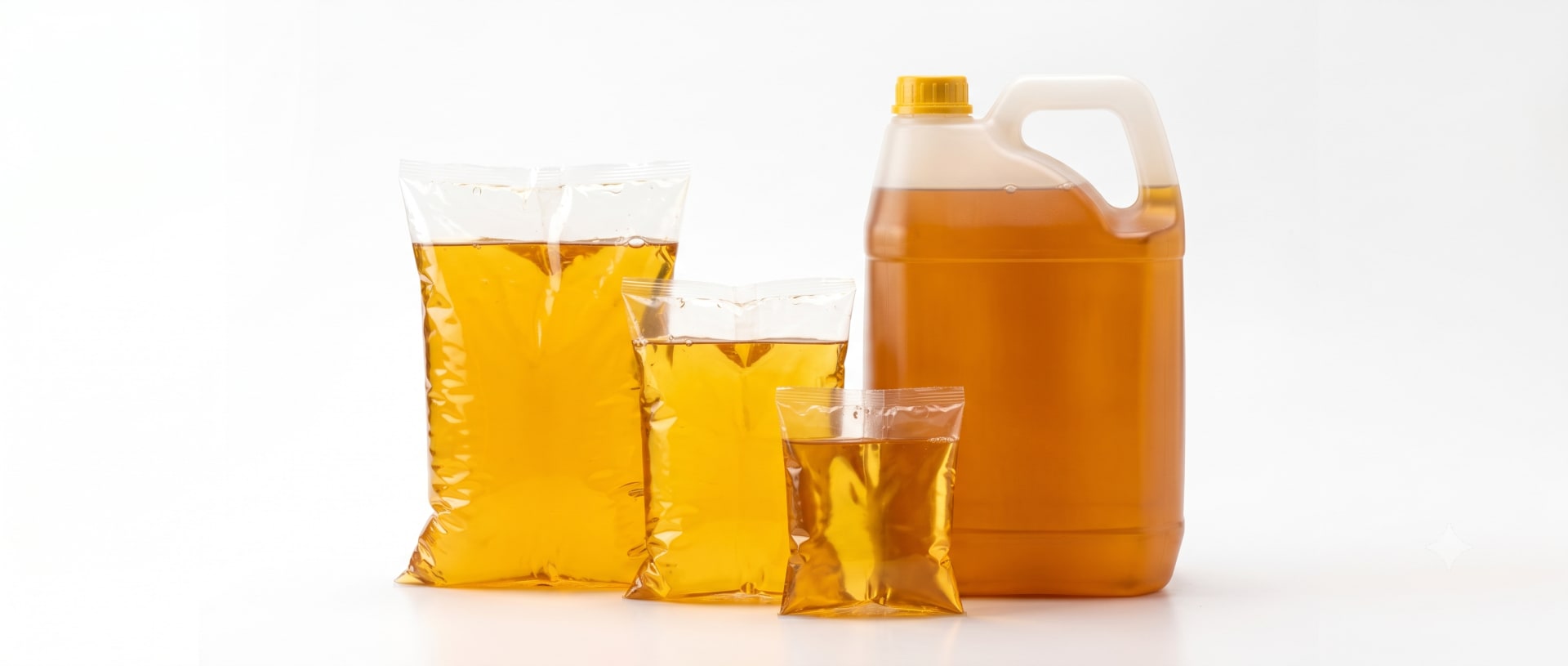
India now enforces nine mandatory edible oil standard pack sizes — 200 ml/g, 500 ml/g, and 1, 2, 3, 4, 5, 15, 20 L/kg — under the 6 June 2026 Legal Metrology amendment.
What are the 9 mandatory edible oil standard pack sizes in 2026?
The nine mandatory edible oil pack sizes in India are 200 ml/g, 500 ml/g, 1 L/kg, 2 L/kg, 3 L/kg, 4 L/kg, 5 L/kg, 15 L/kg, and 20 L/kg, notified by India's Department of Consumer Affairs on 6 June 2026.
Moneycontrol, The Hindu BusinessLine, News18, Times Now, and Akashvani News reported this amendment to the Legal Metrology Standard Operating Procedure on 6 June 2026. Manufacturers, packers, and importers got a three-month window to clear old stock and retool their lines. That deadline passed around 6 September 2026. Legal Metrology inspectors are now enforcing the rule across Indian oil mills, repacking units, and import terminals.
The Legal Metrology edible oil packaging rules 2026 cover both domestic and imported supplies across ten oil categories:
- Palm oil
- Soybean oil
- Sunflower oil
- Mustard oil
- Groundnut oil
- Sesame oil
- Rice bran oil
- Cottonseed oil
- Corn oil
- Blended edible oils
Why did the government step in? Retail shelves were flooded with odd pouch weights—650g, 700g, 810g, 850g, and 870g—that looked identical to 1-litre packs from the front, making unit price comparison nearly impossible for buyers (reported by Times Now, 7 June 2026). Only two exemptions exist: small packs below 200 ml/g and minor edible oils. Everything else must fit the nine standard tiers.
What does the dual volume-and-weight declaration rule require?
The dual declaration rule under the Legal Metrology (Packaged Commodities) Rules, 2011 requires any edible oil pack showing net quantity in volume (ml or L) to also print the equivalent net weight in grams or kilograms on the label.
Strict edible oil dual weight volume labelling closes the loophole where brands sold 870g or 910g pouches in 1-litre-sized film webs. If your mill packs a 1 L pouch or a 15 L square tin declared by volume, the artwork or inkjet coding window must show both volume and mass side by side. What if you pack strictly by weight without declaring volume? You still cannot run fractional weights like 850g; you must pack straight 200g, 500g, 1 kg, 2 kg, 3 kg, 4 kg, 5 kg, 15 kg, or 20 kg units unless the pack is under 200g or contains an exempt minor oil.
How do packers change over from 870g/910g pouches to standard 1-litre packs?
Packers change over from 870g or 910g pouches to standard 1-litre packs by increasing filler piston stroke or load-cell cutoff targets, resetting photo-eye pull length for taller pouches, and updating TIJ coder templates.
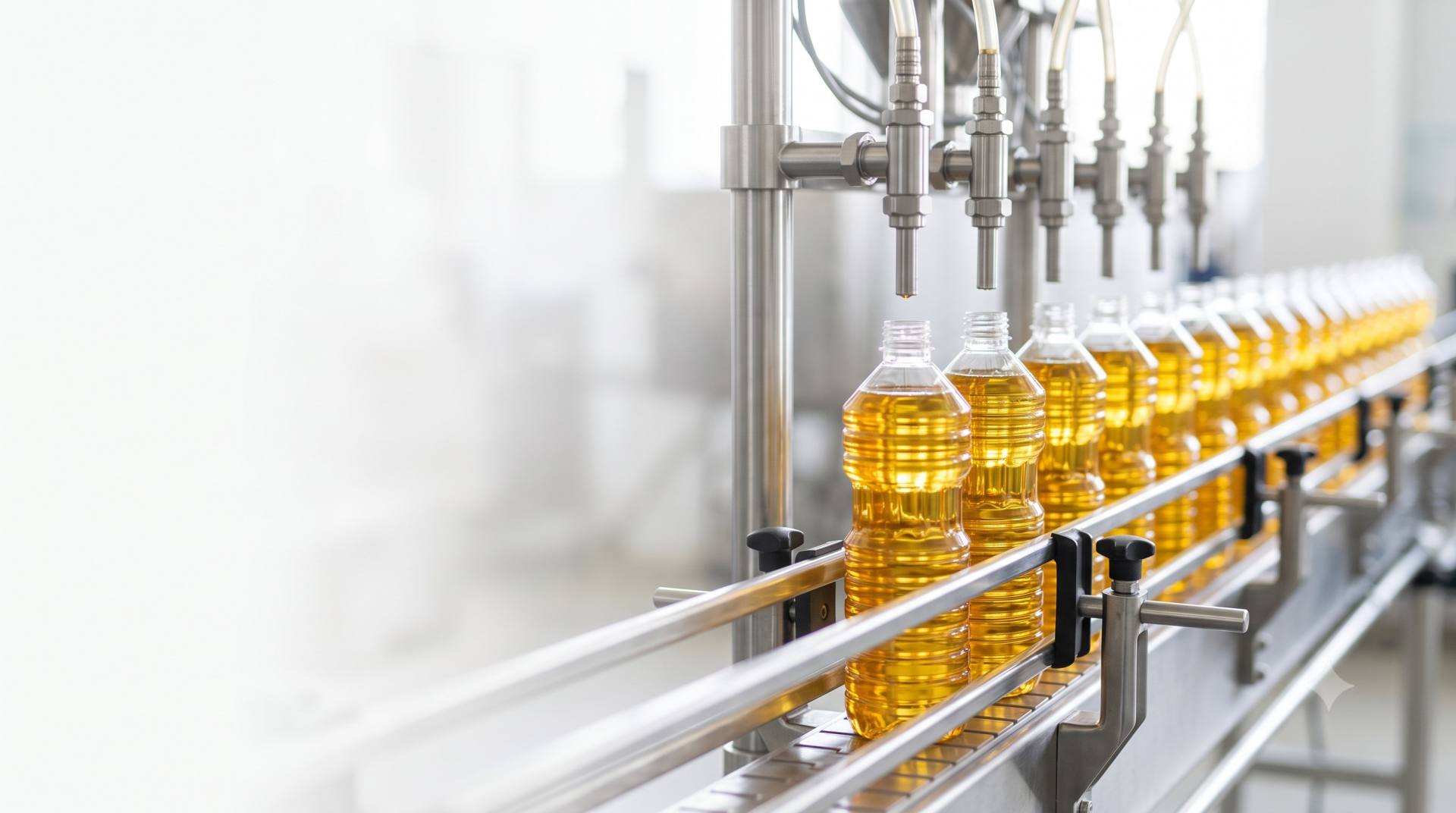
Dropping legacy 650g, 700g, 810g, 850g, 870g, and 910g runs on an edible oil pouch packing machine doesn't require a new VFFS frame. It takes three mechanical and PLC adjustments on the shop floor:
Filler Recalibration: On pneumatic or servo piston fillers, turn the stroke lead screw or adjust the servo pulse count to open the cylinder volume up to a full 1,000 ml discharge. On flow-meter or weigh-metric VFFS machines, update the PLC target cutoff recipe to the 1 L/kg mark.
Bag-Length & Forming Tube Check: Pushing a full 1 L dose into a pouch width originally sized for 810g or 870g raises the oil meniscus right up to the seal jaws. Keep your existing forming collar if the web width allows it, but lengthen the pull-belt draw and shift the eye-mark sensor registration so the top horizontal seal closes above the oil splash line.
Horizontal Jaw Dwell and Cooling: A 1 L pouch hits the bottom seal harder during drop-off than an 810g pack. Increase jaw clamping pressure slightly and verify your cooling air blast on the horizontal sealing bar before ramping back up to full speed.
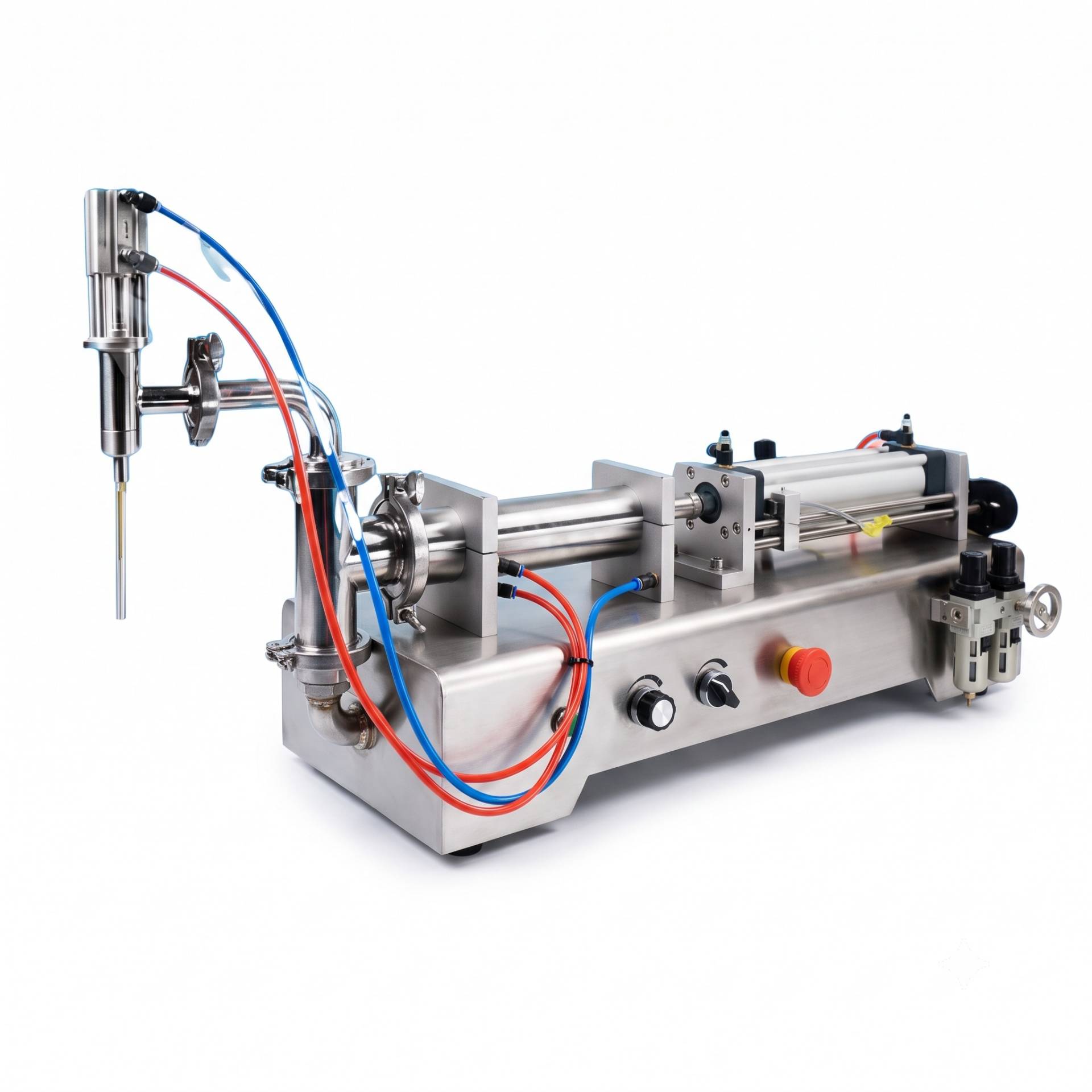
Running 200 ml and 500 ml bottles or stand-up pouches on a semi-automatic line? A dedicated oil filling machine lets your fitter dial in the exact 200 ml or 500 ml stroke using the rear handwheel and magnetic reed switches—no cylinder barrel swap needed. For those two smallest standard tiers, a single-head pneumatic liquid filling machine (50–500 ml) covers the full range on one adjustable stroke.
Volumetric vs load-cell fillers: which suits 5 L jars and 15 kg tins?
Volumetric piston and flow-meter fillers suit high-speed 200 ml to 5 L retail packs filled by volume, while net-weight load-cell fillers are built for 15 L/kg and 20 L/kg bulk tins and jerrycans where oil temperature swings throw off volumetric accuracy.
Choosing the right edible oil packing machine across the nine standard sizes comes down to container type, line speed, and whether your primary sale unit is litres or kilograms.
Swipe or scroll horizontally to view all columns
| Parameter | Volumetric Filler (Piston / Flow Meter) | Net-Weight Filler (Load-Cell Platform) |
|---|---|---|
| Target Standard Sizes | 200 ml, 500 ml, 1 L, 2 L, 3 L, 4 L, 5 L | 5 kg, 15 L/kg, 20 L/kg |
| Measurement Principle | Displaced cylinder volume or pulse count | Real-time strain-gauge mass measurement |
| Temperature Sensitivity | Volume varies with oil temperature | Mass remains constant across temperatures |
| Changeover Method | Stroke length screw or HMI pulse preset | HMI target weight and dribble-cutoff entry |
| Primary Container Types | Flexible pouches, PET bottles, HDPE jars | Square tin containers, 20 L Jerrycans |
How to update TIJ batch coders for dual ml/g and MRP printing?
Updating thermal inkjet (TIJ) batch coders for the 2026 rules requires building locked message templates in the printer controller that bind the standard volume, equivalent weight, batch number, packing date, and unit MRP into one fixed layout.
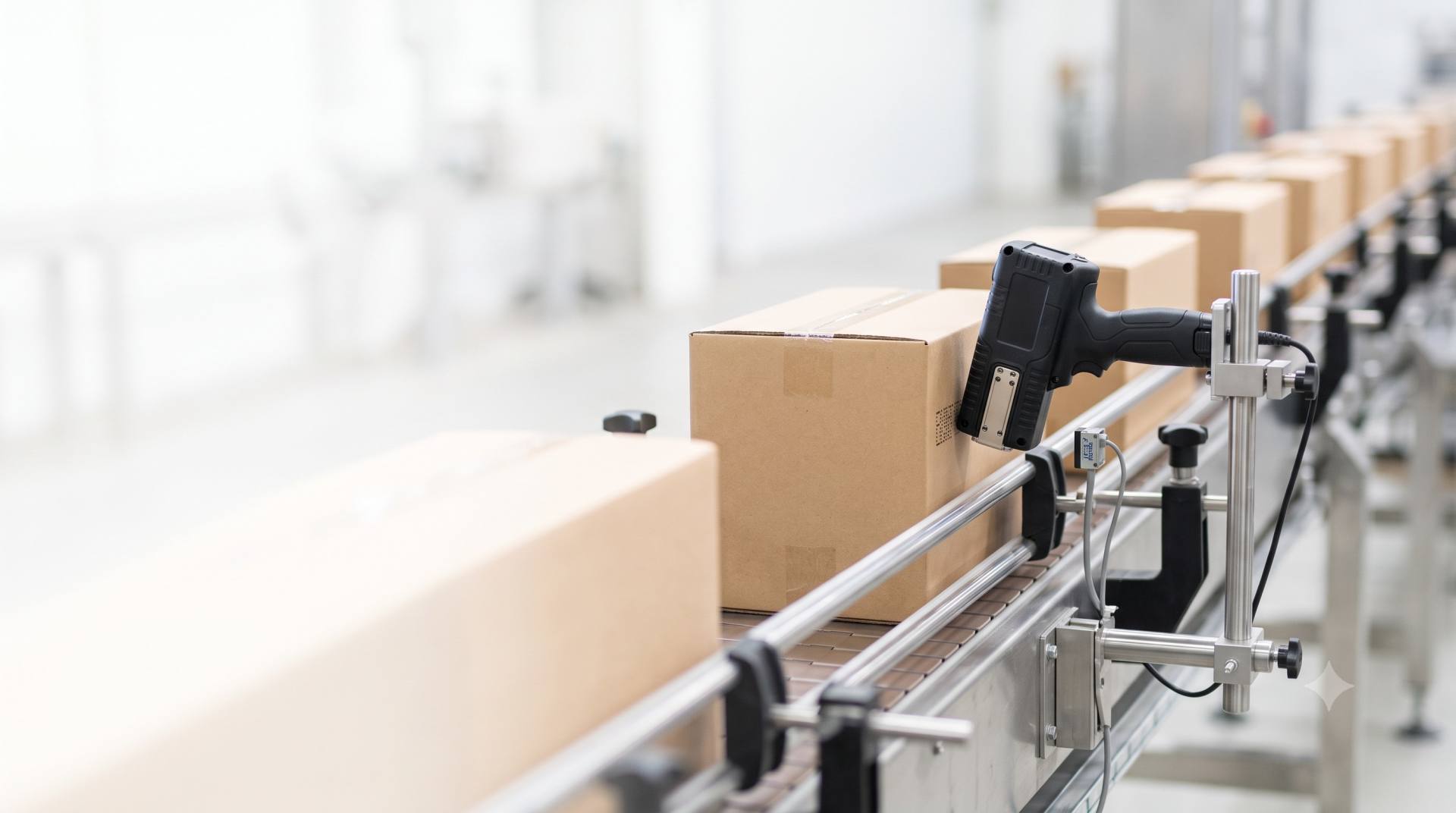
Many mills still have leftover film rolls printed before September 2026, or use common unprinted net-quantity boxes stamped online by a coder. You cannot risk a night-shift operator calling up an old 870g file while running 1 L pouches. Mounting industrial inkjet printers on your VFFS film frame or bottle conveyor solves this if you lock down the controller memory:
Wipe Discontinued Job Files: Delete every saved preset for 650g, 700g, 810g, 850g, 870g, and 910g packs from the TIJ touchscreen so operators cannot select them by mistake.
Bind Volume and Weight Strings: Create one named template per standard size (200 ml/g, 500 ml/g, 1 L/kg, up to 20 L/kg) where the volume and equivalent gram/kilogram declaration sit inside a single non-editable text block next to the auto-updating date and batch counter.
Lock the TIJ controller before the first 1 L run: one named template per standard size, and DELETE every legacy preset (650g, 700g, 810g, 850g, 870g, 910g) from the touchscreen. A night-shift operator calling up an old 870g file is the most common way an otherwise compliant plant fails inspection.
Limits and assumptions
Actual changeover work, line speeds, and machine pricing depend on your plant's specific floor setup:
Cylinder Bore Limits: A pneumatic piston cylinder built for 50 ml to 500 ml strokes physically cannot pump 1 L or 5 L in a single shot. Stepping up to multi-litre jars requires a larger cylinder bore, a multi-stroke logic setting, or a flow-meter/load-cell filler.
Line Speed and Throughput: Pouches or tins per minute vary with pump discharge pressure, diving-nozzle diameter, and how fast operators load empty tins on semi-automatic platforms.
Oil Viscosity and Plant Temperature: Flow rates and foaming behavior shift across palm, soybean, sunflower, mustard, groundnut, sesame, rice bran, cottonseed, corn, and blended oils—and change further between winter shifts in northern India and summer shifts in central or western states.
Quotation Scope and Taxes: Any 1 litre oil packing machine price or 15 kg tin filler quote in INR depends on automation level, SS304 vs SS316 contact parts, ex-works Indore pickup versus factory delivery, transit insurance, and the applicable GST rate at billing.