An entry-level MRP printing machine price in India ranges from Rs 8,473 for manual thermal inkjet coders up to Rs 85,000 for conveyor units, reaching Rs 7,50,000 for high-volume outer carton equipment.
MRP Printing Machine Price in India by Technology
A commercial MRP printing machine price in India ranges from Rs 8,473 for manual handheld units up to Rs 7,50,000 for heavy-duty secondary packaging coders across five core technologies. Factoring in an industrial coding machine price in India means matching the mechanical build to actual shift output rather than over-engineering the line.
Swipe or scroll horizontally to view all columns
| Technology | Price Band (INR) | Print Height | Best-Fit Product | Market Price Anchors (Reference Only) |
|---|---|---|---|---|
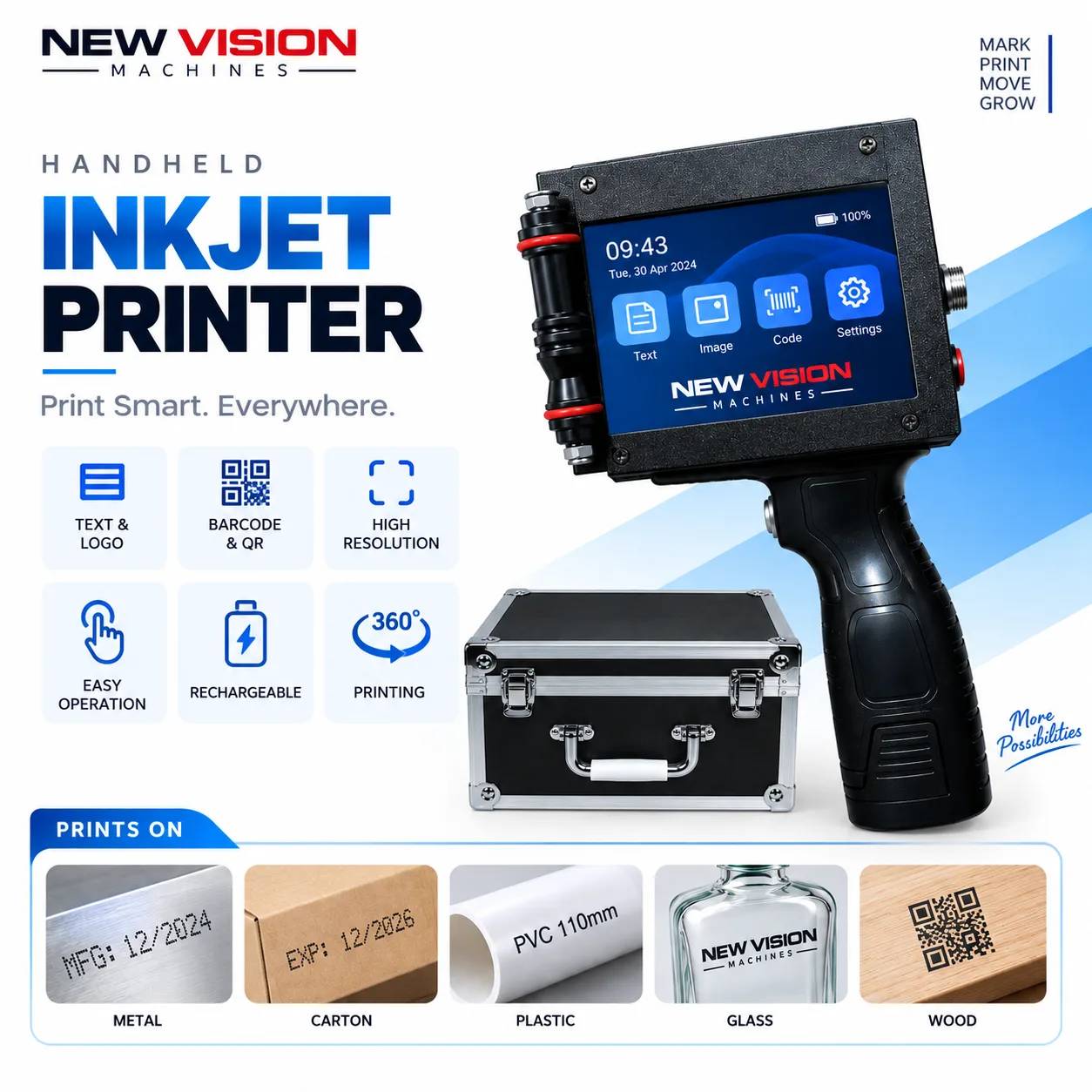
| Handheld Thermal Inkjet (TIJ) | Rs 8,473–22,000 | 12.7mm vs 25.4mm | Pouches and labels (manual batching) | Rs 19,500 (V S Machines, IndiaMART); Rs 22,000 (Packerials) |
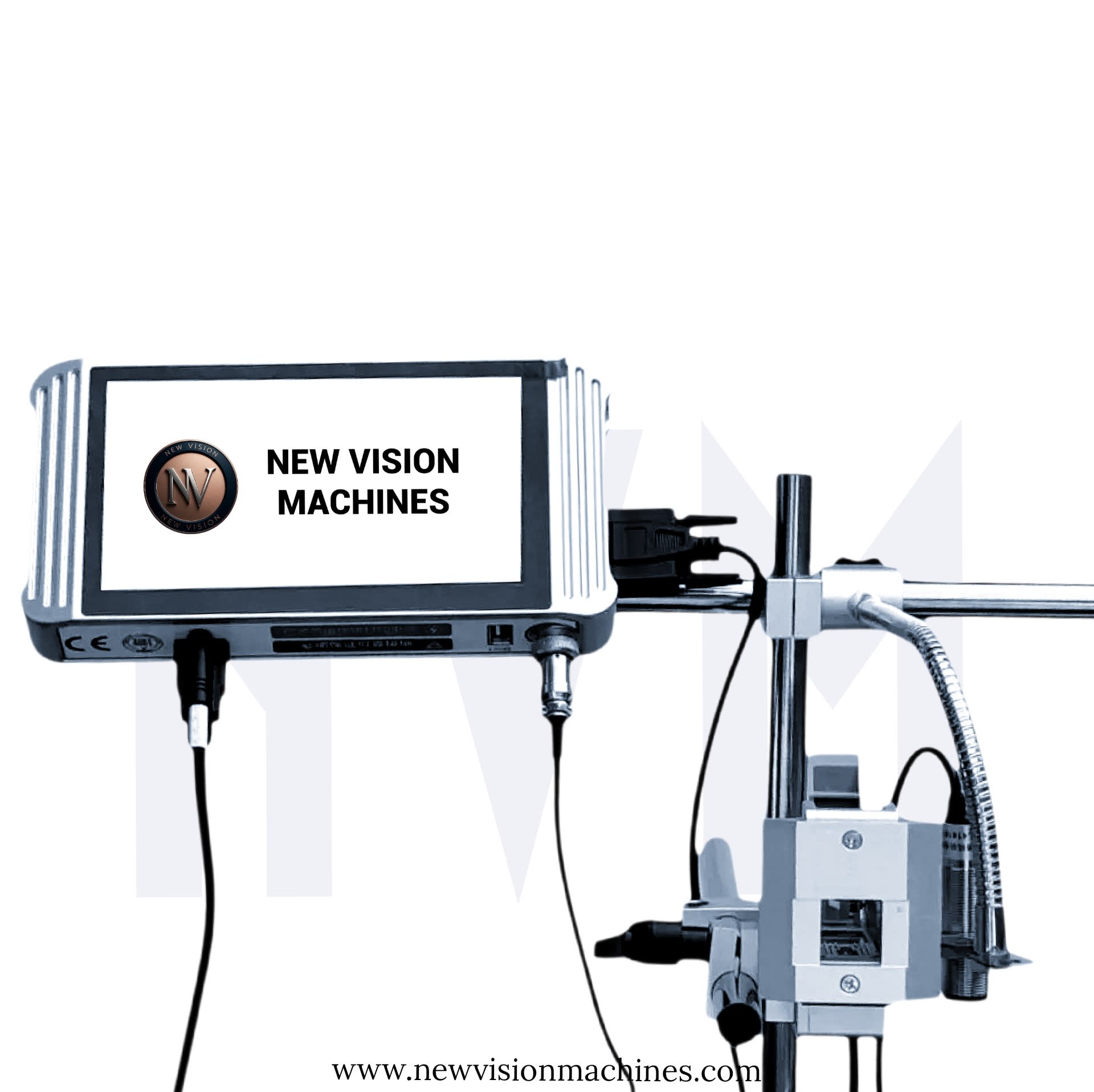
| Online Thermal Inkjet (TIJ) | Rs 15,000–85,000 | 12.7mm vs 25.4mm | Pouches and labels (conveyor lines) | Rs 15,000 (RIDHI Enterprise); Rs 65,000 (SK Printing, HP TIJ 2.5); Rs 68,000 (Meditek, Delhi) |
| Hot-Ink / Dry-Ink Ribbon Coders | Rs 14,999–42,000 | Standard character heights | Duplex cartons and labels | Rs 14,999–42,000 market band |
| Drop-On-Demand (DOD) Large-Character | Rs 1,50,000–7,50,000 | Up to 100mm | Corrugated outer cartons | Rs 7,50,000 (KGK Jet) |
| Continuous Inkjet (CIJ) | Rs 4,25,000+ | Standard character heights | High-speed bottle lines | Rs 4,25,000 (KGK Jet) |
Evaluating the true MRP printing machine price in India requires separating hardware stickers from daily floor uptime. Small plants often waste capital on complex fluid loops when a simple cartridge system does the job. New Vision Machines maintains a verified five-tier coding price ladder: Rs 8,473 → Rs 15,499 → Rs 49,000 → Rs 1,21,000 → Rs 1,98,900. By building machinery in-house, this ladder undercuts prevailing distributor markups across every tier while keeping frames and brackets rigid.
Technology Selection: Matching Coding Hardware to Packaging Formats
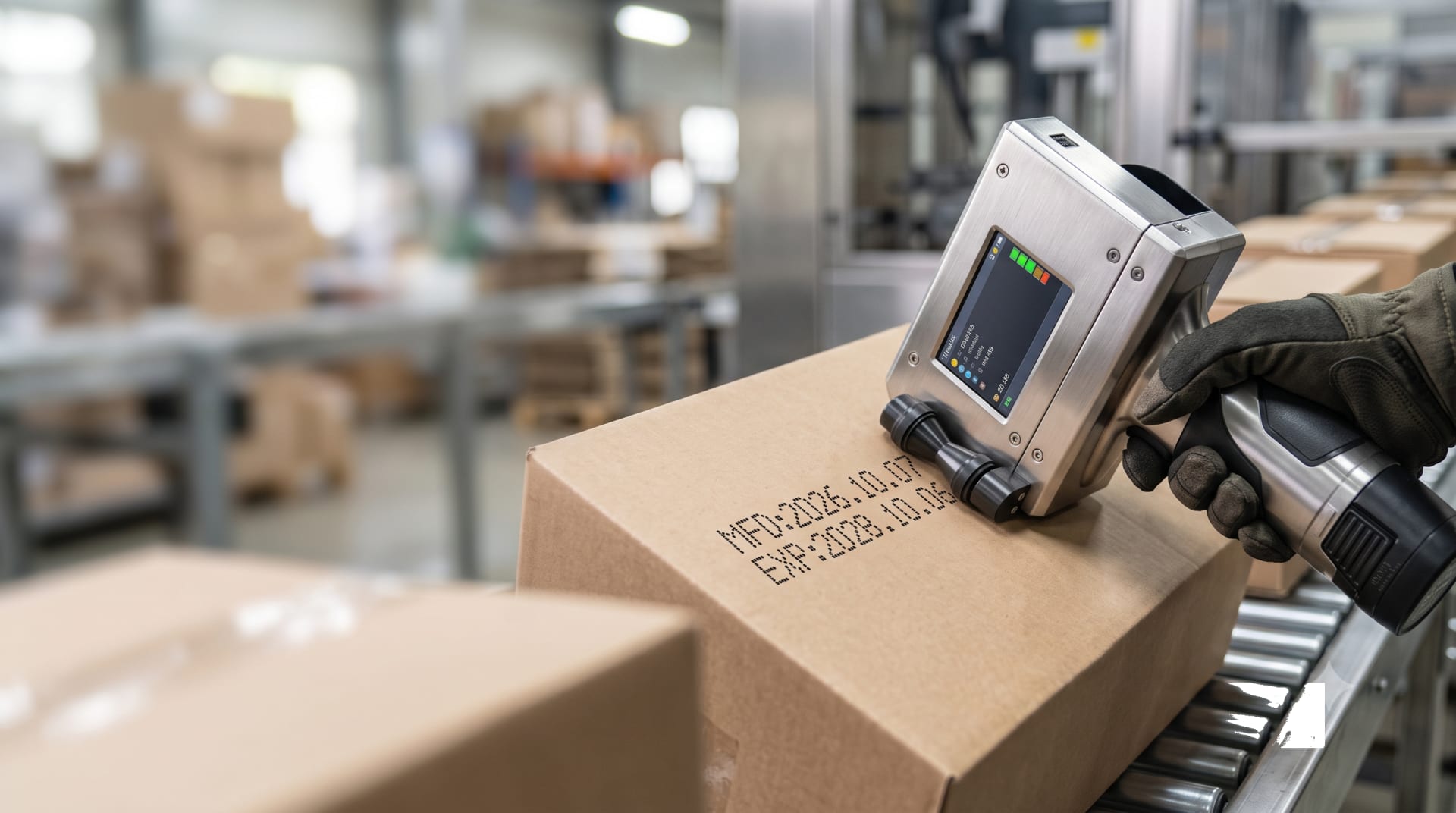
Packaging substrate density and line mechanics dictate equipment selection: flexible pouches and labels utilize thermal inkjet, duplex cartons employ hot-ink ribbons, corrugated shippers demand drop-on-demand, and high-speed bottle lines require continuous inkjet.
Mismatched machinery causes constant headaches. Thermal inkjet cartridges carry their own printheads, meaning every cartridge swap renews the nozzle face entirely. That design keeps pouch lines clean. Bottle conveyors demand a different tool: continuous inkjet systems fire pressurized drops across curved glass or wet plastic without touching the container. Brown shipping cartons need brute legibility; drop-on-demand heads throw bold identification marks across rough kraft paperboard. For dry food or pharmaceutical blister cards packed in duplex board, mechanical hot-ink ribbon units stamp crisp batch codes that never smudge under friction.
Price Drivers: Engineering Factors That Determine Machinery Cost
Industrial coding equipment valuation reflects four physical criteria: print height capacity (12.7mm vs 25.4mm vs 100mm), mounting configuration, ink chemistry, and line speed.
Before commissioning a batch coding machine India production heads must evaluate these specific operational drivers:
Print Height (12.7mm vs 25.4mm vs 100mm): Standard date and batch lines fit easily within a single 12.7mm cartridge path. Doubling that window to 25.4mm requires dual-cartridge alignment brackets, while 100mm outer-case coders reach Rs 1,50,000 to Rs 7,50,000 because they rely on multi-valve solenoid blocks.
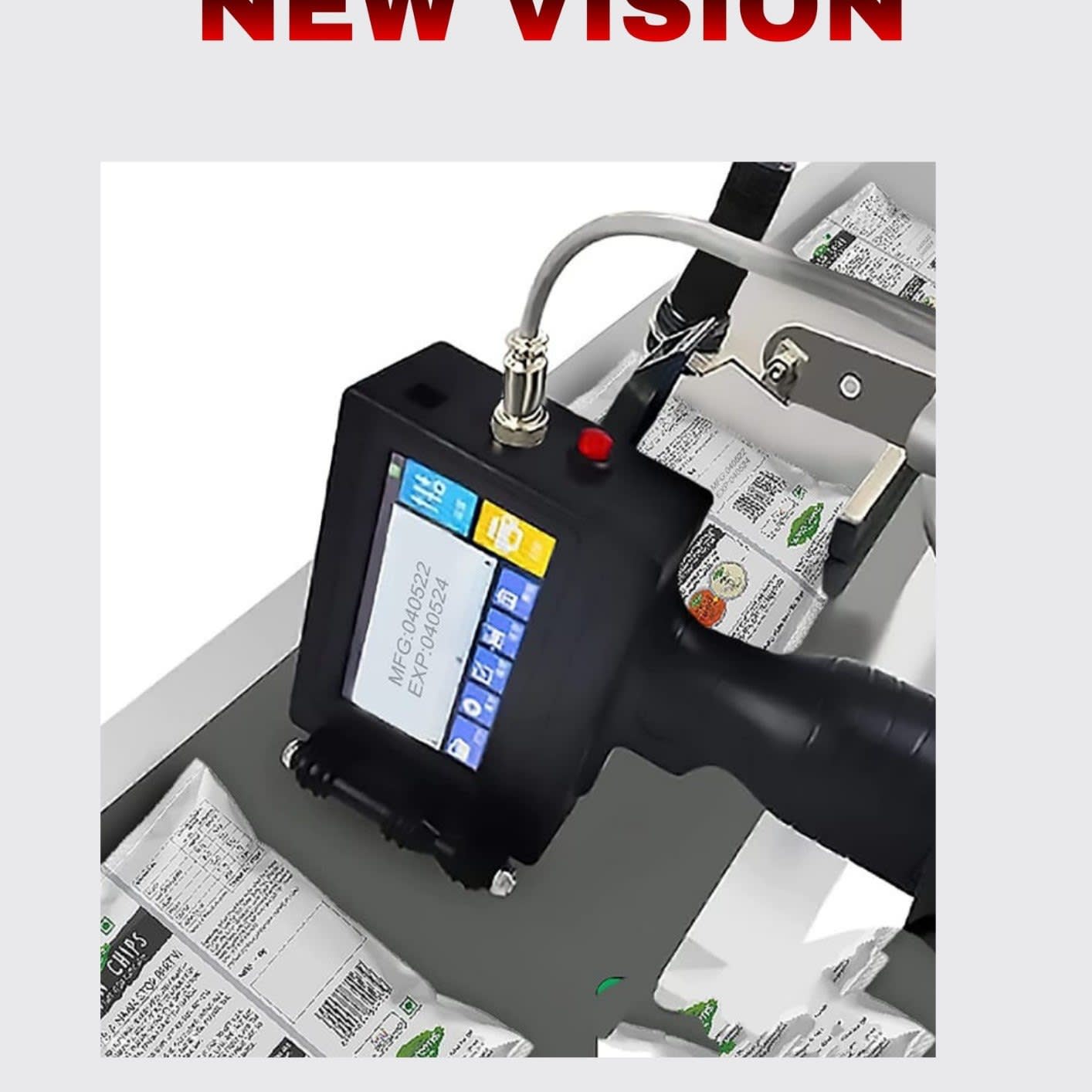
Handheld vs Online Mounting: A standard handheld inkjet printer price India plants budget for begins at Rs 8,473 because manual printing cuts out sensors, encoders, and line stands. Automated online heads run Rs 15,000 to Rs 85,000 to cover optical photo-eyes, shaft encoders, and electronic reject signals.
Ink Chemistry Formulation: Porous paper absorbs water-based ink instantly without expensive nozzle heaters. Non-porous foils, metallic laminates, and shrink films demand aggressive solvent carriers, requiring corrosion-proof fluid lines that push equipment costs up.
Line Speed Synchronization: Intermittent packaging machines stop briefly for each stamp. High-speed rotary lines do not pause; they require microsecond drop firing to prevent distorted characters on moving products.
Weighing these variables keeps your overall MRP printing machine price in India aligned with genuine plant needs instead of surplus capacity.
Operational Economics: Consumable and Ink Expenses per Print
Operating expenditure per coded impression is governed by droplet volume, throw distance, and ink system architecture rather than initial machine purchase price alone.
Thermal inkjet hardware carries minimal maintenance overhead. You discard the old nozzle with the spent cartridge, avoiding pump repairs, messy washdowns, and clogged filters. Continuous inkjet machines require steady top-ups of make-up fluid, plus routine viscosity tuning during dusty plant shifts. Large carton coders burn through substantial ink volume, but bulk ink containers keep fluid costs sensible across 100mm text. Balancing fluid mileage against machine depreciation protects line margins over millions of cycles.
Statutory Compliance: Legal Metrology (Packaged Commodities) Rules
The Legal Metrology (Packaged Commodities) Rules mandate that every pre-packaged commodity sold in India must bear clear, indelible declarations of the maximum retail price (MRP), manufacturing date, expiry date, and batch number.
Unclear print is a legal liability. Local inspectors seize unreadable stock, and distributors reject smeared cartons at depot gates. Modern coding heads maintain sharp edge contrast, surviving rough transport and warehouse humidity across long supply chains.