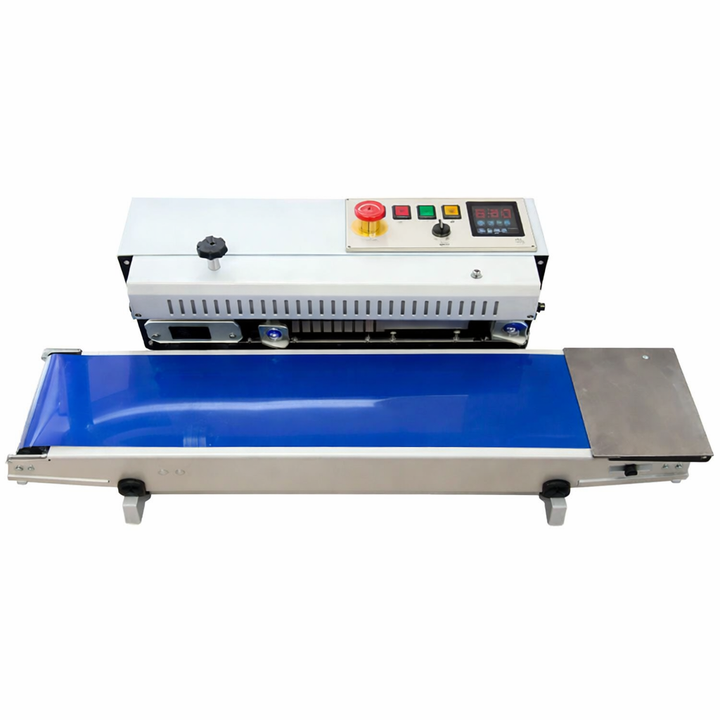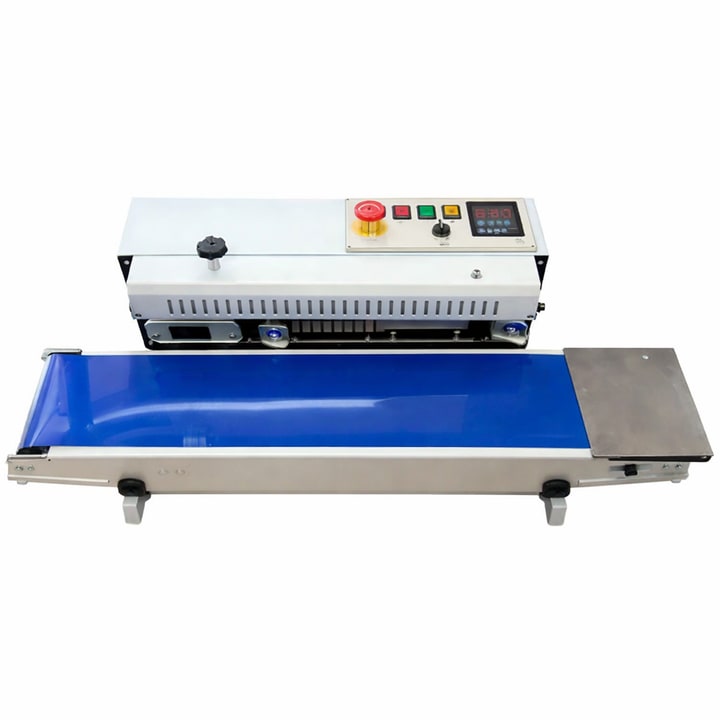
If you run a small or mid-sized packaging line in India, a Horizontal Continuous Band Sealer MS FR-900 is one of the fastest ways to upgrade from hand sealing to professional, repeatable pouch sealing. It is built for continuous operation, consistent seal quality, and higher output for products like spices, snacks, powders, grains, seeds, and general merchandise.
What is a Horizontal Continuous Band Sealer (FR-900)?
A horizontal continuous band sealer is a semi-automatic sealing machine that seals pouches continuously using heated sealing blocks and moving PTFE (Teflon) bands. Unlike an impulse sealer (press-and-release), the FR-900 style machine lets you feed pouch after pouch in a flow, making it ideal for daily production packing.
The “horizontal” design means the pouch travels flat on a conveyor, which works best for dry products and packs where the contents should not spill during sealing. For liquids or free-flowing products, vertical band sealers are usually a better fit.
How the FR-900 Band Sealer Works
The sealing process is simple, but the machine delivers a professional finish when settings are matched to your pouch material.
- Conveyor feeding: The operator places the pouch on the conveyor with the open mouth aligned to the guide.
- Heating zone: The pouch mouth passes between heated blocks where heat softens the inner sealing layer of the laminate.
- Pressure + band sealing: Moving PTFE bands apply consistent pressure while the pouch moves forward, forming a uniform seal.
- Cooling zone: Cooling blocks/fans help the seal set quickly so it doesn’t open under tension.
Best Applications in Indian Packaging
The MS FR-900 horizontal band sealer is widely used by Indian manufacturers, repackers, and traders who pack in laminated pouches for retail and wholesale supply.
- Spices & masala: Chilli powder, turmeric, coriander, spice mixes, whole spices.
- Dry foods: Namkeen, snacks, dry fruits, tea, coffee, pulses, rice, flour, sugar, salt.
- Agriculture: Seeds, bio-products, micronutrients, small fertilizer packs.
- Pharma & nutraceutical: Tablets (with inner packing), herbal powders, supplements.
- General merchandise: Hardware kits, small components, retail packs for e-commerce.
Which Pouch Materials Can It Seal?
An FR-900 band sealer is typically used for heat-sealable films and laminates. In Indian markets, these are the common materials:
- Laminated pouches: PET + PE, PET + MPET + PE, BOPP laminates.
- Poly pouches: LDPE/HDPE polybags (where thickness is suitable).
- Foil-based laminates: Aluminium foil laminates used for aroma and barrier protection.
To get the best seal, match temperature and speed to the pouch thickness and inner sealing layer (usually PE).
FR-900 Key Specifications (What Matters for Buyers)
When comparing FR-900 band sealer machines, buyers usually weigh a few core parameters. These are the practical points to check before finalizing.
- Sealing speed: Variable speed helps balance output and seal strength, especially when you switch pouch thicknesses.
- Temperature control: Wider temperature range makes the machine flexible across laminated, poly, and foil pouches.
- Seal width: A wider seal generally means better strength and fewer leak issues in transit.
- Conveyor load: Important if you run heavier pouches; too much weight can pull the seal line and cause wrinkles or open seals.
- Body material: MS body is cost-effective; SS body is preferred for wet areas, export compliance, and corrosive environments.
Horizontal vs Vertical Band Sealer: Quick Decision Guide
Choosing the right orientation prevents product leakage and improves line efficiency.
- Choose Horizontal FR-900: Dry powders, grains, snacks, items that can lie flat without spilling.
- Choose Vertical Band Sealer: Liquids, pastes, pickles, free-flowing powders, and pouches that must stay upright.
How to Use the MS FR-900 (Step-by-Step)
Follow this practical setup method to reduce rework and achieve clean seals.
- Step 1: Switch on the machine and set the temperature based on pouch material (start lower and increase gradually).
- Step 2: Adjust conveyor speed. Higher speed increases output but may reduce seal strength if temperature is not matched.
- Step 3: Adjust the pouch guide so the pouch mouth consistently enters the sealing zone in a straight line.
- Step 4: Maintain consistent headspace in the pouch mouth (keep the sealing area clean and free of powder/oil).
- Step 5: Run 5–10 trial pouches and do a manual pull test to confirm seal integrity before full production.
Common Sealing Problems (And Fixes)
Most band sealing issues come from mismatched temperature, speed, or pouch alignment. Use this checklist to fix problems fast.
- Seal opening easily: Increase temperature slightly, reduce speed, and ensure sealing area is clean.
- Pouch mouth wrinkling: Improve pouch guiding, reduce conveyor load on the sealing area, and check tension/alignment of PTFE bands.
- Burn marks on laminate: Lower temperature or increase speed; confirm you are sealing the correct layer.
- Powder in seal line: Add better filling control (funnel height, vibration control) and keep a wider top margin.
- Uneven seal width: Check pressure setting, band tracking, and guide alignment.
Maintenance Tips to Extend Machine Life
In Indian factory conditions (dust, masala powder, long shifts), basic daily maintenance keeps the FR-900 running reliably.
- Daily: Clean the conveyor and sealing zone; remove powder/oil near the heating blocks.
- Weekly: Inspect PTFE bands for wear, cuts, or tracking drift; check cooling fan airflow.
- Monthly: Check electrical connections, emergency switch function, and belt tension.
- Spare planning: Keep PTFE bands, heater parts, and basic consumables ready to avoid downtime during peak orders.
MS FR-900 Price in India: What Changes the Cost?
The price of an FR-900 band sealer depends on configuration and build quality. As a practical buying rule, consider the total cost of ownership, not just the lowest upfront price.
- Body build: MS body is typically more economical; SS body costs more but improves hygiene and corrosion resistance.
- Conveyor quality: Stronger conveyor and better motor stability improve sealing consistency over long shifts.
- Temperature controller: Better controllers give more stable heat, reducing rejects.
- Optional add-ons: Batch coding/embossing, counting, and special guides can change the overall package price.
- Service support: Local spares availability and service response often matter more than saving a small amount upfront.
Buying Checklist: How to Choose the Right FR-900 for Your Line
Use this checklist before placing an order to ensure the machine matches your pouch and production reality.
- Your pouch material and thickness: Confirm the machine can seal your laminate consistently without burn marks.
- Output target: Decide pouches per minute needed and pick a machine with stable speed control for long runs.
- Product type: Dry vs liquid decides horizontal vs vertical orientation.
- Available space: Ensure conveyor length and operator feeding space fits your packing table layout.
- Future expansion: Plan for batch coding and compliance needs if you sell in modern trade or exports.
Why Choose New Vision Machines for FR-900 Band Sealers?
New Vision Machines supplies band sealers that are selected and configured for Indian operating conditions, including long duty cycles, varied pouch materials, and practical operator usage. Support for setup guidance, spares planning, and configuration selection helps reduce rejection rates and improves overall packaging efficiency.
If you share your pouch sample and product type (powder/snack/grain), the right temperature-speed setup and orientation can be recommended so you get a strong, clean seal from day one.