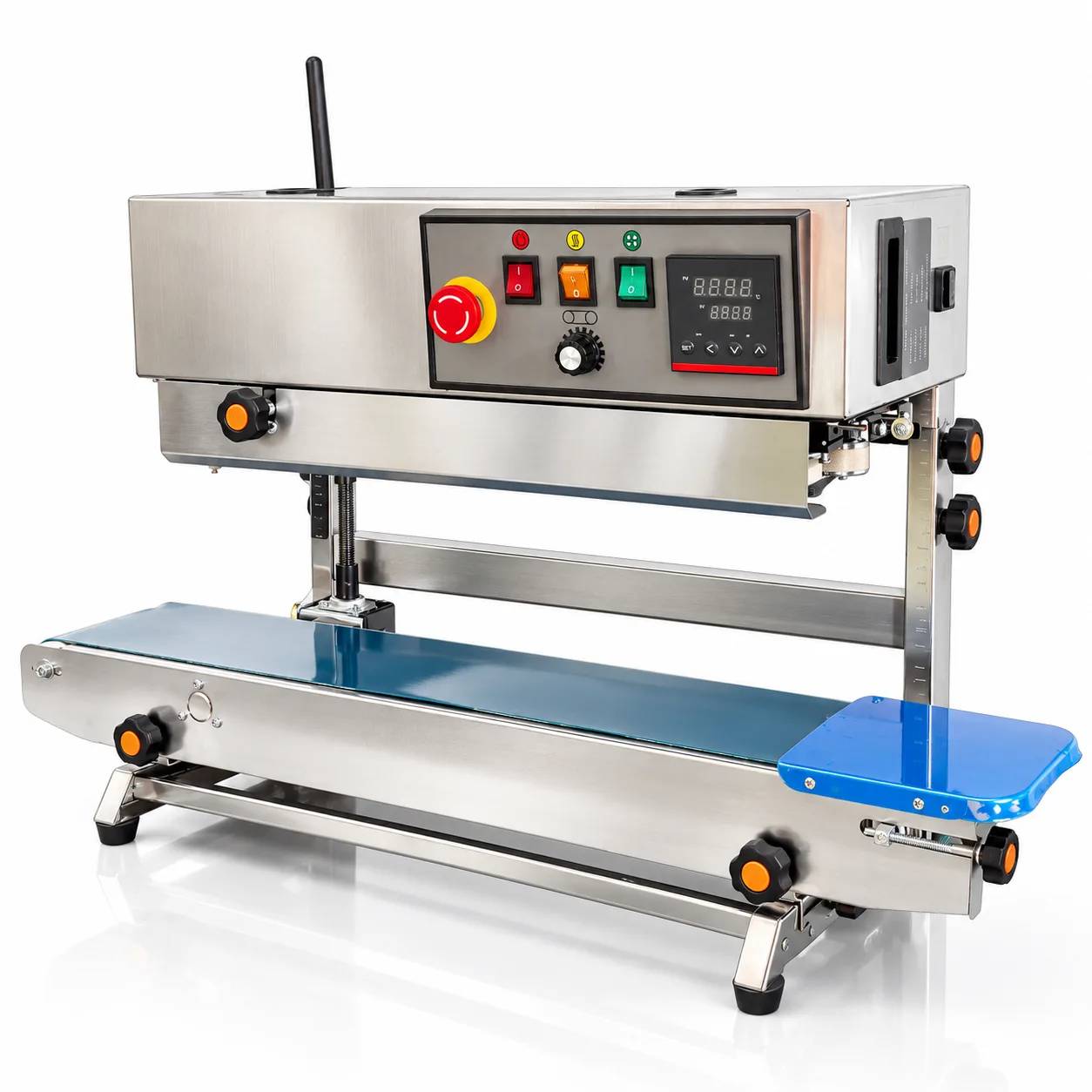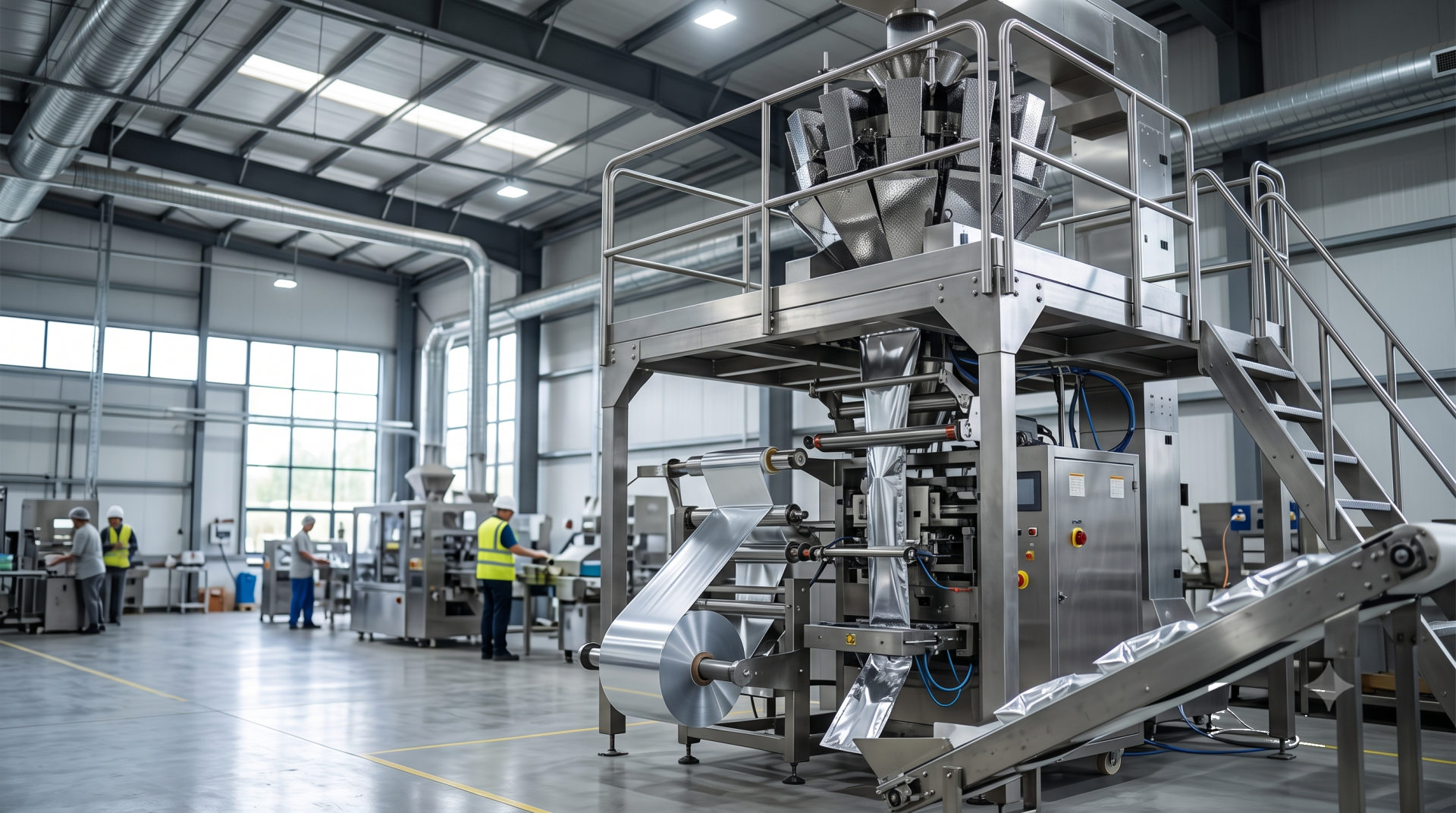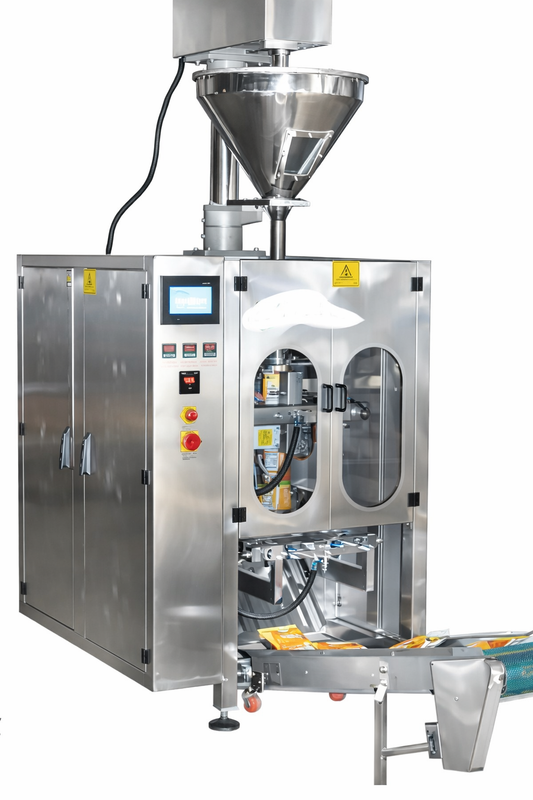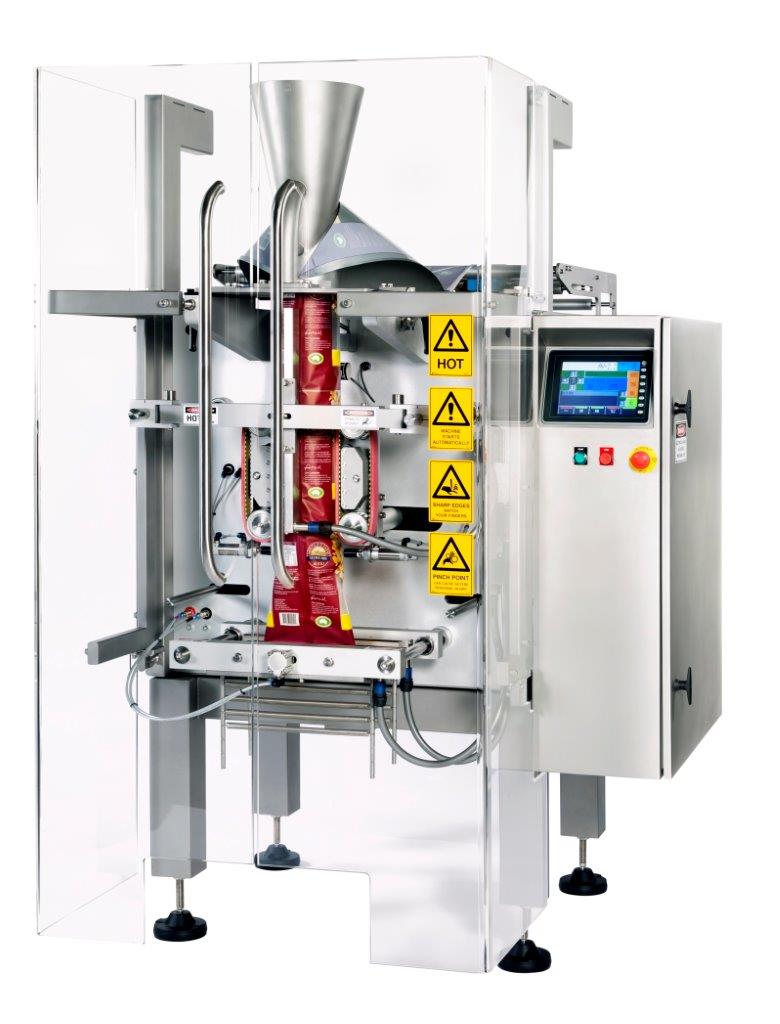
The VFFS machine — Vertical Form Fill Seal — is the most searched packaging machine in India right now, and for good reason. It seals, fills, and forms pouches in one continuous motion, turning a roll of film into finished, shelf-ready packets at speeds no manual team can match. But with dozens of models flooding the market and BIS compliance rules tightening by September 2026, buying the wrong machine is a mistake your production line cannot afford.
What Is a VFFS Machine?
A VFFS (Vertical Form Fill Seal) machine is an automated packaging system that pulls a flat roll of laminated film, forms it into a tube vertically, fills it with your product — powder, granules, liquid, or paste — and heat-seals it into a finished pouch, all in one continuous downward motion. The result is a sealed, labelled packet ready for dispatch, produced without manual intervention.
VFFS machines are engineered for high-volume, repeatable output. They handle everything from 5-gram spice sachets to 25-kg commodity bags. In India, they are the standard choice for namkeen, spices, sugar, pulses, flour, edible oil, dairy powder, and pharmaceutical granules.
Why VFFS Is in Such High Demand Across Indian Factories
Three forces are colliding in 2026 to make VFFS machines the hottest item on every factory buyer's list.
- FMCG and food processing expansion: India's food processing sector is scaling rapidly, and every new production line needs a packing solution that keeps pace with automated upstream processes.
- E-commerce-driven packaging pressure: Online grocery and D2C brands need lightweight, tamper-evident pouches in flexible sizes — exactly what VFFS machines produce.
- BIS Scheme X deadline approaching: From September 2026, BIS certification will be mandatory for all imported industrial machinery including packaging equipment. Buyers are urgently re-evaluating imports and moving toward certified Indian-made alternatives.
India's packaging machinery market is growing at a CAGR of 5.7% through 2035. Filling machines — the core of VFFS systems — already account for 27.6% of total packaging machinery demand in 2026. The shift is structural, not cyclical.
Types of VFFS Machines: Which One Fits Your Factory?
Not all VFFS machines are built the same. The right type depends on your product, target output, and pouch format.
Swipe or scroll horizontally to view all columns
| Type | Best For | Output Speed | Approx. Price (₹) |
|---|---|---|---|
| Semi-Automatic VFFS | Small factories, startups, trial runs | 20–40 pouches/min | ₹2.5–6 lakh |
| Automatic VFFS (Auger/Cup Filler) | Powders, spices, sugar, flour | 40–80 pouches/min | ₹7–18 lakh |
| Automatic VFFS + Multihead Weigher | Namkeen, chips, grains, nuts, frozen food | 60–120 pouches/min | ₹18–45 lakh |
| Multi-Lane VFFS (2–9 lanes) | Sachets, single-serve, high-volume FMCG | 200–600 pouches/min | ₹30–80 lakh+ |
| Liquid VFFS (Piston/Servo Pump) | Edible oil, milk, sauces, shampoo | 30–60 pouches/min | ₹8–22 lakh |
Key Specs to Know Before You Buy
These are the numbers that determine whether a machine earns its place on your production floor — or becomes an expensive mistake.
How to Choose the Right VFFS Machine: 5 Factors That Matter
Choosing a VFFS machine is not about picking the fastest one or the cheapest one. It is about matching the machine's design to your exact product and production requirements. Here are the five factors that decide everything.
- Product Type (Powder, Granule, Liquid, or Solid): The filling mechanism is built around your product. Powders need auger fillers; granules use multihead weighers or cup fillers; liquids require piston or servo pumps. Buying a machine with the wrong filler means constant inaccuracy and wastage.
- Target Output Speed: Match the machine speed to your upstream production rate. Buying a 120-pouch-per-minute machine when your filling capacity is 40 pouches per minute creates a bottleneck — you pay for speed you cannot use.
- Pouch Size and Format: Pillow bags, gusset bags, stand-up pouches, and 3-side or 4-side seal sachets each require a different forming collar and film specification. Confirm the machine supports the exact pouch format your market needs before placing an order.
- Film Compatibility: Indian laminated films have varying thickness and melting points across suppliers. The machine's sealing jaw temperature and dwell time must be calibrated to handle this variation — a critical issue with many imported machines that fail on locally sourced film.
- After-Sales Service Reach: A machine is only as reliable as the service engineer who can fix it. Confirm that spare parts are available domestically within 24–48 hours and that trained technicians can reach your factory within a day. This single factor drives more buyer regret than price.
VFFS vs HFFS: Which Machine Do You Actually Need?
Indian buyers frequently compare VFFS and HFFS (Horizontal Form Fill Seal) machines. The difference is straightforward once you know what each is built for.
Swipe or scroll horizontally to view all columns
| Feature | VFFS Machine | HFFS Machine |
|---|---|---|
| Product type | Powder, granules, liquids, free-flowing solids | Solid/shaped products (biscuits, bars, soap) |
| Pouch format | Pillow bags, sachets, gusset, stand-up | Flow wrap, horizontal pillow packs |
| Floor space | Small footprint, vertical build | Larger horizontal footprint |
| Price range (India) | ₹2.5–80 lakh+ depending on config | ₹4–120 lakh+ depending on config |
| Best for | Food, spices, agro, pharma, dairy | Confectionery, personal care, bakery |
If your product flows freely or is a powder, granule, or liquid, a VFFS machine is almost always the right choice. HFFS machines handle solid, shaped products that must be placed horizontally into film. Most Indian SME food factories need VFFS, not HFFS.
Common Mistakes Indian Buyers Make When Choosing a VFFS Machine
These are the mistakes that cost factories lakhs — sometimes entire production shutdowns — and they are entirely avoidable.
- Buying on speed alone: A machine rated at 100 pouches per minute running your product at 55 pouches per minute — because of product density or film speed — is a machine you overpaid for. Always confirm tested speeds with your specific product.
- Ignoring BIS compliance: With BIS Scheme X mandatory for imported machinery from September 2026, buying an uncertified imported machine now means it could be blocked at customs or flagged during inspections. Verify certification before signing any purchase order.
- Skipping the filler compatibility check: The VFFS body and the filling system are two separate components. Many buyers purchase the machine body and then discover the filler they ordered cannot achieve the accuracy they need for their product weight.
- Choosing the cheapest Chinese import without a local service partner: A ₹5-lakh Chinese machine with no spare parts availability can cost you ₹10 lakh in lost production while you wait 8–12 weeks for replacement parts. Calculate total cost of ownership, not just the purchase price.
- Not accounting for film cost: VFFS machines run on roll film. Film cost varies significantly by lamination type and supplier. Failing to factor in film cost per pouch before buying can erode the ROI you calculated on paper.
VFFS Machine Price in India: What to Expect in 2026
Pricing varies by configuration, filler type, machine origin, and after-sales package. Based on current IndiaMart listings and supplier quotes, here is a realistic view of what Indian buyers are paying in 2026.
Swipe or scroll horizontally to view all columns
| Category | Configuration | Price Range (₹) |
|---|---|---|
| Entry Level | Semi-auto, cup filler, single forming set | ₹2.5–6 lakh |
| Mid Range | Fully auto, auger/cup filler, date coder | ₹7–18 lakh |
| High Output | Auto VFFS + multihead weigher + servo drive | ₹20–50 lakh |
| Multi-Lane | 2–9 lane sachet machine, high-speed FMCG | ₹35–80 lakh+ |
Domestic Indian-made VFFS machines are typically 15–30% less expensive than equivalent imported models when you factor in GST, customs duty, freight, and the very real cost of delayed spare parts. The government's CLCSS scheme also offers up to ₹15 lakh in capital subsidy for eligible SME machinery purchases — effectively closing the price gap further for qualifying buyers.
Frequently Asked Questions
What products can a VFFS machine pack?
A VFFS machine can pack a wide range of products including powders (spices, flour, milk powder, cement), granules (sugar, salt, rice, pulses, namkeen, chips), liquids (edible oil, sauces, shampoo, water), and small solid items (tablets, seeds, candy). The filling system — auger, cup filler, multihead weigher, or piston pump — is selected based on product type. Most Indian food factories use VFFS for spices, sugar, and snack packaging.
What is the minimum production volume to justify a VFFS machine?
A fully automatic VFFS machine makes economic sense when you are producing 500 or more pouches per shift consistently. Below that volume, a semi-automatic machine at ₹2.5–4 lakh may offer a better return. As a general rule, if you are packing by hand or with a single manual sealer, and your orders exceed 200 kg per day, it is time to evaluate a VFFS machine.
What is the difference between an auger filler and a multihead weigher in a VFFS machine?
An auger filler uses a rotating screw to measure volumetric doses of powder — ideal for fine powders like spices, flour, or coffee where weight consistency is high. A multihead weigher uses multiple vibrating heads to simultaneously weigh and combine product portions — preferred for granules, namkeen, and snacks where individual piece weight varies. Multihead weighers are faster and more accurate for irregular products but cost significantly more.
Is a BIS certificate required for VFFS machines in India?
From September 2026, BIS Scheme X certification will be mandatory for all imported industrial machinery, including packaging equipment, under BIS's Foreign Manufacturers Certification Scheme (FMCS). Machines without valid BIS certification will not clear Indian customs. If you are considering an imported VFFS machine for delivery in late 2025 or 2026, verify BIS certification status from the manufacturer before placing your order. Indian-made machines are not subject to this import requirement.
How long does a VFFS machine last, and what maintenance does it need?
A well-maintained VFFS machine from a reputable Indian manufacturer typically lasts 8–15 years in continuous production. Daily maintenance includes cleaning the forming tube, sealing jaws, and film contact parts after each shift — especially critical for sticky or moisture-sensitive products. Weekly checks should cover drive belt tension, jaw alignment, and filler calibration. Monthly servicing of the PLC, servo motors, and pneumatic components will prevent the majority of unplanned breakdowns.
What film should I use with my VFFS machine?
The most common film for VFFS machines in India is PE/PP laminated film in 30–80 micron thickness, chosen based on product weight, shelf life requirement, and branding print quality. For food products requiring extended shelf life, co-extruded barrier films with EVOH layers are used. Always match the film specification to your machine's sealing jaw temperature range — Indian film suppliers vary in consistency, so calibrate sealing parameters for each new film batch to avoid weak seals or burnt edges.
The Bottom Line
A VFFS machine is one of the highest-ROI investments a food or FMCG manufacturer can make in 2026. It cuts labour cost, eliminates sealing inconsistency, reduces film waste by up to 50% versus pre-made bags, and scales with your production as you grow. But only if you choose the right configuration — matched to your product, your film, your output target, and backed by reliable local service.
Looking for the right VFFS machine for your factory? New Vision Machines supplies a wide range of automatic and semi-automatic packaging machines across India — browse our full packaging machine range or contact our team for a free consultation and specification recommendation.