Selecting the right water bottle filling machine is one of the most critical decisions for any packaged drinking water business in India. The machine you choose directly impacts production efficiency, product quality, operational costs, and ultimately your profitability. Whether you are starting a small-scale water bottling unit or expanding an existing manufacturing facility, understanding the various types of machines, their features, and how they align with your business needs is essential.
Understanding Water Bottle Filling Machine Types
The Indian market offers several types of water bottle filling machines, each designed for specific production scales and requirements. Manual filling machines are the most basic option, suitable for very small operations with limited budgets of ₹30,000 to ₹80,000. These require significant manual intervention and are ideal only for pilot projects or micro-enterprises producing less than 500 bottles daily.
Semi-automatic water bottle filling machines represent the next level, combining manual loading with automated filling processes. Priced between ₹1.5 lakh to ₹4 lakh, these machines work well for small businesses producing 1,000 to 3,000 bottles per day. They offer better consistency than manual systems while keeping investment costs manageable for startups and regional distributors.
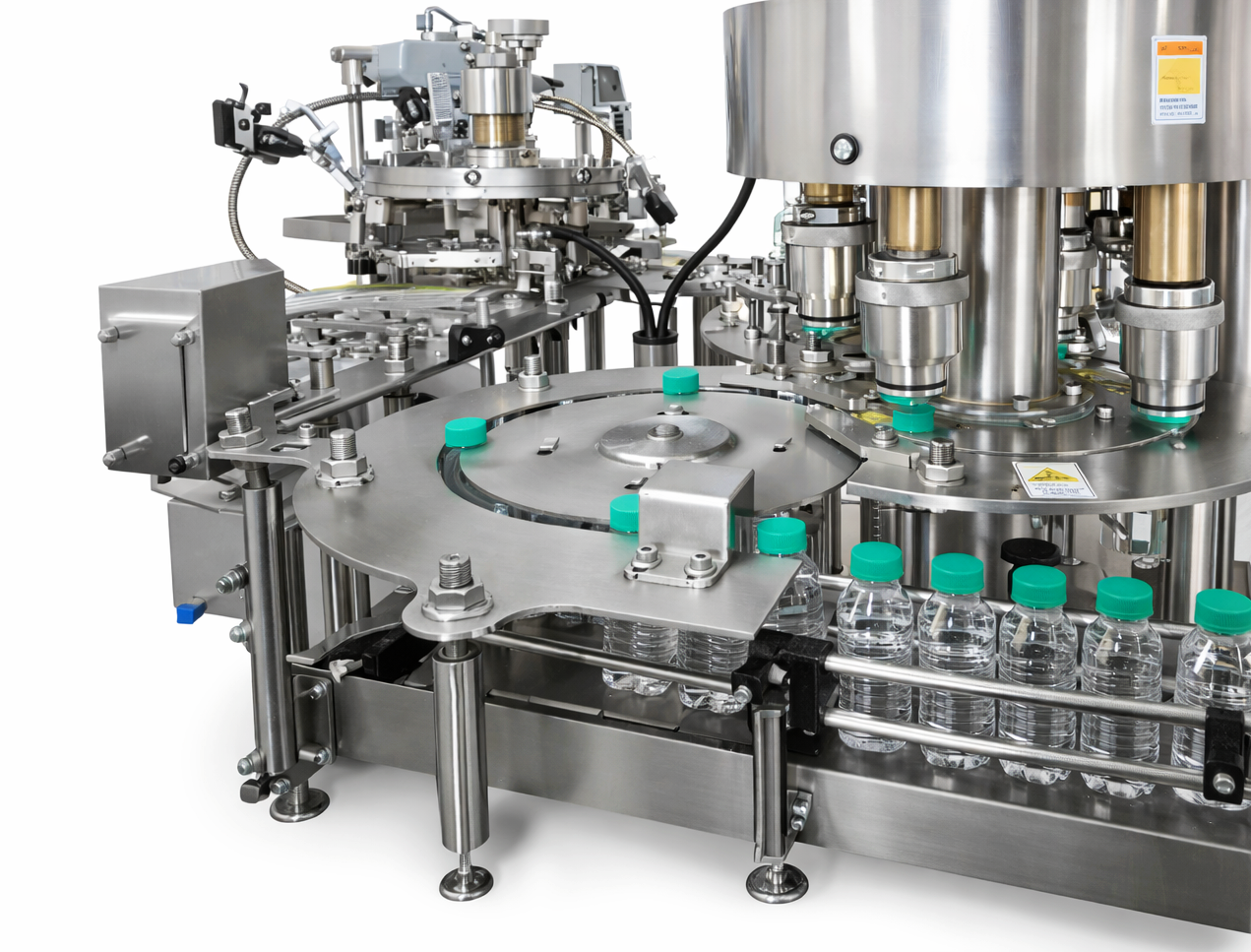
Fully automatic water bottle filling machines are the industry standard for established businesses. With capacities ranging from 40 BPM to 120 BPM and prices between ₹5 lakh to ₹15 lakh, these systems integrate rinsing, filling, and capping operations. High-speed automatic machines operating at 60 to 240 BPM cost between ₹12 lakh to ₹30 lakh and suit large-scale manufacturers supplying regional or national markets.
Key Factors to Consider Before Purchase
Production Capacity Requirements
Calculate your daily production targets before investing in any machine. If your business aims to produce 3,000 to 5,000 bottles daily, a 60 BPM machine would be appropriate. For production exceeding 10,000 bottles per day, consider machines with 100 BPM or higher capacity. Always factor in future growth and choose equipment that can handle at least 20 to 30 percent more than your current requirements.
Bottle Size Flexibility
The Indian packaged water market demands multiple bottle sizes including 200ml, 500ml, 1 liter, and 2 liters. Modern filling machines offer changeover capabilities allowing you to switch between different bottle formats with minimal downtime. Look for machines with adjustable conveyor belts, filling nozzles, and capping heads that accommodate various PET bottle dimensions without requiring complete reconfiguration.
Filling Technology and Accuracy
Different filling technologies suit different liquid properties and bottle types. Gravity filling systems work excellently for low-viscosity liquids like purified water and are cost-effective for standard bottle sizes. Piston fillers provide high accuracy for precise volume control, essential for maintaining consistency across thousands of bottles. Vacuum overflow fillers ensure uniform fill levels, creating professional product appearance that builds consumer trust.
Essential Machine Features for Indian Manufacturers
High-quality water bottle filling machines incorporate several critical features that directly impact operational efficiency. The rinsing system should include automated bottle inversion with high-pressure water jets to remove dust and particles before filling. This three-stage process of rinsing, filling, and capping should operate seamlessly on a single integrated platform.
Look for machines equipped with no-bottle-no-fill sensors that prevent product wastage when bottles are missing from the production line. Touch-screen PLC controls offer easy operation and allow quick adjustments to filling volumes, conveyor speeds, and capping torque. Stainless steel construction ensures durability and meets food safety standards required by FSSAI regulations in India.
Automatic cap feeding systems eliminate manual cap placement, reducing labor costs and increasing production speed. Magnetic clutch capping mechanisms provide consistent sealing without damaging bottle threads, ensuring leak-proof packaging that maintains product integrity during transportation and storage across India's challenging distribution networks.
Power Requirements and Infrastructure
Most automatic water bottle filling machines in India operate on three-phase electrical connections at 440V. Power consumption varies based on machine capacity, typically ranging from 8 kW for smaller 60 BPM units to 15 kW for high-speed 120 BPM systems. Ensure your facility has adequate electrical infrastructure and consider voltage stabilizers to protect sensitive electronic components from fluctuations common in many industrial areas.
Water supply requirements include access to both raw water for the rinsing system and purified water for filling. Machines need consistent water pressure, usually between 2 to 4 kg per square centimeter, to operate efficiently. Floor space requirements range from 4 feet by 6 feet for compact semi-automatic units to 15 feet by 8 feet for fully integrated automatic production lines.
Maintenance and Operating Costs
Regular maintenance is crucial for maintaining machine efficiency and product quality. Daily cleaning routines include sanitizing filling nozzles, rinsing tanks, and conveyor surfaces to prevent bacterial contamination. Weekly maintenance involves checking belt tensions, lubricating moving parts, and inspecting seals and gaskets for wear.
Monthly servicing should address filter replacements, valve calibration, and sensor testing to ensure accurate filling volumes. Many Indian manufacturers offer annual maintenance contracts ranging from ₹25,000 to ₹1 lakh depending on machine complexity. Budget for spare parts including filling nozzles, conveyor chains, and pneumatic components which typically cost 5 to 8 percent of the machine's annual operating expenses.
Evaluating Suppliers and After-Sales Support
Choosing a reliable manufacturer is as important as selecting the right machine. Established suppliers in major industrial hubs like Ahmedabad, Mumbai, Delhi, and Chennai offer better after-sales support and spare parts availability. Request demonstrations at the manufacturer's facility to observe actual machine performance and build quality before making purchase decisions.
Verify that the supplier provides comprehensive training for your operators covering machine operation, basic troubleshooting, and maintenance procedures. Good manufacturers offer installation support, commissioning assistance, and trial runs to ensure optimal performance from day one. Check warranty terms carefully, with most reputable suppliers offering 12 to 24 months coverage on mechanical components and electronic systems.
Return on Investment Considerations
Calculate your ROI by comparing machine costs against labor savings, production increases, and quality improvements. A fully automatic 60 BPM machine costing ₹8 lakh can replace 4 to 5 manual workers while producing more consistent output. At typical packaged water margins of ₹2 to ₹3 per liter, businesses can recover their investment within 18 to 24 months with steady production volumes.
Factor in reduced product wastage from accurate filling, which can save 3 to 5 percent of your raw material costs annually. Energy-efficient modern machines consume less power per bottle compared to older technologies, contributing to lower operating expenses. The enhanced production capacity allows you to fulfill larger orders, access wholesale contracts, and expand market reach across multiple districts or states.
Compliance and Certification Requirements
Ensure the water bottle filling machine complies with Indian food safety regulations and quality standards. Look for machines manufactured according to GMP guidelines and constructed from food-grade stainless steel meeting AISI 304 or 316 specifications. The equipment should facilitate easy cleaning and sanitization to maintain FSSAI licensing requirements for packaged drinking water production.
Some machines come with CE certification or ISO compliance documentation, indicating adherence to international manufacturing standards. While not mandatory in India, these certifications reflect better build quality and design practices. Maintain proper documentation of machine specifications, maintenance records, and calibration certificates for regulatory inspections and quality audits.
Making the Final Decision
Start by defining your production requirements, budget constraints, and growth projections for the next three to five years. Visit multiple manufacturers, compare technical specifications, and request detailed quotations including installation, training, and warranty terms. Consider financing options available through machinery loans or MSME schemes that offer favorable interest rates for manufacturing equipment investments.
Test the machine with your actual bottle sizes and water quality before finalizing the purchase. Negotiate for trial periods, performance guarantees, and clear service level agreements for maintenance support. The right water bottle filling machine becomes the backbone of your production operations, directly influencing product quality, customer satisfaction, and business growth in India's competitive packaged water industry.