If you are evaluating a paper plate unit in India, the machine price is only one part of the decision. The more useful question is whether the machine capacity, starting investment, raw-material cost and expected selling price work together for your target output.
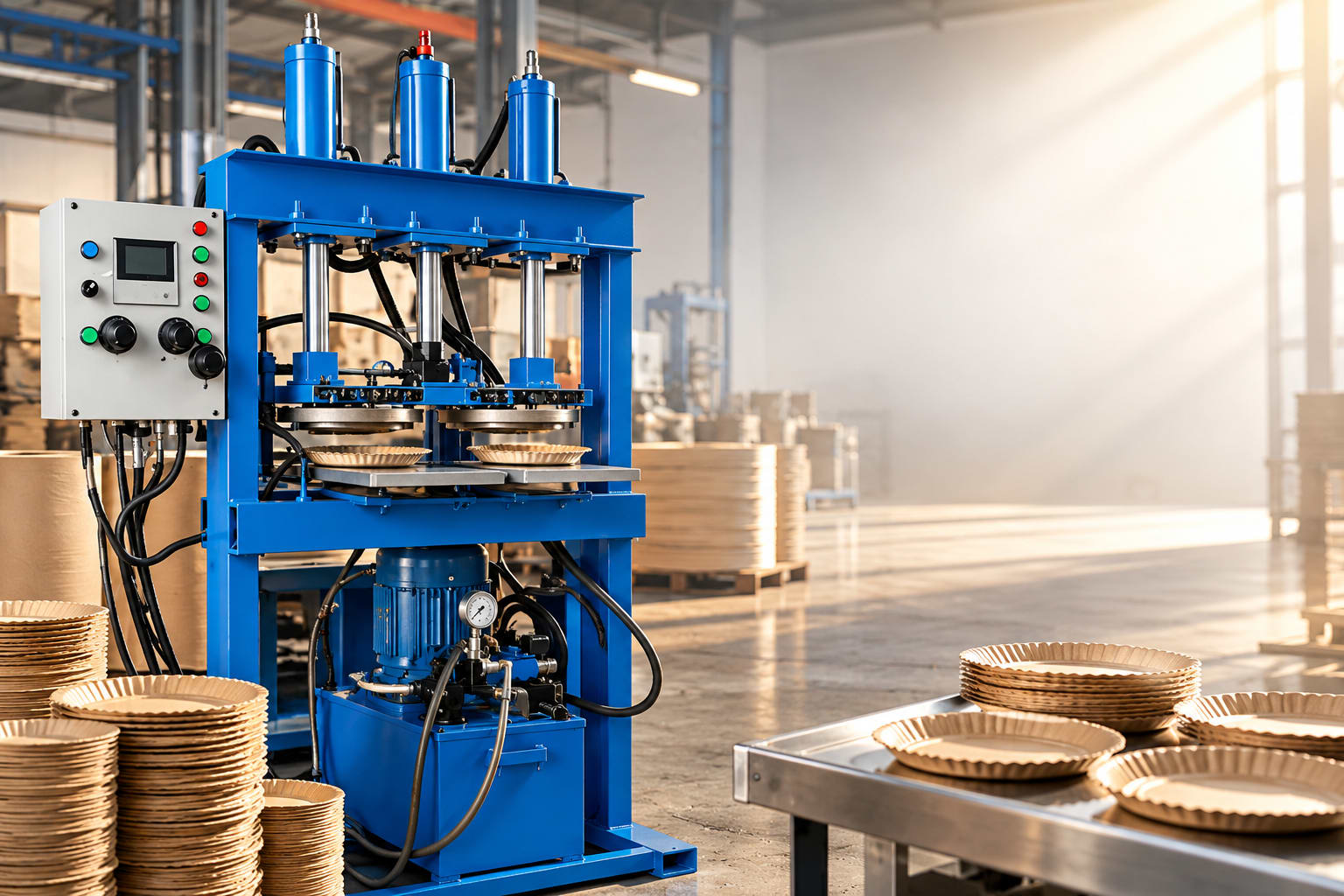
For buyers comparing entry-level and commercial setups, the paper plate making machine price in India generally depends on the machine type. A single-die/crank machine can start around ₹50,000, while a double-die machine sits in the mid-range. Hydraulic and industrial high-speed machines require substantially higher capital.
Paper Plate Machine Price in India: Current Market Bands
The broad market bands are:
Swipe or scroll horizontally to view all columns
| Machine type | Typical price (INR) | Output class | Best for |
|---|---|---|---|
| single-die/crank | ~₹50,000 | Cheapest, slower | Small entry-level production |
| double-die | ₹75,000–₹90,000 | Mid — the ₹76,000 machine's class | Small commercial units |
| hydraulic | ~₹1,25,000 | Faster | Higher-output production |
| fully automatic high-speed | ~₹6,50,000 | Industrial | Large-scale manufacturing |
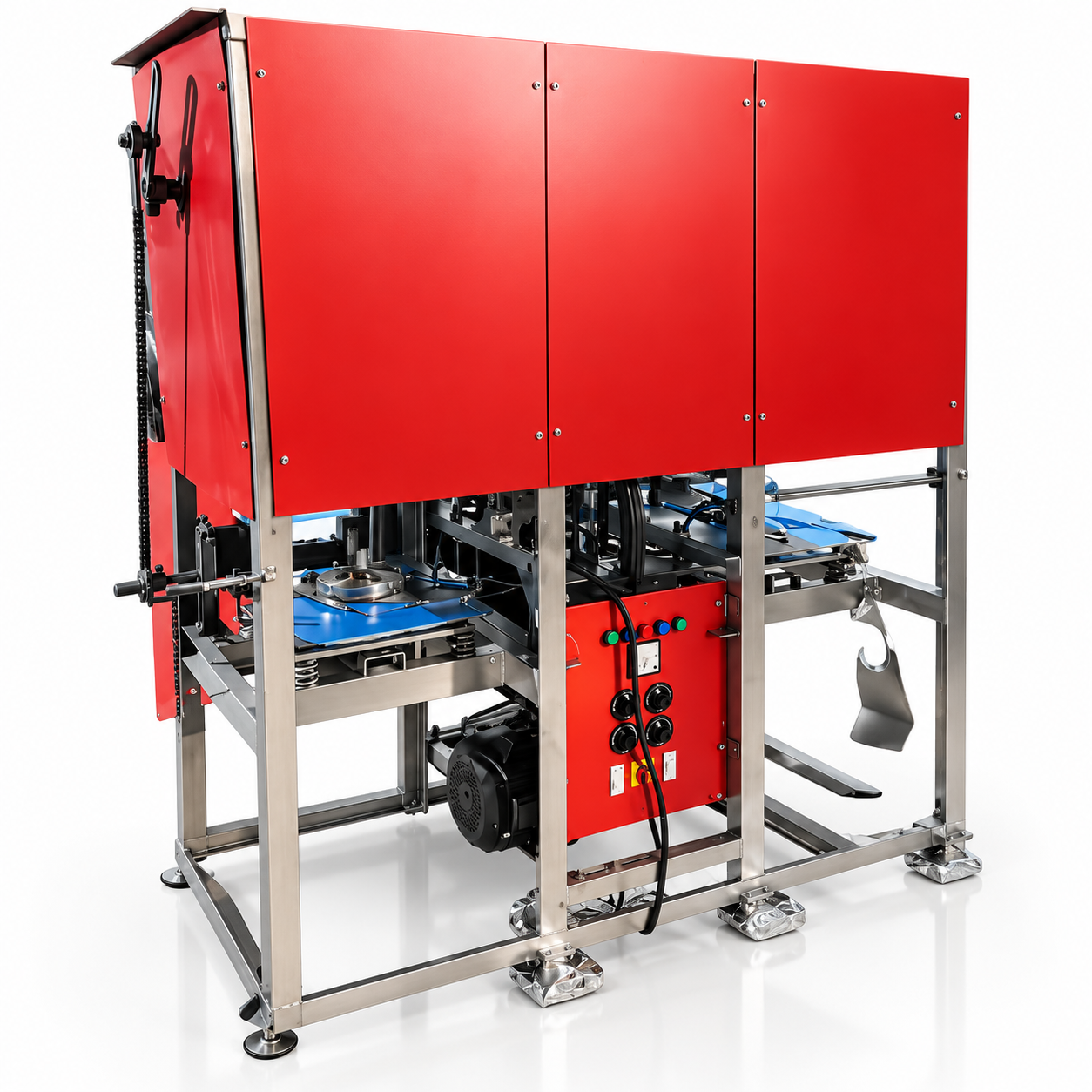
New Vision Machines sells an automatic double die paper plate machine at ₹76,000. That places it within the typical double-die market band rather than the higher-cost hydraulic or industrial categories.
The important distinction for buyers is not simply buying the cheapest machine. A lower machine cost can make sense when production requirements are modest, while higher-capacity equipment becomes relevant when the business needs substantially greater output.
What Does a Paper Plate Machine Investment Look Like?
Industry-guide figures put the total starting investment for a paper plate manufacturing setup at approximately ₹70,000–₹2,00,000, depending on the scale and equipment selected.
That range is useful because the machine itself does not represent the entire paper plate machine investment. Working requirements, raw material and operating costs also affect the amount of capital needed to start and sustain production.
Industry guides commonly cite 20–40% profit margins and a potential break-even period of 6–12 months. These should be treated as industry-guide figures, not guaranteed returns from any particular machine or supplier.
Paper Plate Business Profit: What the Numbers Suggest
The economics depend heavily on production volume, selling price and operating costs.
Industry-guide figures cite paper plate selling prices of approximately ₹0.50–₹2 per plate, with potential monthly income of around ₹30,000–₹1,00,000+ depending on production and sales.
One industry example uses 1,50,000 plates per month at ₹0.50 per plate:
Revenue: ₹75,000/month
Raw material + power: approximately ₹30,000
Net: approximately ₹45,000/month
Another industry guide gives a simpler per-plate example: production cost of around ₹0.40 per plate, selling at approximately ₹1.00, leaving around ₹0.60 per plate before considering other business expenses.
These examples show why paper plate business profit cannot be judged from machine price alone. Actual results depend on production utilisation, material costs, selling price and the ability to consistently sell the manufactured plates.
Is a Double-Die Machine Worth the Extra Investment?
For a buyer starting above the smallest entry-level setup, the double-die category is a practical middle ground.
A single-die/crank machine has the lowest listed market entry price at around ₹50,000, but it belongs to the slower entry-level class. Double-die machines occupy the ₹75,000–₹90,000 range and provide a higher-output option without moving directly into the approximately ₹1.25 lakh hydraulic category.
At ₹76,000, the New Vision Machines automatic double-die machine sits near the lower end of that double-die market range.
Demand Outlook for Paper Plates in India
India's single-use plastic restrictions and EPR rules support demand for alternatives such as paper plates. This creates a broader market opportunity for paper-based disposable products, although machine ownership alone does not guarantee sales.
For a new unit, the stronger approach is to work backwards from a realistic sales requirement: determine the number of plates you can sell, calculate the required production rate, then select the machine class accordingly.
Financing and Subsidy Options
PMEGP and Mudra subsidies apply to eligible micro-manufacturing units of this type. Eligibility, loan structure and subsidy conditions depend on the applicable scheme and the applicant's circumstances.
For a buyer planning a paper plate machine investment, these financing routes can be relevant when the available starting capital is limited. They should be checked against the current scheme requirements before making a purchase or preparing a project report.
New Vision Machines supplies the double-die paper plate making machine across India at ₹76,000 with pre-dispatch checking and after-sales support. Call +91-9981604279 or request a quote for delivery timelines.