An ice cream bar looks simple to pack — until you try it. The product is cold, the environment is humid, the film wants to stick to the sealing jaws, and a leaky seal means freezer burn and a ruined product. Ice cream packaging is flow-wrap packaging with a cold chain working against you, and the machine needs to be built for it.
Why ice cream needs its own wrapper
A standard biscuit flow wrapper will technically wrap an ice cream bar. It will also give you sticking film, inconsistent seals, and condensation-related failures within a week. Three things make frozen-dessert wrapping different:
1. Film sticking. Cold product + heated sealing jaws = film that wants to weld itself to the jaw face. Machines built for ice cream use jaw coatings, temperature profiles, and timing tuned for cold product. This is the single biggest difference between a biscuit wrapper and an ice cream wrapper.
2. Seal integrity at low temperature. The seal has to survive freezing, transport, and freezer storage without micro-leaks. Leak-proof, consistent seals are not a nice-to-have — they are the difference between a 6-month shelf life and freezer burn in six weeks.
3. Hygiene and washdown. Dairy-adjacent environments demand stainless product-contact surfaces and designs that don't trap moisture. Bacteria loves a damp crevice at room temperature between production runs.
How it works: horizontal flow wrap, cold-tuned
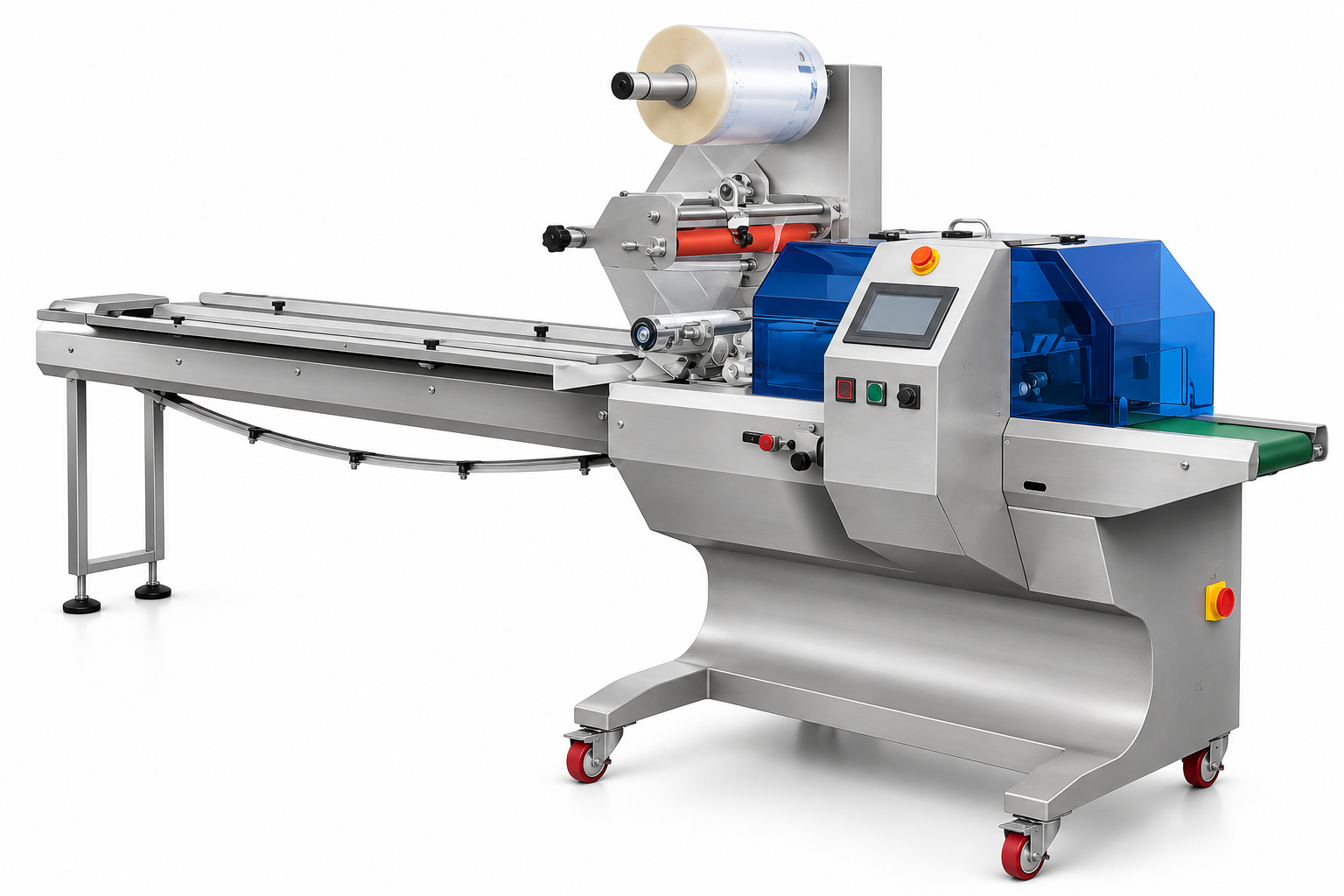
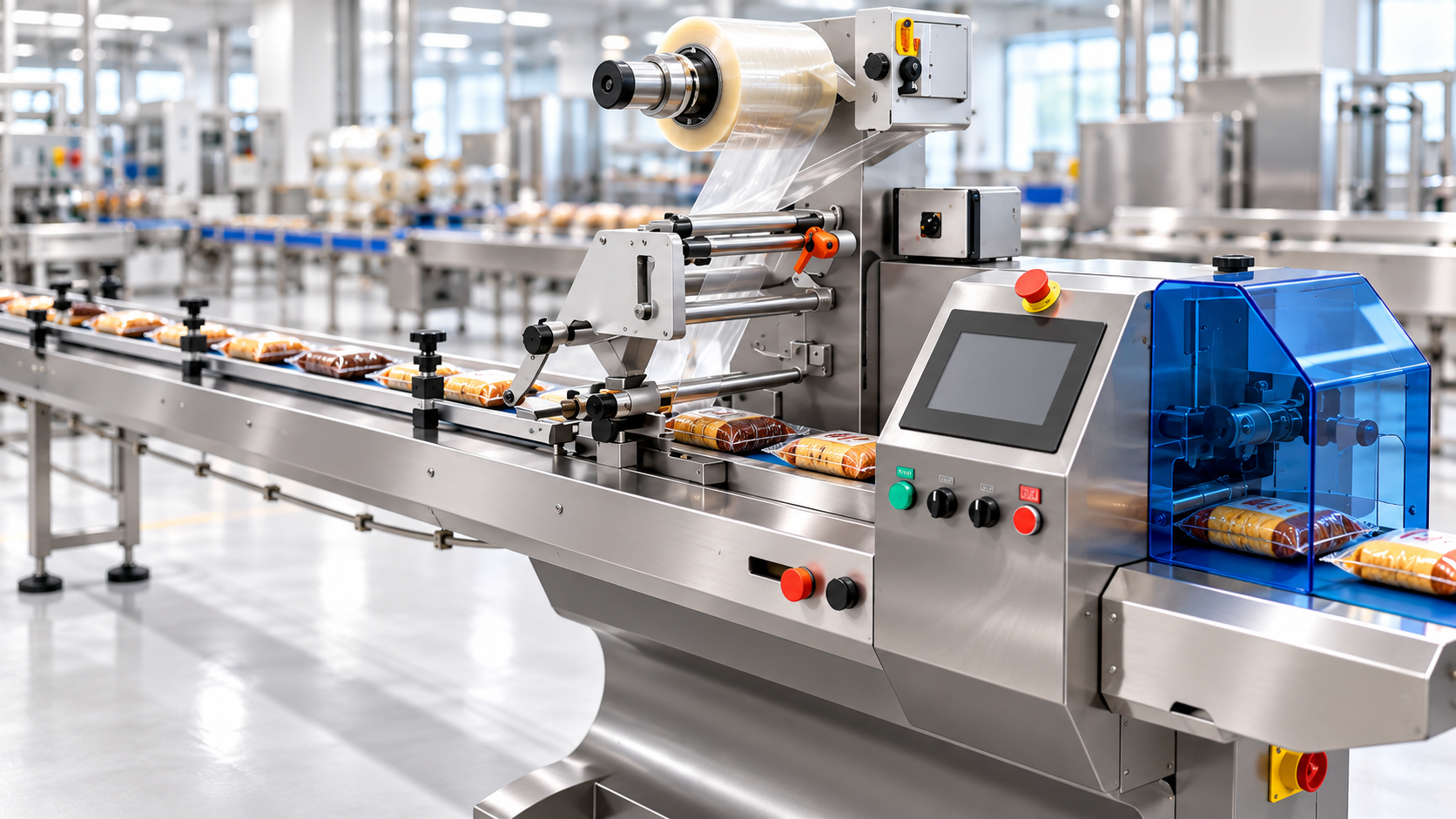
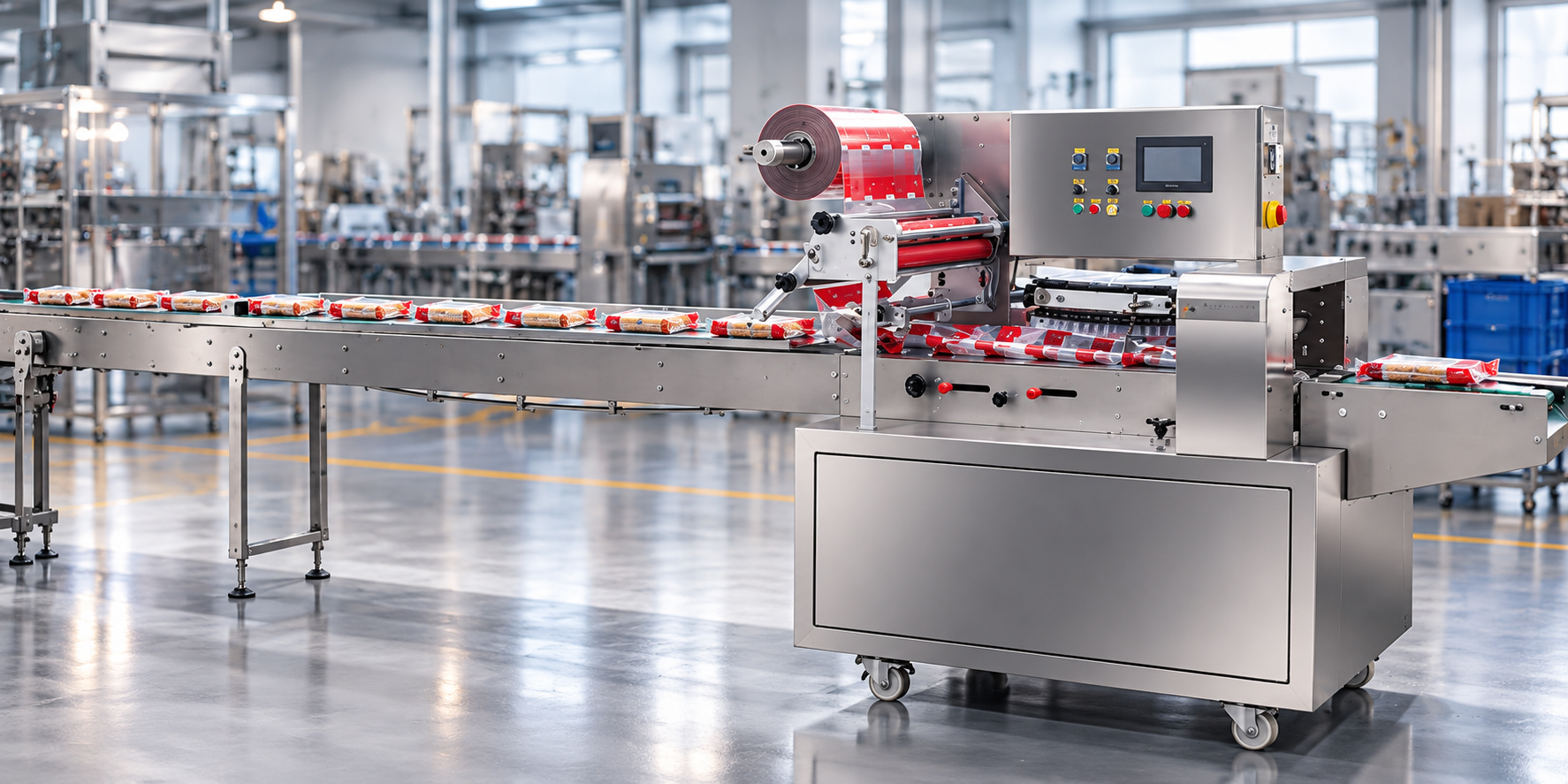
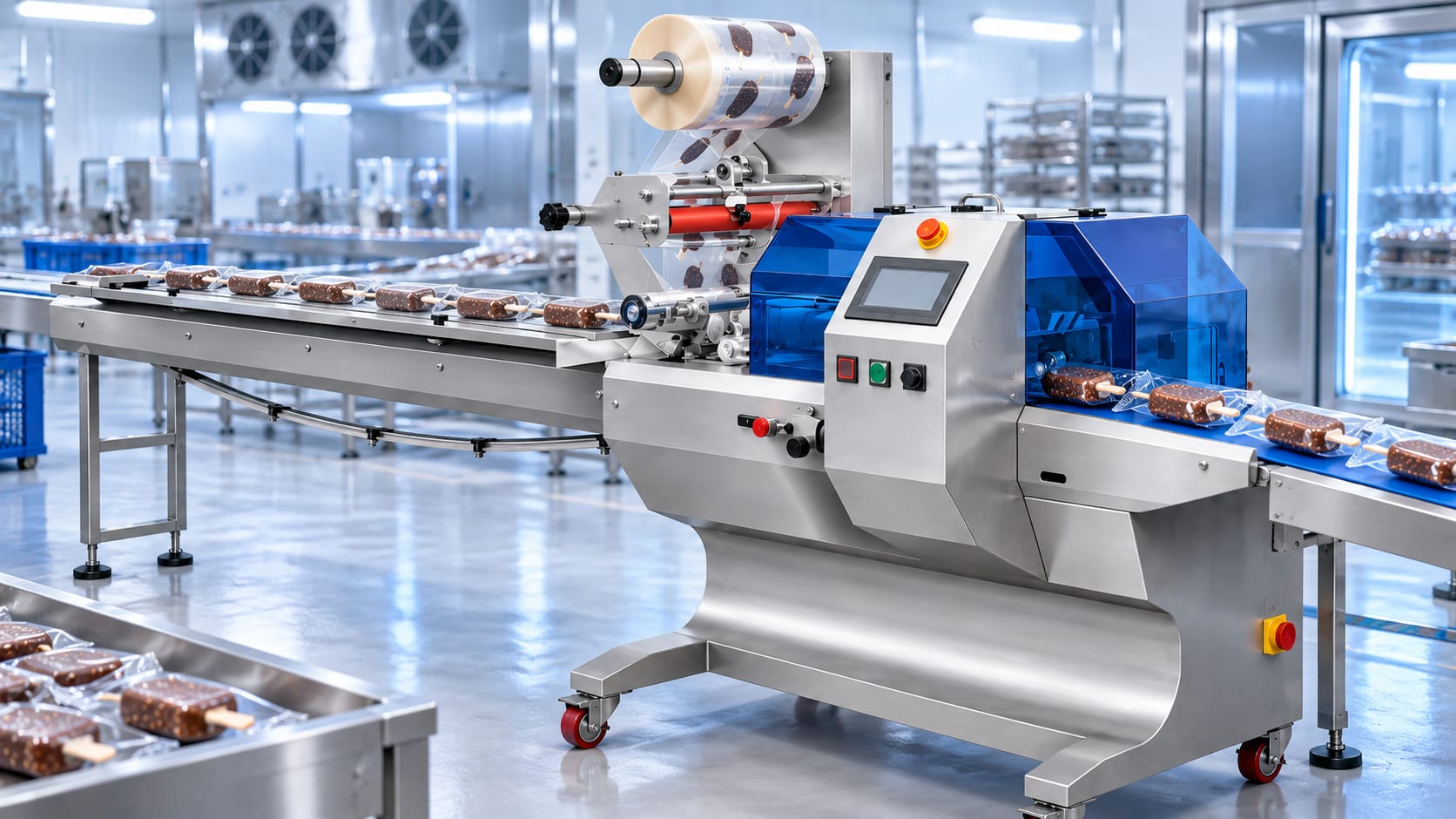
Ice cream bars and sticks are regular, solid shapes — ideal for horizontal flow wrap. The bar travels through a film tube, gets a fin seal underneath and end seals front and back, and the cutter separates each pack. The ice-cream-specific engineering is in the details: servo motor control for precise cut placement across different bar sizes, PLC with recipes for quick changeovers between SKUs, and sealing parameters calibrated for laminated or cold-sealable films.
Speeds in this category run 40–110 packs/min depending on the machine class — enough for small and mid-size ice cream manufacturers scaling past manual packing.
What it costs in India: ₹2.7 lakh to ₹5.75 lakh
From current live listings:
- Basic bar packers (70–100 pcs/min, standard controls): around ₹2.7–₹3.35 lakh. - Mid-range automatic units (servo control, PLC, 40–80 packs/min): around ₹3.35–₹4.5 lakh. - High-end lines (camera tracking, full automation): ₹5.75 lakh and above.
Our ice cream flow wrap machine is priced at ₹3,24,800 — the mid-band with hygienic leak-proof sealing, precise cutting, and controls adjustable for different bar and stick sizes. If your product is a free-flowing frozen item rather than bars or sticks, our vertical flow wrap machine (₹2,81,500) is the alternative to evaluate. For the broader category, see flow wrap machines in India and our flow wrap machine price guide.
Film: BOPP, laminates, and the cold-seal question
Standard heat-sealable BOPP and laminated films work, but the film has to seal cleanly at jaw temperatures that won't melt the product or stick. Cold-sealable films (which seal with pressure rather than heat) are an option for heat-sensitive products but cost more and need a machine configured for them. Whatever film you choose, run it on the actual machine with your actual product before committing — film behavior at production temperature is the one thing no brochure can tell you.
What to verify before buying
1. Run frozen product, not room-temperature samples. Sticking and seal behavior change completely at production temperature. Any trial that doesn't use frozen bars is theater.
2. Check the seal after 48 hours frozen. Pull packs from a freezer, not off the line. Micro-leaks show up as ice crystals inside the pack.
3. Changeover between sizes. If you run multiple bar sizes, time a format change. Servo machines with recipe storage earn their premium here.
4. Jaw coating and cleaning. Ask how the jaw faces resist sticking and how they are cleaned. This is a daily maintenance item.
5. Stainless contact parts. For anything dairy-adjacent, confirm stainless-steel product-contact surfaces — not painted mild steel.