Ask five suppliers for a flow wrap machine price in India and you will get five different numbers — sometimes for what looks like the same machine. This post puts real numbers on the table: what automatic flow wrap machines actually trade for, what each type costs, and what separates a ₹2.8 lakh machine from a ₹6 lakh one.
The real price band: ₹2.4 lakh to ₹6.2 lakh
Based on current live listings from Indian manufacturers and marketplaces, automatic flow wrap machines in India trade in this band:
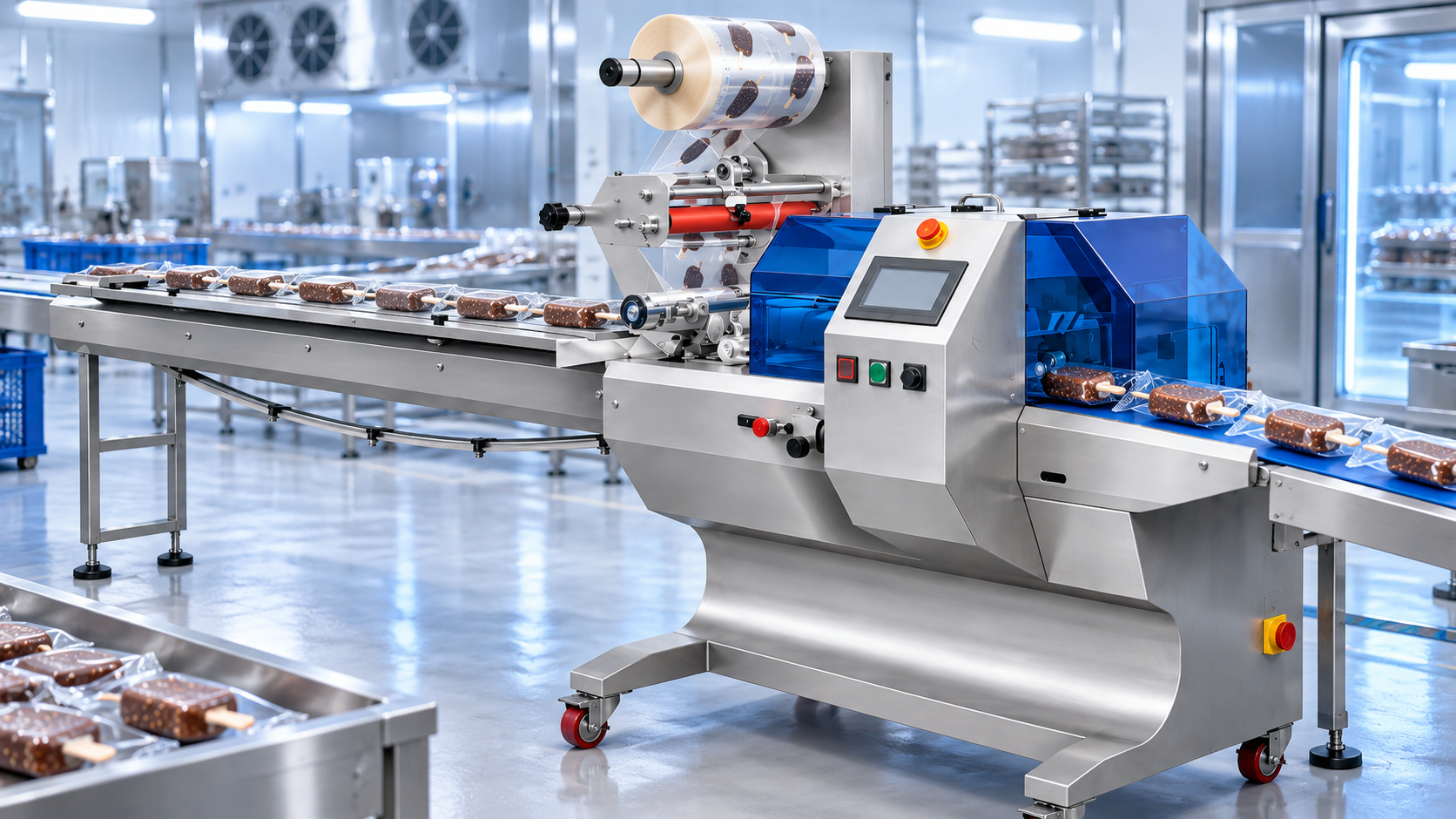
- Entry horizontal units (basic controls, 40–70 packs/min): around ₹2.4–₹3 lakh. Example: manufacturer listings at ₹2,40,000 and ₹3,00,000 for PLC-controlled horizontal units. - Mid-range horizontal units (PLC, photo-eye registration, 60–150 packs/min): around ₹3–₹4.2 lakh. Live listings at ₹3,10,000, ₹3,50,000, and ₹3,75,000. - High-speed / servo lines: ₹5 lakh and above, with some fully automatic lines listed at ₹6,19,500. - Ice cream flow wrap machines: ₹2.7–₹5.75 lakh. Listings at ₹2,70,000 (bar packer, 70–100 pcs/min), ₹3,35,000, ₹4,50,000 (servo, 40–80 packs/min), and ₹5,75,000 for camera-tracker lines.
These are listing prices from TradeIndia, IndiaMART, and manufacturer sites — the market as it actually trades, not brochure figures.
What New Vision Machines charges: four machines, four prices
Our flow wrap range, all automatic, all with registration control:
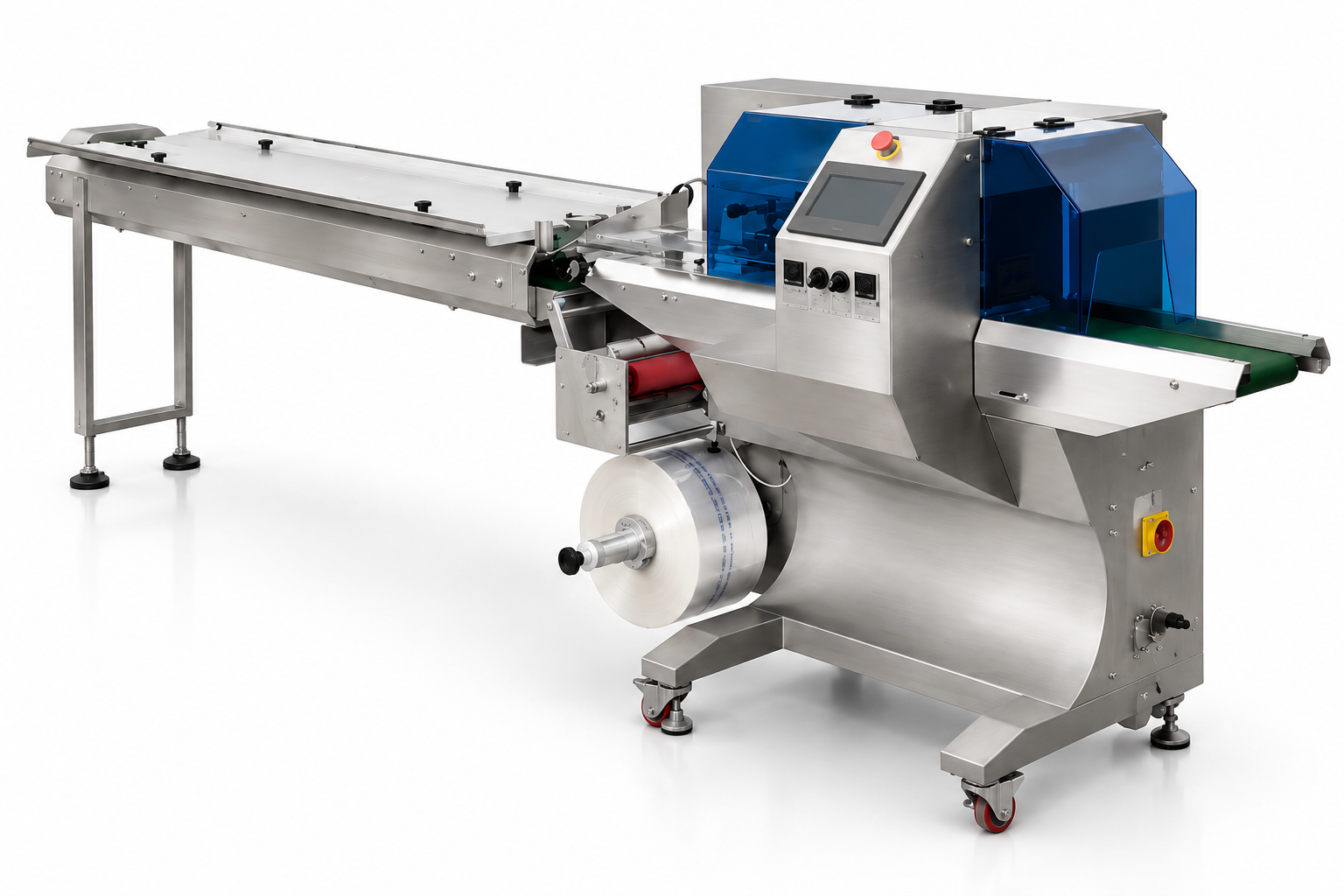
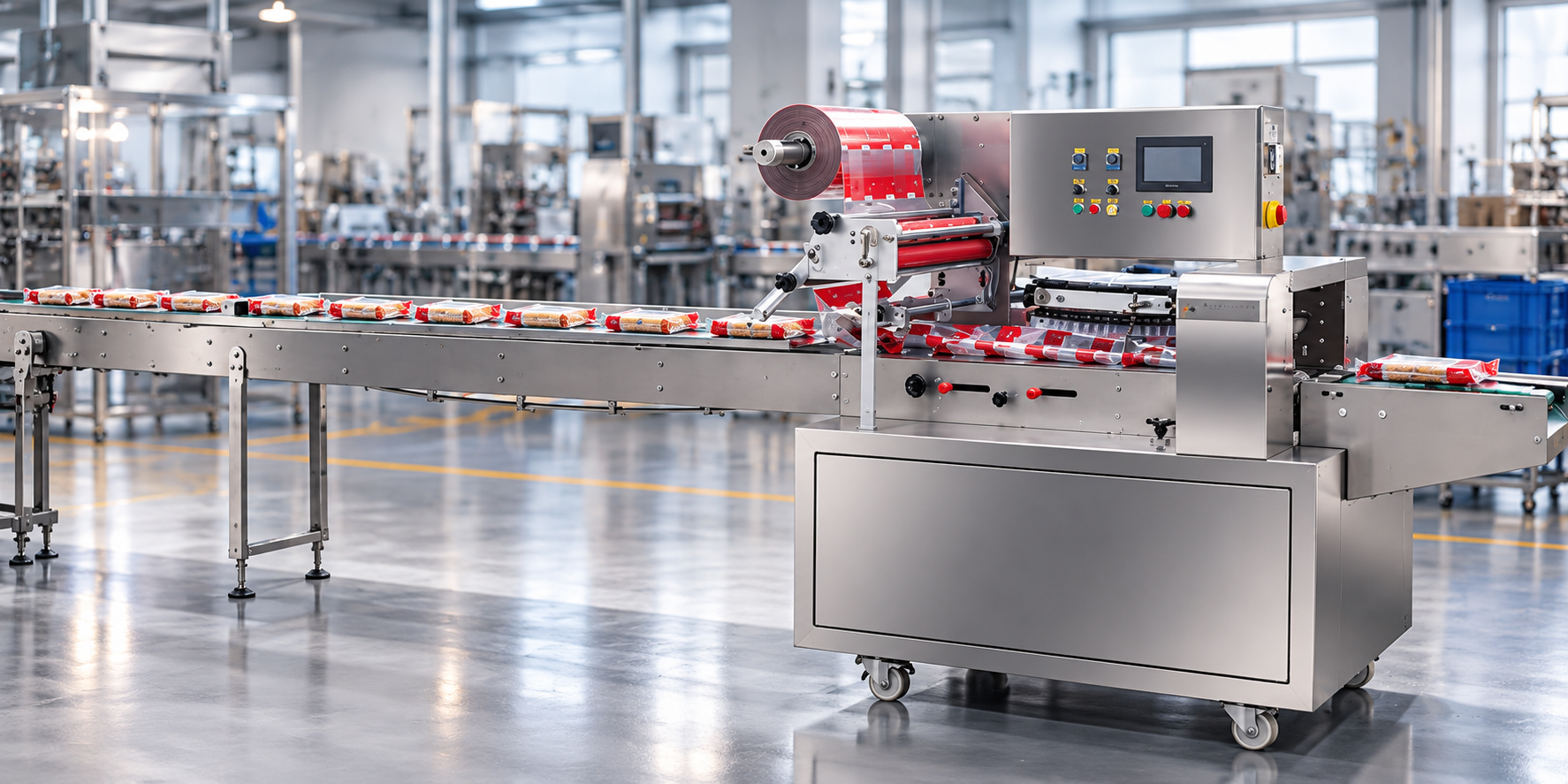
- Horizontal Flow Wrap Machine — ₹2,80,700. Biscuits, chocolates, bakery, soap, FMCG. The all-rounder. - Vertical Flow Wrap Machine — ₹2,81,500. Snacks, spices, powders, grains — fills as well as wraps. - Switch Packaging Machine — ₹2,82,900. Electrical switches, sockets, hardware — configured for the electrical industry. - Ice Cream Flow Wrap Machine — ₹3,24,800. Ice cream bars, sticks, frozen desserts — hygienic sealing for cold environments.
All four sit in the engineered mid-band: below the stripped-down entry tier on build quality, below the servo-premium tier on price. For how these machines work mechanically, see our horizontal flow wrap buying guide; for the full range, see flow wrap machines in India.
What moves a machine up the band
Five things separate a ₹2.8 lakh machine from a ₹5 lakh one:
1. Drive system. Mechanical drives are honest workhorses for single-product long runs. Servo drives cost more but earn it on frequent changeovers and printed-film accuracy.
2. Speed rating. A 40 packs/min machine and a 150 packs/min machine are different machines with different frames, drives, and sealing systems. Buy the speed you need — the sizing math is in our buying guide — not the brochure maximum.
3. Build material. Stainless-steel product-contact parts cost more than mild steel and matter for food, dairy, and pharma. For non-food products, mild steel is fine and cheaper.
4. Controls. Basic relay controls vs PLC with touch HMI and recipe storage. If you run multiple SKUs, recipe-based changeover pays for itself quickly.
5. After-sales depth. Spares availability, technician response time, commissioning support. This is the invisible line item — a machine ₹30,000 cheaper with no service network is the most expensive machine you will ever own.
How to compare quotes: a checklist
- Same scope? Check packs/min, film width range, product size envelope, and control type on every quote. A cheaper quote often quietly drops one of these. - Film included in trials? Ask for a trial run with your actual product and film before committing. - Seal integrity, not just speed. Ask for burst/leak test results on sample packs. - Wear parts priced. Sealing jaws, cutters, sensors — get spares prices in writing with the quote. - Installation and commissioning. Included or extra? On-site or remote? - Warranty terms. Duration, what it covers, and response-time commitments.
The cost-per-pack lens
Price is what you pay; cost per pack is what the machine costs you. A ₹2,80,700 machine running 100 packs/min over two shifts packs roughly 9.6 lakh packs a month. Even small differences in film waste (misregistered cuts), downtime (changeover speed), and reject rates (seal failures) compound into real money at that volume. When two quotes differ by ₹40,000, ask which one wastes less film and changes over faster — the answer usually decides it.