Last updated: 9 October 2026
The packaged drinking water plant setup cost in India starts at Rs 1,70,000 ex-works for the core pouch packing machine, with total investment scaling higher based on RO capacity, shed civil work, and laboratory licensing.
Key Takeaways
Core Machine Outlay: Rs 1,70,000 ex-works (+ GST as applicable) for an automatic mechanical form-fill-seal unit.
Rated Line Speed: 1,000 pouches per hour across standard 100 ml to 200 ml liquid pouch sizes.
Daily Plant Yield: 12,000 pouches per day based on a two-shift (16-hour) run at 75% Overall Equipment Effectiveness (OEE).
Power & Utilities: 1750 W on a standard 220V/50Hz single-phase connection; zero air compressor required.
Chassis Footprint: 1050 x 850 x 1920 mm with a 450 kg mechanical frame.
Statutory Mandate: Mandatory Bureau of Indian Standards (BIS) certification under IS 14543 before commercial retail distribution.
What is the packaged drinking water plant setup cost in India?
A baseline packaged drinking water plant setup cost in India starts with Rs 1,70,000 ex-works for the primary mechanical pouch packer, while water purification, civil construction, and laboratory testing equipment make up the balance.
Every plant is built in two buckets: the fixed machinery line and site-dependent setup heads. Buyers often make the mistake of grouping them together. If you look at regional machinery suppliers to compare pouch packing machine prices, separate drive mechanics from cosmetic sheet metal. A quoted mineral water plant machine price means very little unless you compare exact motor ratings, sealing systems, and pneumatic dependencies.
Cost head | What it covers | Indicative figure
Pouch packaging machine | Automatic form-fill-seal unit, inline UV film sterilization, batch date coder | Rs 1,70,000 ex-works (+ GST as applicable)
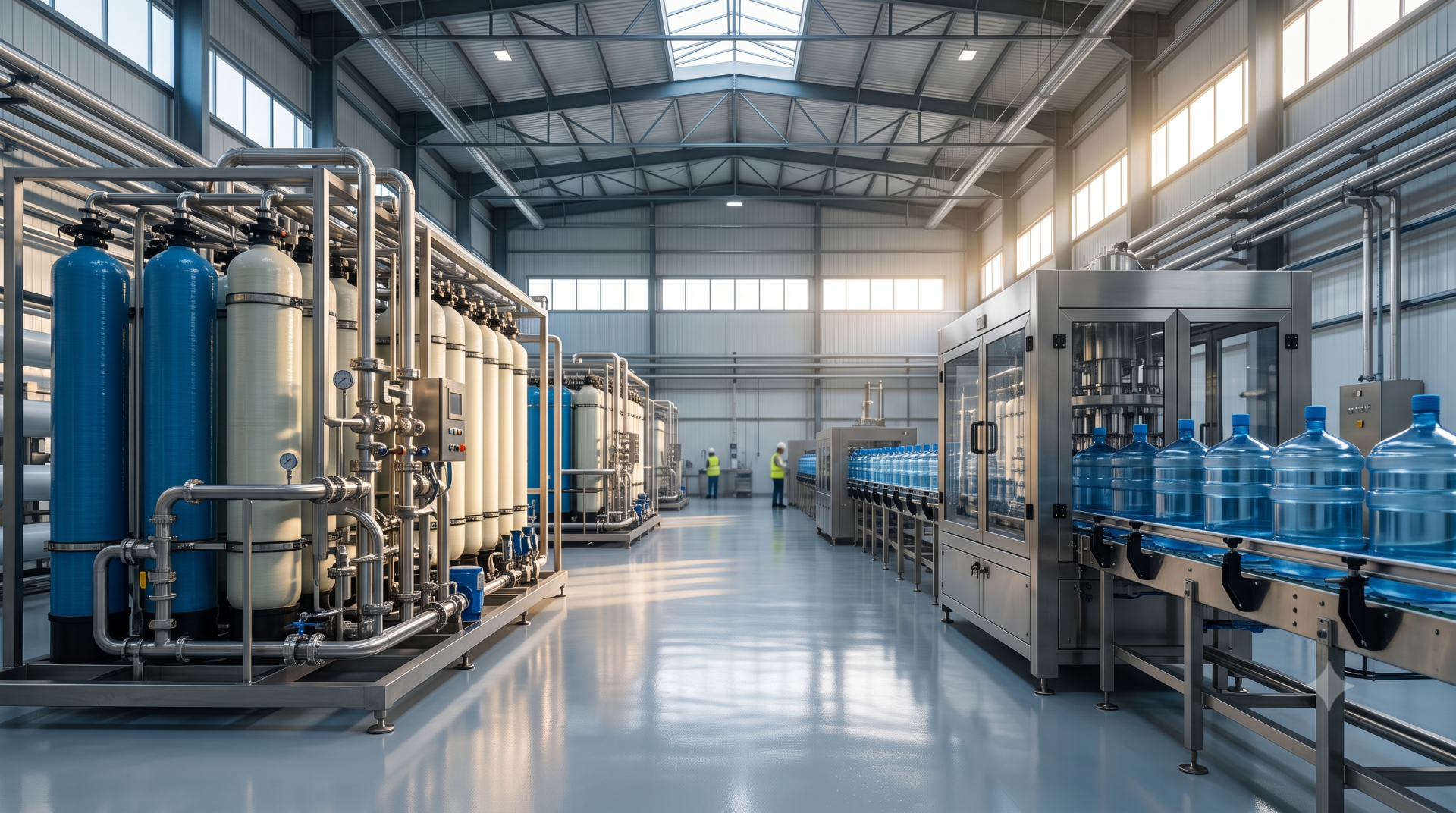
Reverse Osmosis (RO) plant | Multi-stage filtration, media beds, RO membranes, micron filters, ozone system | Varies — get quotes
BIS licensing & laboratory setup | IS 14543 certification, mandatory in-house testing equipment, inspection fees | Varies — get quotes
Factory shed & civil works | Hygienic partitioned production hall, drainage, anti-bacterial flooring, wiring | Varies — get quotes
Working capital & roll stock | Food-grade laminated LDPE film rolls, master distribution crates, operating float | Varies — get quotes
Never base your working capital strictly on machinery pro-formas. When budgeting the packaged drinking water plant setup cost in India, get custom quotes for your civil partitions and water treatment beds early, long before the first roll of film arrives at the factory gate.
What machines does a water pouch plant need?
A functional water pouch plant requires three primary machines: a commercial reverse osmosis (RO) treatment system, an automatic mechanical form-fill-seal pouch packing machine, and an inline batch coder.
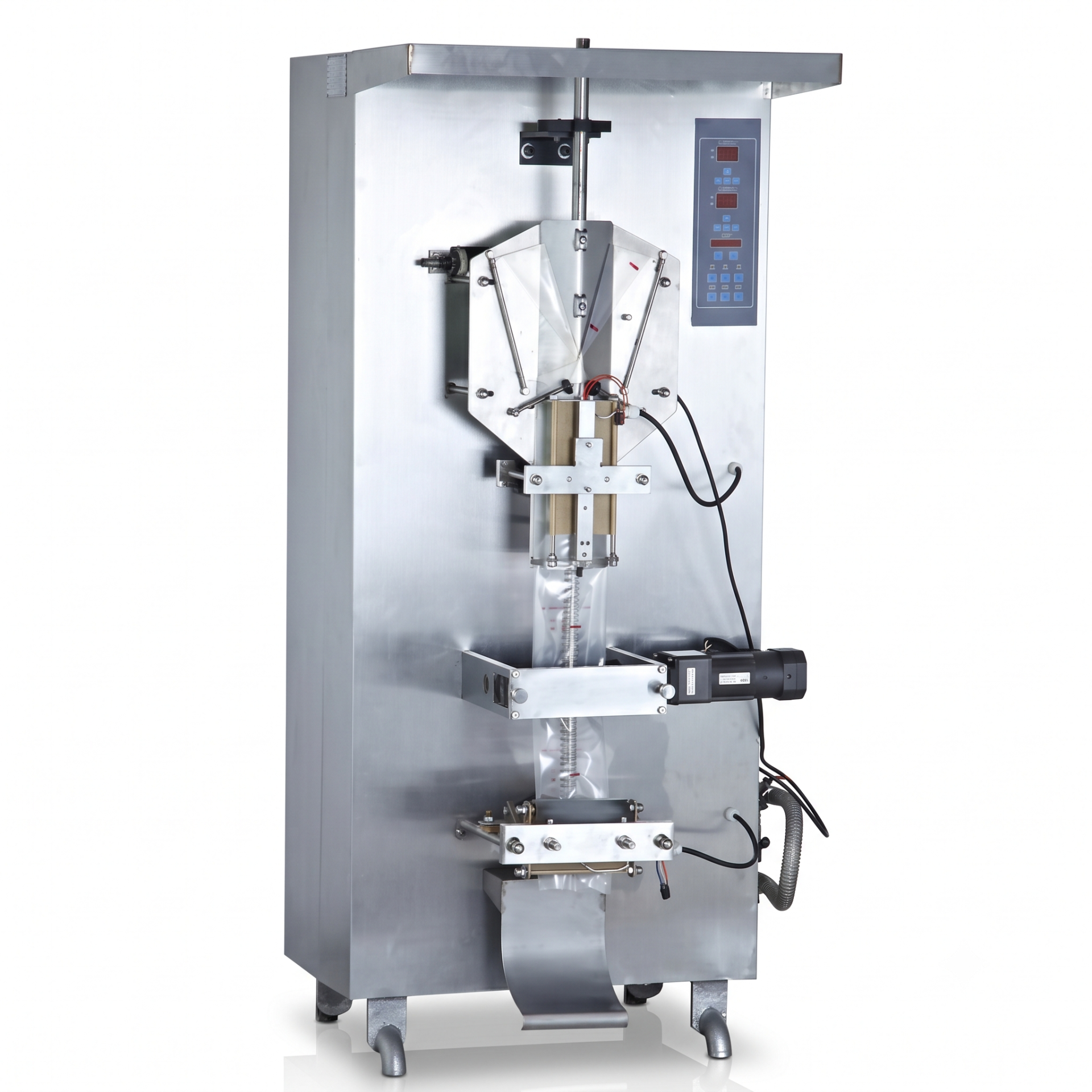
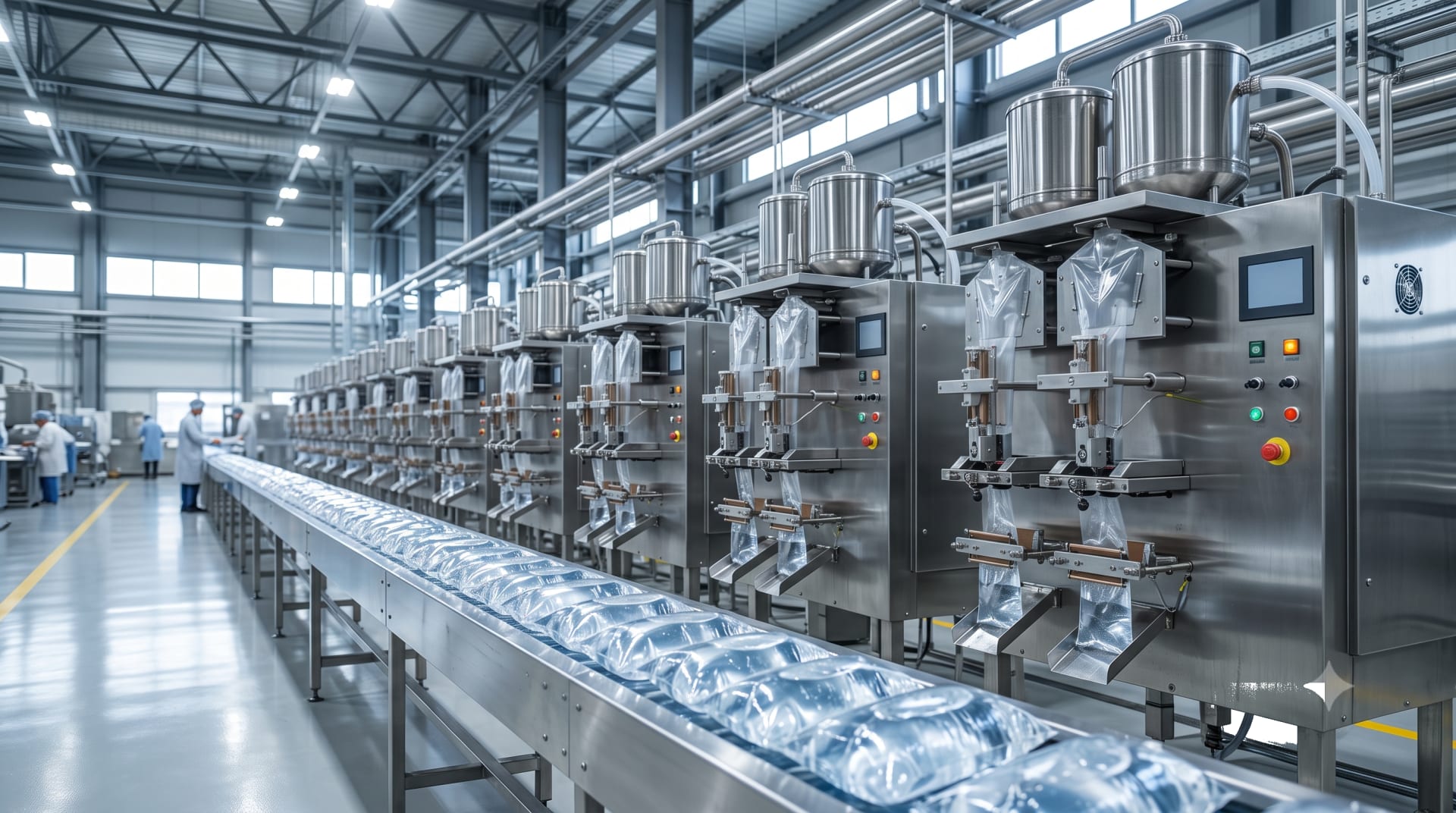
At the center sits the 1000-pouch-per-hour water pouch packing machine. It runs on a heavy 450 kg mechanical frame measuring 1050 x 850 x 1920 mm, built to handle continuous daily shifts without structural flex. Power draw is modest: 1750 W on a standard 220V/50Hz single-phase line. It packages volumes from 100 ml up to 200 ml, handling roll-fed film widths between 50–170 mm and pouch lengths between 50–210 mm.
The machine executes three operations automatically in one pass:
Inline UV film sterilization: The film unwinds through an enclosed UV tunnel, irradiating surface bacteria before the sheet meets the forming tube.
Inline date printing: A mechanical hot-stamp unit prints batch codes, manufacturing dates, and MRP onto the dry film stock before it hits moisture.
Sealing and cutting: Cam-driven jaws pull, vertically seam, fill, cross-seal, and cut each finished pouch.
Unlike pneumatic packers, this chassis requires no air compressor. A mechanical camshaft and microcontroller handle stroke timing directly. Fewer valves. Lower electrical load. No pneumatic line condensation contaminating the seals. For anyone starting a water pouch packing business, that mechanical simplicity saves hours of maintenance each week.
How many pouches can one machine produce per day?
One 1,000-PPH machine outputs exactly 12,000 finished pouches in a 16-hour operating day at 75% Overall Equipment Effectiveness (OEE).
Nameplate speed is not real-world output. Operators need time for film changes, ink roll swaps, temperature stabilization, and shift-end washdowns. Here is the verified shop-floor arithmetic:
Daily Output = 1,000 pouches/hour × 16 operating hours × 0.75 OEE = 12,000 pouches/day
When local route demand climbs past 12,000 pouches daily in a growing packaged drinking water business, factory owners face an equipment choice:
Strategy A: Add a second 1000-PPH machine (Rs 1,70,000 ex-works). Running two separate machines doubles daily volume to 24,000 pouches and gives you immediate line redundancy. If line one pauses for a roll change or jaw adjustment, line two keeps running. Both units plug straight into single-phase connections.
Strategy B: Upgrade to a higher-PPH class machine (~Rs 2.5–2.8L). A single, larger frame saves floor space and requires only one operator station. The tradeoff is risk: if that sole machine stops for maintenance, total plant output drops to zero until it restarts.
Build future expansion into your initial packaged drinking water plant setup cost in India from day one. Sizing your electrical trunking and floor drainage for a second machine now prevents costly downtime later, while comparing your expected mineral water plant machine price across capacity tiers keeps budget allocations realistic.
Plant troubleshooting: How do you fix common pouch packing defects?
Diagnosing pouch packaging defects requires checking jaw mechanical alignment, sealing temperature settings, and web tension before touching dosing pumps or stroke timers.
Pouch leakage at the seals: Hairline leaks along the vertical or cross seams trace back to poor jaw pressure or temperature drift. Check the microcontroller temperature readout against a contact pyrometer; keep sealing temperature locked within a 2°C band for your specific LDPE micron rating. Check the jaw springs. If the mechanical strike plate is misaligned by even half a millimeter, the film will not fuse evenly.
Seal-area water contamination: Wet film will not weld. If water droplets hit the sealing zone, the plastic delaminates under transport pressure. Reset the mechanical valve cam to shut off liquid flow before the cross-sealing jaws begin their forward stroke. Inspect the fill nozzle tip; worn silicone seals allow water to drip between dosing cycles.
Date-print smear on wet film: Ink smudges when ribbon strikes damp film or rolls over idler bars before cooling. Mount your batch coder near the unwinder spool where the film is bone-dry. Fine-tune coder dwell time so hot-melt ink bonds instantly without melting through thin packaging stock.
Unplanned downtime: Sudden line stops usually stem from wandering film webs or motor thermal trips caused by erratic line voltage. Wipe down the rubber nip rollers daily to clear mineral scale, secure film roll collars firmly against the unwind arbor, and ensure your single-phase feed holds 220V under motor start loads.
Keeping scrap rates down protects your margins. It ensures your packaged drinking water plant setup cost in India pays for itself on schedule while keeping your water pouch packing business competitive on local delivery routes.