From 1 January 2026, every packaged drinking water plant in India runs under FSSAI's compulsory Scheme of Testing. Here is what the 2026 rules demand from your RO skid, lab testing, and batch coding.
What changed for packaged water plants in 2026?
Under packaged drinking water plant rules 2026, central FSSAI enforced a compulsory Scheme of Testing across India on 1 January 2026 after removing mandatory BIS certification in October 2024 (FNB News; registerkaro.in).
Removing the BIS mandate from the Food Safety and Standards (Prohibition and Restriction of Sales) Regulations, 2011 in October 2024 did not relax plant inspections. Instead, the FSSAI Scheme of Testing packaged drinking water took effect on 1 January 2026 as the national baseline (FNB News; registerkaro.in). Bottled water remains inside the packaged drinking water high risk category FSSAI classification, meaning factories face scheduled laboratory checks and physical plant audits throughout 2026 (registerkaro.in). Buyers calculating packaged drinking water plant cost in INR must separate ex-works machinery quotes (excluding GST) from landed project budgets (including GST) while setting aside recurring working capital for mandatory third-party and in-house lab testing. For the full budget picture, see our packaged drinking water plant setup cost guide.
State food safety commissioners still hold authority to tighten licensing rules inside their own borders. On 14 October 2026, Uttar Pradesh FSDA Commissioner Dr. Roshan Jacob issued a state directive ordering that new packaged-water units in Uttar Pradesh will receive a licence only after obtaining BIS certification, while existing units must secure BIS certification by 31 March 2027 or face licence suspension and a production halt (The Statesman, The World Opinion, IANS, October 2026). That order came immediately after Uttar Pradesh inspectors visited 811 units and tested 660 water samples—flagging 176 unsafe samples and 337 substandard samples—before suspending 152 plant licences across the state (The Statesman, The World Opinion, IANS, October 2026). Note the jurisdiction: this BIS mandate is strictly an Uttar Pradesh state directive, and central FSSAI has not adopted it nationwide.
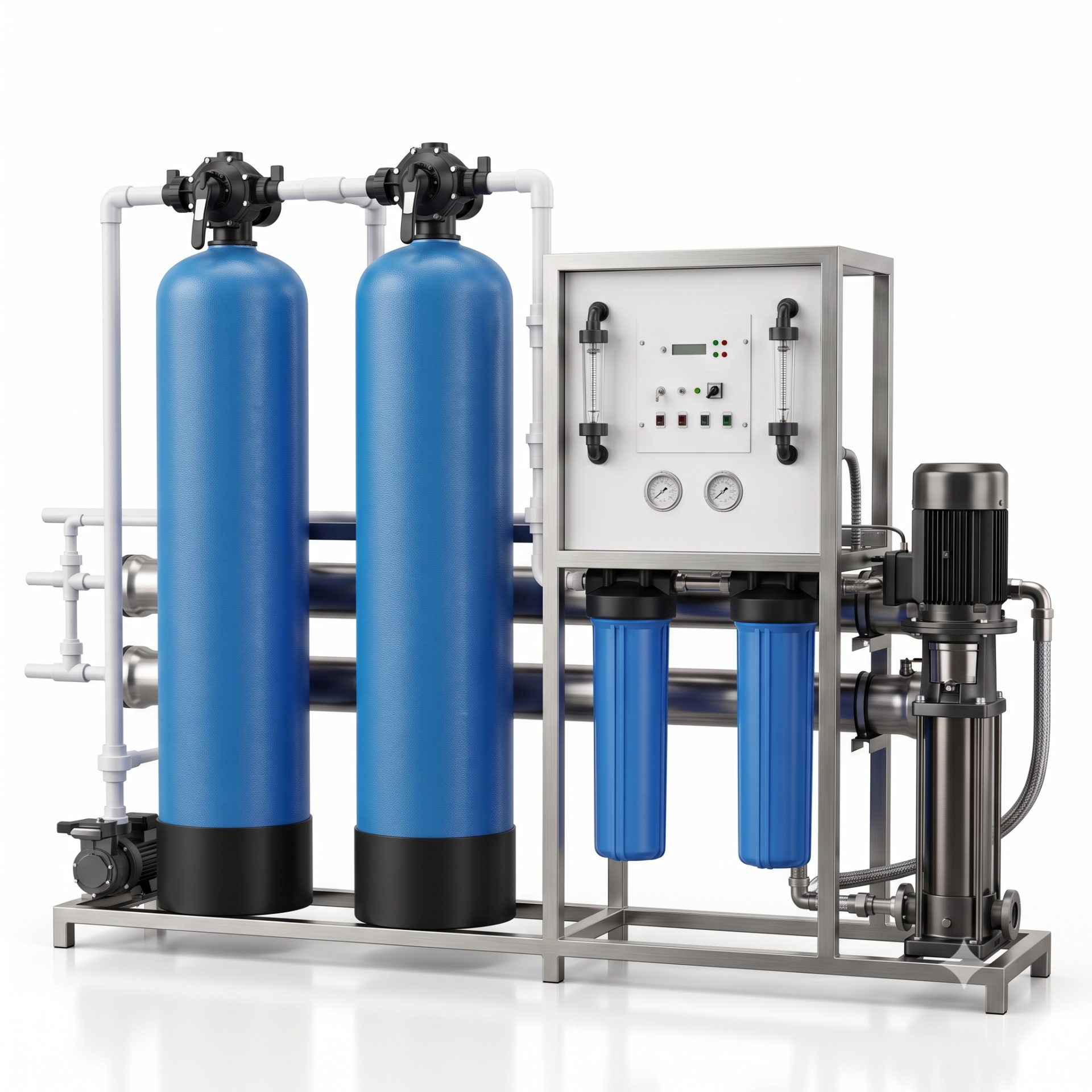
FRP vs SS RO skids (500–2000 LPH): what do inspectors look for?
Inspectors auditing a 500 to 2000 LPH packaged drinking water ro plant check manifold weld seams, dead-leg piping joints, and washdown clearance across FRP vs SS RO plant water bottling skids to enforce the 1 January 2026 FSSAI Scheme of Testing (FNB News; registerkaro.in).
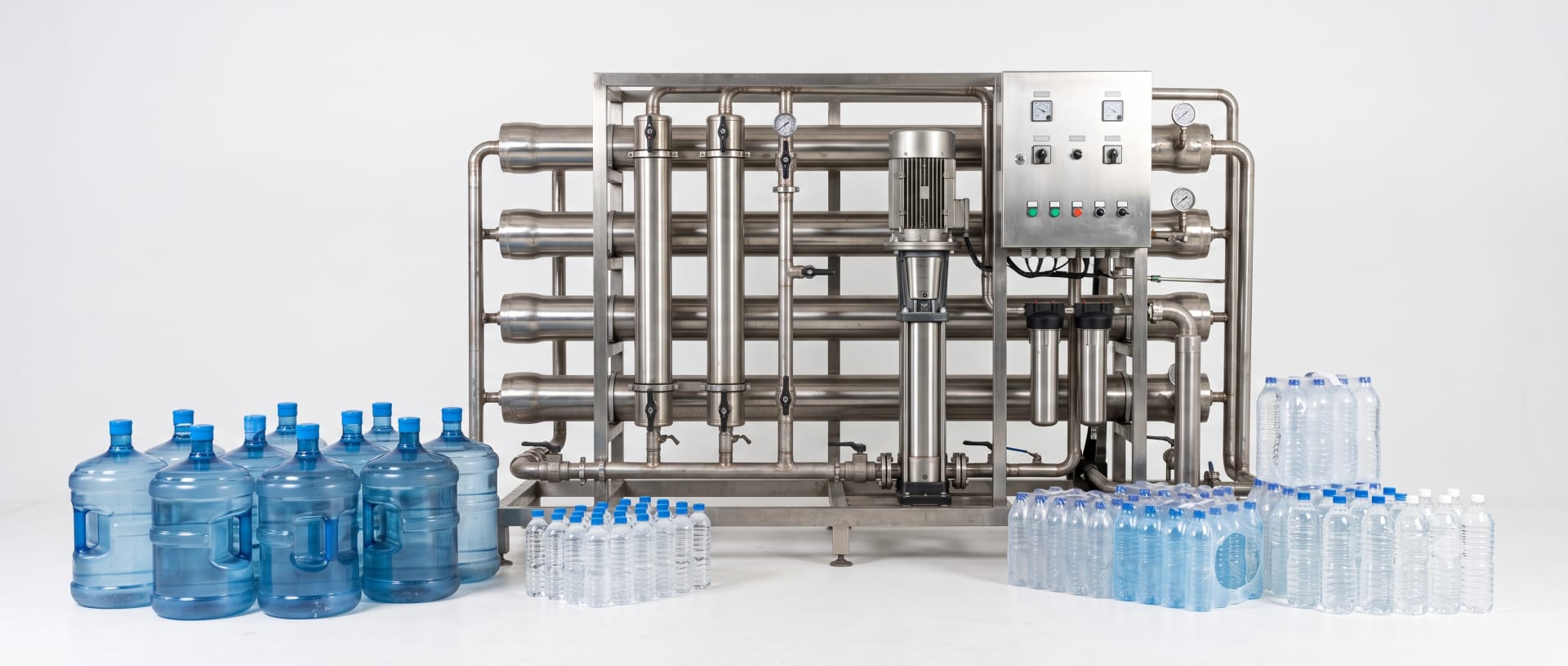
Walk through an active bottling room and the practical difference between the two builds becomes obvious. Fiber-reinforced plastic (FRP) pressure vessels plumbed with unplasticized polyvinyl chloride (uPVC) manifolds keep upfront capital expenditure lower in INR (excluding GST), making a 2000 LPH FRP industrial RO plant practical for tight startup budgets. However, solvent-cemented uPVC tees and threaded joints can trap stagnant water if the piping layout leaves dead legs, and external FRP shells can chalk under harsh chemical washdowns. Specifying a full stainless steel (SS) skid on a 1000 LPH RO plant raises initial equipment cost in INR, but sanitary SS manifolds, welded joints, and stainless membrane housings let operators flush and sanitize the line between shifts without risking cracked fittings or hidden biofilm pockets.
Swipe or scroll horizontally to view all columns
| Compliance & Skid Parameter | FRP RO Plant Skid | SS RO Plant Skid |
|---|---|---|
| Target Plant Capacity | 500–2000 LPH | 500–2000 LPH |
| Microbiological Testing Cadence | 12 tests/year (monthly) | 12 tests/year (monthly) |
| Chemical & Physical Testing Cadence | 4 tests/year (quarterly) | 4 tests/year (quarterly) |
| Packaging Material Testing Cadence | 2 tests/year (biannually) | 2 tests/year (biannually) |
| Post-Failure Restart Requirement | 5 consecutive passed batches | 5 consecutive passed batches |
| Mandatory Record Retention Period | 5 years minimum | 5 years minimum |
How do plants prevent microbiological batch failures?
Bottling lines pass their 12 mandatory monthly microbiological tests per year by running inline UV disinfection, closed-loop ozonation, and multi-stage automated jar washing on every shift (registerkaro.in; FNB News).
Failing even one monthly microbiological test under the 1 January 2026 FSSAI Scheme of Testing shuts down commercial dispatch immediately (FNB News). You cannot simply flush the storage tank and resume shipping the next morning. Plant operators must run a formal root-cause investigation, log their corrective actions on the line, and hold all commercial dispatches until 5 consecutive batches pass every required microbiological test—then store those test and remediation files for at least 5 years (FNB News).
After ANY failed microbiological test, hold every dispatch until 5 consecutive batches pass — shipping one "probably fine" lot risks licence suspension and a full investigation file. 152 Uttar Pradesh plants learned this the hard way in October 2026.
Three post-RO sanitation hardware stages protect the line from a costly 5-batch shutdown:
Inline UV Sterilization: Mounted on the permeate line feeding the filling manifold, quartz-sleeve UV lamps inactivate bacteria that slip past storage tank breather vents before water ever reaches a bottle.
Ozonation Contact Systems: Piped into the final product SS storage tank and recirculation loop, ozone sanitizes internal pipe walls, tank headspace, and filler nozzles right up to the capping head.
Automated Jar Washing: Market-returned 20-litre polycarbonate and PET jars arrive with broken caps, road dust, and algae rings inside the neck. Running an enclosed 20-litre water jar washing and filling machine subjects each jar to high-pressure internal and external jet rinses before filling, stopping dirty returnables from re-contaminating treated RO permeate.
How should pre-treatment and membranes be sized for high-TDS borewell water?
Engineering pre-treatment vessels and RO membrane arrays for a 500 to 2000 LPH plant drawing high-TDS borewell water requires sizing media beds and membrane surface area to pass all 4 quarterly chemical and physical tests per year (registerkaro.in).
Raw groundwater chemistry shifts between monsoon and summer across Indian industrial estates. Pumping untreated, high-TDS borewell water straight into undersized filters chokes micron cartridges within days, scales tail-end RO membranes, and pushes product water out of chemical compliance. Look at the numbers from the October 2026 Uttar Pradesh inspection drive across 811 units: out of 660 water samples tested by state labs, 337 came back substandard and 176 tested unsafe, leading to 152 suspended licences (The Statesman, The World Opinion, IANS, October 2026).
Clearing the 4 quarterly chemical and physical tests mandated by the 1 January 2026 FSSAI Scheme of Testing starts before water ever touches the high-pressure RO pump (registerkaro.in). Buyers ordering a 500 to 2000 LPH skid for high-TDS borewell water need properly sized sand filters to trap suspended silt, activated carbon vessels to strip organics, calibrated antiscalant dosing pumps to stop mineral scaling on membrane leaves, and multi-cartridge micron housings that protect the high-pressure pump impellers during continuous shifts.
What traceability do the 5-year record rules demand?
India's 1 January 2026 FSSAI testing rules mandate a minimum 5-year retention period for all lab reports and corrective-action logs, requiring permanent batch, timestamp, and QR coding on every filled bottle and jar (FNB News).
Auditors inspecting a high-risk category water plant do not just inspect water treatment tanks; they pull finished bottles from the dispatch floor and match printed batch numbers against 5 years of lab binders. Those files must tie each production lot to 12 monthly microbiological test reports per year, 4 quarterly chemical and physical reports per year, and 2 biannual packaging-material test certificates per year (registerkaro.in; FNB News).
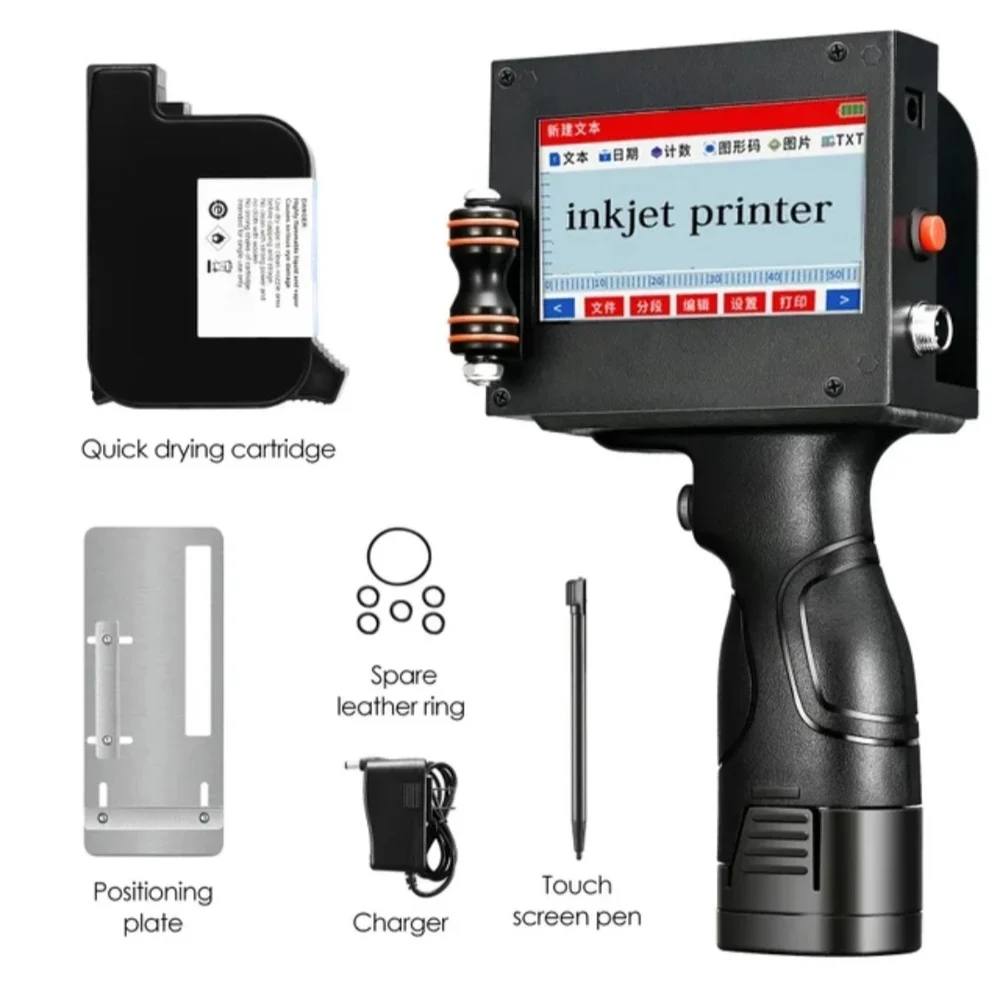
Cold PET bottles sweating on a humid conveyor quickly rub off cheap contact ink stamps or peel paper batch stickers. Mounting thermal inkjet (TIJ) printers for batch coding water bottles and 20-litre jar caps prints fast-drying batch codes, shift timestamps, and scannable QR codes directly onto curved bottle necks or labels. Should a monthly lab sample fail, minute-by-minute TIJ timestamps let the quality team quarantine that exact shift's stock and verify the 5 consecutive passed microbiological batches required before resuming market dispatches (FNB News).
Limits and assumptions
Project budgets for packaged drinking water plant cost in INR, licensing timelines, and line layouts across 500 to 2000 LPH plants vary by machine model, plant capacity, state location, GST scope, and site operating conditions.
Machine Model and Skid Build: Capital outlay in INR shifts depending on whether you specify an FRP RO skid with uPVC manifolds or a full SS skid, a semi-automatic versus enclosed automatic 20-litre jar washer, and a standalone versus conveyor-mounted TIJ batch coder.
Plant Capacity: Electrical connected load, raw water tank volume, membrane vessel count, and high-pressure pump sizing scale up across 500 LPH, 1000 LPH, and 2000 LPH lines.
Location and State Directives: While central FSSAI removed mandatory BIS certification in October 2024 and enforced the national Scheme of Testing on 1 January 2026 (FNB News; registerkaro.in), state-level enforcement differs—most notably in Uttar Pradesh, where the 14 October 2026 FSDA state directive mandates BIS certification before licensing new units and gives existing units until 31 March 2027 to obtain BIS certification (The Statesman, The World Opinion, IANS, October 2026).
Tax and Commercial Scope: Purchase managers comparing INR quotes must separate ex-works machine pricing (excluding GST, transit insurance, freight, civil foundation work, and third-party lab testing fees) from turnkey landed project costs (including GST).
Site Operating Conditions: Pre-treatment backwash frequency, antiscalant consumption, and RO membrane replacement intervals depend on seasonal swings in high-TDS borewell water and batch-to-batch consistency across biannual packaging-material deliveries.