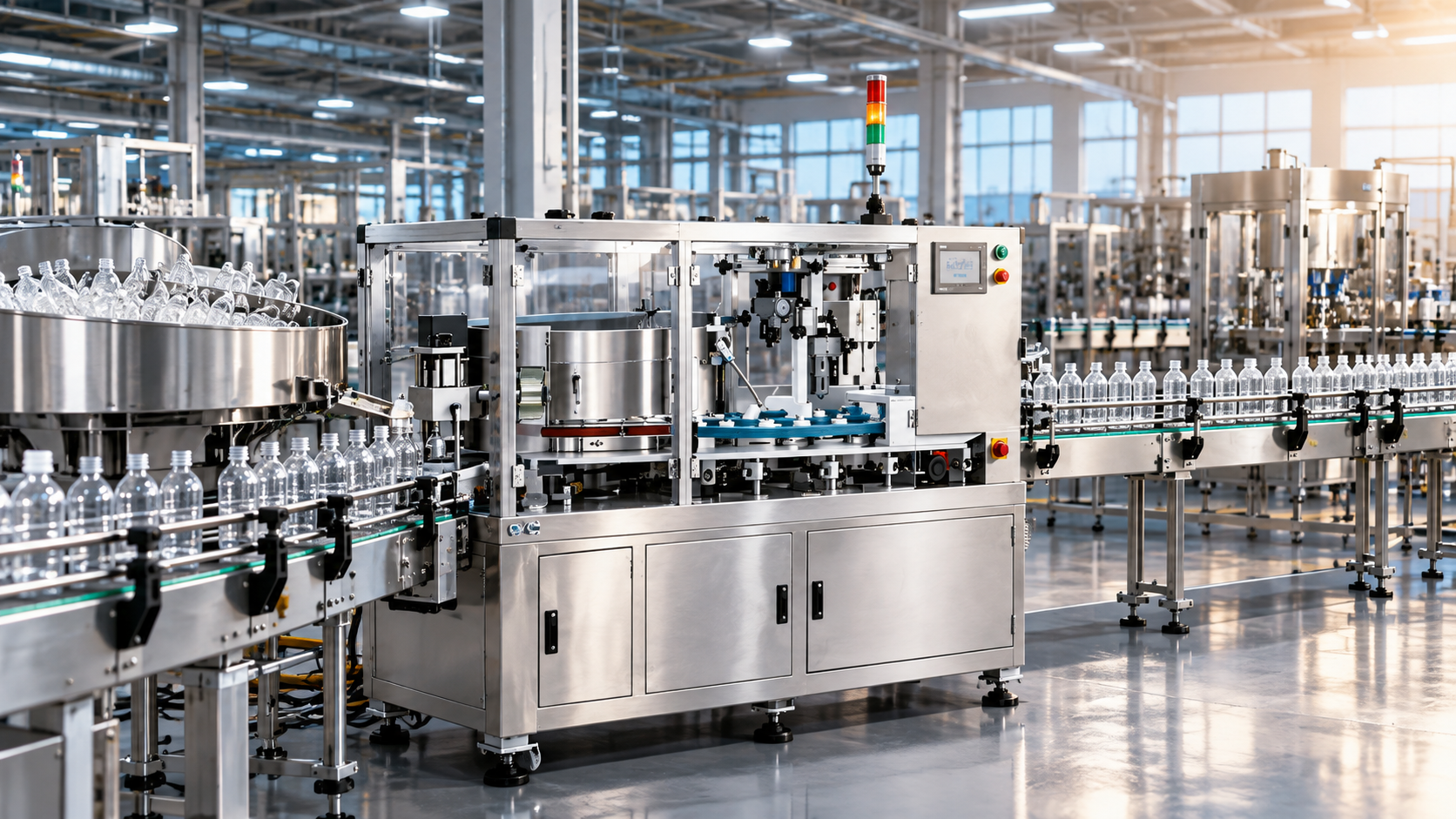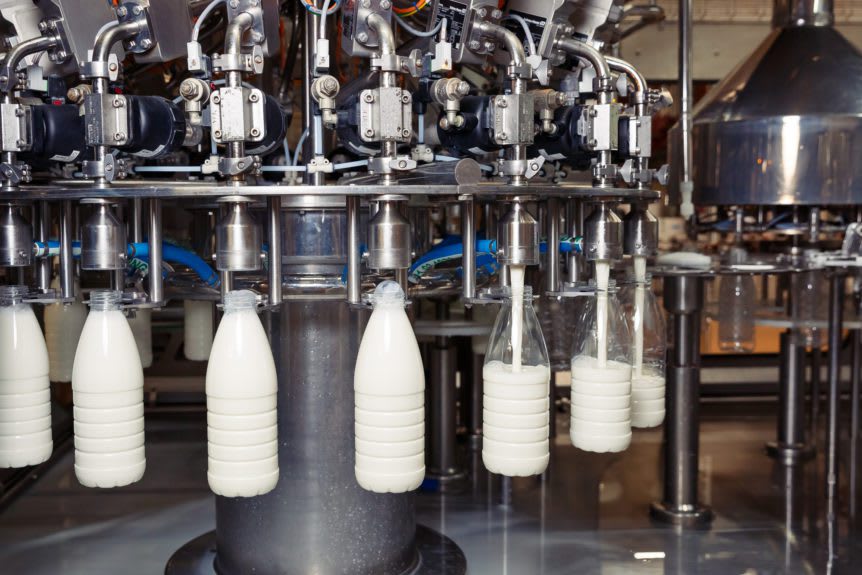
A milk bottle filling machine doses a set volume of milk into bottles — typically 200 ml, 500 ml, or 1-litre PET or glass bottles — then the bottles move on to capping and labelling. Unlike pouch lines that form the pack from film, a bottle line works with pre-made containers, so the machine's only job is accurate, hygienic filling at speed.
Pouch vs bottle: the decision that comes before the machine
Most dairies start this conversation asking about machines. The right first question is the format, because it decides your economics for years:
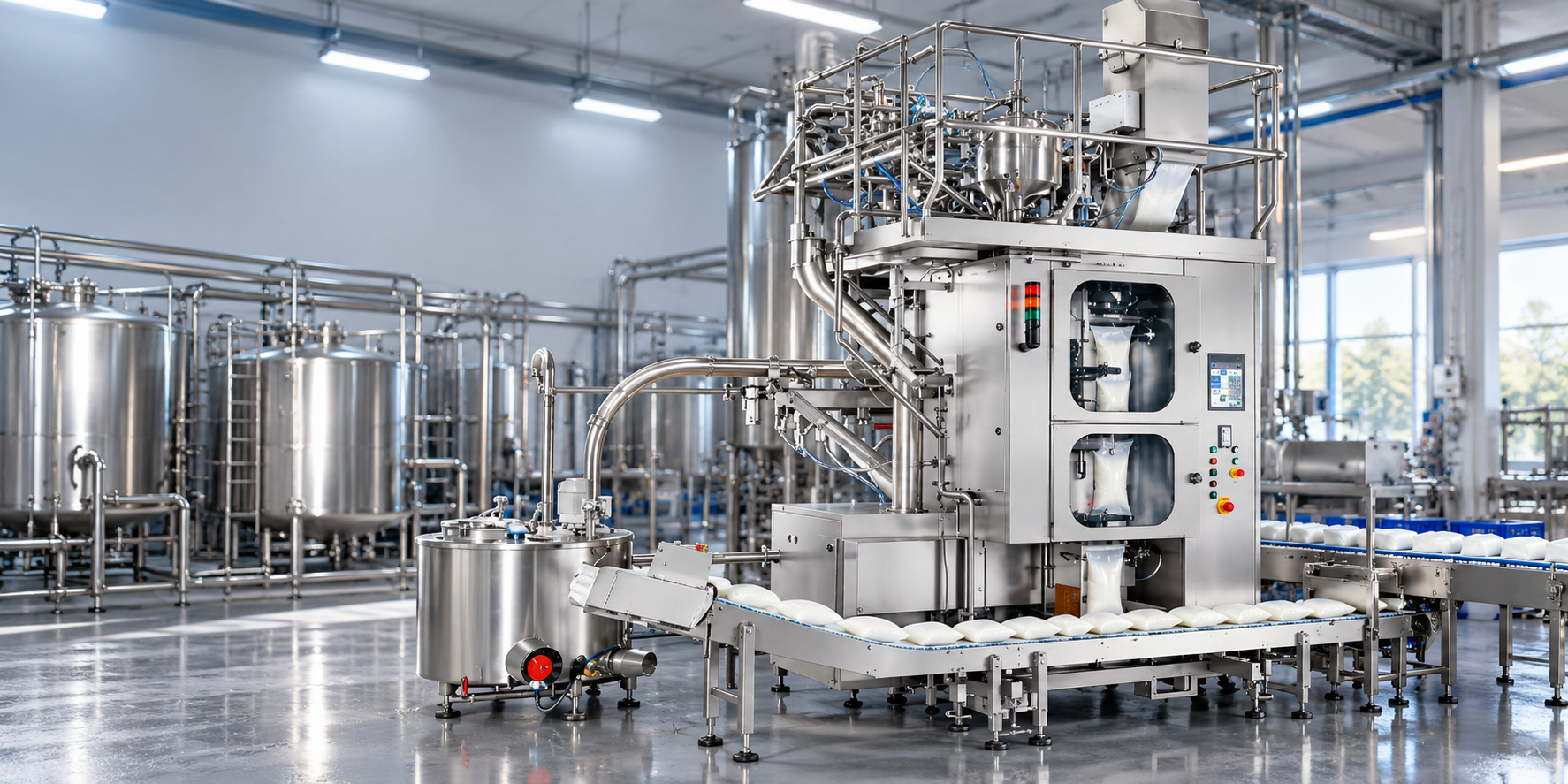
Pouch wins on cost per unit and throughput — film is cheap, lines are fast, and the 500 ml pouch is India's default retail milk format. If you compete on price at volume, pouch is almost always the answer.
Bottle wins on margin per unit and brand. Bottled milk — plain in PET/glass, or flavoured milk in 200 ml PET — sells at a premium, survives handling better, reseals after opening, and carries a label with real shelf presence. The trade: bottles cost more per unit than film, and the line needs a capper and labeller after the filler.
A practical rule: below ~5,000 litres/day of commodity milk, pouch usually wins on cost. For flavoured milk, premium plain milk, farm-gate brands, or any product where the pack itself sells the product, bottle wins on margin. Many growing dairies run both — pouch for tonnage, bottle for the premium line.
How it works: piston, nozzle, and the two line layouts
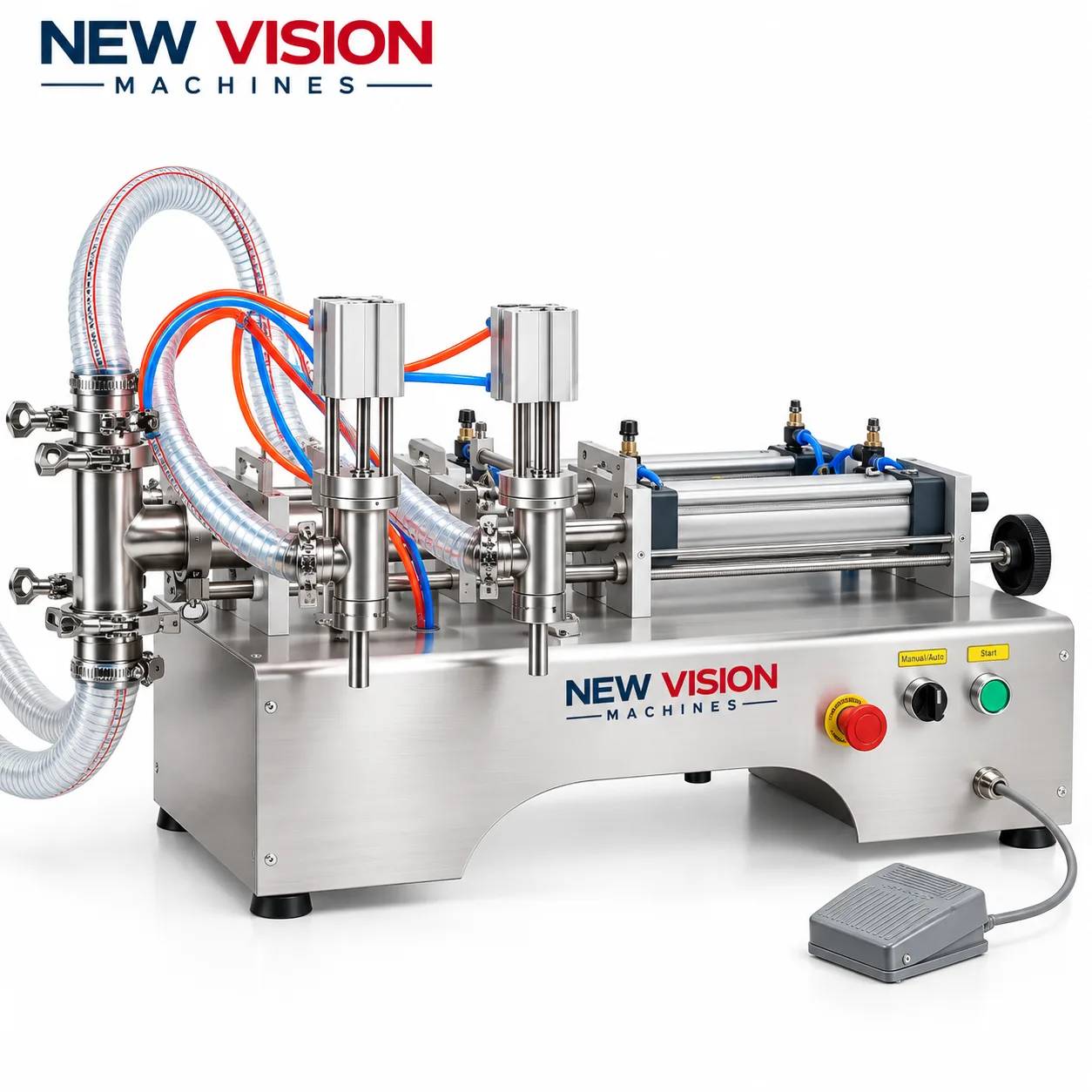
The standard dairy bottle filler is a piston (volumetric) filler: each filling head has a cylinder that draws a fixed volume of milk on the backstroke and pushes it through the nozzle on the forward stroke. Volume is set mechanically, so it stays consistent regardless of tank level — the weakness of gravity systems on pouch lines doesn't apply here.
Diving nozzles matter for milk. The nozzle dips to the bottle's bottom and rises as the level climbs (bottom-up filling). This stops foaming and splashing, which matters because foam in the neck area fouls the cap seal. If a supplier's filler uses fixed top-down nozzles for milk, ask how they handle foam — the answer tells you whether they've actually run dairy.
Inline vs rotary. Inline machines park 2–8 heads over a conveyor; bottles stop, fill, and move on. Simple, cheaper, 5–60 bottles per minute, and the right choice up to mid-scale. Rotary fillers spin bottles through a carousel of 12–40+ heads for 60–300+ bpm — serious money, justified only when a single SKU runs all day.
Bottle formats and what they demand from the machine
PET bottles (200 ml / 500 ml / 1 L): the mainstream choice. Light, cheap, shatterproof. Needs neck-handling change parts per bottle size — confirm changeover time if you run multiple SKUs.
Glass bottles: the traditional and premium format (farm brands, A2 milk). Heavier, breakable, and unforgiving of rough handling — the conveyor and guides must be set for glass, not just PET.
Flavoured milk (chocolate, butterscotch, mango): higher viscosity than plain milk and often with stabilisers. Needs a piston sized for viscous flow and slightly slower fill to avoid aeration. Standard plain-milk settings under-fill flavoured product — validate with your actual recipe, not water.
Cap compatibility: the filler is only half the line. Every bottle needs a cap torqued to spec right after filling — plan the capper (screw or press-on) and a labeller as part of the same purchase, not as an afterthought six months later.
What it costs in India: the real band
Based on current live listings from Indian marketplaces, milk bottle filling machines trade between ₹50,000 and ₹6.5 lakh:
- Manual / single-nozzle entry (flavoured milk counters, farm gate): around ₹8,000–₹50,000 - Semi-automatic 2–4 head (5–30 bottles/min, 100–1000 ml): around ₹50,000–₹1,00,000 - Automatic inline 30–60 bpm (conveyorised, multi-head): around ₹2.25–₹3.8 lakh - Flavoured-milk / high-speed 40 bpm lines: ₹6.2–₹6.5 lakh and above
What moves a machine up the band: number of heads, conveyor automation, SS304 product-contact parts, PLC controls, and integration (infeed tables, capping, coding). For context, a double-head piston liquid filling machine covering 100–1000 ml with ±1% accuracy lists at ₹54,600 — the entry tier where most small dairies actually start.
Sizing it: the one formula that matters
Required bottles/min = Daily bottle target ÷ (operating hours × 60 × 0.8)
The 0.8 is real-world efficiency — bottle jams, changeovers, cleaning. Example: 12,000 bottles of 500 ml over an 8-hour shift needs 12,000 ÷ (8 × 60 × 0.8) = 31 bottles/min, so you size for a 40 bpm machine, not a 30.
Two sizing traps specific to bottle lines: first, change parts — a machine rated 60 bpm on one bottle size drops when you change formats; size for your most frequent changeover, not the brochure number. When comparing piston bottle fillers for a dairy line, confirm the fill-range and change-part envelope in writing. Second, the capper must match — a 40 bpm filler feeding a 20 bpm manual capper is a 20 bpm line with extra steps.
What to verify before buying
1. Run your bottles, your milk. PET wall thickness and neck finish vary; a filler tuned for one bottle supplier's 500 ml may misbehave on another's. Test with your actual containers. 2. Foam check. Fill 50 bottles and inspect the neck area — foam residue under the cap is a shelf-life and leaker risk. 3. Accuracy across the shift. Weigh filled bottles at start, middle, and end of a run. Piston seals wear; the spread should stay inside ±1%. 4. Changeover time. If you run 200 ml and 1 L, time a full format change yourself — heads, guides, and conveyor settings. 5. Cleaning access. Milk contact parts (pistons, nozzles, hoses) must strip down without tools for daily washdown. Ask for the cleaning procedure in writing. 6. Line completeness. Confirm what the quote excludes — infeed table, capper, labeller, and air compressor are the usual surprises.
Field troubleshooting: four bottle-line defects
Foamy fills. Nozzle not diving deep enough, or fill speed too high for the viscosity. Lower the nozzle start position and slow the fill stroke — especially on flavoured milk.
Volume drift through the shift. Piston seal wear or air-pressure fluctuation on pneumatic machines. Check the compressor regulator first (cheapest fix), then inspect seals.
Bottles tipping on the conveyor. Guide rails set for the wrong bottle diameter, or belt speed mismatched to fill time. Common right after a format change — re-check every guide, not just the filler.
Caps leaking after capping. Usually cap torque, not the filler — but foam residue in the neck (see above) is the filler's contribution. Fix the fill before blaming the capper.