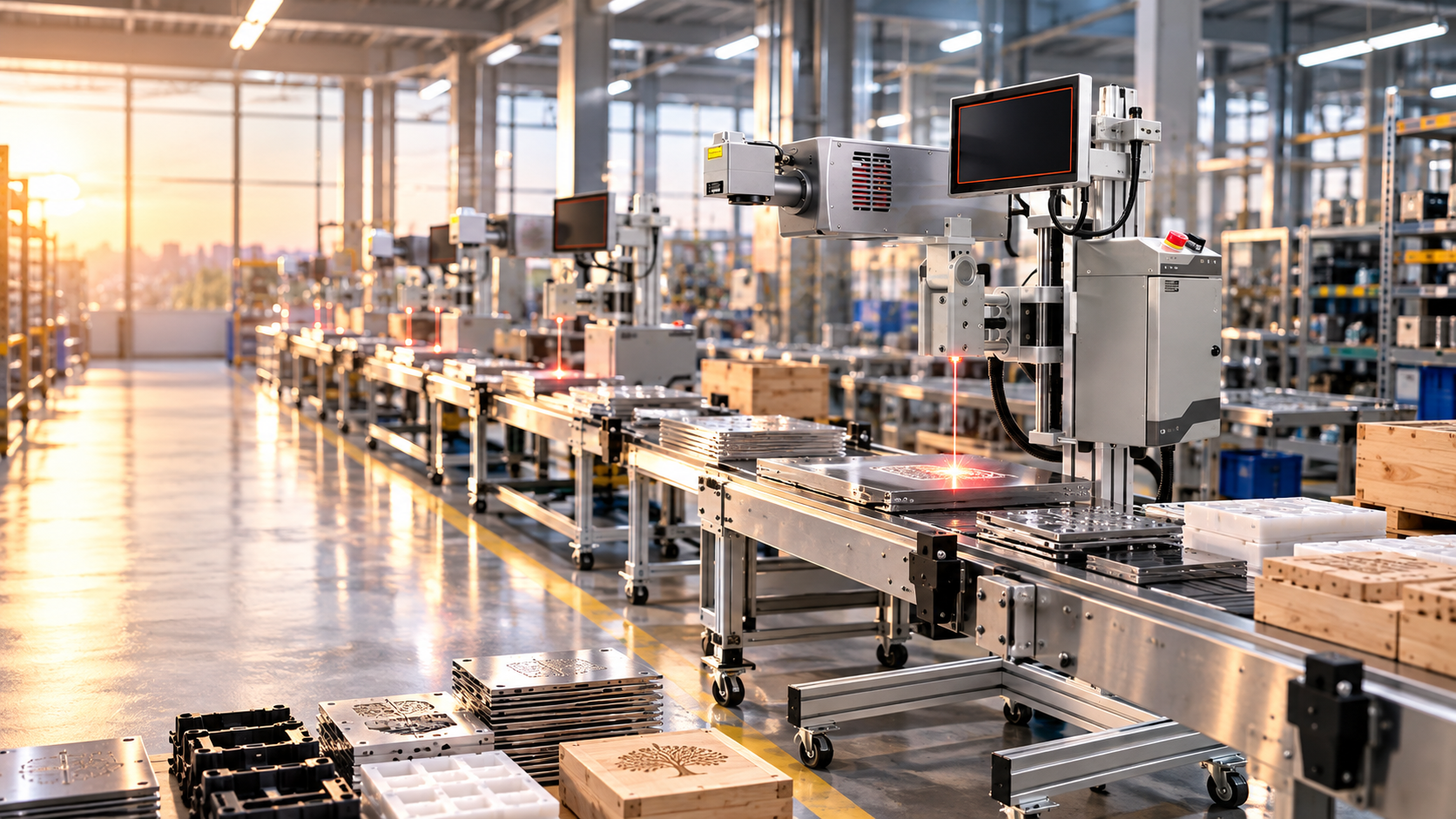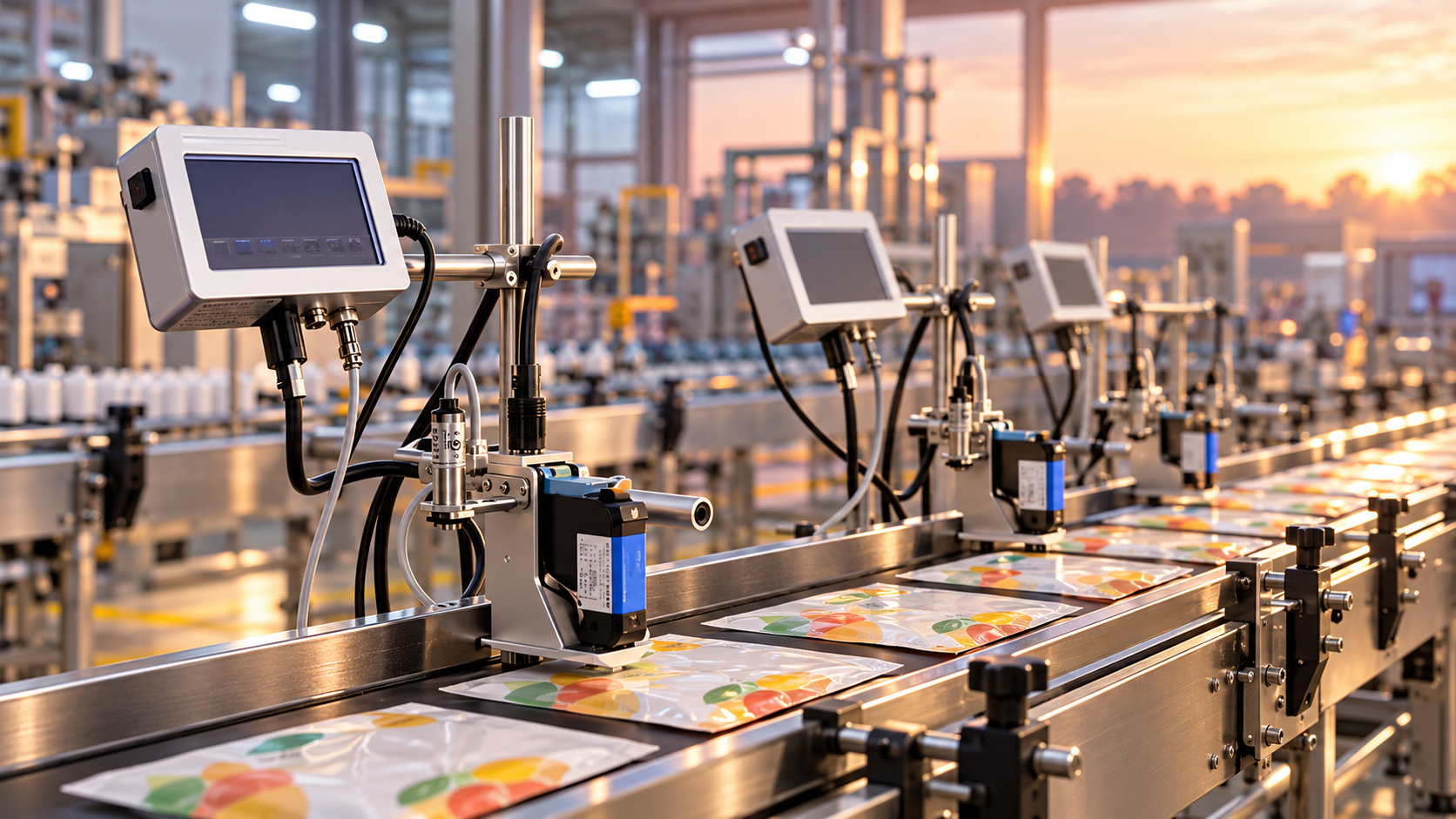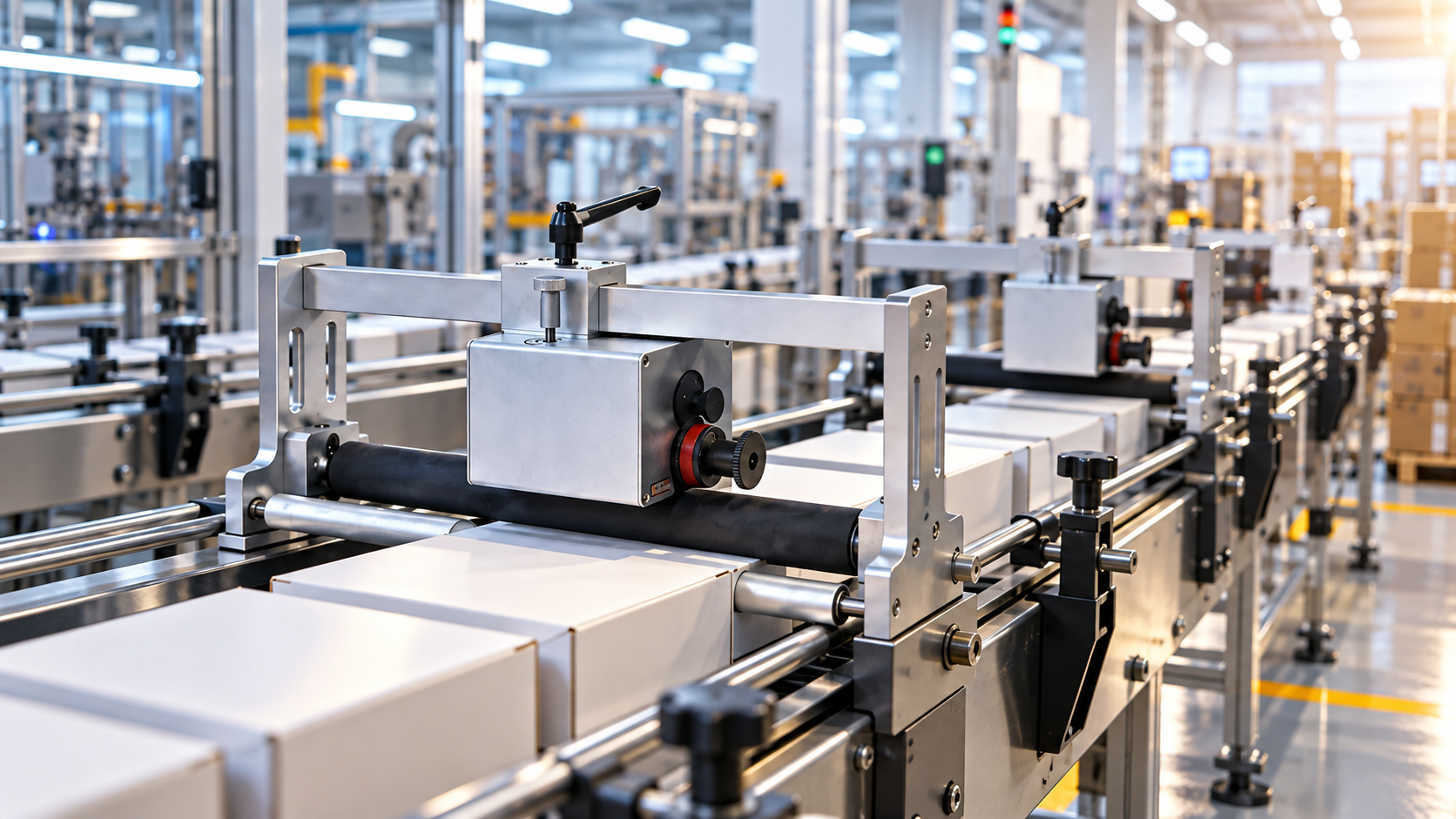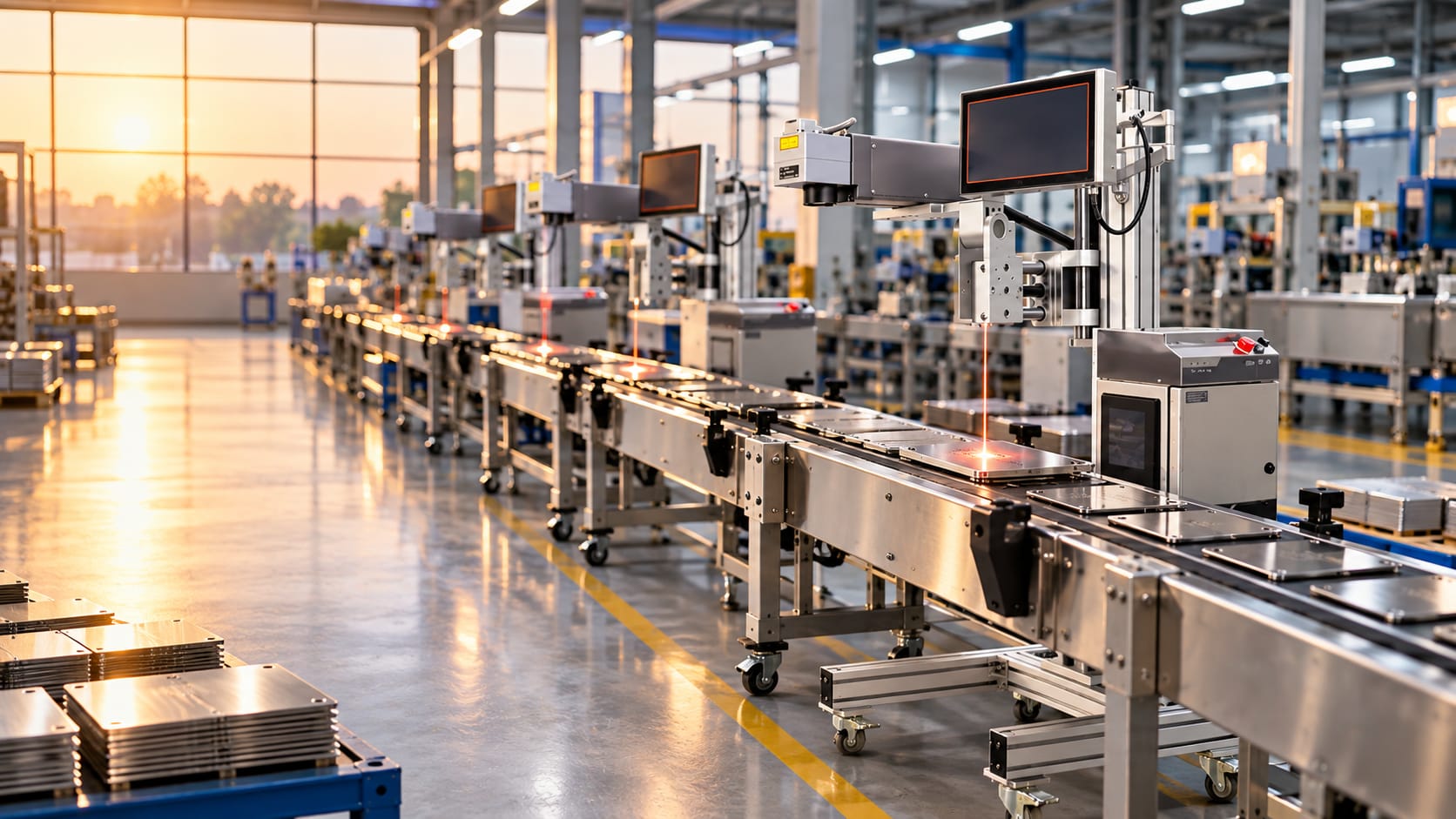
A laser marking machine price in India typically starts around ₹1.5 lakh and can cross ₹30 lakh. The actual quote depends on laser type, power, marking area, source, cooling, automation and the service included with the machine.
What is the laser marking machine price in India?
The verified price bands are ₹1.3–3.5 lakh for 20–30W fiber systems, ₹1.5–3.5 lakh for 30W CO₂ systems, and ₹2.5–4.5 lakh for 3–10W UV systems.
The wider Indian market runs from roughly ₹1.5 lakh to ₹30 lakh or more. That spread is not unusual. Higher-power sources, larger marking fields, automated handling, production-line integration, installation and service support can all push a machine into a different price bracket.
| Laser Type | Power | India Price Band | Best For |
|---|---|---|---|
| Fiber | 20–30W | ₹1.3–3.5 lakh | Metals, serial numbers, barcodes, engraving |
| CO₂ | 30W | ₹1.5–3.5 lakh | Wood, leather, acrylic, paper, glass, rubber |
| UV | 3–10W | ₹2.5–4.5 lakh | Heat-sensitive plastics, glass, PCBs, medical devices |
These are working price bands, not fixed rates. A machine at ₹1.4 lakh and another at ₹3 lakh may both be correctly priced if their sources, optics, marking area, automation and support packages are different.
What determines a fiber laser marking machine price in India?
A 20–30W fiber system currently costs around ₹1.3–3.5 lakh, with the source, marking field, scan system and included support having a direct effect on the final quotation.
Fiber lasers operate at 1064 nm and are primarily used on stainless steel, mild steel, brass and aluminium. Serial numbers, barcodes and component identification are common jobs. Higher-power configurations can also be used when deeper engraving is required.
For a basic identification application, don't compare machines on wattage alone. Galvo scan speed affects how quickly the laser completes the mark, while marking area determines how much of the component can be covered in one setup. Both can affect production capacity.
For a reference configuration, see the 20W fiber laser marking machine for steel and aluminium parts.
A 100W system belongs to a different application class. The 100W fiber laser system for deep engraving on automotive components is intended for substantially different work from a machine used only for serial numbers and basic identification marks.
What determines a CO2 laser marking machine price in India?
A 30W CO₂ system currently falls around ₹1.5–3.5 lakh, depending on its configuration, marking requirement and the installation and support included in the quotation.
CO₂ lasers operate at 10.6 microns and are suited to organic and non-metal materials such as wood, leather, acrylic, paper, glass and rubber.
One live Indian marketplace reference places a 30W CO₂ machine at ₹2.0 lakh, with 471 reviews and a 4.3-star rating. That is a market reference, not a universal price for every 30W configuration.
The 30W CO2 laser marking machine for wood, leather and acrylic represents this application category.
The more important test is straightforward: can the machine produce the required contrast and consistency on your actual material? Surface finish, material composition and production speed can matter more than choosing the lowest quoted wattage.
What determines a UV laser marking machine price in India?
A 3–10W UV system currently falls around ₹2.5–4.5 lakh because it uses a specialised 355 nm source for applications where controlled, low-heat marking is required.
UV lasers are used for cold marking, where excessive heat can damage, discolour or deform the substrate. Typical applications include heat-sensitive plastics, glass, PCBs and medical devices.
That higher purchase price should be considered against the application. If the part cannot tolerate significant thermal impact, comparing machines only by their purchase price misses the main engineering requirement.
See the 10W UV laser system for cold marking plastics and glass for this application category.
Which laser type should an Indian factory use?
Fiber is generally used for metals, CO₂ for organic materials, and UV for heat-sensitive materials where low-heat marking is required.
| Requirement | Suitable technology |
|---|---|
| Stainless steel component marking | Fiber |
| Mild steel serial numbers | Fiber |
| Aluminium barcodes | Fiber |
| Deep engraving on metal | Higher-power fiber |
| Wood marking | CO₂ |
| Leather marking | CO₂ |
| Acrylic marking | CO₂ |
| Paper and rubber marking | CO₂ |
| Heat-sensitive plastic | UV |
| PCB marking | UV |
| Glass with low thermal impact | UV |
| Medical-device marking | UV |
The complete range of laser marking machines for Indian factories can be assessed against the material and production requirement first, then against price.
What actually moves a laser marking machine quotation?
Laser power, galvo scan system, source configuration, marking area, cooling and automation usually account for the biggest differences between quotations.
1. Laser power
Higher wattage supports different marking depths and production requirements. A 20W machine used for identification marks should not be compared directly with a high-power system intended for deep engraving.
The question is not simply, "How many watts?" It is, "What mark do you need, on what material, at what production rate?"
2. Galvo scan speed
The galvo system moves the laser beam across the marking field. Its speed affects marking time.
That matters on a production line. If one machine takes noticeably longer to mark every component, a lower purchase price can disappear through slower output over time.
3. MOPA versus fixed-pulse source
MOPA and fixed-pulse fiber sources are not equivalent for every application. Their pulse characteristics affect how the laser interacts with the material.
The difference becomes relevant when marking different metals, producing colours, handling fine details or working with particular surface finishes. Source selection should therefore follow the marking requirement, not simply the machine's headline wattage.
4. Marking area
A larger marking field can require a different optical configuration and increase machine cost.
There is little value in paying for a large field when every component only needs a small serial number. On the other hand, undersizing the field can force additional positioning or multiple marking cycles when the component requires larger graphics or several marks in one operation.
5. Cooling
Air-cooled and water-cooled systems have different operating and maintenance requirements.
Evaluate cooling alongside duty cycle, operating environment and maintenance needs. It should not be treated as an isolated specification.
6. Automation and line integration
A standalone marking workstation is not the same purchase as an inline production system.
Conveyors, sensors, PLC communication, part positioning and automatic triggering all add engineering work and can materially change the quotation.
If the machine is going into an existing production line, discuss the integration requirement before comparing supplier prices.
7. Installation and training
Check whether installation, commissioning and operator training are included.
A quotation that looks cheaper on paper may exclude the work needed to get the machine installed, configured and running correctly on the shop floor.
8. Service network and spares
Laser-source availability, replacement components and local technical support directly affect downtime risk.
This matters even more when the marking machine is tied to continuous production. A machine that cannot be serviced promptly can hold up the line regardless of how attractive its original purchase price looked.
How should a factory shortlist a laser marking machine vendor?
A practical shortlist starts with three things: test the machine on your material, put the commercial terms in writing, and confirm that service is available where the machine will operate.
Use this checklist:
- GST invoice: Confirm that the supplier provides a proper GST invoice. - Live material test: Send your actual production material and require a live marking demonstration before buying. - State-level service: Ask where service engineers are located and whether your state is covered. - Laser-source spares: Confirm availability of source-related spares and expected replacement support. - Warranty: Get warranty duration, exclusions and covered components in writing. - Application result: Check contrast, readability, depth and consistency—not merely whether the sample can be marked. - Production test: For high-volume work, measure the actual cycle time required per part.
A live sample on your own material tells you more than a long specification sheet. Check the finished mark, repeat it across several parts, and measure the cycle time if the machine will run in production.
What is the total cost of owning a laser marking machine?
Total cost of ownership includes the machine price plus installation, maintenance, consumables or replacement parts, downtime and technical support.
The purchase quotation is only the starting point. A factory should consider:
Purchase price + installation + training + maintenance + spares + downtime exposure + service support.
Suppose the machine will mark thousands of components. A small difference in cycle time can become more important than a modest difference in purchase price. The same applies to service delays. An inexpensive machine that sits idle while waiting for technical support still carries a production cost.
For that reason, compare complete production-ready configurations rather than comparing machine bodies and wattage alone.
What should you check before accepting the final quotation?
Before accepting a quotation, confirm the laser type, power, marking area, source configuration, galvo system, cooling arrangement, automation scope, installation, training, warranty and service terms.
The supplier should clearly state what is included and what is not. If two quotations look different, normalize them before deciding what the price difference actually means.
Compare:
- Same laser type - Same power - Same marking field - Comparable source configuration - Comparable scan system - Same level of automation - Installation included or excluded consistently - Training included or excluded consistently - Equivalent warranty terms - Comparable service and spares support
Once these points are aligned, the difference between two quotations becomes much easier to understand.
How do you troubleshoot common laser marking defects?
Four common defects—faint marks, uneven depth, blurred edges and incorrect positioning—usually point to specific setup or process issues.
| Marking defect | Likely cause | Practical fix |
|---|---|---|
| Faint or low-contrast mark | Incorrect power/speed balance or unsuitable settings | Re-tune power and marking speed on the actual material |
| Uneven marking depth | Inconsistent focus or surface position | Check focus height and part positioning |
| Blurred or soft edges | Incorrect focus or unsuitable scan settings | Recheck focal distance and optimise scan parameters |
| Mark shifted from required position | Incorrect fixture, origin or trigger position | Recheck workholding, origin and automation trigger alignment |
Run these checks on the actual production material. A parameter set that gives a clean mark on one alloy, plastic or surface finish may behave differently on another.
Where can Indian factories compare laser marking systems?
Indian factories can compare laser systems by material, laser type, power and application before using purchase price as the deciding figure.
New Vision Machines provides laser marking equipment for industrial marking requirements, with application-specific configurations for different materials and production environments. The useful starting point is the complete range of laser marking machines for Indian factories, followed by a material test on the actual component.
How much does a 20–30W fiber laser marking machine cost in India?
A 20–30W fiber laser marking machine currently falls in the verified ₹1.3–3.5 lakh range in India. The final quotation depends on the laser source, galvo system, marking area, cooling, installation, training, warranty and service package. These systems are primarily used for metal marking and engraving.
How much does a 30W CO₂ laser marking machine cost in India?
A 30W CO₂ laser marking machine currently falls around ₹1.5–3.5 lakh in the verified Indian price ladder. CO₂ systems operate at 10.6 microns and are suited to materials such as wood, leather, acrylic, paper, glass and rubber. Configuration and included services can move the quotation within that band.
How much does a 3–10W UV laser marking machine cost in India?
A 3–10W UV laser marking machine currently falls around ₹2.5–4.5 lakh in India. UV systems use a 355 nm wavelength and are commonly selected for cold marking applications involving heat-sensitive plastics, glass, PCBs and medical devices. The required application result should be verified with a live material test.
Is a cheaper laser marking machine always better for a small factory?
No. Purchase price does not capture total cost of ownership. A factory should also compare cycle time, marking consistency, installation, operator training, warranty, local service availability and spare-part support. A lower quotation can become more expensive if production downtime or service delays are significant.
What should I ask a laser marking machine supplier before buying?
Ask for a GST invoice, a live demonstration using your actual material, written warranty terms, details of the service network in your state and confirmation that laser-source spares are available. Also compare marking area, scan speed, source configuration, cooling and automation scope before comparing final prices.
Can the same laser marking machine mark every material?
No. Fiber, CO₂ and UV lasers have different wavelengths and material interactions. Fiber systems are primarily used for metals, CO₂ systems for organic materials and UV systems for applications requiring low-heat marking. Selecting the technology from the material and required mark quality is more reliable than selecting it from price alone.
Need a marking test before you buy?
Contact New Vision Machines, Indore, at +91-9981604279 for a demo using your material. The practical test is simple: define the required mark, run it on the production material, check the result, then compare the complete machine configuration and service terms.