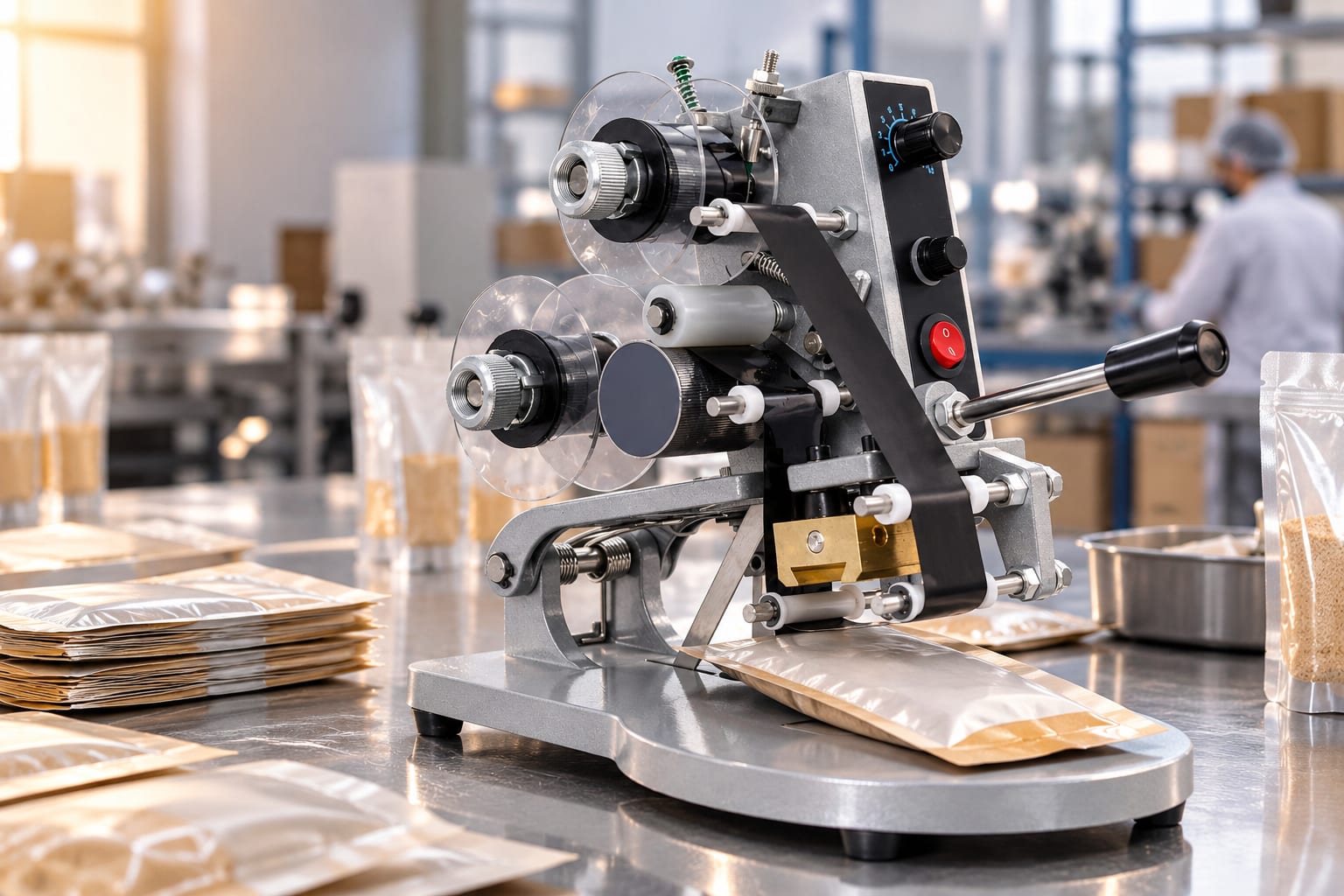
An MRP printing machine in India costs ₹3,300–₹42,000. Choose manual hot ribbon for low-volume pouches; use heated hot-ink-roll coding for conveyor lines requiring up to 300 prints/min.
MRP printing machine: price bands by coding method
Manual hot-ribbon batch coding machines cost ₹3,300–₹8,500, electric ribbon models cost ₹12,999–₹16,000, and a heated hot-ink-roll online coder costs ₹42,000.
Swipe or scroll horizontally to view all columns
| Coding method | Speed / prints per minute | Maintenance | Running cost | Pricing INR |
|---|---|---|---|---|
| Manual hot ribbon | 10–30 prints/min, operator-dependent | Low; clean type and heated block | Ribbon and type | ₹3,300–₹8,500 |
| Heated hot ink roll | Up to 300 prints/min | Moderate; heated roll and ink system | Ink roll / consumables | ₹42,000 |
| Handheld inkjet | Line-speed digital coding; application dependent | Cartridge/printhead care | Ink cartridge | Varies by configuration |
For electric ribbon machines, the supplied price band is ₹12,999–₹16,000.
The manual batch coding machine price in India makes ribbon coding practical for small pouch operations where the operator controls the pack rate. The machine is mechanically simple: heat, type, ribbon and pressure produce the code.
What the ₹7,000 manual machine provides
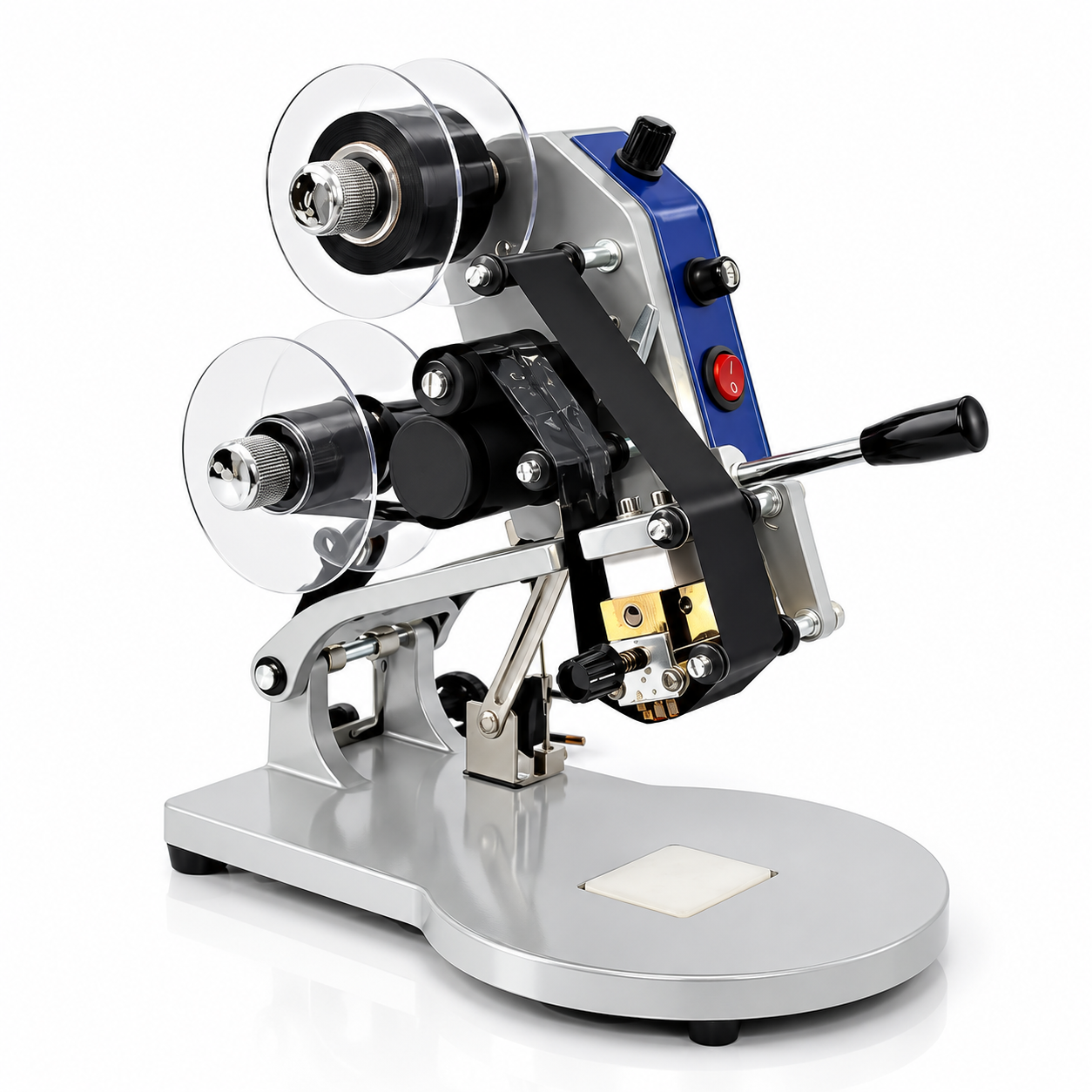
New Vision Machines' manual hot-ribbon machine costs ₹7,000 and is a lever-operated bench-top press with hot-ribbon printing up to 200°C.
It supports:
1–3 lines of date, batch, MRP or expiry information
Changeable type
10–30 prints/min, depending on the operator
40 W, 220 V single-phase power
Soft pouches, films and labels up to 4 mm thick
For a small food, spice, namkeen, confectionery or similar pouch operation, this is the basic engineering question: does the operator need to code every pack at a rate above 30 prints/min? If not, the ₹7,000 machine avoids paying for automation that the production process does not require.
Ribbon vs hot ink roll vs inkjet chooser
Manual hot ribbon is the right choice for low-volume pouch coding, heated hot ink roll for conveyor lines requiring up to 300 prints/min, and handheld inkjet for cartons and bottles requiring digital text.
Manual hot ribbon: The print is made through heated type and ribbon. It suits soft pouches, films and labels where the required information is mainly date, batch, MRP and expiry. It is operator-dependent, so actual output varies with handling.
Heated hot ink roll: A heated ink roll is suited to continuous conveyor production. The supplied specification is up to 300 prints/min, making it appropriate when the packaging line itself is materially faster than a manually operated press.
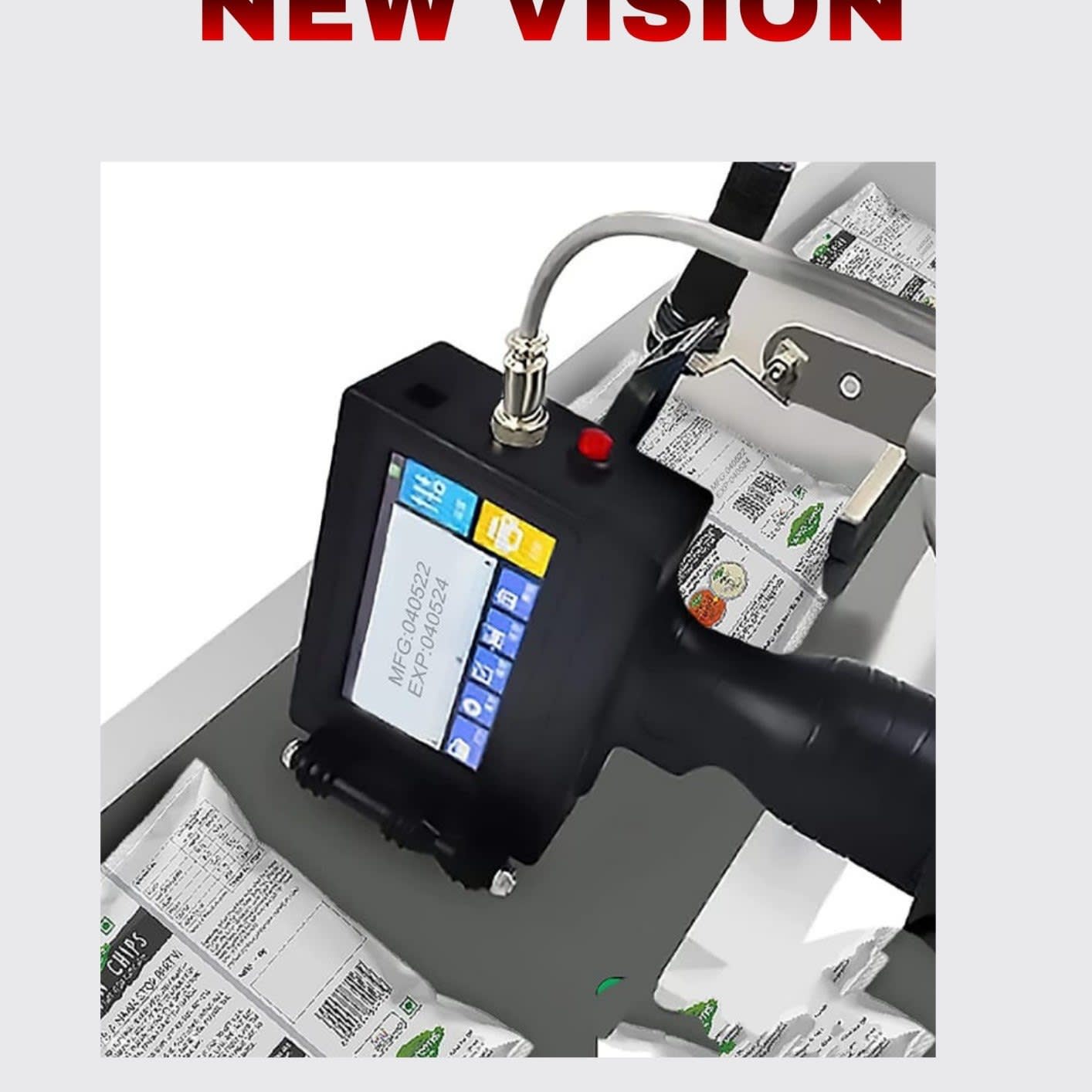
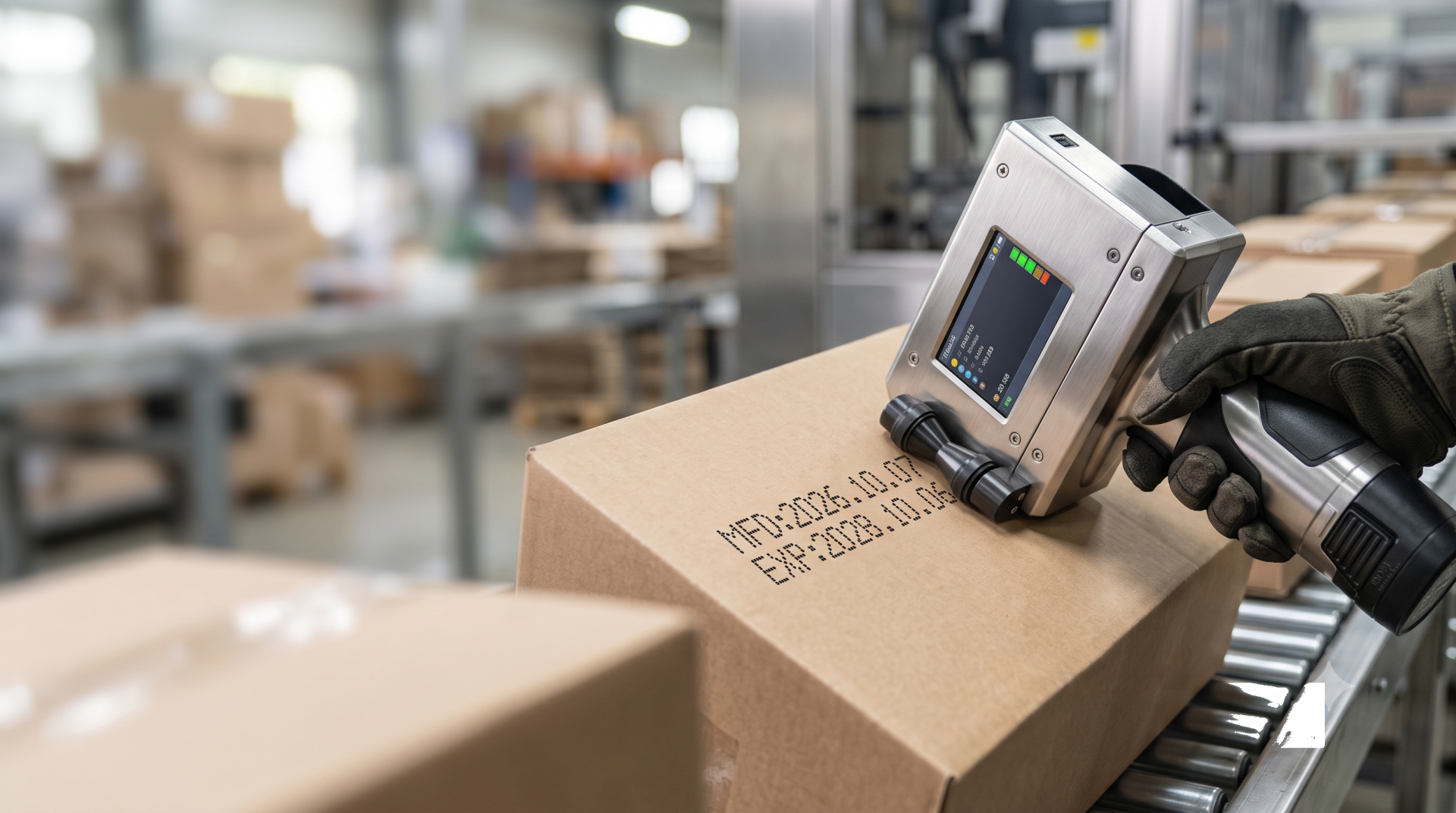
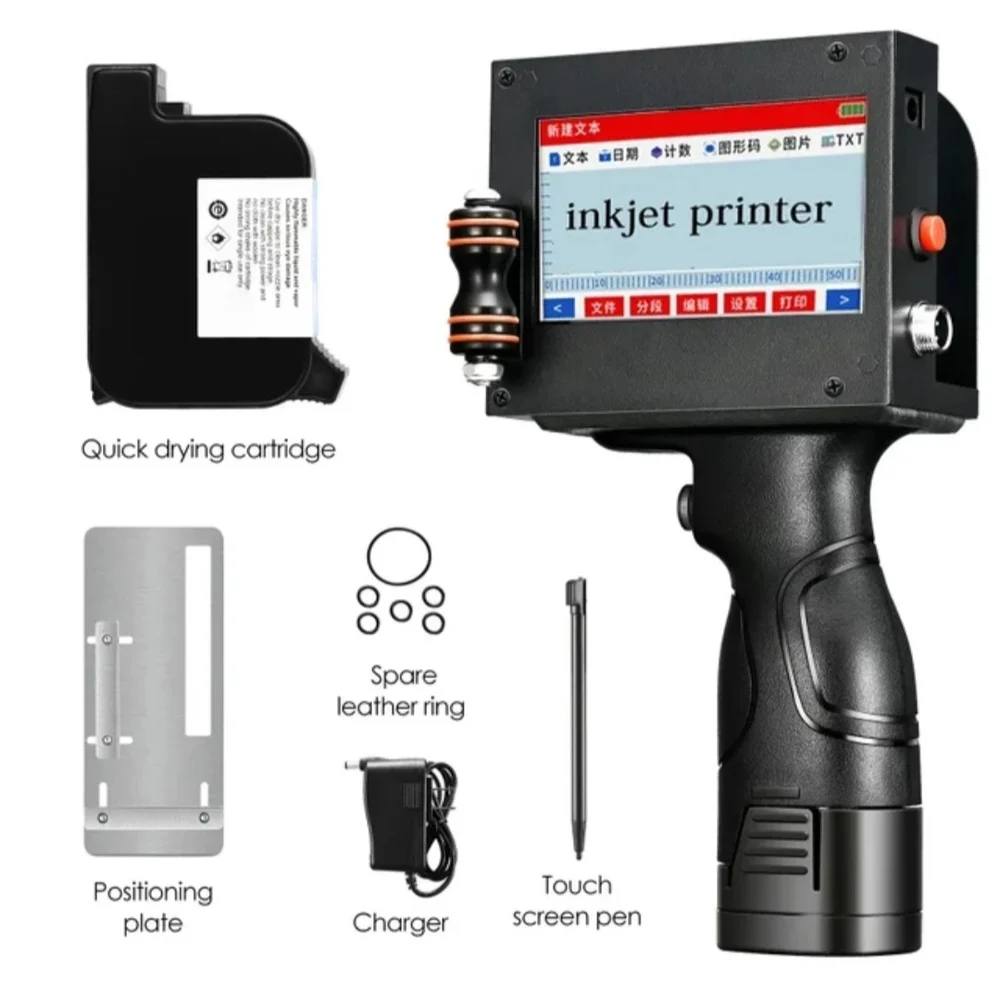
Handheld inkjet: Inkjet is the flexible option when the substrate is a carton, bottle or another surface where contact-type coding is inconvenient. Digital printing also becomes more useful when the code contains variable text, logos or barcodes rather than only a fixed set of date and batch characters.
The date coding machine price should therefore be evaluated against the production constraint, not just the purchase price. A ₹7,000 coder that cannot keep up with a fast line is more expensive operationally than a higher-priced system that matches the line.
CODING-METHOD CHOOSER MATRIX
Use the row matching your production condition; each condition points to one coding method.
Swipe or scroll horizontally to view all columns
| Volume per shift | Substrate | Print content | Choose |
|---|---|---|---|
| Low | Soft pouch | Date + MRP + batch + expiry | Manual hot ribbon |
| Medium | Soft pouch | Date + MRP + batch + expiry | Manual hot ribbon if operator rate remains within 10–30 prints/min |
| High / continuous | Soft pouch | Date + MRP + batch | Heated hot ink roll |
| Low to medium | Carton | Digital text | Handheld inkjet |
| Low to medium | Bottle | Digital text | Handheld inkjet |
| Any | Carton or bottle | Logos / barcodes | Handheld inkjet |
The decisive variables are therefore volume × substrate × information content. Do not select a coder from price alone.
manual hot-ribbon batch coding machine at Rs 7,000
hot-ink-roll coder for conveyor lines at Rs 42,000
The mrp printing machine price should be compared against the production requirement represented by each row, rather than treated as an isolated purchase figure.
Ribbon-running economics for a small unit
For a manual coder rated at 10–30 prints/min, theoretical prints per shift are calculated as prints/min × 60 × shift hours.
For example, at the upper manual rate:
30 prints/min × 60 × 8 hours = 14,400 theoretical prints/shift
At the lower rate:
10 prints/min × 60 × 8 hours = 4,800 theoretical prints/shift
These are mathematical ceilings, not guaranteed production outputs. The supplied manual specification is operator-dependent, so loading pouches, positioning, pressing the lever and removing coded packs reduce practical throughput.
The useful break-even point is the manual machine's 30 prints/min ceiling versus a 300 prints/min hot-ink-roll line speed. At equal eight-hour theoretical operation:
Manual at 30 prints/min: 14,400 prints/shift
Hot ink roll at 300 prints/min: 144,000 prints/shift
That is a 10× theoretical speed difference.
The implication is straightforward: if the packing line consistently demands substantially more than 30 coded packs per minute, a manual press becomes the production bottleneck. If the line produces only a fraction of that rate, the ₹7,000 manual machine can be adequate.
For a small plant, the MRP printing machine should therefore be selected from actual prints per shift and substrate requirements rather than purchase price alone. The mrp printing machine price matters, but the production ceiling determines whether the machine is appropriate.
FSSAI date/MRP requirements for pouches
For packed food pouches, manufacturing and expiry information must be declared on the label, making reliable date coding part of the packaging compliance process.
For a food manufacturer, the coding system needs to produce the required MFG and expiry information clearly and consistently on the pouch. MRP and batch information may also need to be printed according to the applicable packaged-goods labelling requirements.
The practical requirement is not simply owning an MRP printing machine. The printed information must remain legible on the actual packaging material after printing, handling and packing.
For laminated films and soft pouches, contact printing is useful because the machine can apply the heated ribbon directly to the supported print area. Where the required code becomes more complex—such as logos or barcodes—digital inkjet becomes the more suitable class.
Field troubleshooting
Faint ribbon print on laminated film: Check that the heated type reaches the required temperature and that the ribbon is correctly positioned against the type and film. Increase contact consistency before assuming the machine requires replacement.
MRP is smudged and rubs off: Check the ribbon-to-surface contact and the condition of the heated block. The print must be transferred cleanly rather than dragged across the film. Test the actual laminated film used in production.
Type characters print upside-down after a changeover: Remove and reinstall the individual characters in their correct orientation. Because the machine uses changeable type, orientation must be checked whenever the date, batch or MRP layout is changed.
Ribbon tears at the heated block: Stop the press and inspect ribbon alignment, tension and the heated block area. A ribbon that is misaligned or being pulled against the heated section can tear rather than transfer normally.
Conclusion
The MRP printing machine decision is fundamentally a throughput and substrate decision. For low-volume pouch production, manual hot ribbon offers a simple ₹7,000 entry point. For conveyor production, the ₹42,000 hot-ink-roll option provides up to 300 prints/min. For cartons, bottles and digital content, handheld inkjet is the more flexible route.
New Vision Machines supplies coding equipment from Lasudia Mori, Indore, MP 452010. For machine selection based on your pack material, required code and production rate, contact +91-9981604279.