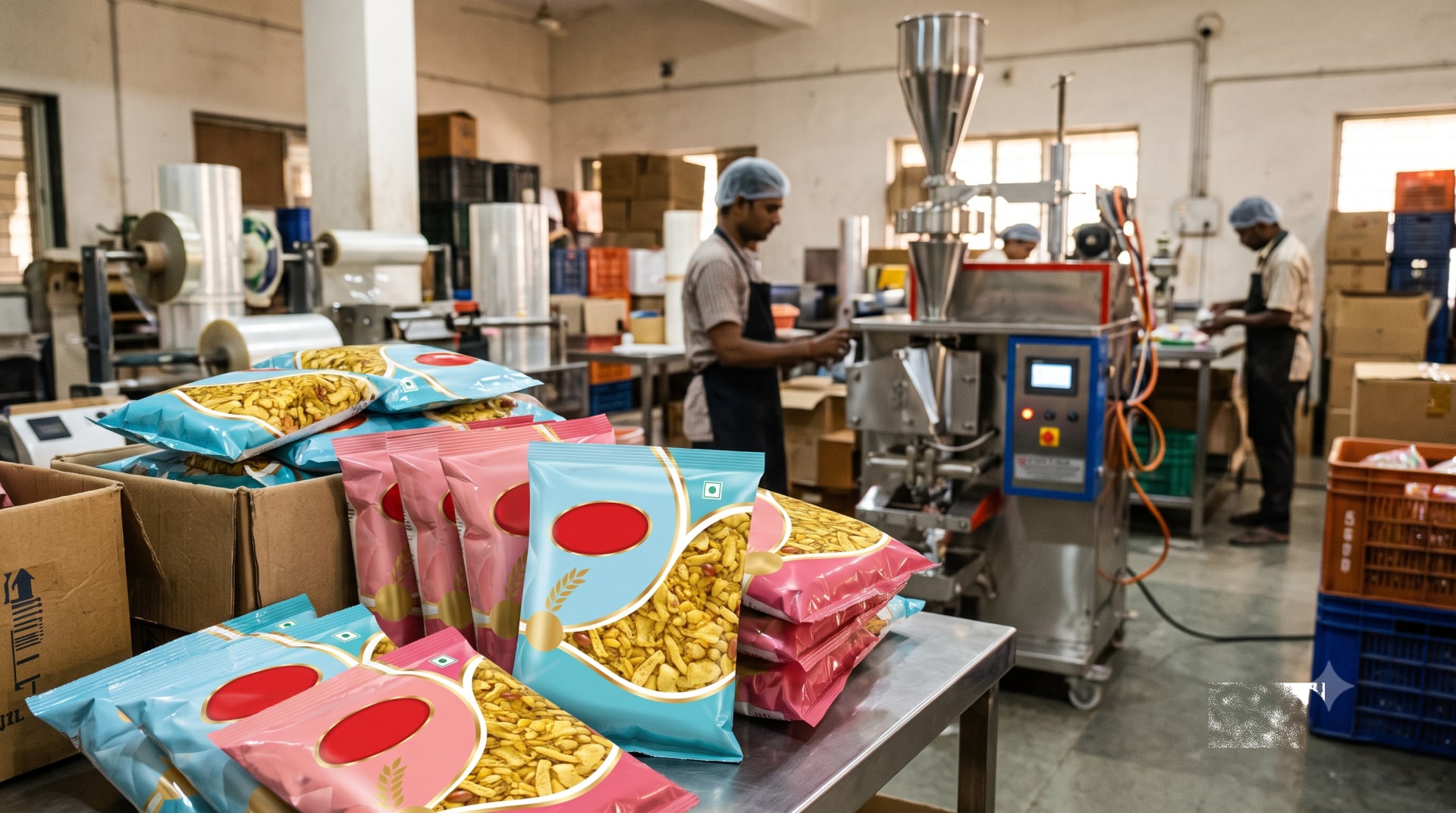
A commercial namkeen packing machine price in India starts at Rs 8,400 for a continuous band sealer and reaches Rs 42,900 for an entry-level form-fill-seal (FFS) bagger.
Getting a snack packaging unit off the ground means making hard trade-offs between machinery costs, pouch formats, shop-floor hands, and working capital. Regional equipment hubs offer everything from benchtop band sealers to vertical pouch packaging setups. Choosing the right pouch packing machine for namkeen comes down to product bulk density, surface oil content, and pouch dimensions. A fragile potato wafer behaves very differently in a drop chute than dense ratlami sev or nylon bhujia.
Namkeen Packing Machine Price Across Three Startup Routes
Bootstrapping a line costs under Rs 25,000 for hand-sealing, under Rs 30,000 for a semi-automated weigh-fill and seal line, or from Rs 42,900 for a dedicated side-seal bagger alone.
Equipment quotes only tell part of the story. Your machinery outlay must leave enough liquidity for film rolls, nitrogen cylinders, spices, and oil reserves.
1. The Hand-Seal Route (Under Rs 25,000 All-In)
This setup pairs stainless-steel manual scoops, a digital tabletop scale, and prep tables with a horizontal mini band sealer. New Vision Machines supplies the continuous band sealer at Rs 8,400 ex-works Indore, against a broader market band of Rs 7,500–25,000. The motor feeds pouches through Teflon belts and heated brass sealing blocks. You fill the pouch by hand, tap it to settle the product, and guide the lip into the sealer drive. Total setup cost stays under Rs 25,000, making it the most forgiving way to test market demand.
2. The Semi-Auto Route (Under Rs 30,000 All-In)
Here, you mount a vibrating-channel granule weigh filler (handling up to 200g) directly above your packing station and run it alongside the mini band sealer. The weigh filler is priced at Rs 13,600 ex-works Indore against a prevailing market benchmark of Rs 13,000–26,000. The operator places an open pouch under the discharge funnel, steps on a foot-pedal microswitch, and receives a weighed dump of sev, bhujia, or mixture. The pouch then moves straight to the band sealer. At under Rs 30,000 total equipment investment, this configuration cuts out manual weighing bottlenecks and trims giveaway on expensive cashew and spice blends.
3. The Automated Route (From Rs 42,900 Machine Alone)
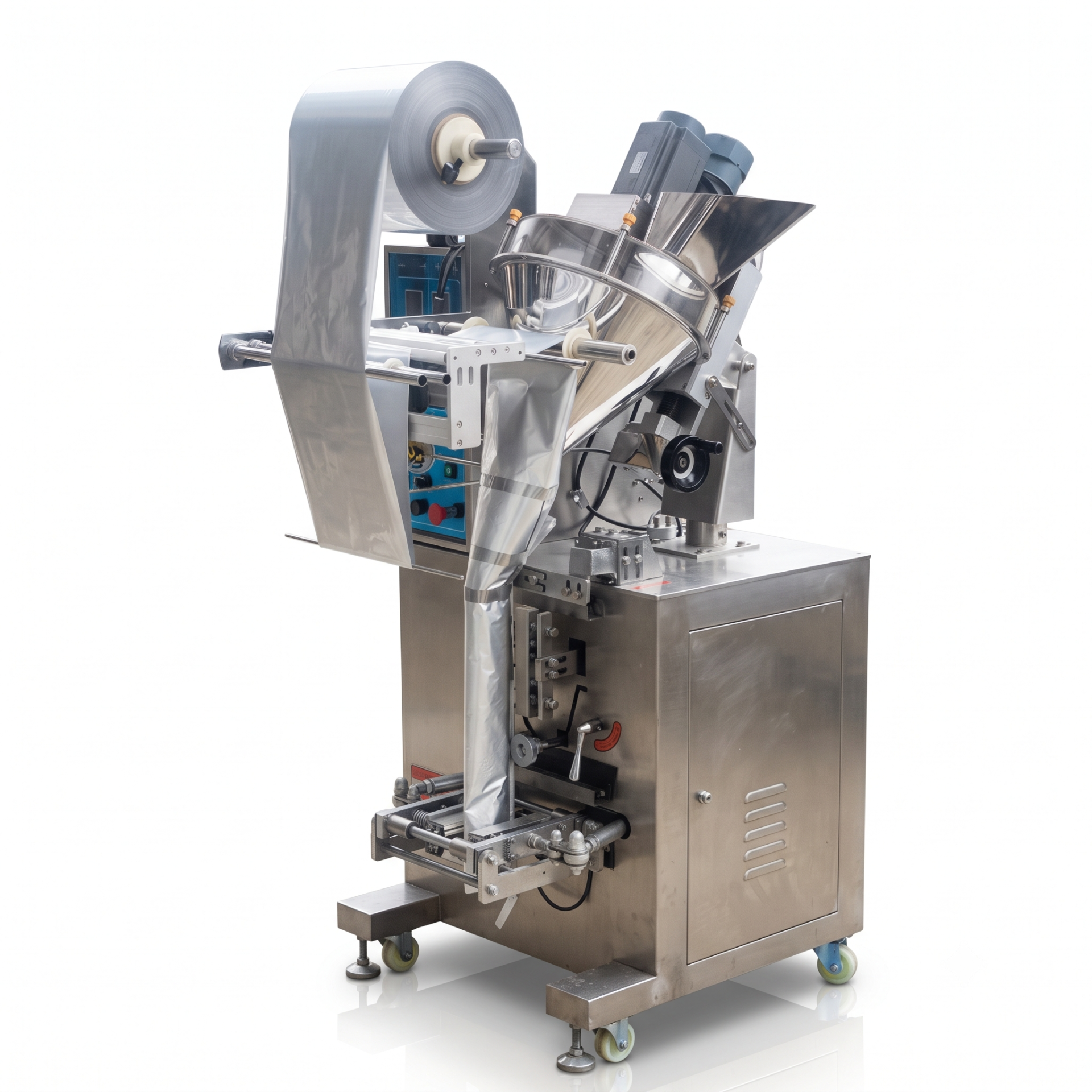
This route deploys an automated side-seal FFS bagger rated for ~100g pouches, priced at Rs 42,900 ex-works Indore for the base machine. It pulls printed laminated film from an overhead reel, draws the web over a stainless-steel forming collar, forms a vertical tube, seals the back fin, drops the product dose, and guillotine-cuts a sealed pouch in one synchronized stroke.
Swipe or scroll horizontally to view all columns
| Route | Machines | All-in Cost (INR) | Pouches/Day | Best For |
|---|---|---|---|---|
| Hand-seal route | Mini band sealer + manual filling | Under Rs 25,000 | Manual batch capacity | Market validation and local retail |
| Semi-auto route | Granule weigh filler (up to 200g) + mini band sealer | Under Rs 30,000 | Operator-paced batch volume | Accurate weight control and regional growth |
| FFS bagger route | Side-seal FFS bagger (~100g) | From Rs 42,900 (machine alone) | Continuous automated volume | High-volume single-SKU retail distribution |
Production Volume Match: Which Route Fits Your Output?
Your daily dispatch volume decides your machinery tier. A pilot batch requires low-cost sealing under Rs 25,000 all-in, while full-shift wholesale distribution demands an automated bagger from Rs 42,900.
Match your realistic namkeen packing machine price against actual counter orders to keep working capital liquid.
Supplying small daily volumes to neighborhood kirana stores does not warrant an automated vertical line. Manual scoop loading into pre-formed three-side-seal pouches, finished on a mini band sealer, handles that volume comfortably with manual labor.
Once your route grows across many retail counters, manual weight checks drag down output. Adding a weigh filler up to 200g standardizes pouch weight and speeds turnaround. When regional distributors begin placing bulk weekly orders for standardized retail pouches, transition to a dedicated side-seal FFS bagger (~100g) for steady, continuous production.
Film and Pouch Economics: Roll Stock vs Pre-Formed Pouches
Continuous band sealers use pre-formed pouches. Continuous form-fill-seal machinery runs exclusively on laminated roll film.
Your film choice governs per-unit packaging margins and dead inventory risk.
Pre-formed pouches give small manufacturers operational agility. You can buy unprinted kraft paper zipper pouches or generic metallized barrier bags off the shelf in small batches, apply custom vinyl stickers, and pack several distinct snack varieties — aloo bhujia, moong dal, khatta meetha, chana dal, and boondi — without printing plates. They slide directly into mini band sealers, keeping trial batches small and scrap rates near zero.
Side-seal FFS baggers require continuous printed roll film. The bagger pulls web stock across dancer rollers and forming shoulders to shape, fill, and crimp packets on the fly. Roll stock cuts your per-pack film expense compared to readymade pouches. The trade-off is upfront commitment: cylinder engraving charges and minimum roll order quantities per SKU. If a recipe or label regulation changes mid-run, unused rolls become dead plastic.
Mandatory Compliance: FSSAI and Legal Metrology Rules
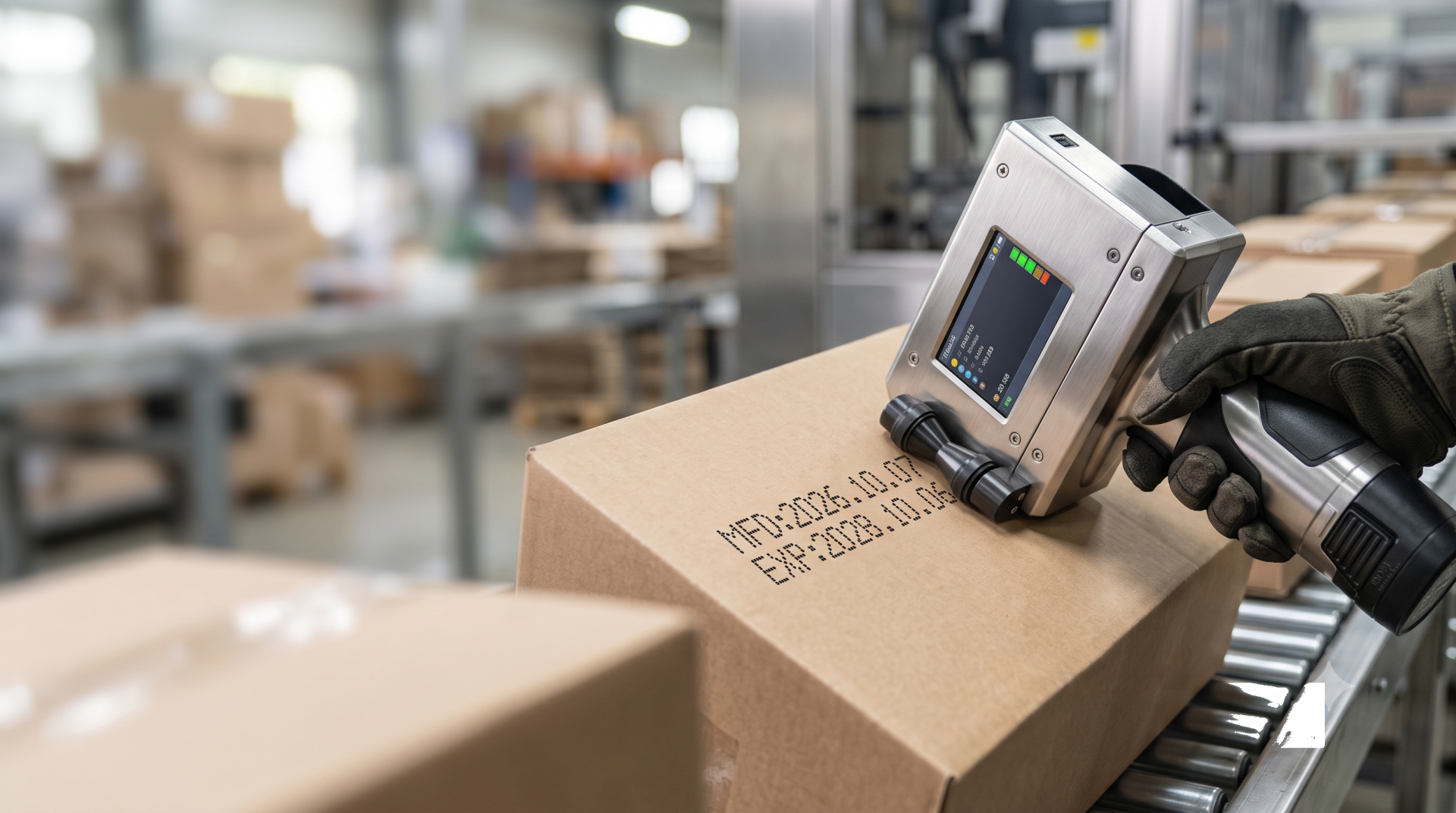
Under FSSAI regulations and Legal Metrology (Packaged Commodities) Rules, every retail snack pouch must legibly display the MRP, manufacturing date, expiry date, and batch number.
Weights-and-measures officers and food safety inspectors will seize non-compliant inventory directly from store shelves.
Your FSSAI license number must be printed alongside the vegetarian logo, nutritional facts, ingredient list, and consumer care address. Legal Metrology rules enforce minimum font heights based on pack surface area for the Maximum Retail Price (MRP), net weight, packing date, expiration date, and lot/batch code.
Never rely on permanent markers or hand stamps for commercial retail. If you run a continuous band sealer or FFS machine, install a hot-foil ribbon coder or embossing wheel attachment on the sealing jaw carriage. These units stamp crisp, indelible variable data directly into the top or side pouch margin during the heat-sealing cycle, preventing smear and rejection by retail stockists.
Common Startup Mistakes in Snack Packaging Lines
The most expensive mistake in namkeen manufacturing is buying an automated packaging machine before securing retail distribution routes. Ignoring moisture-barrier specifications for fried foods is a close second.
Founders routinely look at a namkeen packing machine price in isolation, overlooking roll minimums, compressor lines, and mandatory coding hardware. Sinking serious money into automated machinery before building steady kirana demand leaves capital trapped in idle equipment.
Another frequent failure point is bag material. Fried namkeen contains free cooking oils and delicate starches prone to rapid lipid oxidation. Packing fried bhujia in plain single-layer low-density polyethylene (LDPE) or polypropylene (PP) bags lets oxygen and atmospheric moisture leach through within days, turning crisp namkeen rancid and stale. Commercial shelf life requires a multi-layer structure such as PET laminated to metallized PET and heat-sealable polyethylene.
Kirana store owners also reject inventory that lacks sharp, indelibly coded date and batch declarations. Starting with a modular small business packing machine allows you to calibrate output to real cash flow while maintaining full regulatory compliance.