What secondary packaging machines do
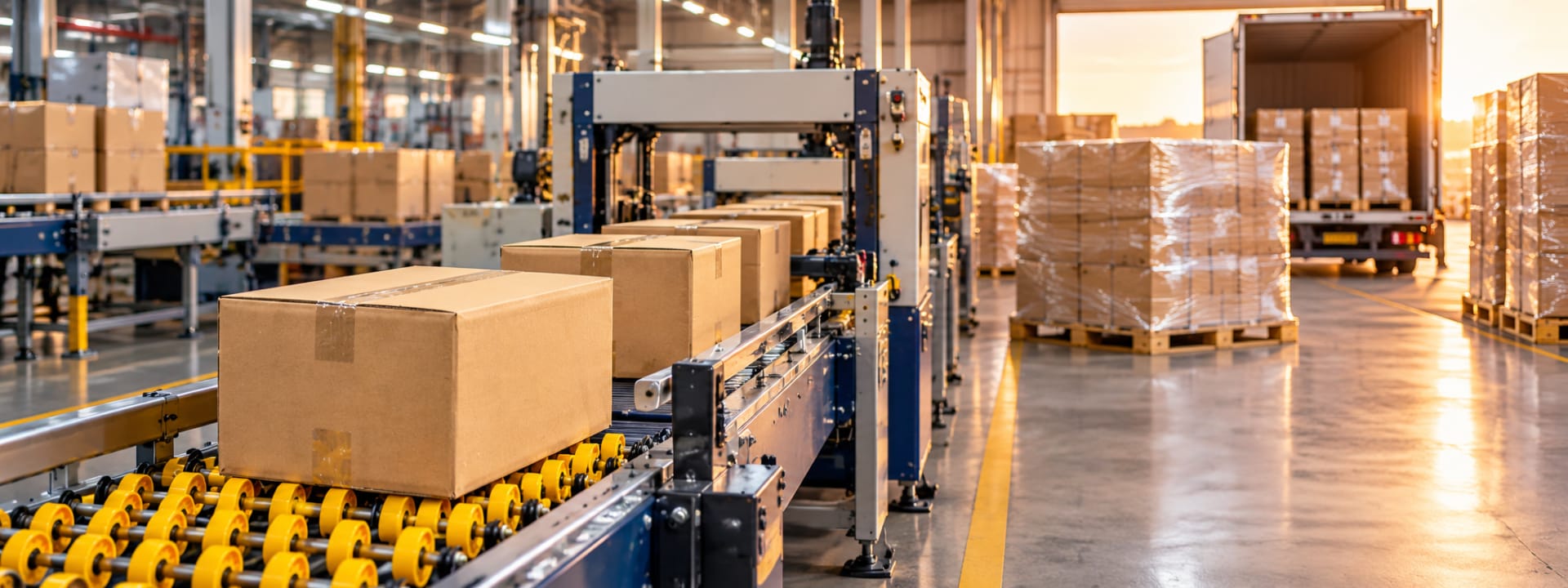
Secondary packaging machines prepare finished primary packs for dispatch, covering four core jobs: carton erection, retail overwrapping, stretch wrapping, and shrink wrapping. A carton erector typically handles 10–20 cases/min, the overwrapping machine runs at 25 packs/min, stretch wrapping is operator-paced, and a shrink tunnel is conveyor-paced. Together, these machines form the practical end-of-line packaging equipment india buyers use to move packed products from production toward dispatch.
The right machine depends on what is already coming off your primary packaging line. If you need an open corrugated case made from a flat blank, start with a carton erector. If finished retail cartons need a cellophane or BOPP wrap, an overwrapper is the relevant machine. For transport protection around boxes, use a stretch wrapper. For heat-shrinking film around individual packs or cartons, use a shrink tunnel.
Carton erectors
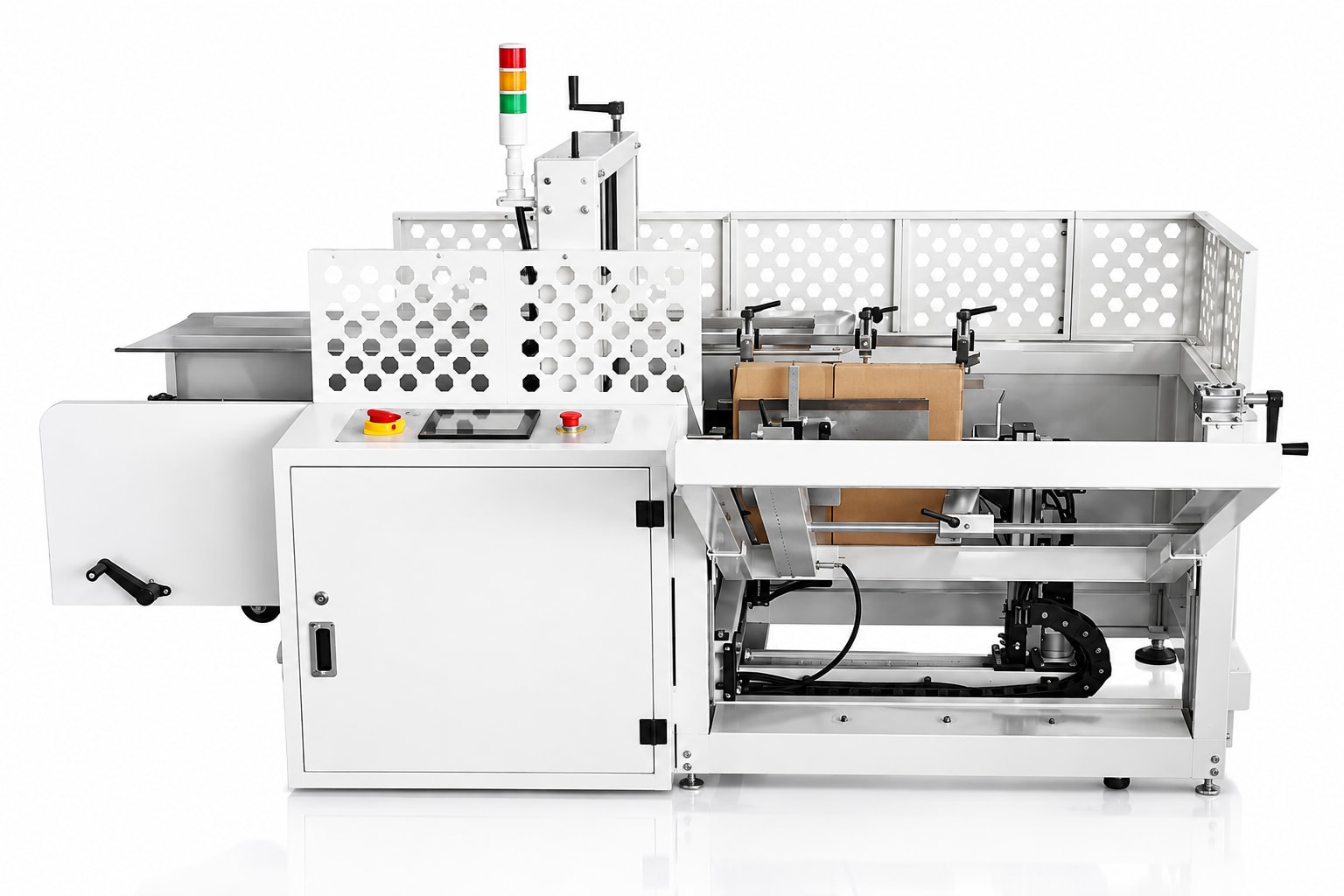
A carton erector automatically converts flat corrugated blanks into open cases for packing lines, typically operating in the 10–20 cases/min class.
The automatic carton erector (₹2,70,000) is suited to plants that currently depend on manual case forming and want a defined carton-forming stage before filling or packing.
The listed ex-works price is ₹2,70,000. For context, the typical market band for carton erectors in India is ₹2L–₹11L. Actual machine selection should be based on carton dimensions, board specification, required output and the rest of the packing line rather than price alone.
A useful buyer question is simple: Are operators spending significant time folding and forming empty cases before products enter them? If yes, carton erection is a clear automation point.
Overwrapping machines
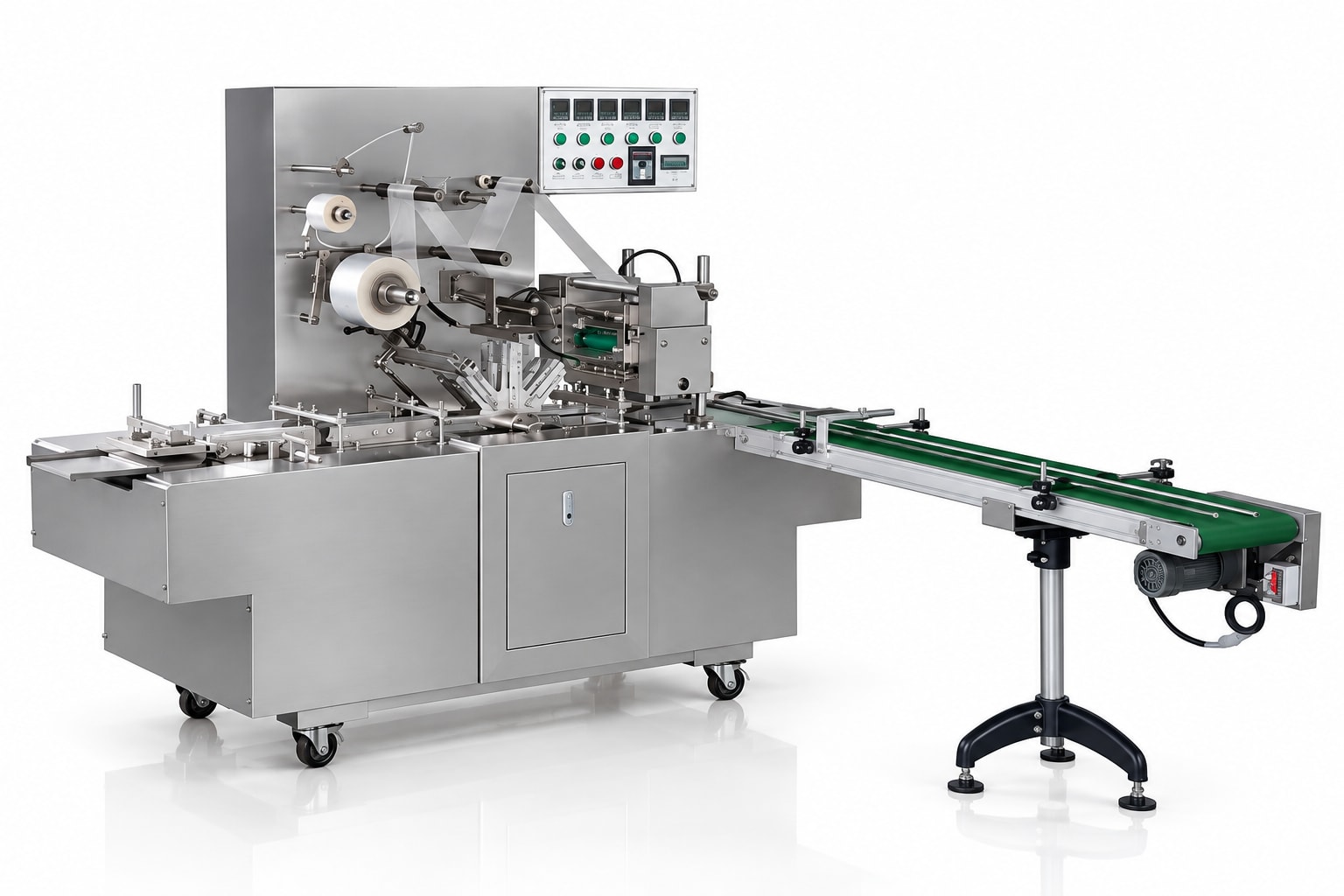
An overwrapping machine wraps finished retail cartons in cellophane or BOPP film, with the New Vision machine rated at 25 packs/min for products such as perfume, tea and cosmetic cartons.
The automatic cellophane overwrapping machine is intended for products where the outer presentation matters as much as basic protection. The film creates a finished retail appearance around the carton while keeping the product enclosed.
Its listed ex-works price is ₹14,50,000, against a stated market band of ₹5.5L–₹15L.
This machine belongs after the product's primary pack and carton presentation stage. It is not a replacement for a carton erector: one forms corrugated shipping cases, while the other wraps finished retail cartons.
Stretch wrappers
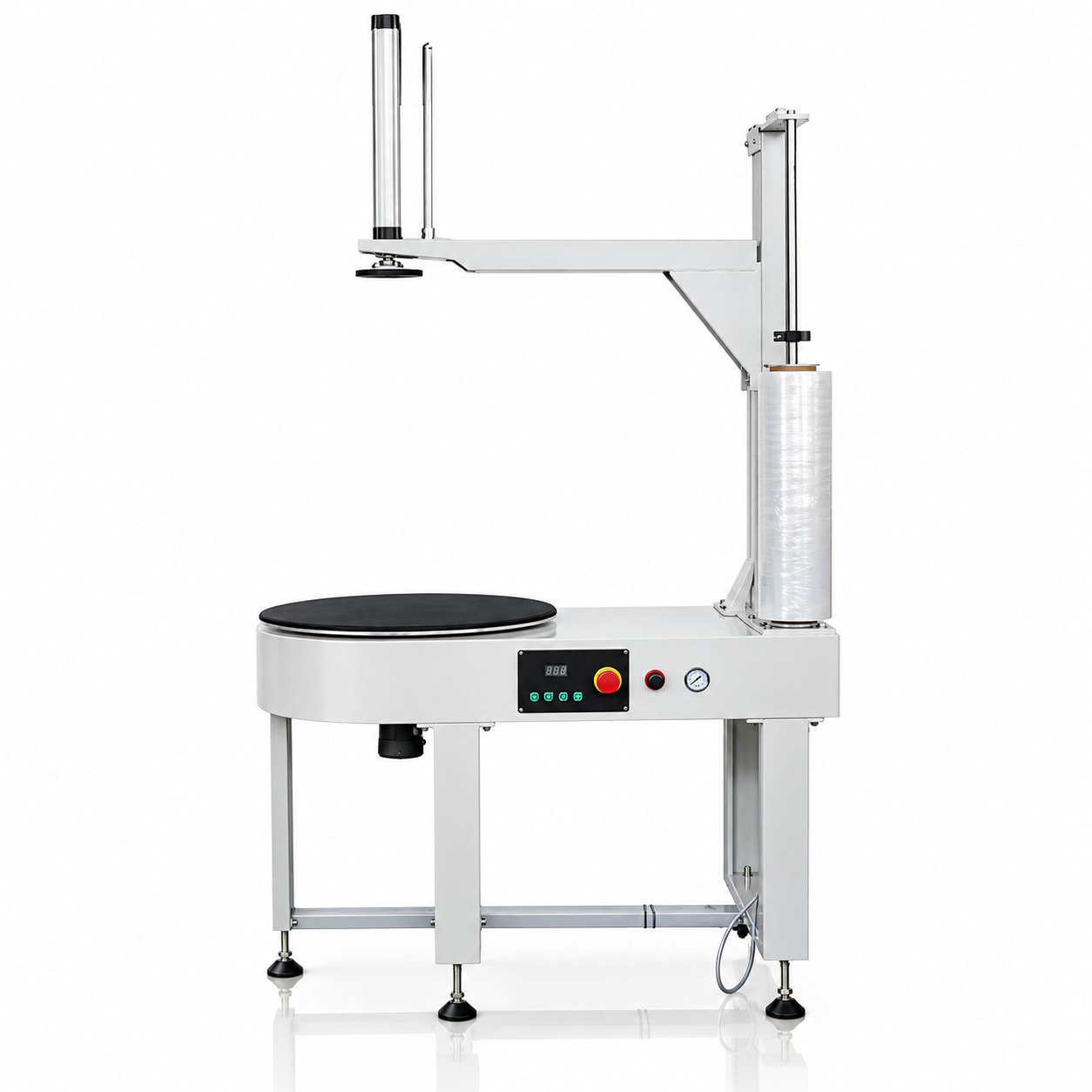
A stretch wrapper applies stretch film around boxes with operator assistance, and its output is operator-paced rather than specified as a fixed packs-per-minute rate.
The pneumatic semi-auto stretch wrapper uses pneumatic holding to assist the operator during box wrapping. It is suited to dispatch areas where cartons need a layer of stretch film for handling and transport.
The listed ex-works price is ₹1,00,860, while the stated market band is ₹45K–₹1.25L.
For plants with variable carton sizes or moderate dispatch volumes, operator-assisted wrapping can be more practical than designing a fully automatic wrapping line. The key consideration is how many boxes must be wrapped per shift and how much operator time is currently consumed.
Shrink tunnels
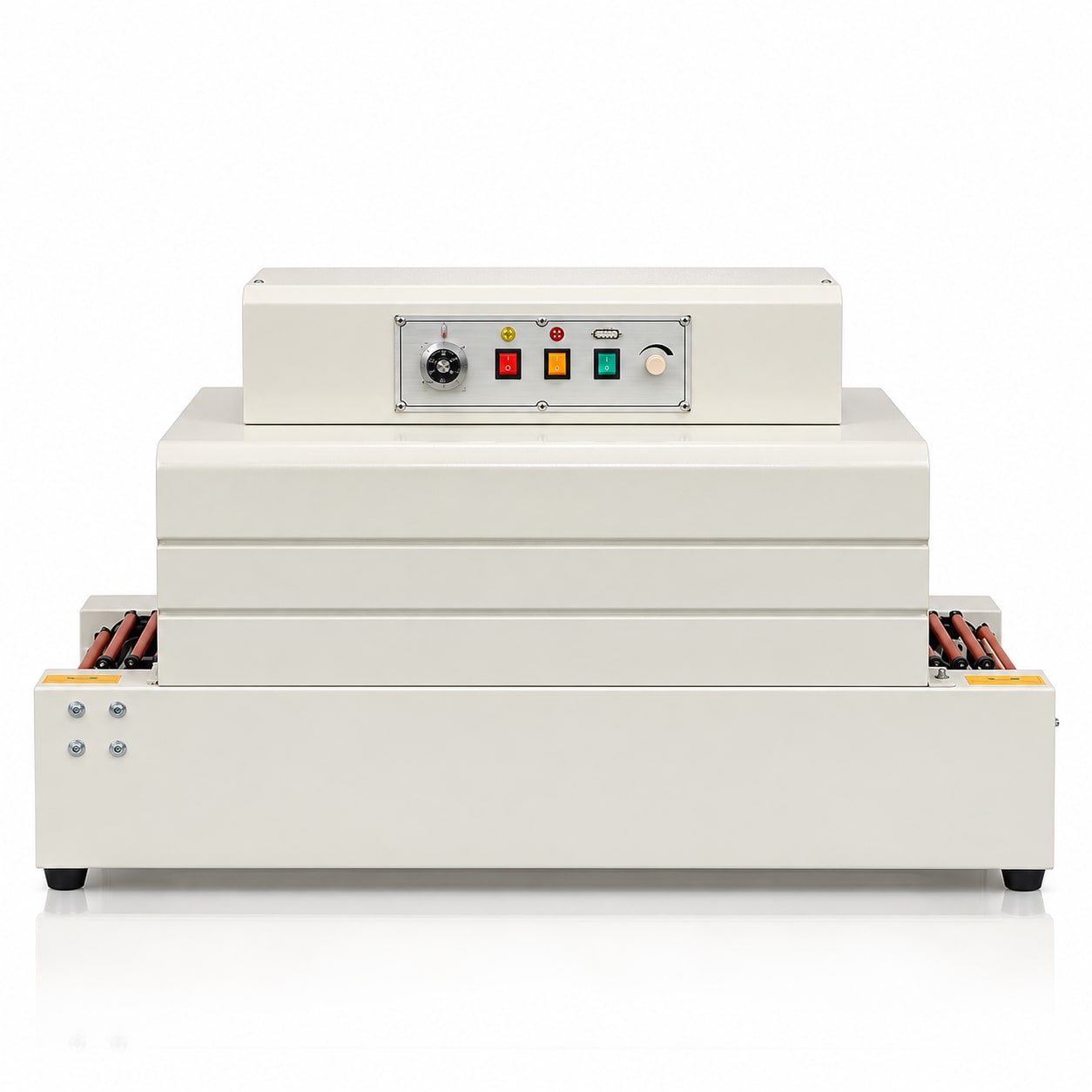
A shrink tunnel uses controlled heat to shrink film tightly around packs or cartons, with its output determined by the conveyor pace through the tunnel.
The 12x6 shrink tunnel machine is used after film application to create a tighter finished pack around the product or carton.
Its listed ex-works price is ₹23,400. The stated standalone market band is ₹58K–₹1.25L.
A shrink tunnel is therefore not a substitute for the film-applying stage. The film must already surround the pack before the tunnel applies heat and produces the final shrink.
Machine comparison
Swipe or scroll horizontally to view all columns
| Machine | Typical Speed | Price Band in India (₹) | Best For |
|---|---|---|---|
| Automatic carton erector | 10–20 cases/min class | ₹2L–₹11L; listed ₹2,70,000 | Forming corrugated cases from flat blanks |
| Automatic cellophane overwrapping machine | 25 packs/min | ₹5.5L–₹15L; listed ₹14,50,000 | Premium retail presentation for cartons |
| Pneumatic semi-auto stretch wrapper | Operator-paced | ₹45K–₹1.25L; listed ₹1,00,860 | Wrapping boxes for handling and dispatch |
| Shrink tunnel machine 12x6 | Conveyor-paced | ₹58K–₹1.25L; listed ₹23,400 | Heat-shrinking film around packs/cartons |
Plant math: estimate output before buying
For a simple planning estimate:
Cartons per shift = cases/min × 60 × operating hours × 0.75 OEE
For example, a carton erector running at 15 cases/min for an 8-hour shift gives:
15 × 60 × 8 × 0.75 = 5,400 cases/shift
The 0.75 factor provides a practical planning allowance for stoppages, changeovers, loading, inspection and other operating losses. It is a planning calculation, not a guaranteed production rate.
For operator-paced equipment such as a semi-automatic stretch wrapper, use your actual observed boxes per hour instead of applying a machine speed that has not been specified.
If your requirement is earlier in the packaging process rather than at dispatch, the how to choose a horizontal flow wrap machine guide covers horizontal flow wrapping. Dairy processors can also refer to the dairy pouch packing machine buyer's guide.
Field troubleshooting
Carton flaps do not form cleanly
Check blank quality, board condition and the carton-forming setup. Damaged or inconsistent blanks can prevent reliable erection even when the machine itself is operating correctly.Film does not shrink evenly
Check film placement before the tunnel and verify that packs are entering the heat zone consistently. Uneven film coverage can produce uneven shrink regardless of conveyor operation.Stretch film is loose around the box
Check how the operator is applying and tensioning the film and whether the pneumatic holding system is keeping the box stable. Loose wrapping reduces the consistency of the finished package.Overwrapped carton has poor film presentation
Check film feeding, carton positioning and the condition of the film. The product must enter the wrapping sequence consistently for the 25 packs/min machine to produce a uniform retail finish.