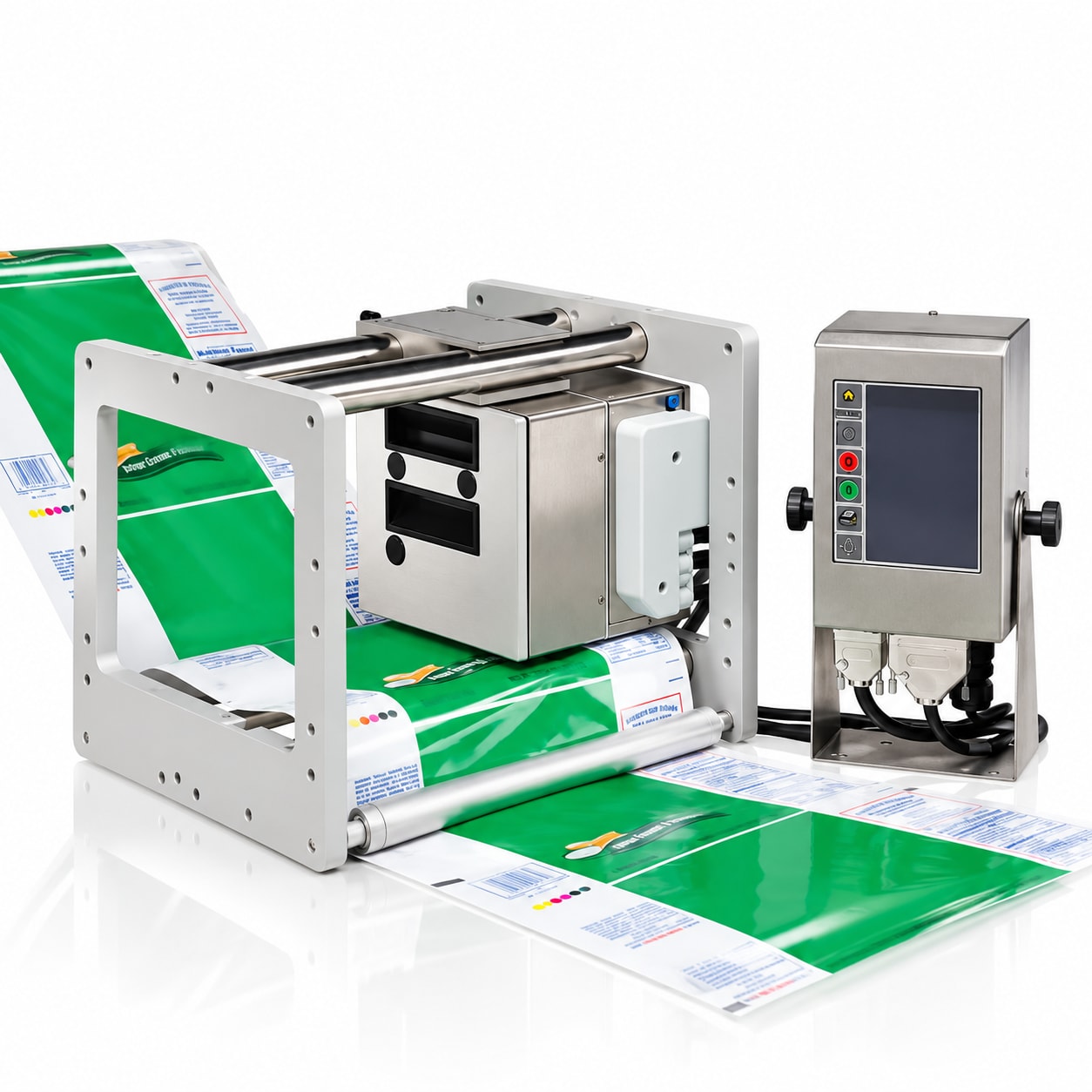

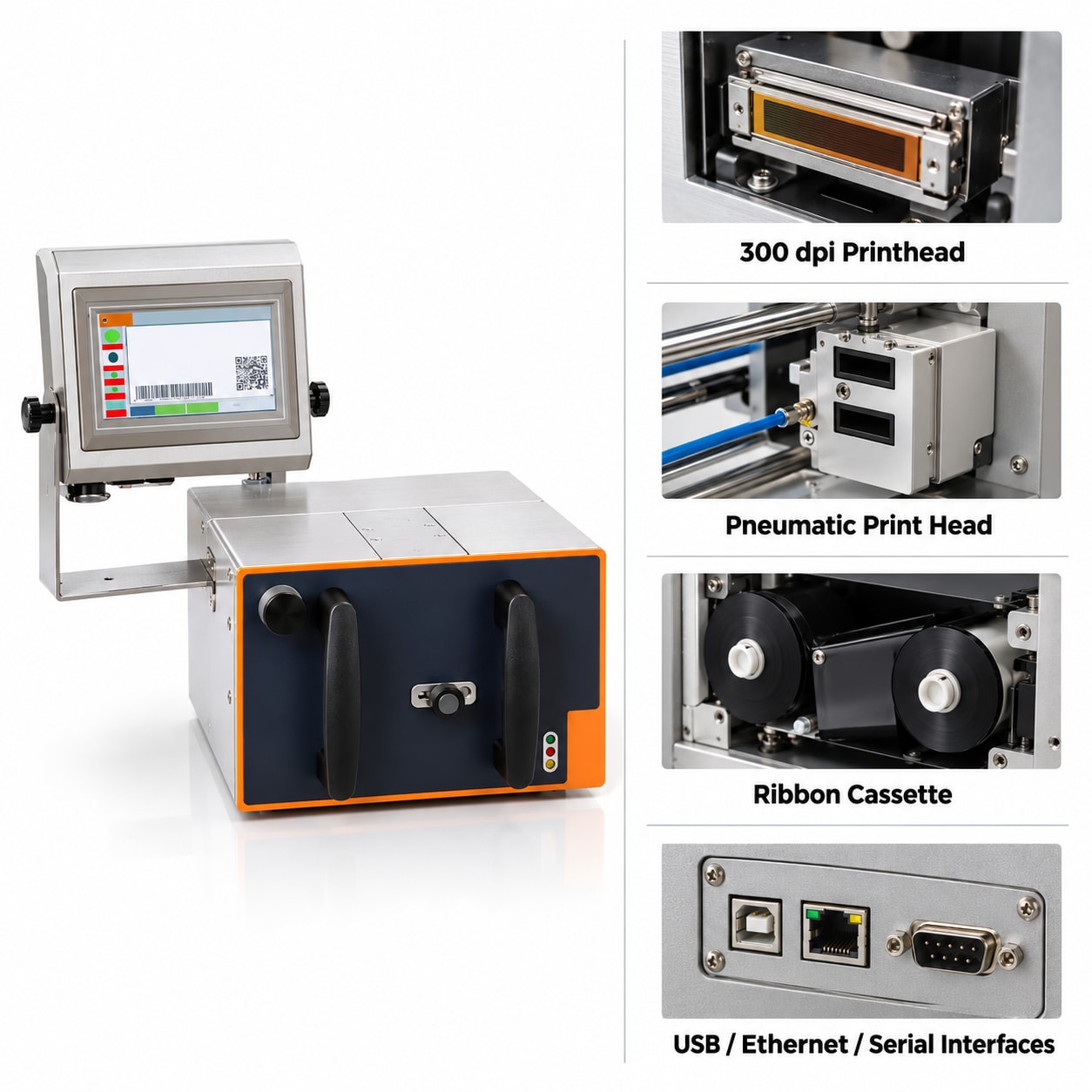

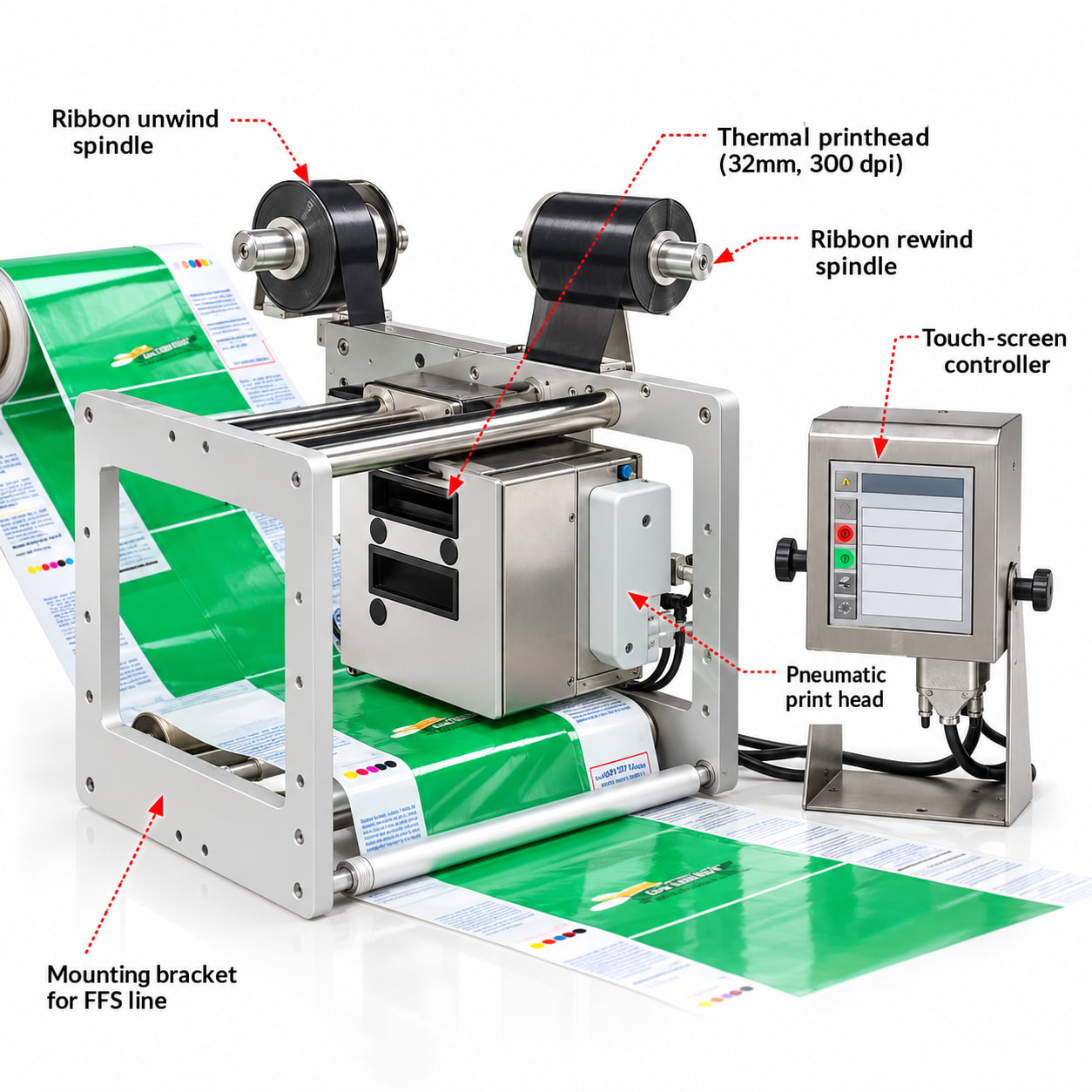

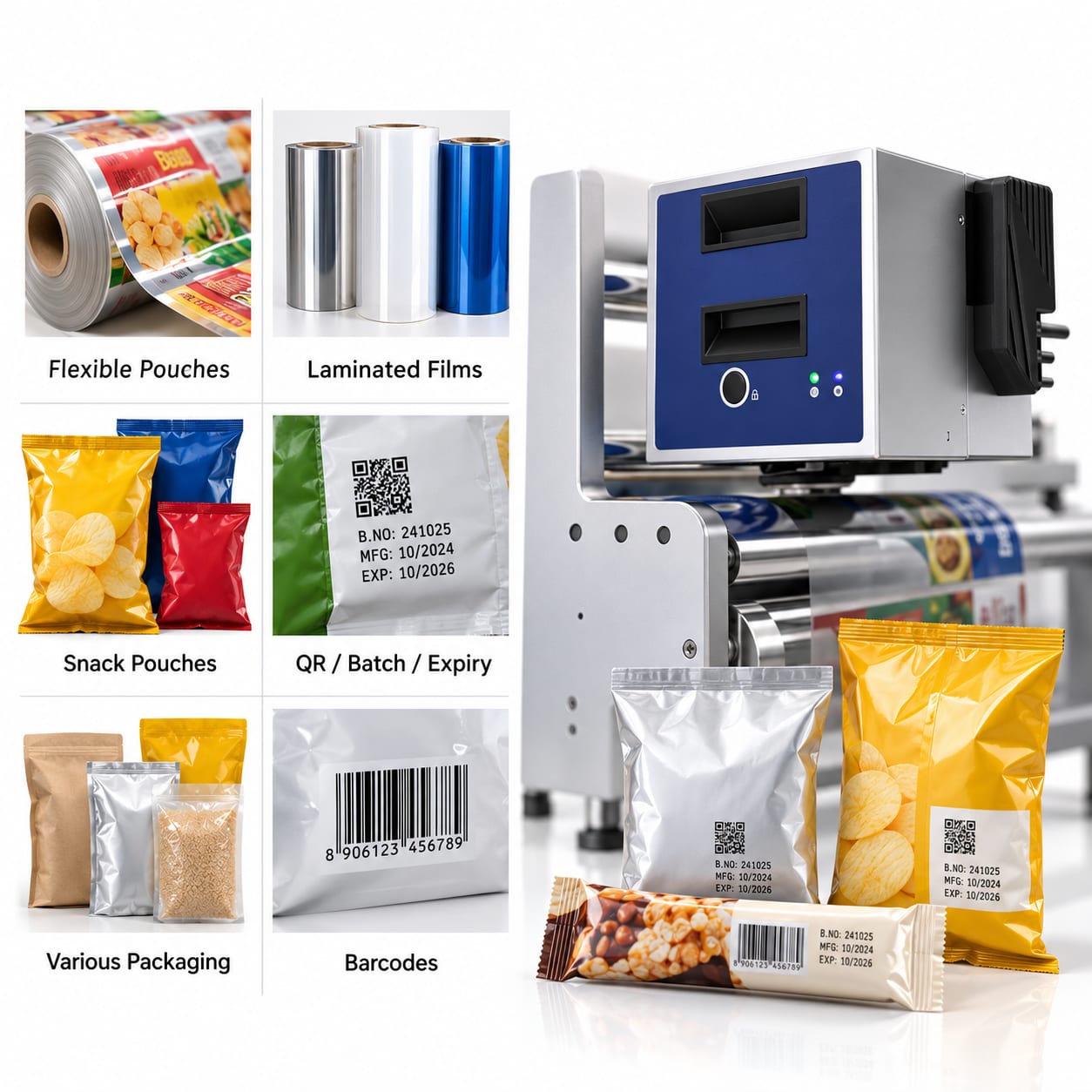

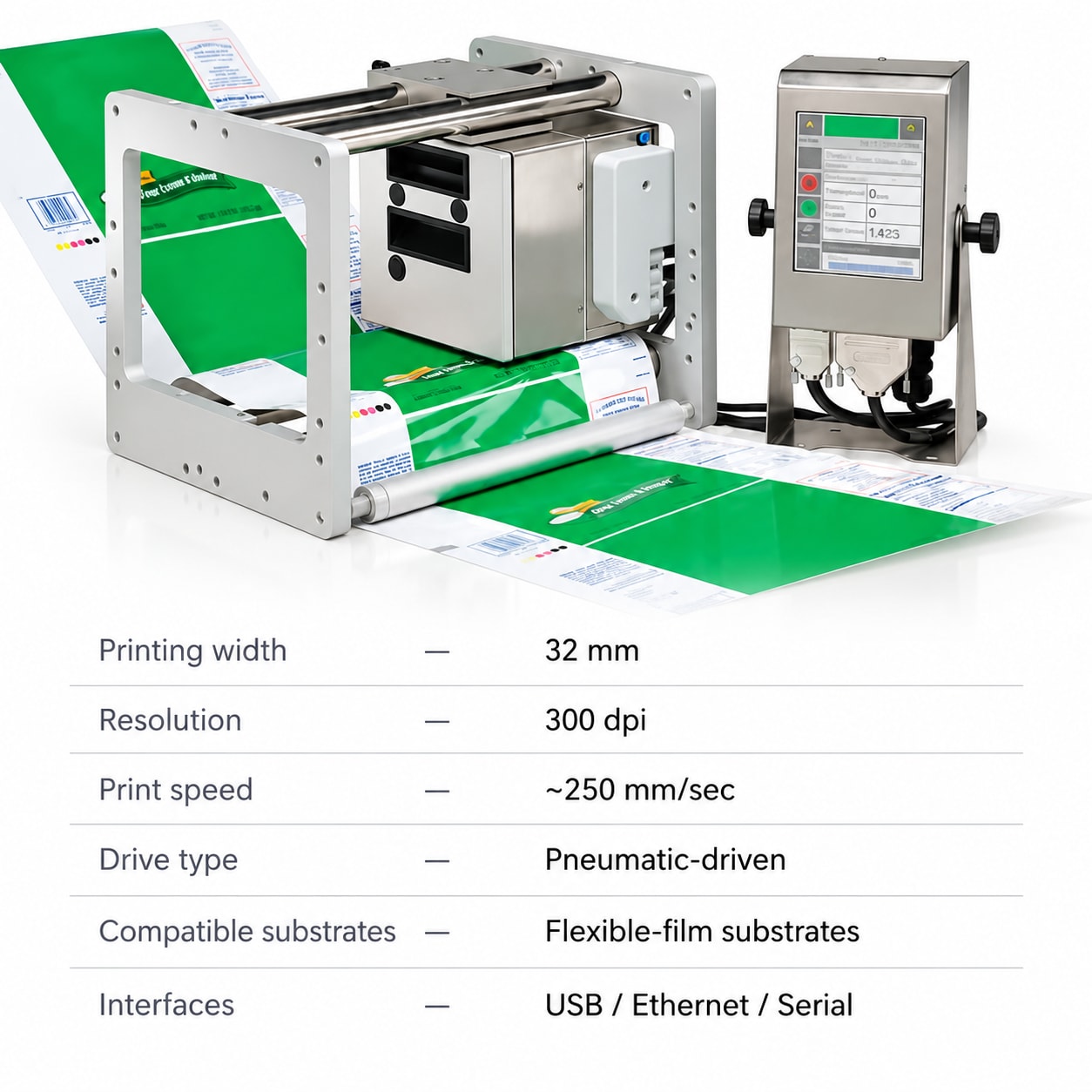
A thermal transfer overprinter for flexible-film packaging is listed at ₹1,70,000 on this page: a pneumatic-driven TTO built around a 32 mm, 300 dpi printhead that prints barcodes, QR codes, logos and batch/expiry data at up to 250 mm/sec, run from a Windows-based controller with USB, Ethernet and serial interfaces.
Key features:
- 32 mm, 300 dpi thermal transfer printhead: crisp small text, barcodes, QR codes and logos on film — far sharper than dot-matrix inkjet
- Pneumatic drive: consistent print pressure and ribbon feed cycle after cycle, ideal for continuous form-fill-seal and flow-wrap lines
- Print speed up to 250 mm/sec: keeps pace with high-speed horizontal and vertical FFS lines without becoming the bottleneck
- Variable-data printing: batch numbers, expiry dates, MRP-style price text, shift codes and graphics in one pass, updated from the controller
- Windows-based controller with USB, Ethernet and serial interfaces: easy job transfer from a PC and integration with line PLCs
- Prints directly on flexible substrates: laminated pouches, snack and spice sachets, milk and oil pouches, medical and pharmaceutical pouches — no labels needed
Typical applications: snack/food pouch lines (FFS), dairy and edible-oil pouches, pharma and medical flexible packaging, cosmetic sachets, confectionery and biscuit flow-wraps — anywhere flexible film replaces labels and the code must stay legible for the product's shelf life.
Decision aid — TTO ribbon vs CIJ ink: your per-10,000-pouches cost math.
TTO and continuous inkjet are the two serious ways to code flexible film. The upfront question is easy; the running-cost question decides the buy. Work it from your own consumable prices with these formulas:
TTO cost per 10,000 pouches = (ribbon roll price ÷ prints per roll) × 10,000
Prints per roll = ribbon roll length ÷ (print length per pouch + ribbon-save gap)
A TTO prints only when it strikes: one ribbon strike per print, and a ribbon-save mechanism shortens the ribbon advance between prints. Waste = ribbon consumed only on printed area.
CIJ cost per 10,000 pouches = ((ink cost ÷ prints per ink unit) + (makeup/solvent cost ÷ prints per solvent unit)) × 10,000
CIJ is continuous: the jet recirculates whenever the line runs, so ink and makeup solvent are consumed during startup, standby purging and downtime — not just when printing. Waste = consumption during every running minute.
Throughput check from this machine's verified spec: 250 mm/sec print speed ÷ a 25 mm batch/expiry mark = up to 10 prints/sec theoretical (~36,000 marks/hour at full line speed) — so on a 60 ppm snack FFS line, the TTO is never the limiting factor. Choose TTO when film is your substrate, 300 dpi legibility matters (QR, small expiry text), and you want a dry, solvent-free line. Choose CIJ when you must code porous cartons, curved bottles or multiple materials in one shift.
Internal resources: browse our complete batch coding machine range, read the TTO vs continuous inkjet running-cost comparison for the detailed cost comparison, or compare the continuous inkjet option for porous cartons.
Published specifications: printing method thermal transfer overprinter (TTO); pneumatic drive; 32 mm, 300 dpi printhead; printing speed 250 mm/sec; interfaces USB, Ethernet, Serial; Windows-based controller; prints barcodes, QR codes, logos, batch/expiry data; application flexible packaging films, pouches and FFS lines.
New Vision Machines supplies this thermal transfer overprinter across India with pre-dispatch checking and responsive after-sales support. Request a quote for delivery timelines and bulk pricing.