India price bands by machine class
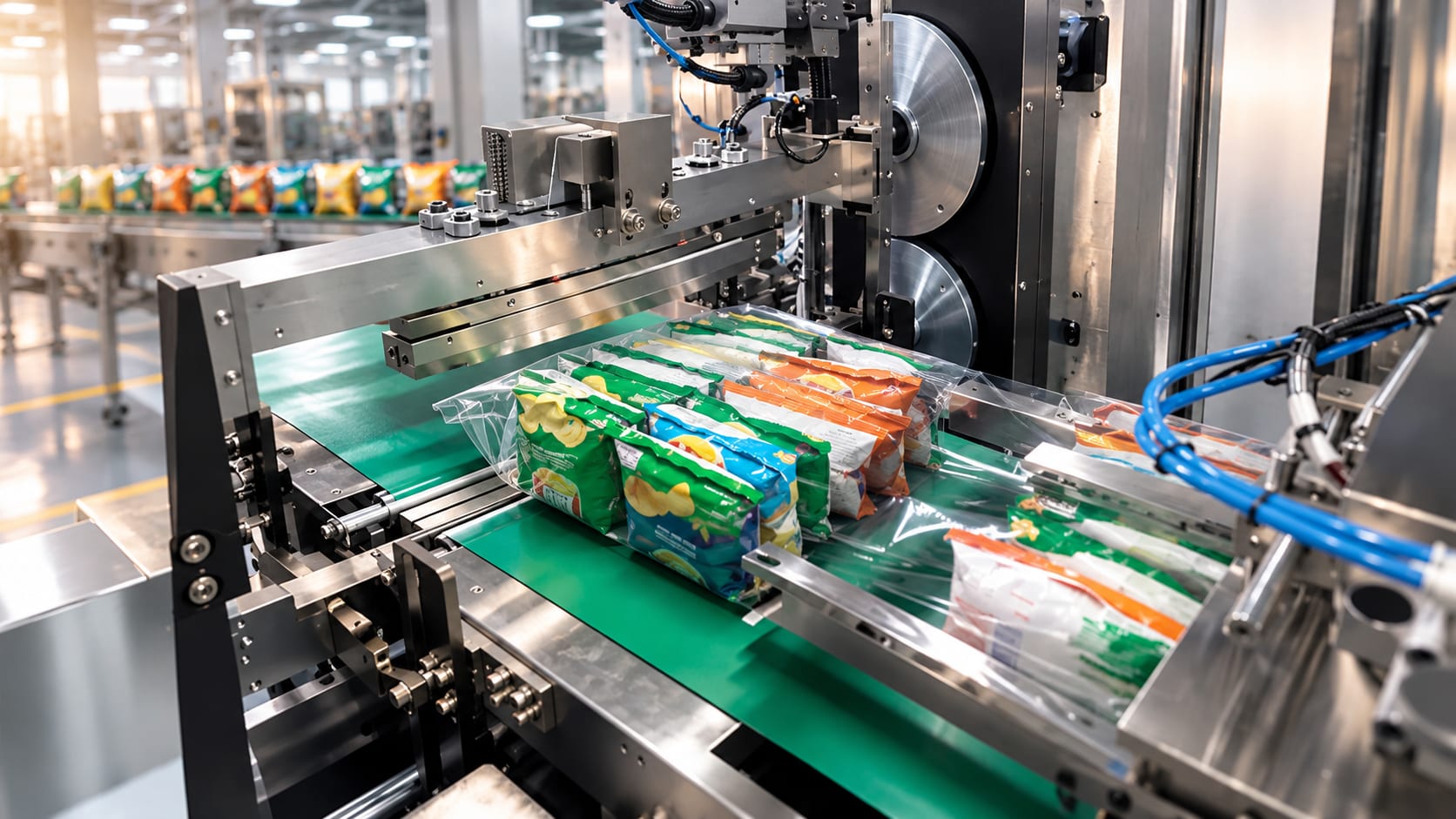
Entry automatic single-station pick-fill-seal machines cost ₹5,00,000–₹7,50,000, higher-speed single/dual-station machines cost ₹10,00,000–₹12,00,000, and multi-head rotary premade pouch lines start at ₹18,00,000.
Machine class | Indicative India price
Entry automatic single-station pick-fill-seal | ₹5,00,000–₹7,50,000
Higher-speed single/dual-station premade pouch | ₹10,00,000–₹12,00,000
Multi-head rotary premade pouch line | ₹18,00,000+
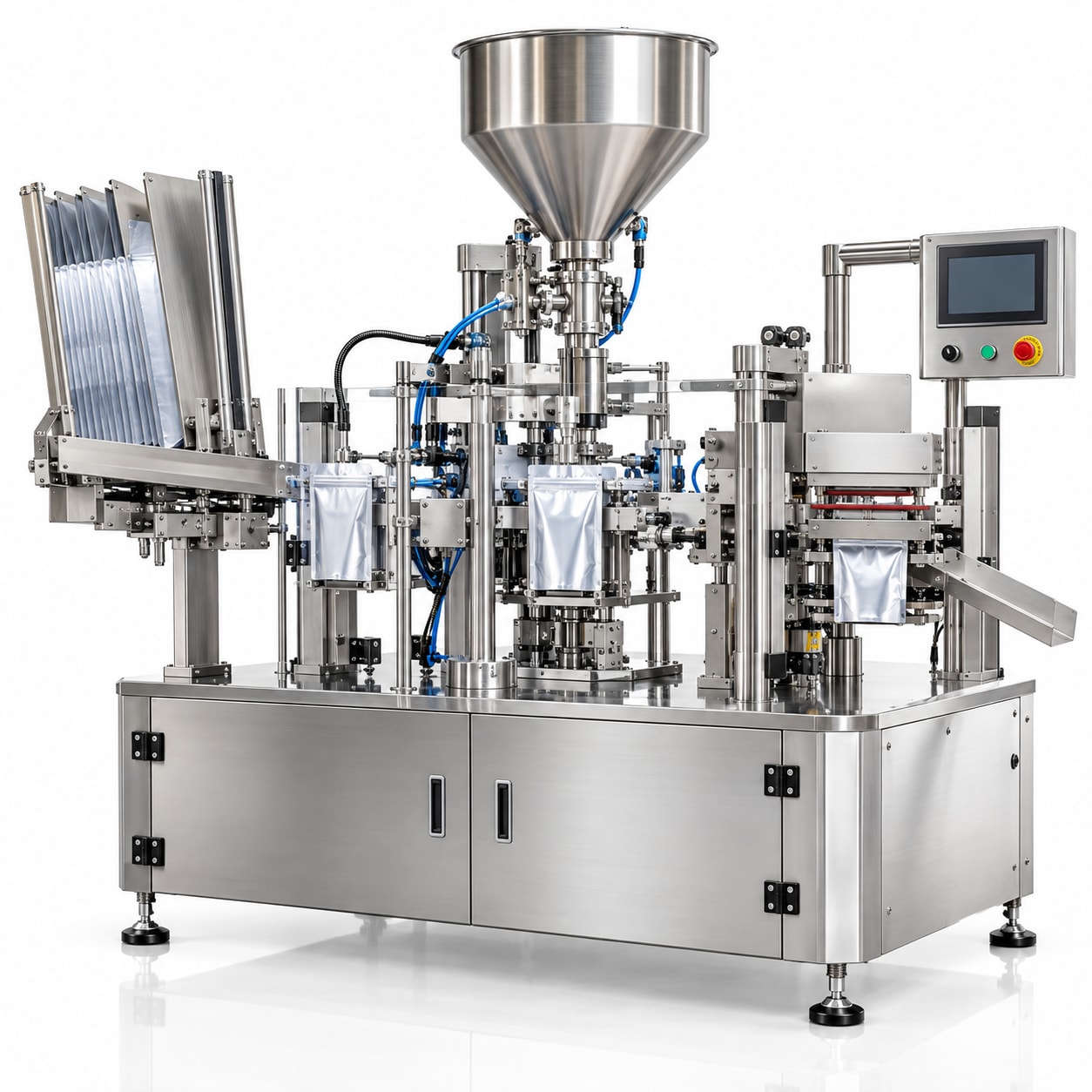
premade pouch filling and sealing machine
New Vision Machines' premade pouch filling and sealing machine is ₹5,40,000: an entry-level automatic single-station pick-fill-seal machine rated at 10–20 pouches/min, with a 50–1000 g fill range, impulse sealing, single-phase power and stainless-steel construction for powders, granules and solids.
The important distinction is that these price bands describe different machine classes, not simply different prices for the same machine. A ₹5.4 lakh single-station machine should not be evaluated against a multi-head rotary line by headline price or assumed output.
For a buyer comparing quotations, the useful question is whether the machine's filling method, pouch handling, sealing arrangement and expected operator rate match the production target.
premade pouch price bands explained in detail
Buyers comparing machine classes can use the premade pouch price bands explained in detail to keep the price discussion tied to the relevant equipment class.
Premade pick-fill-seal vs VFFS vs spout-pouch synthesis
Premade pick-fill-seal costs ₹5,40,000 for the New Vision entry-level machine, while a single-lane ice-pop VFFS machine costs ₹95,000 and separate ribbon coding costs ₹7,000; the correct route depends on pouch format, speed and packaging economics.
There are three practical ways to get product into a pouch:
- Premade pick-fill-seal — buy already-formed printed pouches, pick them, fill them and seal them. This suits buyers who value premium printed pouch presentation and lower changeover complexity between pouch formats.
- VFFS roll-film pouch packing — form the pouch from LDPE film, fill it and seal it continuously. This is suited to high-speed applications where low per-pouch cost and continuous production matter.
- Coding at the seal station — add date, MRP, batch and expiry coding to either pouch route. It is the identification step that completes the packaged product rather than an alternative filling method.
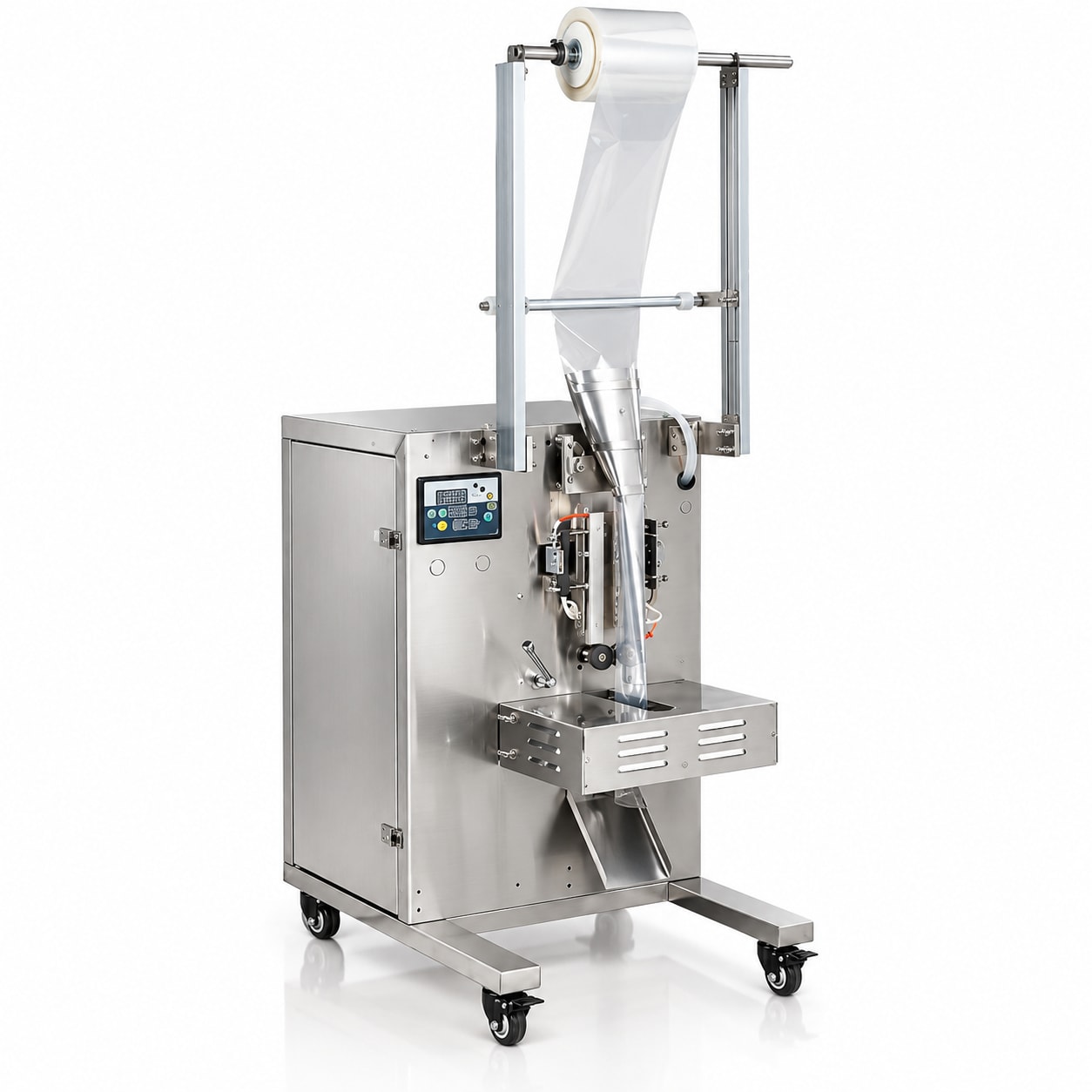
The New Vision single-lane automatic pepsi/ice-pop VFFS pouch machine is ₹95,000 and forms, piston-fills 20–100 ml and seals LDPE ice-pop/ice-candy/chuski pouches at 2,000–3,500 pouches/hour on 220 V single-phase power.
That VFFS figure is a specific ice-pop application. It should not be used as a general speed benchmark for other VFFS pouch formats or for the ₹5.4 lakh premade pick-fill-seal machine.
Pouch route | Speed | Maintenance | Running cost | Pricing INR
Premade pick-fill-seal | 10–20 pouches/min on the ₹5.4 lakh entry machine | Automatic filling, picking and impulse sealing require machine upkeep | Higher pouch-format dependency because premade printed pouches are purchased | ₹5,00,000–₹7,50,000 entry class
VFFS roll-film pouch packing | 2,000–3,500 pouches/hour for the specified ice-pop machine | Forming, piston filling and sealing system require upkeep | Roll-film format can support lower per-pouch cost | ₹95,000 for specified ice-pop machine
Coding at the seal station | 10–30 prints/min with manual hot-ribbon coding | Simple manual coding mechanism | Coding consumables and operator time | ₹7,000
For premium printed pouches, the premade route removes the need to form the pouch from roll film. For continuous ice-pop production, the specified VFFS route produces the pouch itself. Coding remains a separate requirement when the finished pouch needs date, MRP, batch and expiry information.
The coding step every pouch line needs
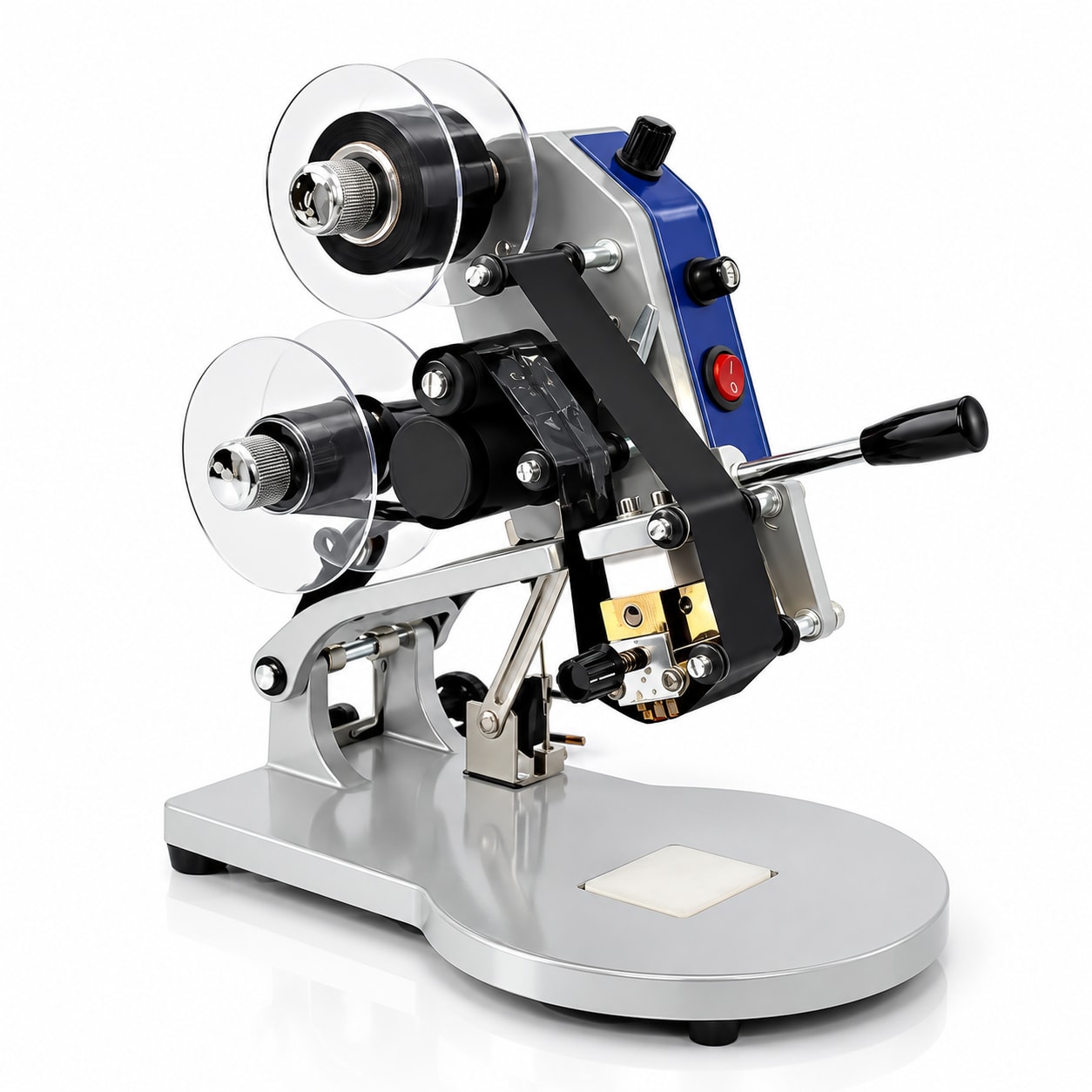
Manual hot-ribbon coding costs ₹7,000 and prints date, batch, MRP and expiry in 1–3 lines at 10–30 prints/min on soft pouches, making coding the final identification step for either pouch route.
The coding decision should be made alongside the filling-machine decision because the finished pouch still needs production identification after filling and sealing.
A manual hot-ribbon batch coding machine can print:
- Date
- Batch
- MRP
- Expiry
- 1–3 lines of coding
- 10–30 prints/min on soft pouches
The ₹7,000 machine can therefore complete a pouch line where the pouch is produced by a premade pick-fill-seal process or a VFFS process.
For buyers choosing between coding methods, the relevant variables are pouch material, required print content, operator rate and the number of pouches that must be coded per minute.
ribbon batch coding for pouch lines
The guide to ribbon batch coding for pouch lines is useful when this coding step is being specified alongside the filling machine.
What a fair quote must specify
A fair pouch-machine quote must state the machine class, pouch route, fill range, rated output, sealing method, power requirement and the exact product/pouch conditions used to establish the quoted performance.
Before comparing two quotations, put the following on the same sheet:
- Pouch route: premade pick-fill-seal or VFFS roll-film.
- Pouch material: identify the actual substrate being used.
- Pouch size: give width and length rather than only a nominal pouch description.
- Fill range: specify the minimum and maximum fill weight or volume.
- Product: state whether the product is powder, granule, solid or liquid.
- Rated output: state pouches/min or pouches/hour for the specified product and pouch.
- Sealing: specify the sealing method.
- Power: specify voltage and phase.
- Machine construction: state the relevant body/material specification.
- Coding: state whether date, MRP, batch and expiry coding is included or purchased separately.
- Changeover: ask what physically changes when pouch size or product changes.
- Acceptance basis: compare performance using the same pouch, product and target output.
A quote is incomplete if it gives only a machine price and a maximum speed. Purchase managers need the conditions behind that speed and the operating scope behind the quoted price.
Cluster comparison: choose the route before choosing the machine
The cluster comparison separates the ₹5.4 lakh premade route, the ₹95,000 ice-pop VFFS route and the ₹7,000 coding step by the four decisions that most affect a buyer's actual packaging setup.
Decision factor | Premade pick-fill-seal | VFFS ice-pop pouch machine | Ribbon coding at seal station
Entry cost | ₹5,40,000 for the specified New Vision machine | ₹95,000 for the specified single-lane ice-pop machine | ₹7,000
Changeover time | Lower changeover burden when using different premade printed pouch formats | Roll-film forming requires format/setup changes | Manual coding requires coding setup rather than pouch forming
Pouch quality control | Depends on purchased premade pouch quality; gives premium printed-pouch presentation | Forms pouches from LDPE film in the machine | Does not form the pouch; adds identification print
Volume break-even | Suited where premium premade pouches and lower-format complexity justify the machine investment | Suited to high-volume continuous ice-pop production; specified output is 2,000–3,500 pouches/hour | Low-cost final coding step for either route
Startup: choose the lowest-cost route that matches the product; for the specified ice-pop application, the ₹95,000 VFFS machine is the lowest entry machine, while ₹7,000 coding can complete identification.
Regional brand: choose premade pick-fill-seal when premium printed pouches and controlled pouch-format changes matter more than the lowest machine entry price.
FMCG plant: compare the required continuous volume against the economics of roll film and higher-class premade equipment rather than treating the ₹5.4 lakh entry machine as a high-speed production line.
single-lane ice-pop pouch machine at Rs 95,000
The single-lane ice-pop pouch machine at Rs 95,000 is therefore relevant to the cluster only for the specified ice-pop application and should not be treated as a universal VFFS benchmark.
Plant math: calculate the route from production target
Plant economics should start with the required pouch rate: required pouches/min = daily pouch target ÷ effective production minutes per day.
For example, if a plant has a daily target of 12,000 pouches and operates for 8 hours, the theoretical requirement is:
12,000 ÷ (8 × 60) = 25 pouches/min
That 25-pouch/min requirement is already above the stated 10–20 pouches/min range of the ₹5.4 lakh New Vision entry-level premade machine, so the buyer should not select that machine solely because its price fits the budget.
For the specified ice-pop VFFS machine, the stated rate is 2,000–3,500 pouches/hour. Converting to minutes:
2,000 ÷ 60 = 33.3 pouches/min
3,500 ÷ 60 = 58.3 pouches/min
This is why the two machines should not be compared by price alone: they address different pouch-production routes and applications.
For coding, the same calculation applies:
required coding rate = daily pouches ÷ available coding minutes
If the required rate is within the stated 10–30 prints/min range of the manual hot-ribbon coder, the ₹7,000 coding step can match the required operator rate. If the required rate exceeds that range, the coding method needs to be reconsidered rather than assuming the coder will simply run faster.
which MRP printing method fits your volumes
The question of which MRP printing method fits your volumes should therefore be settled using the required coding rate, pouch material, print content and available coding minutes rather than machine price alone.
The correct purchase is therefore the route whose pouch format, fill requirement, production rate and coding requirement all fit together. Machine price is the starting number; plant math determines whether that machine belongs on the purchase order.