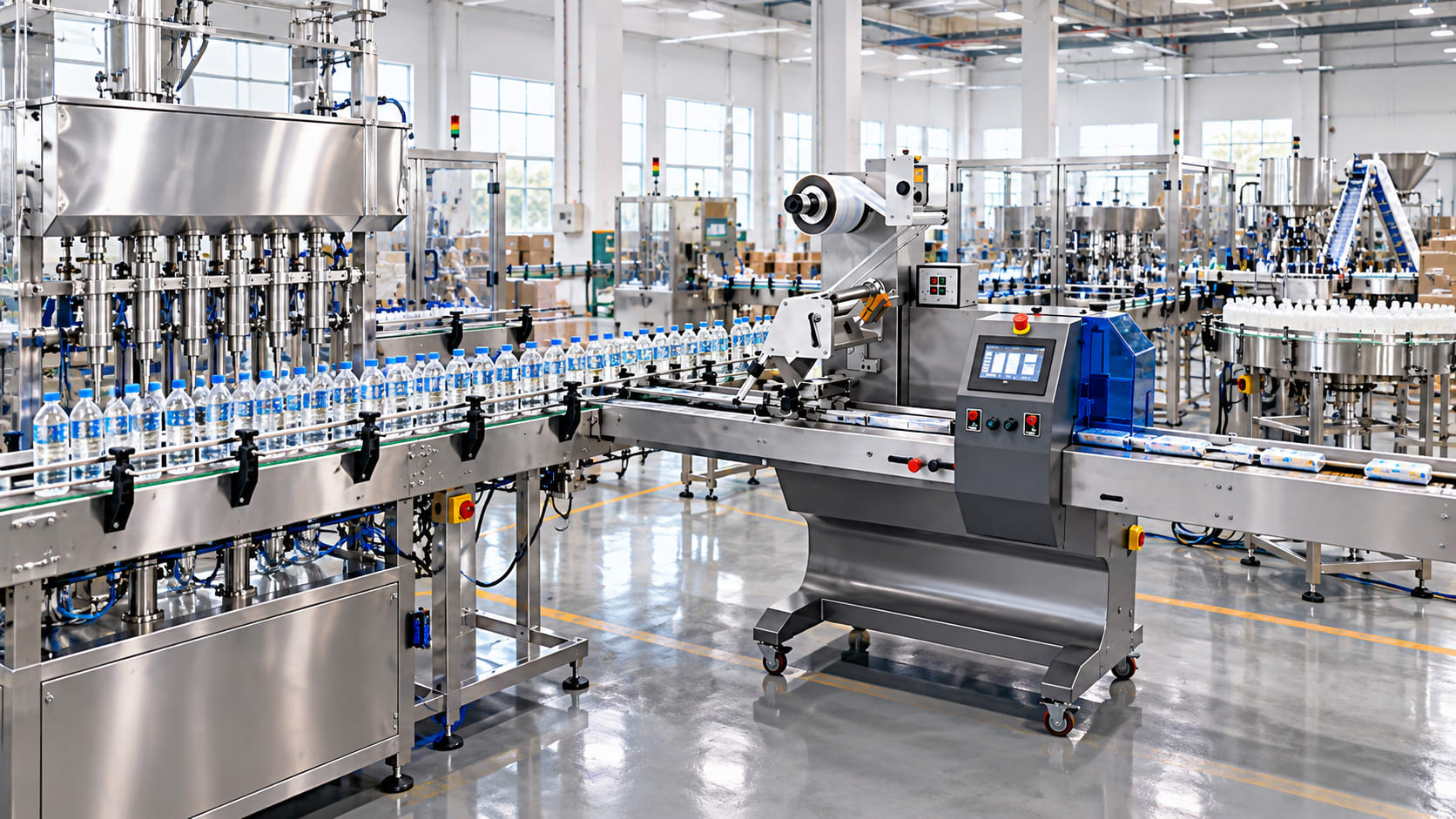
What are the milk packaging machine options in India?
Milk packaging machines in India mainly cover pouch, bottle, cup/lassi and plant-grade lines, with listed prices starting at Rs 1,44,000 for entry pouch machines and going up to Rs 5,60,000 for plant-grade lines.
What are the main milk packaging formats in India?
The practical choices are pouch, bottle, cup/lassi and plant-grade packaging lines. The right format depends on what you sell, the output you need, cleaning requirements and the scale of your dairy.
Swipe or scroll horizontally to view all columns
| Format | Machine type | Price tier INR | Best for |
|---|---|---|---|
| Pouch | Open-body automatic | Rs 2,10,000–Rs 2,80,000 | Small and growing dairies needing easy washdown |
| Pouch | Close-body automatic | Rs 1,44,000–Rs 2,00,000 | Entry-level milk pouch production |
| Bottle | PET/glass filling line | Rs 2,10,000–Rs 2,80,000 | Branded milk and value-added dairy products |
| Cup/lassi | Cup filling/sealing line | Rs 2,10,000–Rs 2,80,000 | Lassi, curd and portion-packed dairy products |
| Plant-grade | Dairy-plant packaging line | Rs 4,00,000–Rs 5,60,000 | Higher-volume dairy operations |
What does a pouch milk packaging machine cost?
A pouch milk packaging machine costs around Rs 1,44,000–Rs 2,80,000 across the entry and mid tiers, while plant-grade pouch lines are listed at Rs 4,00,000–Rs 5,60,000.
When checking milk pouch packing machine price India, don't look at the number alone. Construction, cleaning access and the production scale the machine is meant for matter just as much.
You can compare the available pouch options through the automatic milk pouch packing machine listing.
What is the New Vision open-body milk packaging machine?
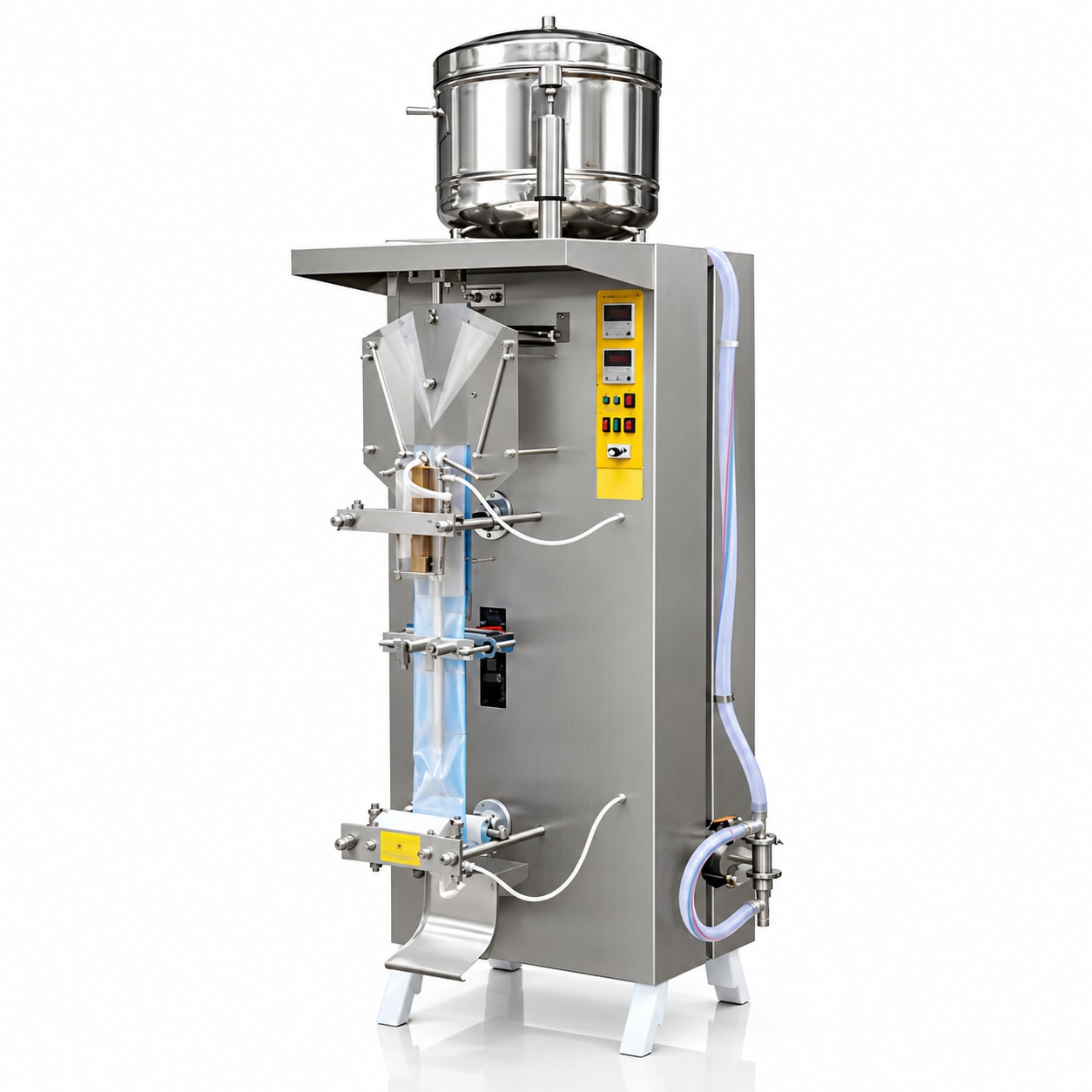
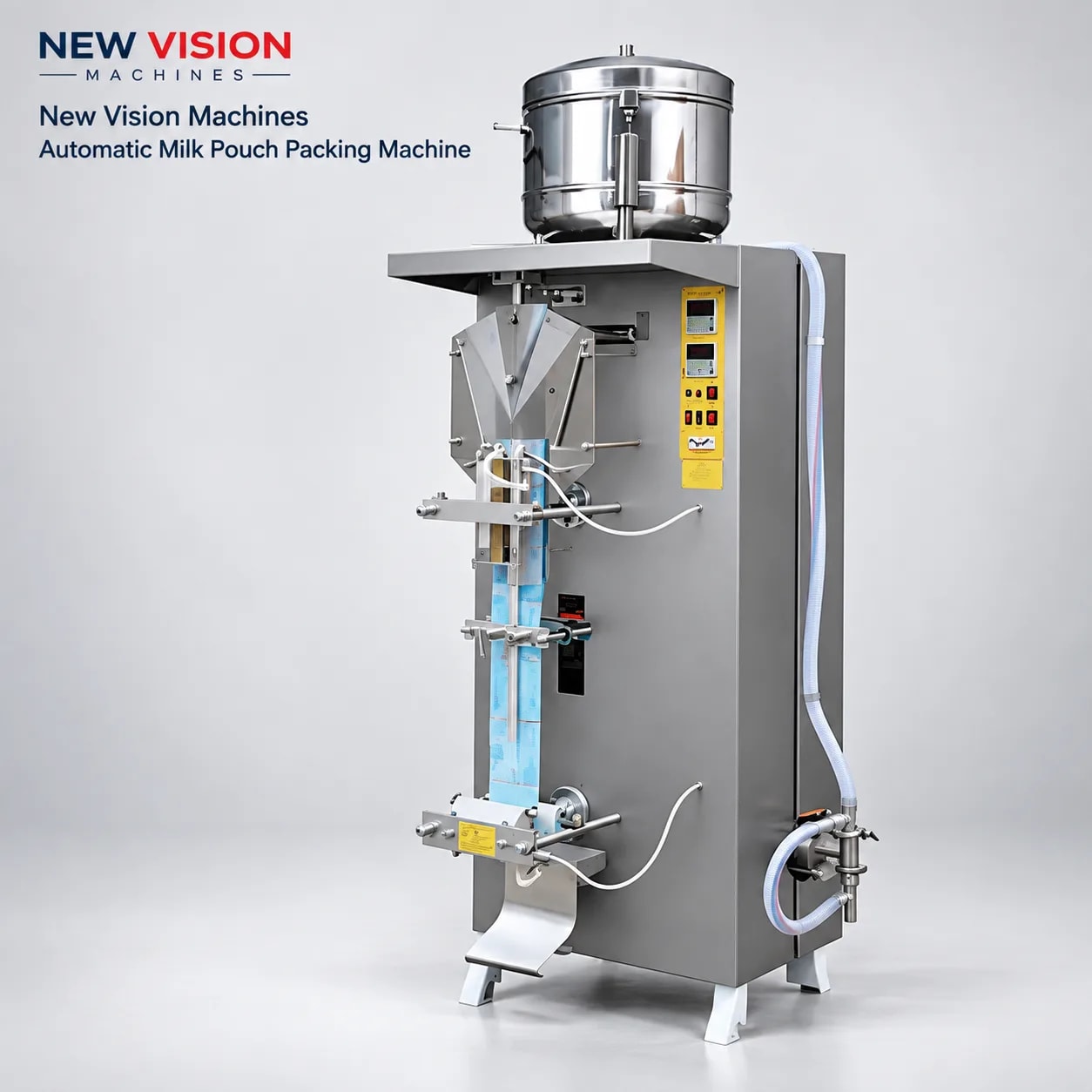
The New Vision open-body automatic milk packaging machine is priced at Rs 3,69,000, with a 200–1000 ml filling range and an output of 1000–1200 pouches/hour.
The machine has an exposed stainless-steel frame, making routine washdown more accessible. It produces centre-seal pillow pouches.
At 1,000–1,200 pouches/hour, an 8-hour shift gives a nominal 8,000–9,600 pouches. At 0.75 OEE, that works out to approximately 6,000–7,200 pouches per shift.
The full listing is available for the open-body automatic milk packaging machine.
Should you buy an open-body or close-body pouch machine?
Open-body machines give easier access for cleaning and washdown, while close-body machines use a more enclosed construction; the better fit depends on how the dairy operates and what it wants to spend.
Swipe or scroll horizontally to view all columns
| Factor | Open-body | Close-body |
|---|---|---|
| Hygiene access | Exposed frame provides easier access to machine surfaces | More enclosed construction |
| Washdown | Fast access for routine cleaning | Cleaning requires more attention to enclosed areas |
| Price | Can sit in the mid-market range | Entry options start around Rs 1,44,000 |
| Best buyer profile | Dairies prioritising frequent washdown and maintenance access | Smaller dairies prioritising initial equipment cost |
For a dairy washing equipment every day, access to the machine matters. It is worth checking this physically rather than making the decision on purchase price alone.
What is the milk packaging machine price map in India?
The current listed price bands are Rs 1,44,000–Rs 2,00,000 for entry pouch machines, Rs 2,10,000–Rs 2,80,000 for mid-tier equipment, and Rs 4,00,000–Rs 5,60,000 for plant-grade lines.
What do entry-level milk packaging machines cost?
Entry machines are priced at Rs 1,44,000–Rs 2,00,000 and cover single-head automatic milk pouch machines aimed at dairies moving into automated pouch production.
This is the starting point for buyers checking automatic milk packing machine price before moving into higher-capacity equipment.
What does mid-tier dairy packaging equipment cost?
Mid-tier equipment falls between Rs 2,10,000 and Rs 2,80,000 and covers packaging requirements for growing dairy operations, including pouch, bottle and cup/lassi applications.
This tier makes sense when basic entry equipment is no longer sufficient but a plant-grade packaging line is not yet required.
What does plant-grade dairy packaging cost?
Plant-grade dairy packaging lines are listed at Rs 4,00,000–Rs 5,60,000 and are intended for larger dairy operations requiring higher-scale packaging infrastructure.
At this level, compare the complete line, sanitation access and required production output rather than looking at the price of one machine in isolation.
Which milk packaging machine format suits your dairy?
Pouch machines suit conventional liquid milk, bottle filling lines suit PET or glass, cup lines suit products such as lassi and curd, while plant-grade lines are intended for larger dairy operations.
Is pouch packaging right for your dairy?
Pouch machines are suited to dairies selling liquid milk in pillow pouches, with the open-body option giving easier access for routine washdown.
For a detailed look at pouch equipment, see the milk pouch packing machine buying guide.
When does a dairy need bottle filling?
Bottle filling machines are suited to PET or glass milk containers, particularly where the container and retail presentation are part of the product strategy.
For the selection considerations, refer to the milk bottle filling machine buying guide.
When does a cup or lassi line make sense?
Cup filling and sealing lines suit lassi, curd and other dairy products sold in individual portions.
These applications generally sit within the Rs 2,10,000–Rs 2,80,000 mid tier, depending on the line configuration.
Who needs a plant-grade dairy line?
Plant-grade lines suit established dairy operations that need larger-scale packaging infrastructure, with listed prices of Rs 4,00,000–Rs 5,60,000.
The starting point should be the required daily output and packaging format, not the machine catalogue.
What should dairies check for FSSAI and SS304 compliance?
A dairy packaging machine should have food-grade SS304 contact parts, practical washdown access, reliable seal integrity and batch-coding capability for traceability.
Are the product-contact parts food-grade SS304?
Applicable product-contact parts should be made from food-grade SS304 stainless steel.
Do not assume that a machine described as stainless steel is entirely SS304. Ask for the actual material specification of the product-contact surfaces.
Can the machine be cleaned properly?
The machine should allow routine cleaning and inspection without difficult-to-reach areas becoming persistent hygiene points.
An open-body frame provides direct access to exposed machine surfaces, which can be useful where frequent cleaning is part of the daily operating routine.
Does the package maintain seal integrity?
Seal integrity is essential because the finished pouch or container needs to remain properly closed during handling, storage and distribution.
Before production, check that sealing remains consistent across the intended operating conditions.
Can batches be traced?
Batch coding should be available where required for production identification and traceability.
The packaging setup should allow the dairy to identify the relevant production batch from the code applied to the finished pack.
How should a dairy choose between packaging options?
Choose the packaging format first, then work through required output, cleaning requirements, presentation and investment.
A dairy selling standard liquid milk may only need pouch packaging. A branded retail operation may prefer PET or glass bottles. Lassi and curd require a cup-based format, while larger plants may justify plant-grade packaging infrastructure.
New Vision Machines is located at Lasudia Mori, Indore, Madhya Pradesh 452010. For machine selection and application discussion, contact +91-9981604279.
What is the practical next step?
Start with the product format and required daily output. From there, compare the relevant machine tier, construction and sanitation requirements before requesting a quotation.