
Pharma packaging line machines in India: what a secondary packaging line does
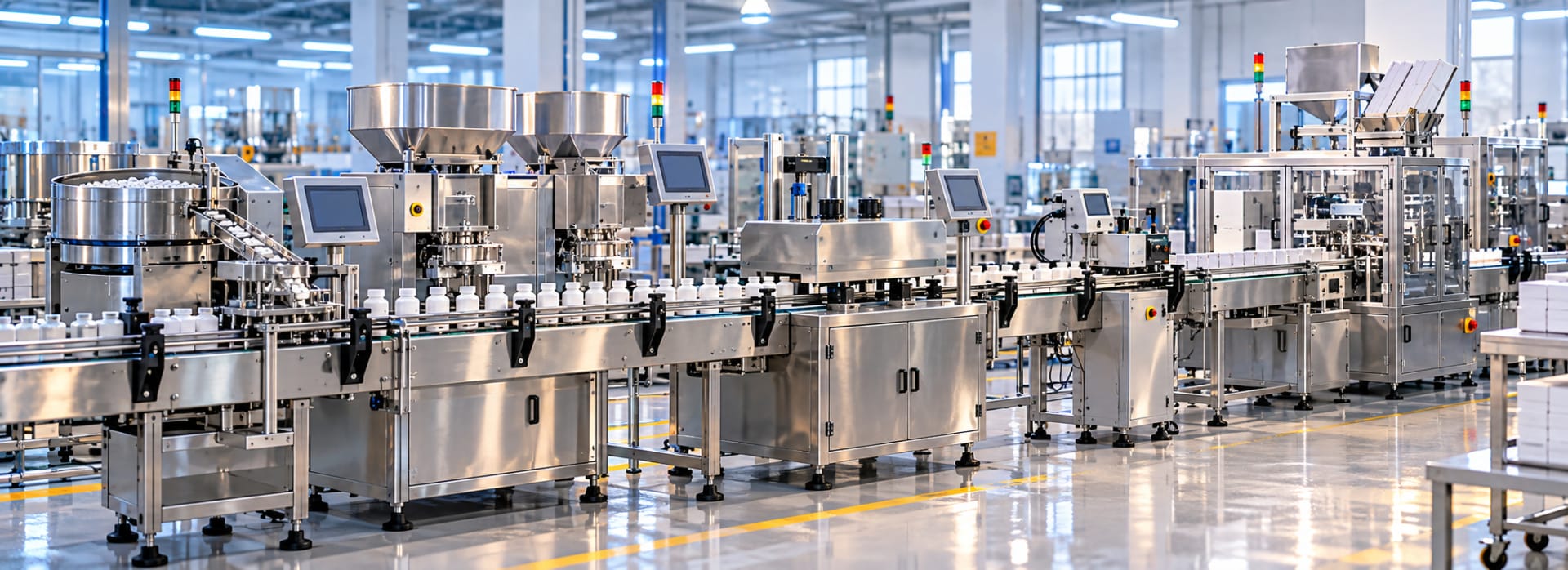
A secondary pharma packaging line takes filled bottles or blister strips and turns them into finished retail packs. The usual flow is straightforward: count and fill the product, seal the bottle, place bottles or strips into cartons, then code the finished pack. Putting the machines in this order keeps product movement consistent from one stage to the next.
The line, stage by stage
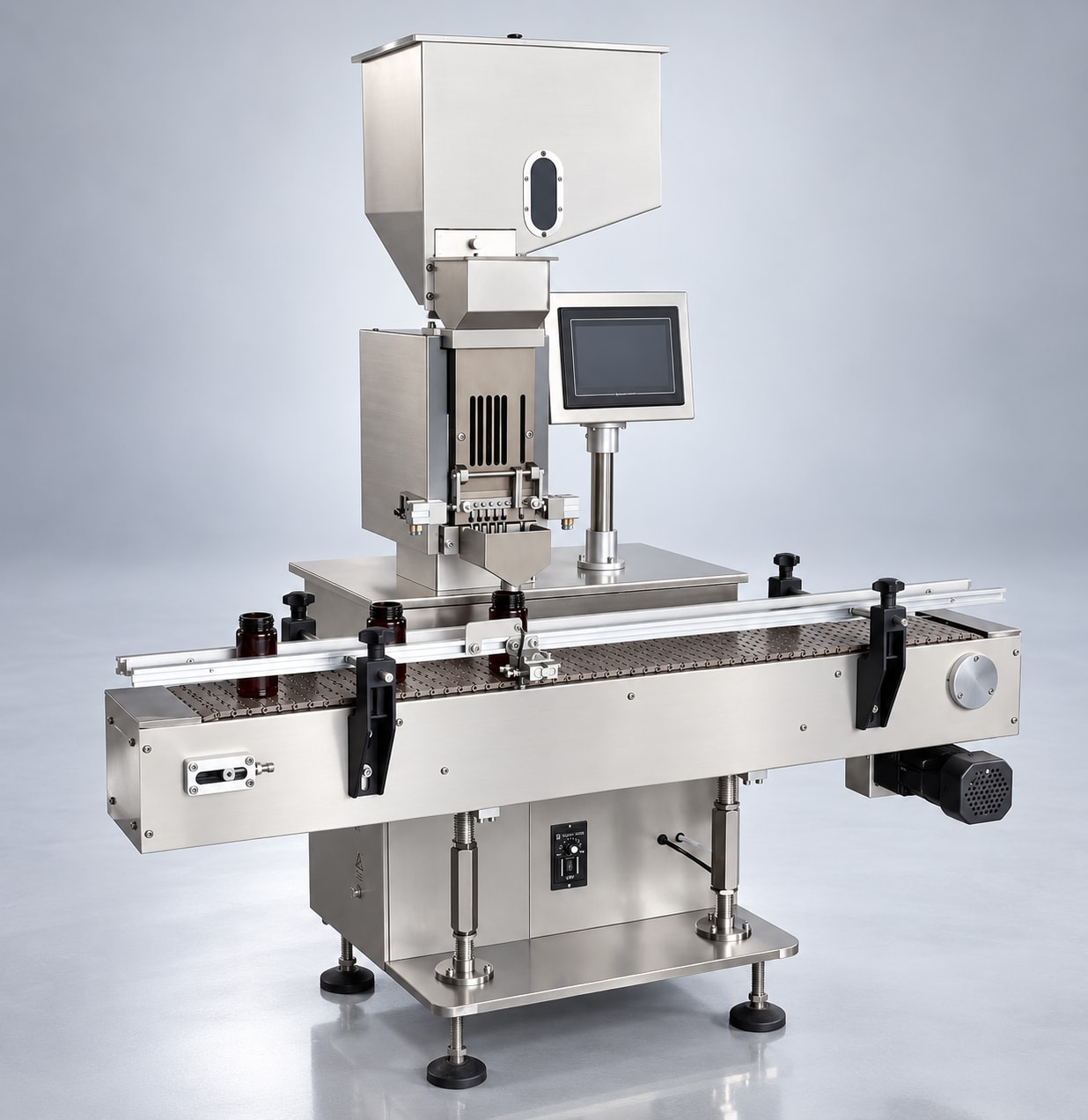
1. Tablet/capsule counting and bottle filling — ₹1,30,000
Everything starts with the product count. The machine counts tablets or capsules and dispenses the required quantity into each bottle. Once the correct quantity is filled, the bottle moves forward for capping and sealing.
For a pharmaceutical packaging line handling different SKUs, automated counting removes a repetitive manual operation and gives the sealing stage a consistent supply of filled bottles.
New Vision lists its Automatic Tablet/Capsule Counting & Filling Machine at ₹1,30,000. See tablet and capsule counting with automatic bottle filling for the first stage.
2. Induction cap sealing — ₹1,13,160
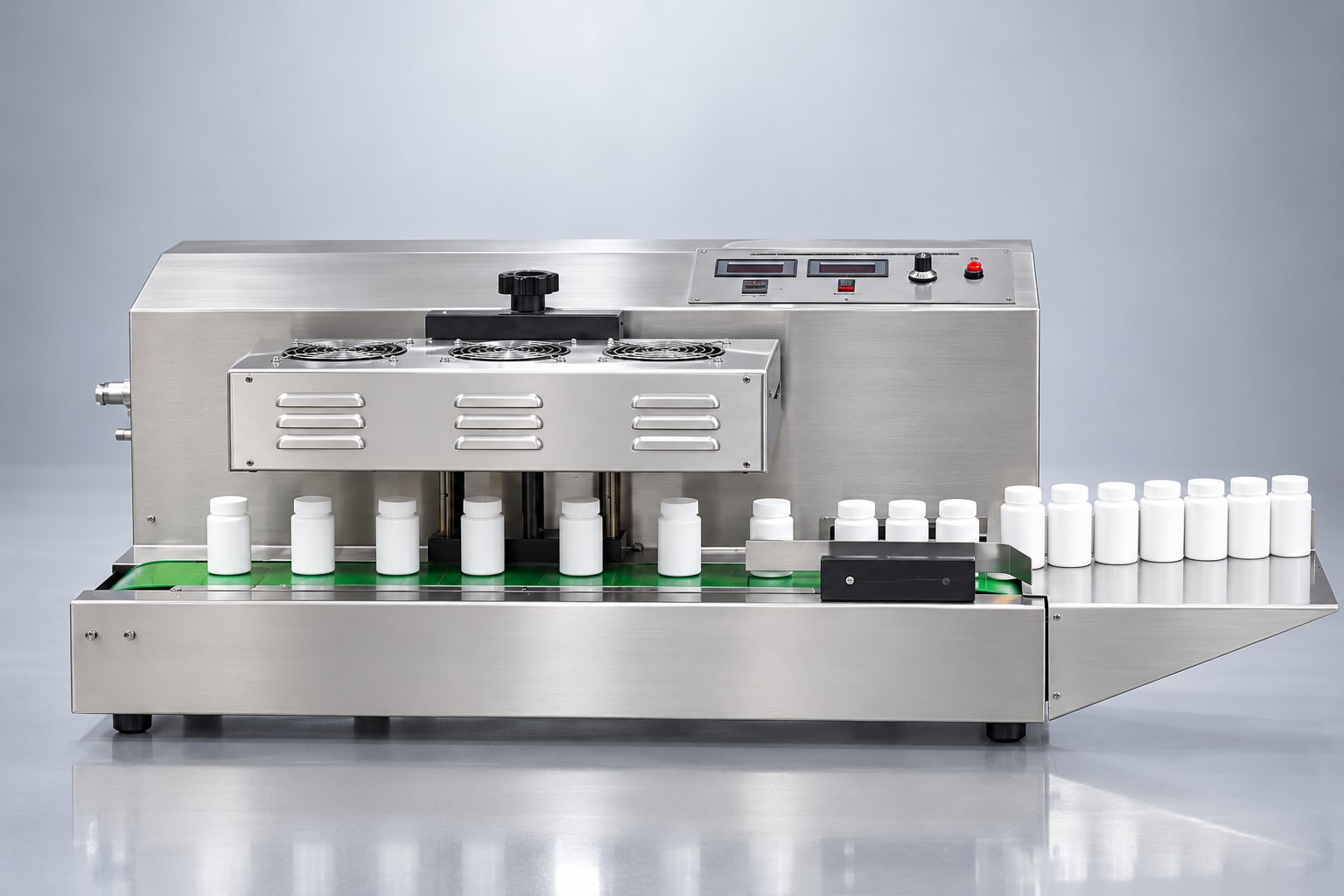
The filled and capped bottle then moves to induction sealing. A foil liner is sealed across the bottle mouth, creating a tamper-evident barrier between the product and the outside environment.
The sequence matters. The bottle has to be filled and capped before the foil seal can be applied. Sealing at this point also prepares the bottle for handling during the next packaging operation.
The Continuous Induction Cap Sealing Machine 20-130mm Heavy Duty is listed at ₹1,13,160. See continuous induction sealing for tamper-evident caps.
3. Cartoning — ₹1,60,000
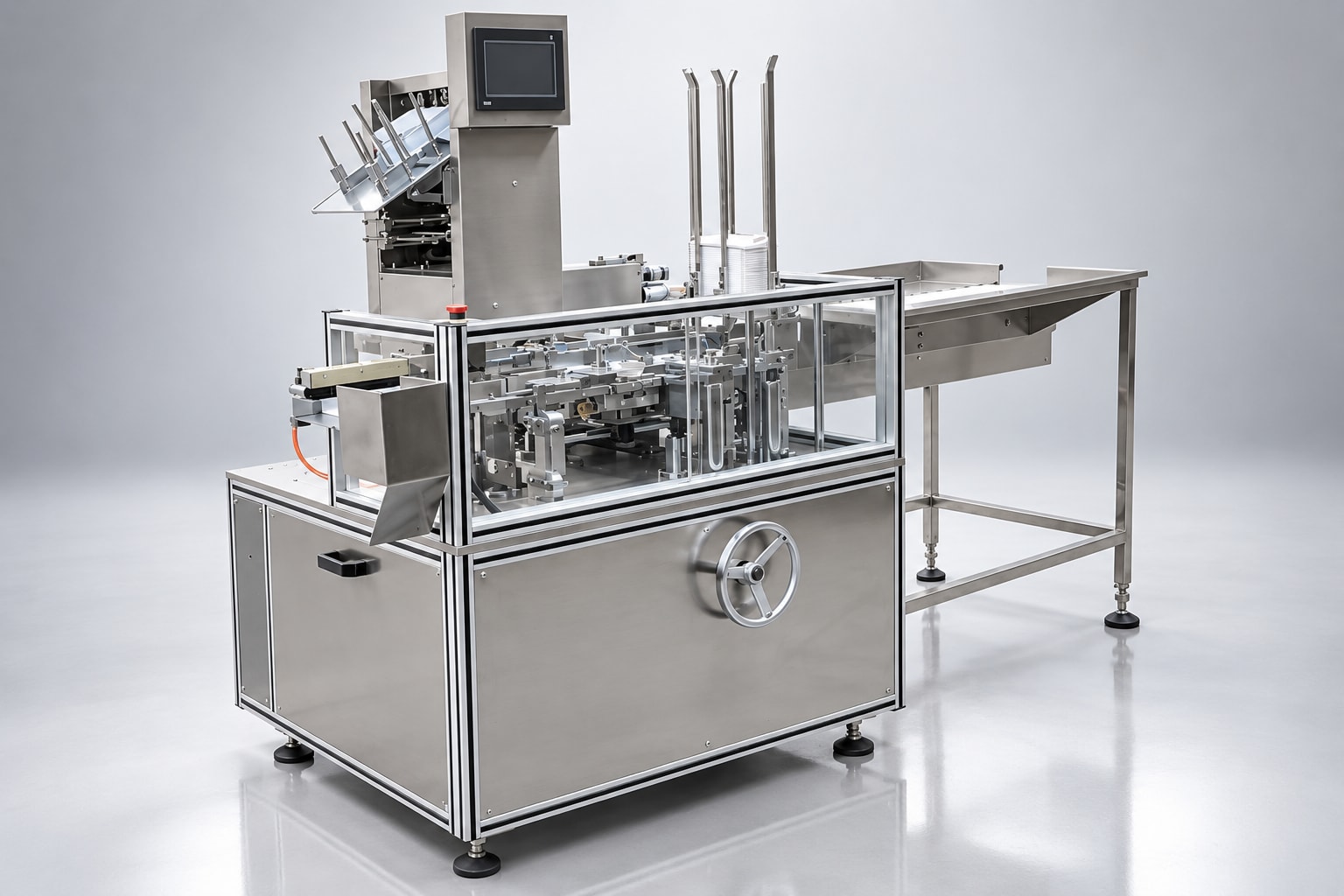
Once the primary pack is ready, the product moves into secondary packaging. An automatic cartoner places blister strips or bottles into retail cartons, creating the pack that will move through storage, distribution and sale.
That makes cartoning the natural next step after filling and sealing. The product is already in its required pack format, so the machine can concentrate on forming and completing the carton.
New Vision lists its Automatic Cartoning Machine at ₹1,60,000. For a tablet counting cartoning line, see an automatic cartoner for blister-to-carton packing.
If you are also comparing coding equipment for a pharma or FMCG line, review which coding technology is most reliable, compared before selecting the downstream coder.
4. Batch coding on the finished carton — ₹42,000
The final listed stage is coding. Once the carton is complete, the coder applies the required production or batch information to the finished secondary pack.
Keeping coding after cartoning means the information is printed directly on the finished carton rather than on an unfinished pack. That can simplify the final identification step in the packaging flow.
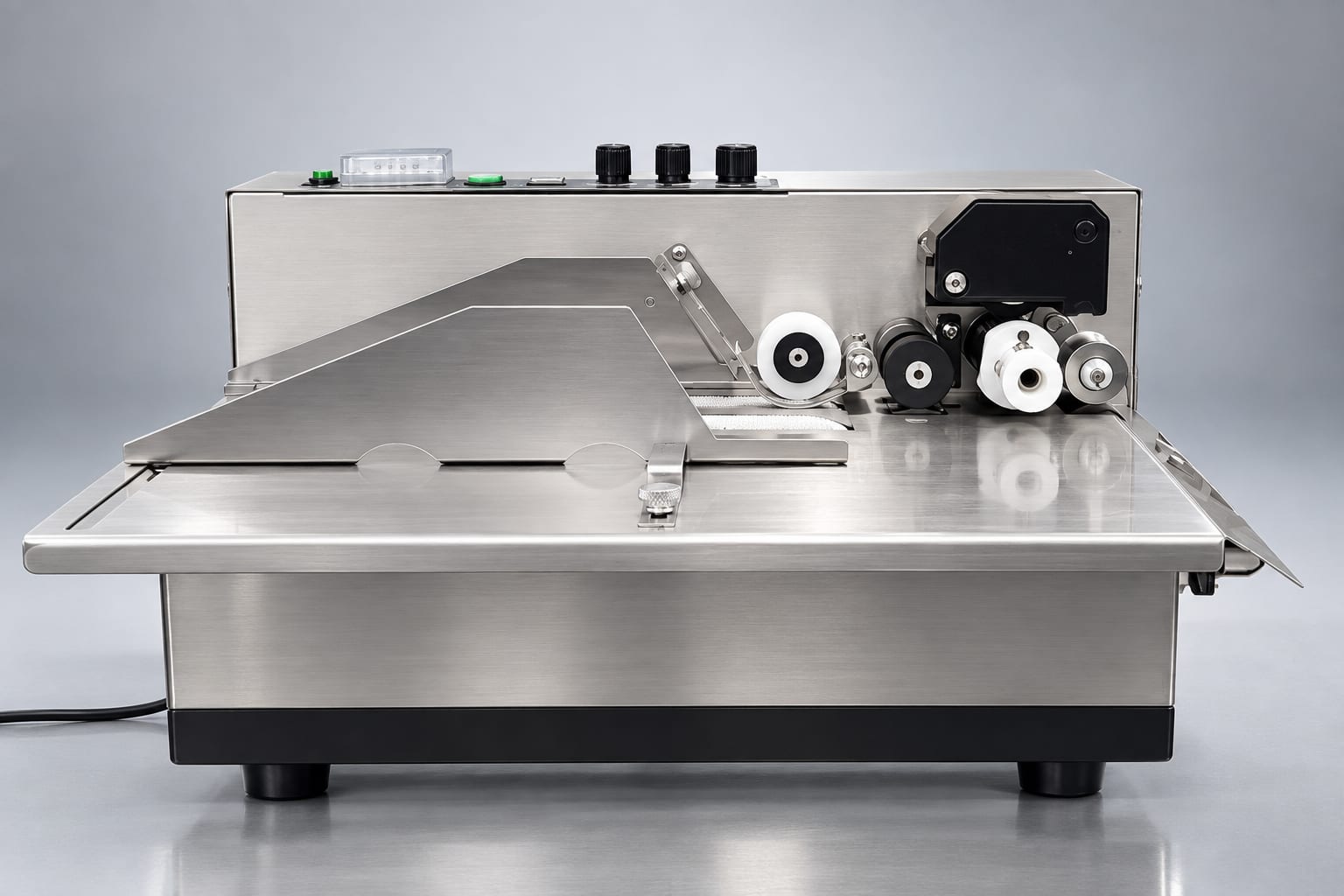
The Hot Ink Coder Machine for High-Speed Batch Coding is listed at ₹42,000. See hot-ink batch coding for the finished cartons.
For equipment budgeting and technology comparison, see hot-ink vs inkjet vs CIJ: price ladder and the full batch coding range.
Price band summary
The four listed machines come to ₹4,45,160 in total: ₹1,30,000 for counting and filling, ₹1,13,160 for induction sealing, ₹1,60,000 for cartoning and ₹42,000 for hot-ink coding. That ₹4,45,160 figure covers these four machines only. A complete project can cost more when additional equipment and line requirements are included.
Where the line hands off: labelers, shrink tunnels
These four stages do not necessarily make up the entire pharmaceutical packaging line. Depending on the product and final pack, the line may also require labelers for containers or packs and shrink tunnels for shrink-wrapped secondary packaging. New Vision also supplies equipment for these downstream packaging operations.
For a factory-specific setup, request a stage-by-stage quote from New Vision Machines with your product format, required pack sequence and desired automation level. That gives the line design a clear starting point instead of treating every packaging project as the same.