What a Bottling Line Actually Is
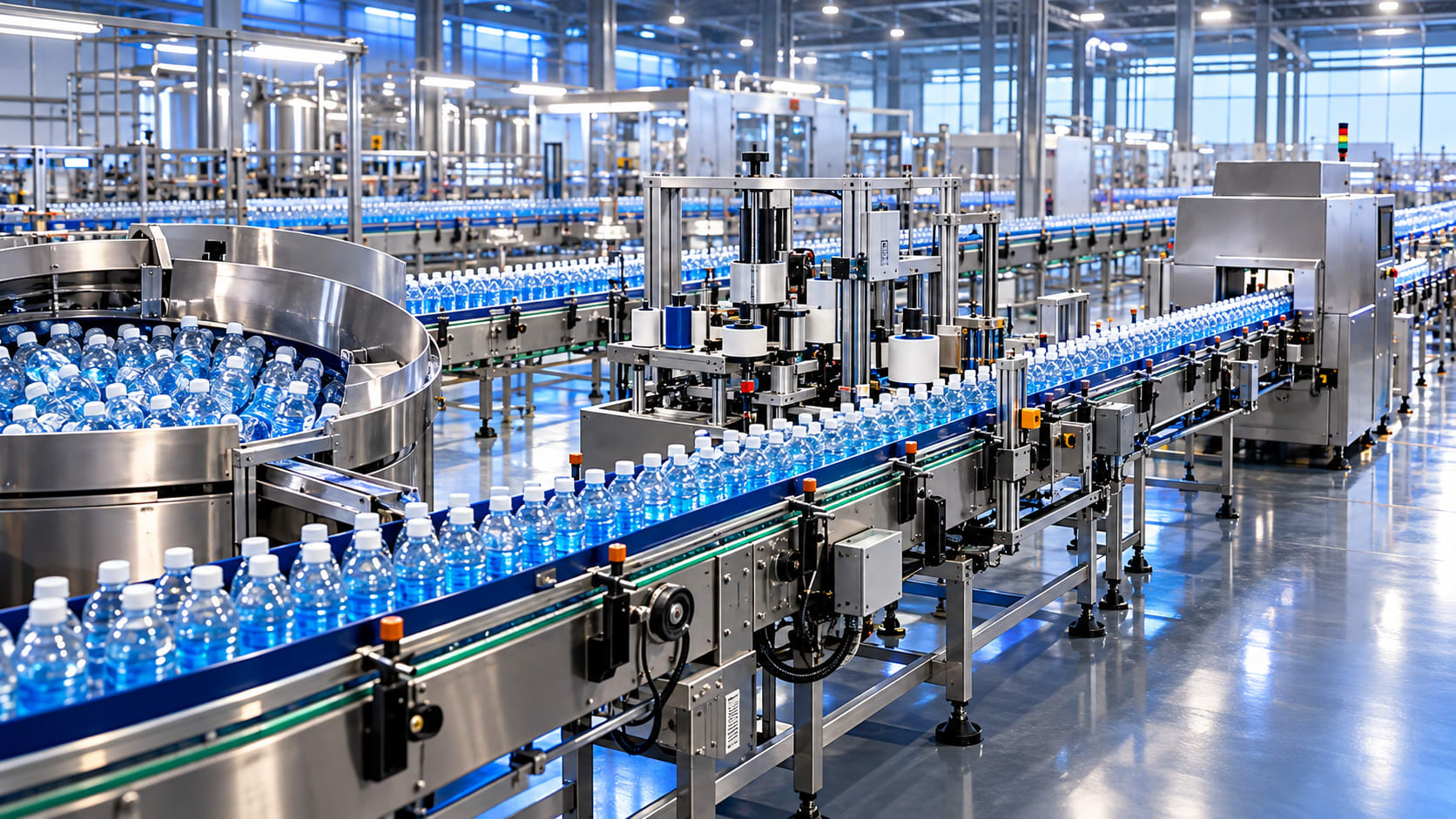
A bottling line is a connected sequence of machines that takes empty bottles from bulk supply and delivers sealed, labeled, and quality-checked finished products. Bottles are fed one by one into the line (unscramble), filled and capped, labeled, transported between stations (convey), and checked for contaminants and correctness before packing (inspection). Each station can be bought separately and bolted onto an existing line, or installed together as a complete setup.
Bottling Line Stations: India Price Bands & Best Fit
| Station | What it does | India price band (SERP evidence) | Output / spec class | Best for |
|---|---|---|---|---|
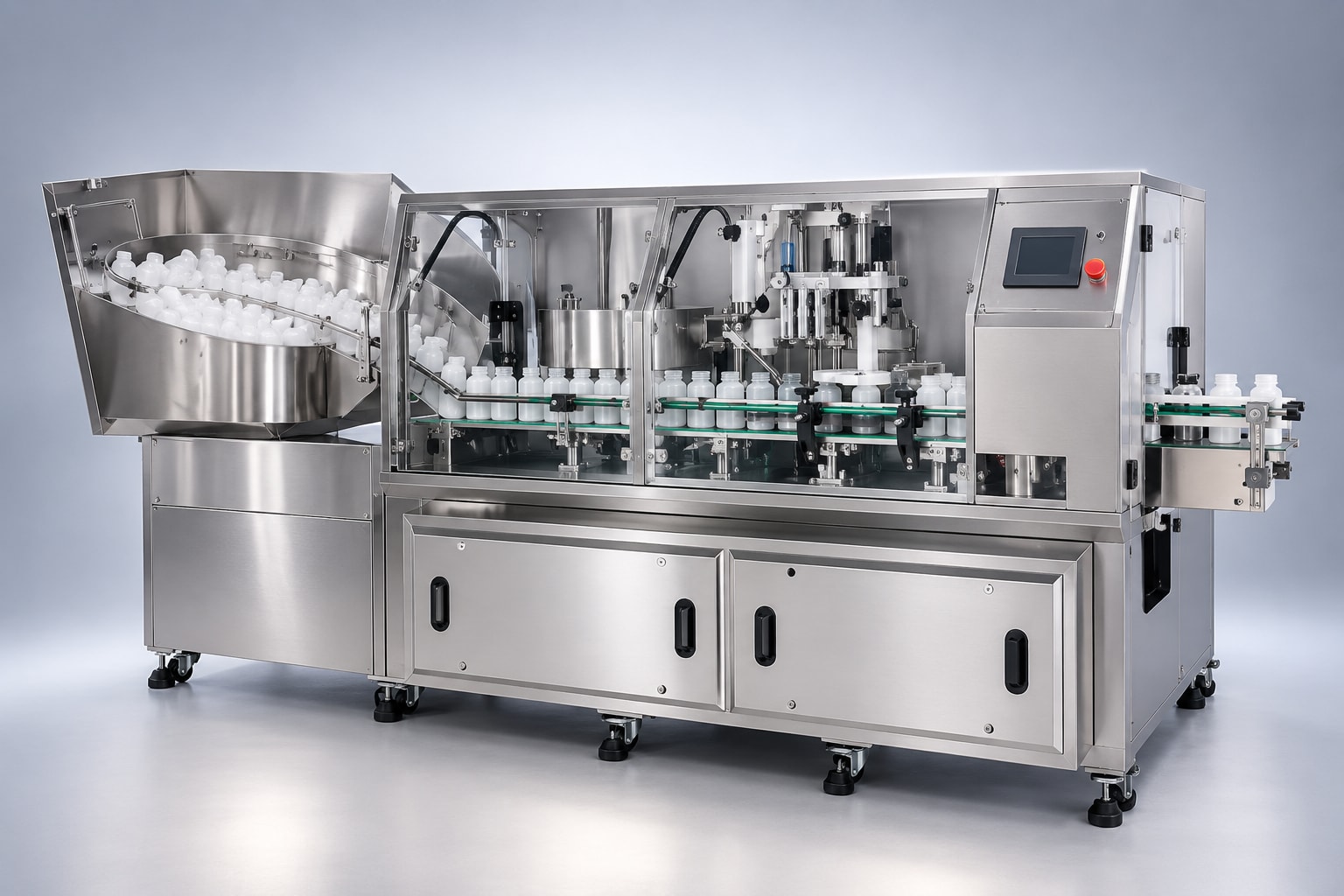
| Bottle unscrambler | Orients bulk empty bottles into single-file feed | ₹3.95L (entry, 300 bpm) → ₹5.4–7.5L (standard automatic) → ₹12.4–15L (high-speed) | 100–300 bpm standard class; turntable or linear | Plants upgrading from manual loading |
| Filler + capper | Fills and seals bottles | See product pages — priced per model | RFC (rinse-fill-cap) for water; piston/pneumatic for viscous | Water, oil, pharma liquid lines |
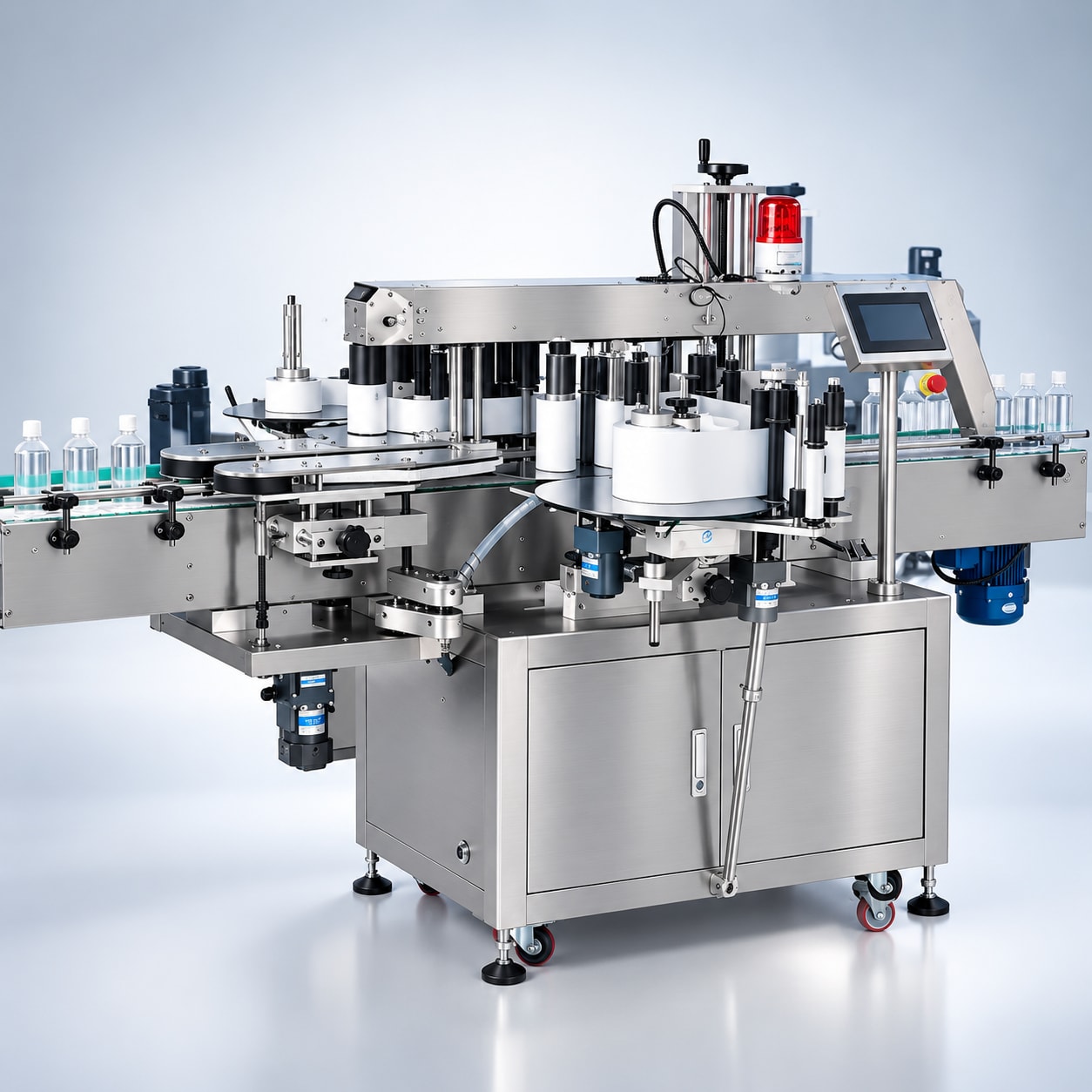
| Round-bottle labeler | Applies labels on round bottles at line speed | ₹1.87–3.25L (standard fully-auto) → ₹8–17L (high-throughput 120–150 bpm) | 30–200 pcs/min standard; double positioning; printer integration | Any bottle line needing line-speed labeling |
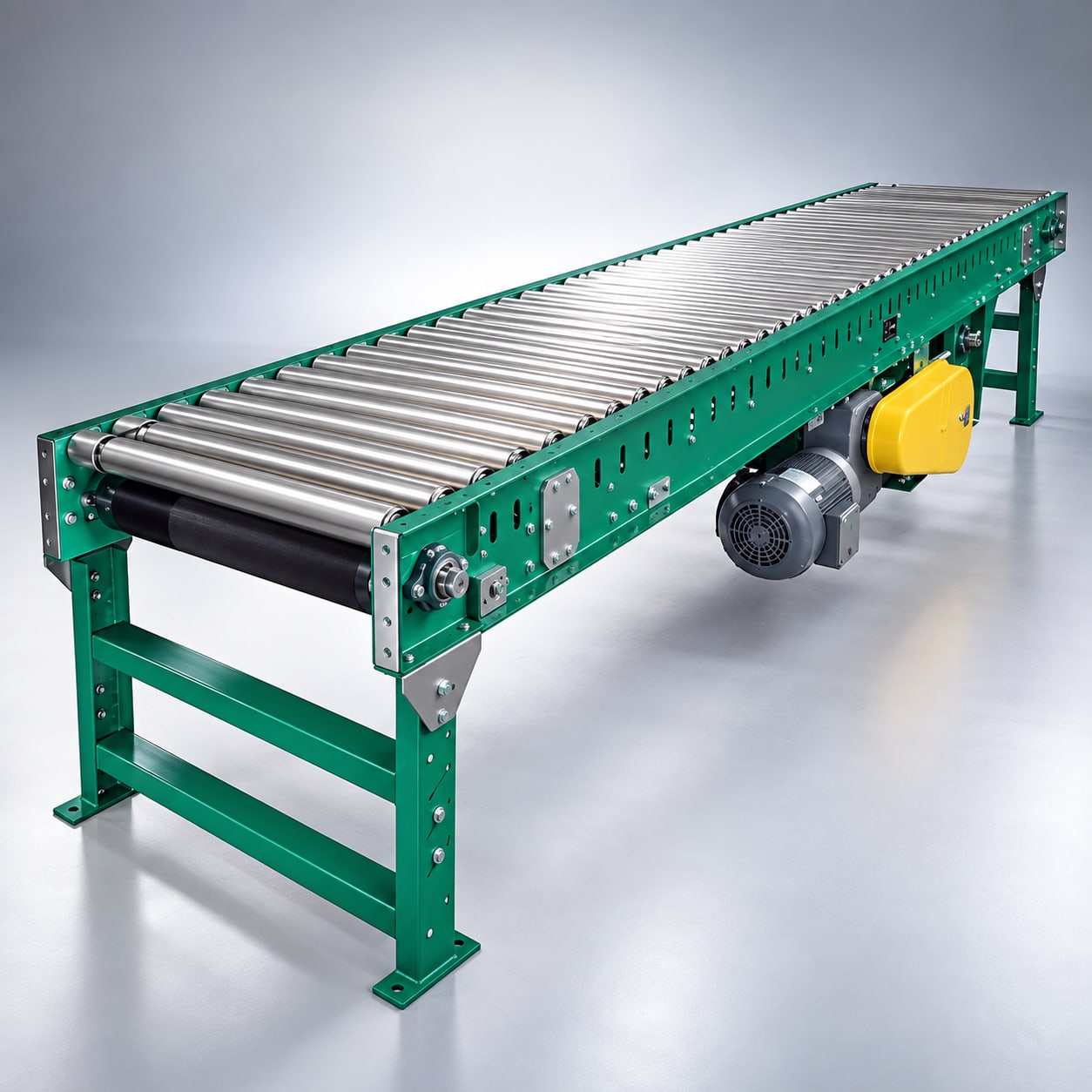
| Motorized roller conveyor | Moves bottles between stations at controlled speed | ₹20,000 (small MS) → ₹1.04–1.5L (SS, 50 kg/feet class) | Up to 50 kg/feet; stainless steel rollers | Fragile / high-value items needing even spacing |
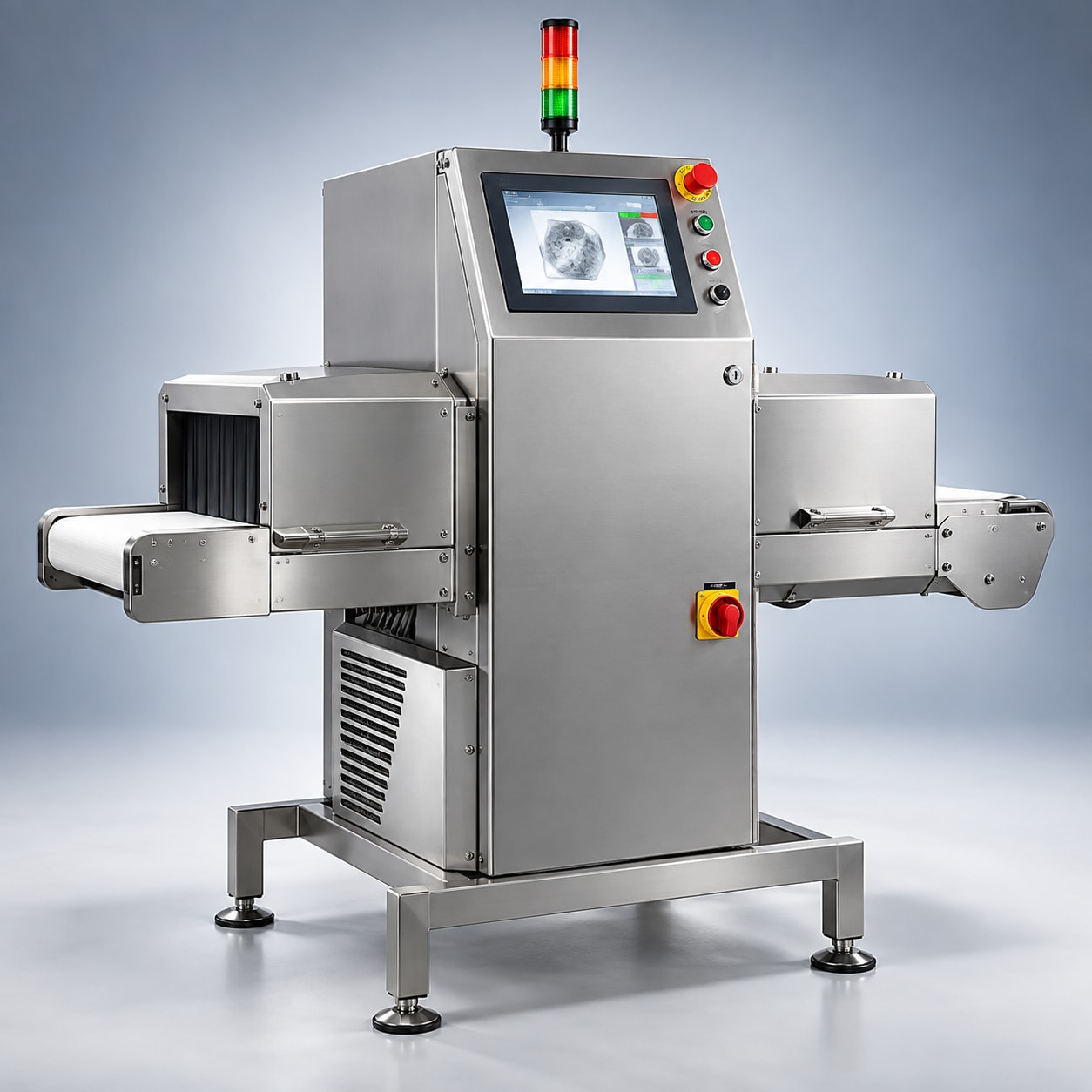
| X-ray inspection | Detects foreign bodies (metal + glass, stone, bone, hard rubber) | ₹5–8L (entry) → ₹13–20L (mid-range food inspection) → ₹35–64.8L (high-end) | Tunnel aperture × belt speed; e.g. 507×305 mm tunnel, 0.20 m/s | Food, dairy, FMCG packing plants |
Station-by-Station Buying Summary
Unscrambler. The line feeder: it sorts jumbled empty bottles and feeds them upright, single-file, at machine speed. Choose turntable vs linear design and match the speed class (100 / 150 / 300 bpm) to your filler. Check format compatibility — PET, HDPE, glass — plus SS304 contact parts and changeover time.
Conveyor. The line's backbone: a motorized roller conveyor keeps bottles evenly spaced and moving at a controlled speed, unlike a gravity roller where bottles slide on a slope and bunch up. For fragile or high-value products, powered rollers are the safer choice. See the SS roller conveyor with 50 kg/feet capacity at ₹1,04,000.
Labeler. The mid-line station after filling and capping. For round bottles at production speed, a fully automatic labeler with double positioning applies labels with ±1 mm accuracy and can integrate an on-demand printer. See the fully automatic round-bottle labeling machine at ₹2,46,000 — distinct from the older semi-automatic sticker labeling for round bottles unit.
Inspection. The end-of-line quality gate. A metal detector conveyor catches metal particles; an X-ray system goes further — glass, stone, bone, and hard rubber that metal detectors miss. They are complementary layers, not substitutes. See the X-ray inspection system for food and packed products at ₹19,90,000, which pairs with the existing metal detector conveyor and checkweigher as the inspection trio.
Fill & cap. The heart of the line. Water plants use rinse-fill-cap (RFC) monoblocks; viscous products use piston or pneumatic fillers. See the automatic bottle capping machine and the water bottling line page, which is a water-specific RFC procurement guide (this hub covers general bottling lines).
How to Choose Your Line Configuration
- New plant vs upgrade: upgrading an existing line? Buy only the station you lack — most machines here are sold as standalone stations. Building new? Start from the filler speed class and spec the unscrambler and labeler to match it.
- Speed matching: the slowest station sets your line output. A 300 bpm unscrambler feeding a 60 bpm labeler wastes money — keep station speeds in the same class.
- Format compatibility: confirm bottle diameter/height range and material (PET/HDPE/glass) against every station, not just the filler.
- Build & controls: SS304 food-contact parts, PLC with HMI touch screen, and changeover time between bottle formats are the real cost drivers after speed.
- Commercials: get prices in writing with GST stated, check what's in the box (compressor, spares, manuals), and ask about installation, commissioning, and warranty support from Indore/Ahmedabad/Noida supply hubs.
Request a Quote
Tell us about your bottling line requirement and our team will send you a detailed quote.
Frequently Asked Questions
What machines do I need for a complete bottling line?
The typical line is: bottle unscrambler → filler → capper → labeler → conveyor → inspection (metal detector / X-ray) → secondary packing. For water, the fill and cap are usually one RFC monoblock; for viscous products, a separate piston filler and capper.
How much does a bottling line cost in India in 2026?
Individual stations run roughly: unscrambler ₹3.95–15L, labeler ₹1.87–3.25L (standard class), motorized roller conveyor ₹20k–1.5L, X-ray inspection ₹5–64.8L depending on class. A complete mid-speed line's total depends on filler/capper selection and speed matching — request a quote for a station-by-station breakup.
Which is better: turntable or linear bottle unscrambler?
Turntable unscramblers suit standard round bottles at moderate speeds; linear unscramblers suit high speeds and easier format changeover. Match the design to your bottle geometry and target bottles-per-minute before deciding on price alone.
Do I need an X-ray inspection machine if I already have a metal detector?
Yes for food, dairy, and FMCG plants with strict foreign-body risk: metal detectors only catch metal; X-ray systems also catch glass, stone, bone, and hard rubber. The two are complementary inspection layers, typically placed one after the other at end-of-line.
What bottle types can an automatic unscrambler handle?
Most automatic unscramblers handle PET and HDPE containers; glass compatibility depends on the machine's bottle-contact design. Always confirm your exact diameter and height range with the supplier before ordering.
Is this the same as the water bottling line page?
No. The water bottling line page is a water-specific procurement guide centered on RFC filling, coding, and shrink packing. This page is the general bottling-line station selector — unscrambler, conveyor, labeler, and inspection with per-station India price bands.