

What an induction cap sealing machine does
An induction cap sealing machine hermetically seals bottles and jars by heating an aluminium foil liner inside the cap with electromagnetic induction — no contact, no heat applied to the product itself. The result is the tamper-evident foil seal you peel off medicine bottles, edible-oil jars, agrochemical containers and packaged drinking water. It is the standard inner seal across pharma, food, beverage, cosmetics and chemical packing lines in India.
The three types — and what each costs in India
| Type | How it works | Typical India price band | Best for |
|---|---|---|---|
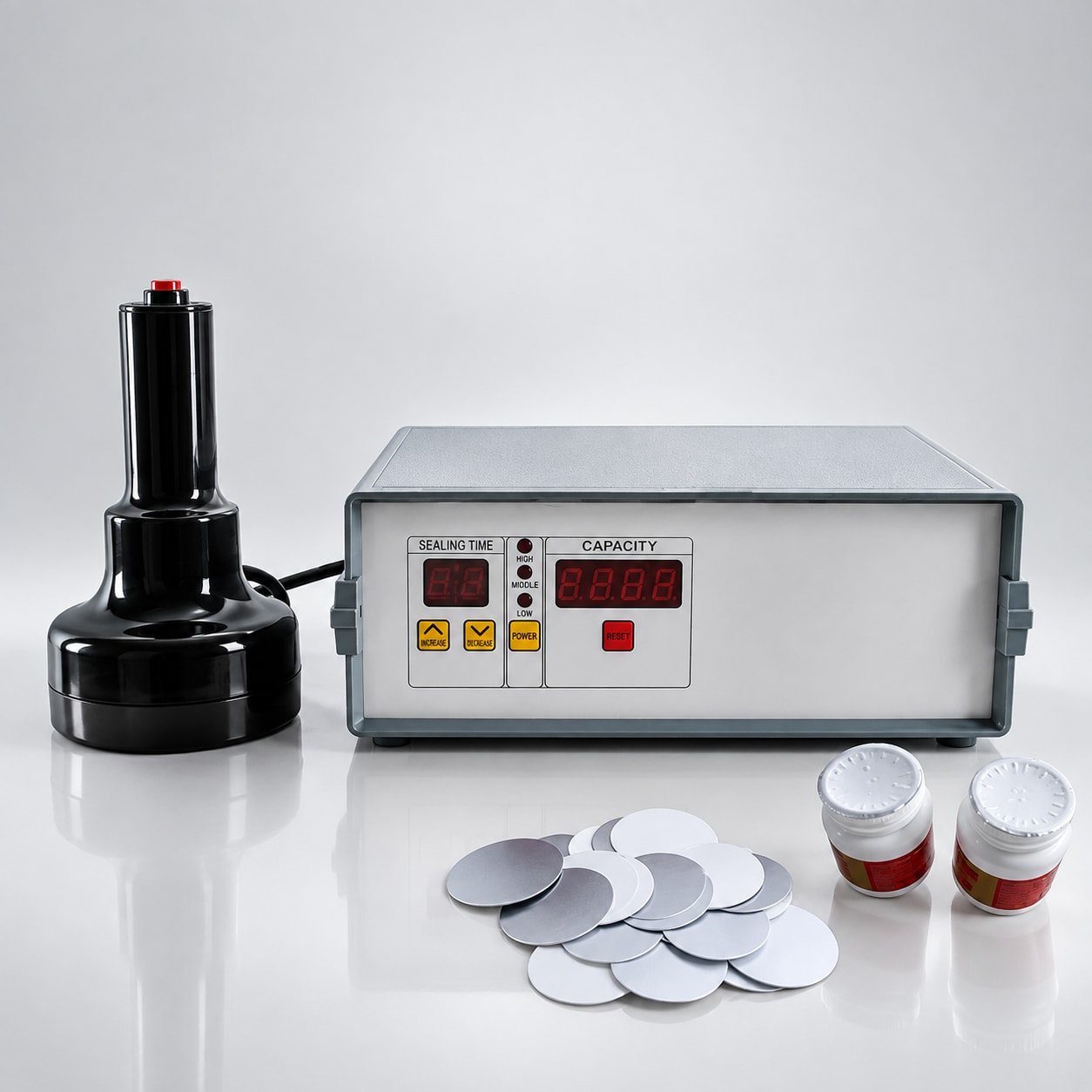
| Handheld / portable | Operator holds the sealing head over each cap | ₹9,800 – ₹17,000 | R&D batches, startups, low volumes, field packing |
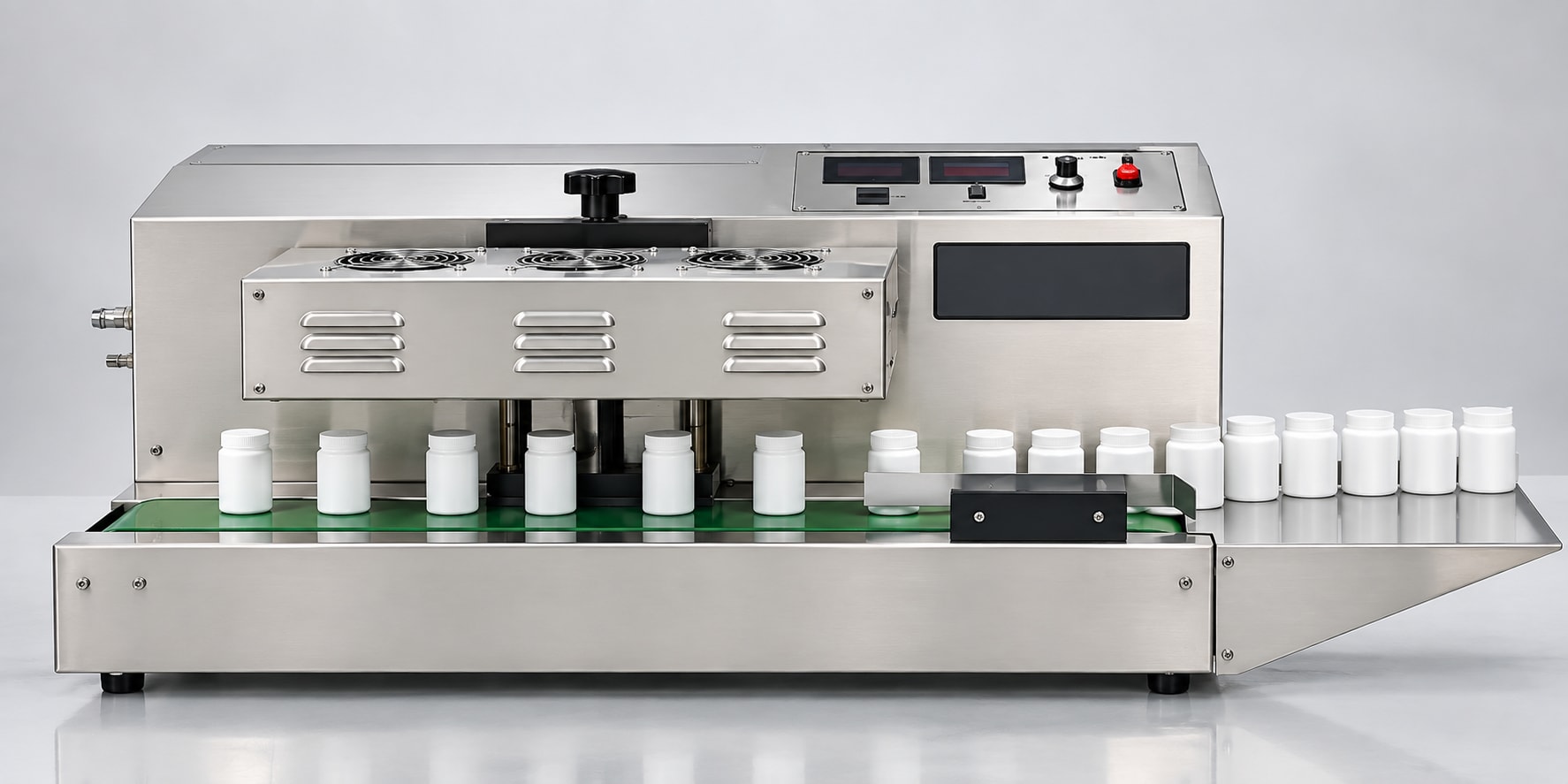
| Tabletop semi-automatic | Conveyor or manual feed under a fixed head | ₹35,000 – ₹52,000 | Small factories, 500–2,000 bottles/day |
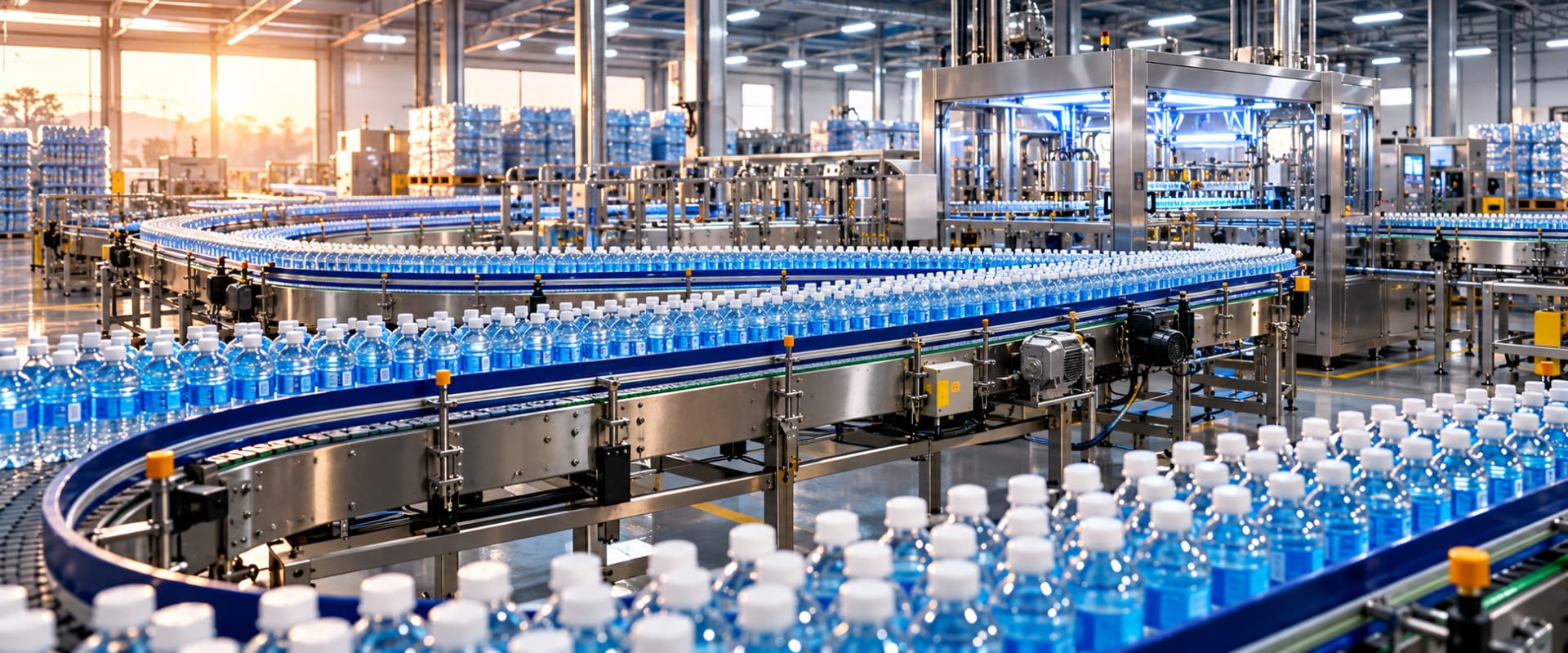
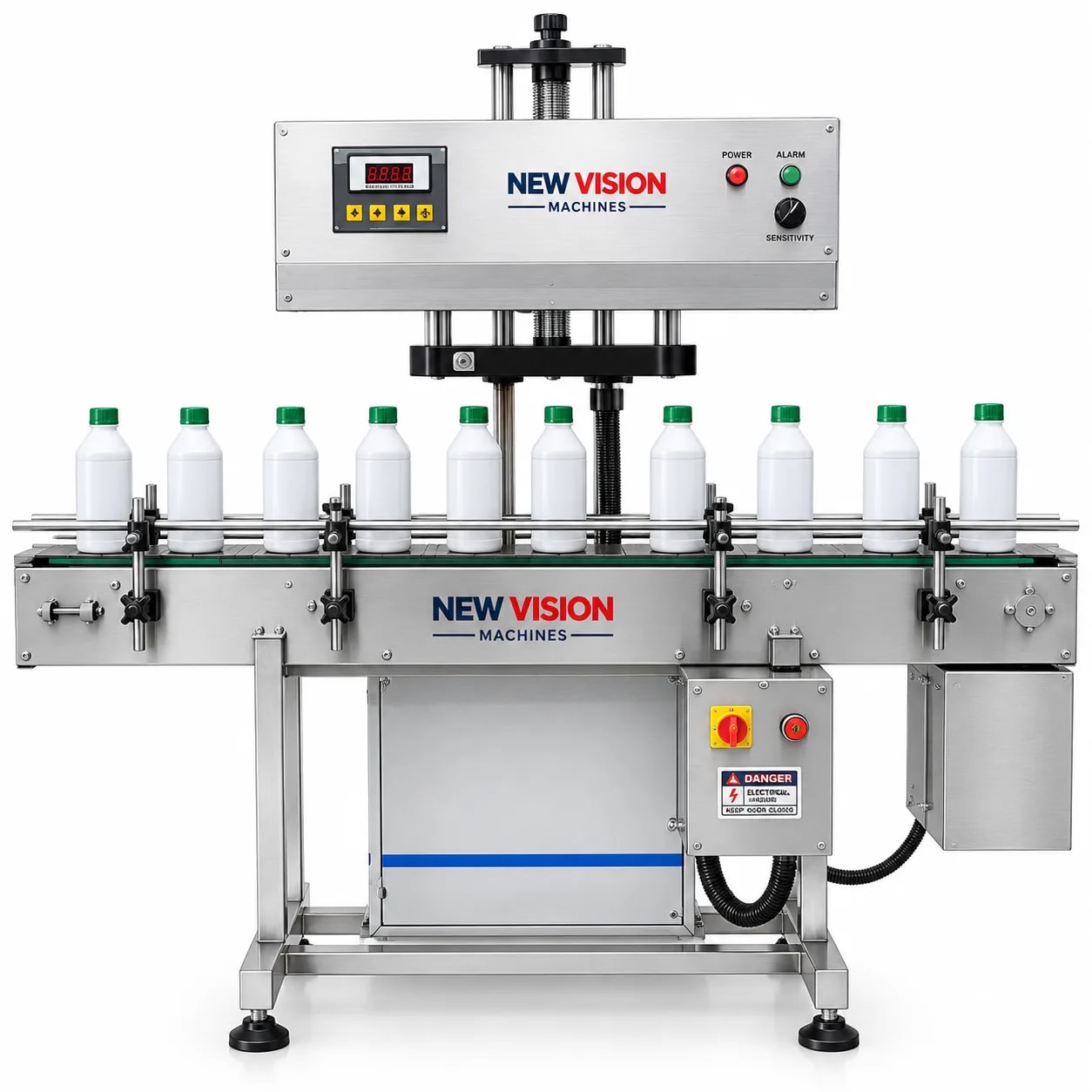
| Continuous online (inline) | Conveyor-fed, seals caps at line speed | ₹1,10,000 – ₹2,40,000+ | Production lines, pharma and beverage plants |
Prices are ex-works and exclude GST unless stated.
Handheld in one line: the cheapest way to get a genuine foil seal — you trade speed for price, and every bottle needs an operator's hand. Tabletop semi-automatic in one line: the step up when hand-sealing becomes the bottleneck — consistent seals without a full line. Continuous online in one line: the only honest choice at production volumes — it seals at conveyor speed and integrates with capping and labelling downstream.
Which one fits your line?
Match the machine to your daily bottle count, not your ambition. Under a few hundred bottles a day, handheld pays for itself in weeks and you avoid paying for capacity you never use. Between 500 and 2,000 bottles a day, the tabletop class removes the operator bottleneck while keeping the investment modest. Above that — or anywhere a pharma or beverage QA audit applies — go continuous online: consistent seal integrity at speed is a compliance question, not a convenience one.
Two honest warnings. First, sealing diameter matters more than brochure speed: confirm your full cap range (common needs run 20 mm to 130 mm) works on one machine, or budget for changeover tooling. Second, foil and cap compatibility is not universal — PP, HDPE, PET and glass all seal, but the foil liner stock must match the container; trial your actual bottles before ordering.
What moves the price
Sealing diameter range, conveyor integration, output speed, and controls (timer-based vs PLC) are the four price levers. A 20–80 mm portable unit and a 20–130 mm heavy-duty online machine are different purchases even though both are called induction sealers — compare on your cap range and daily volume, not on the category name.