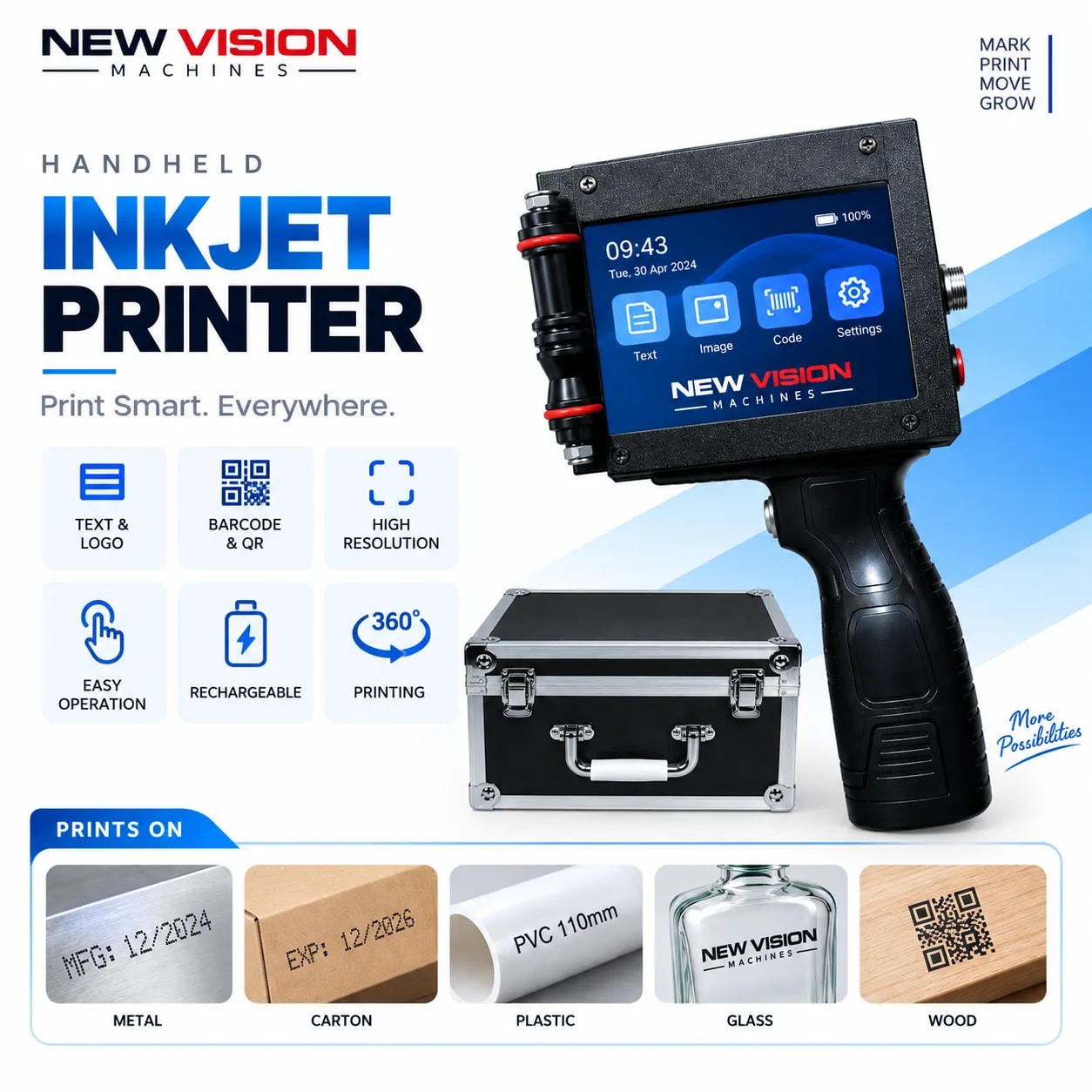
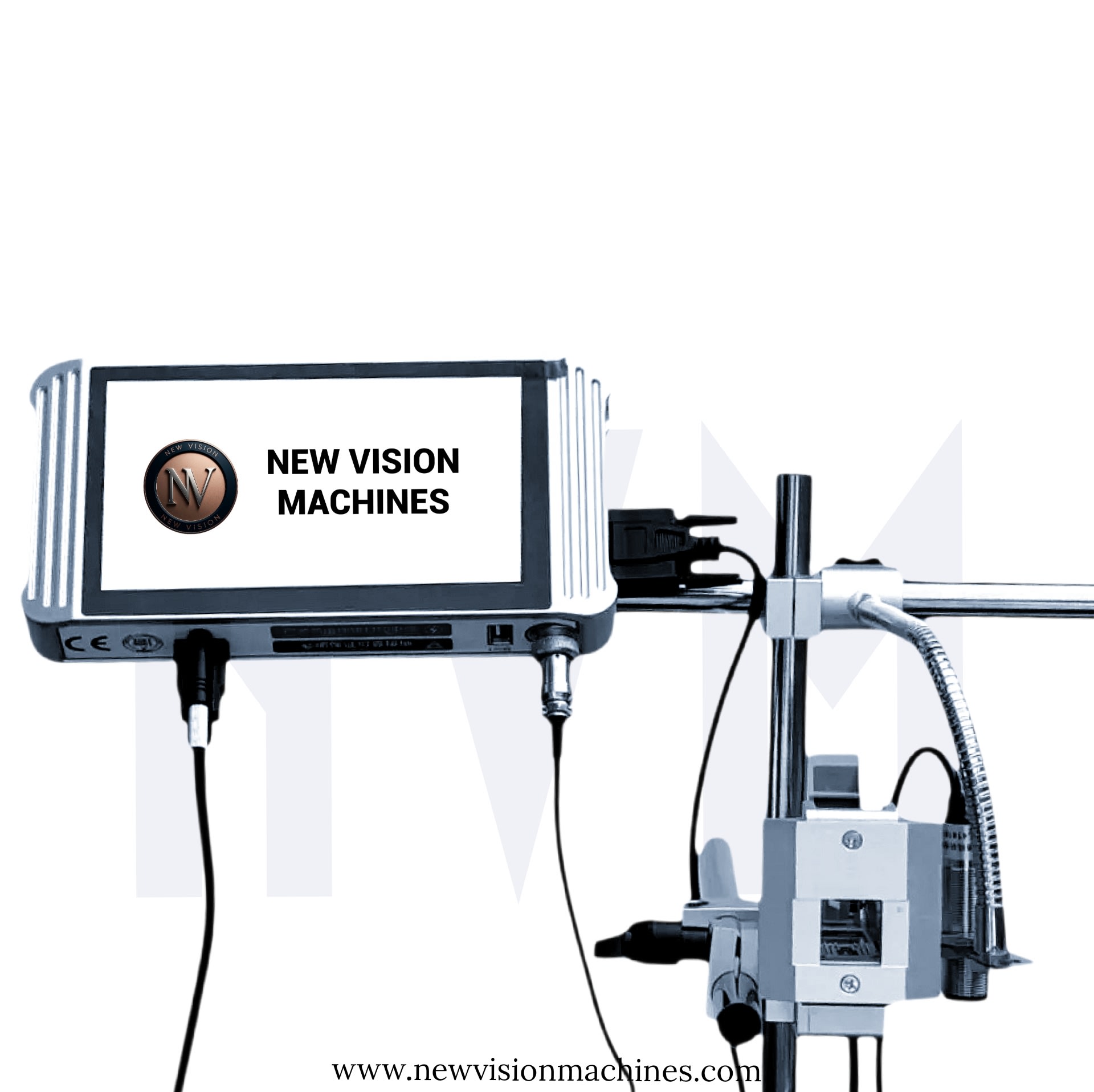
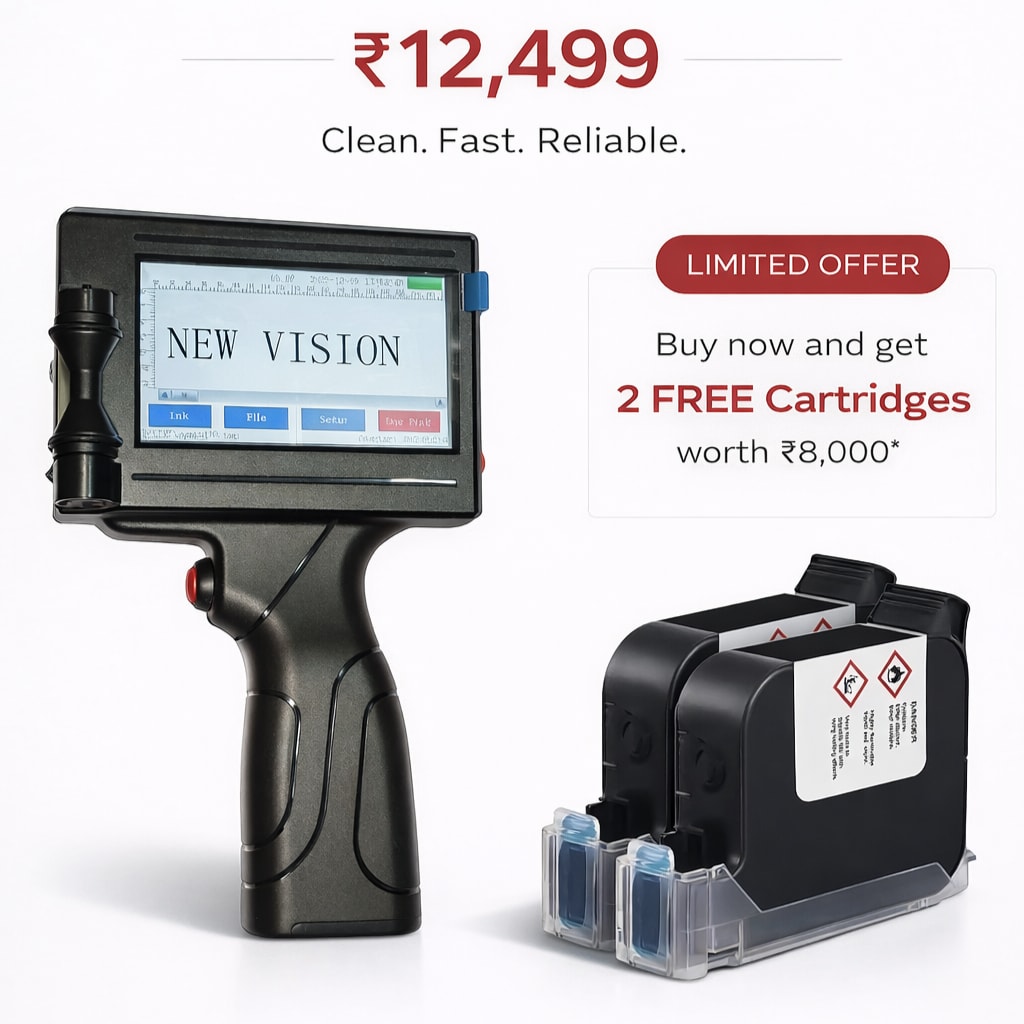

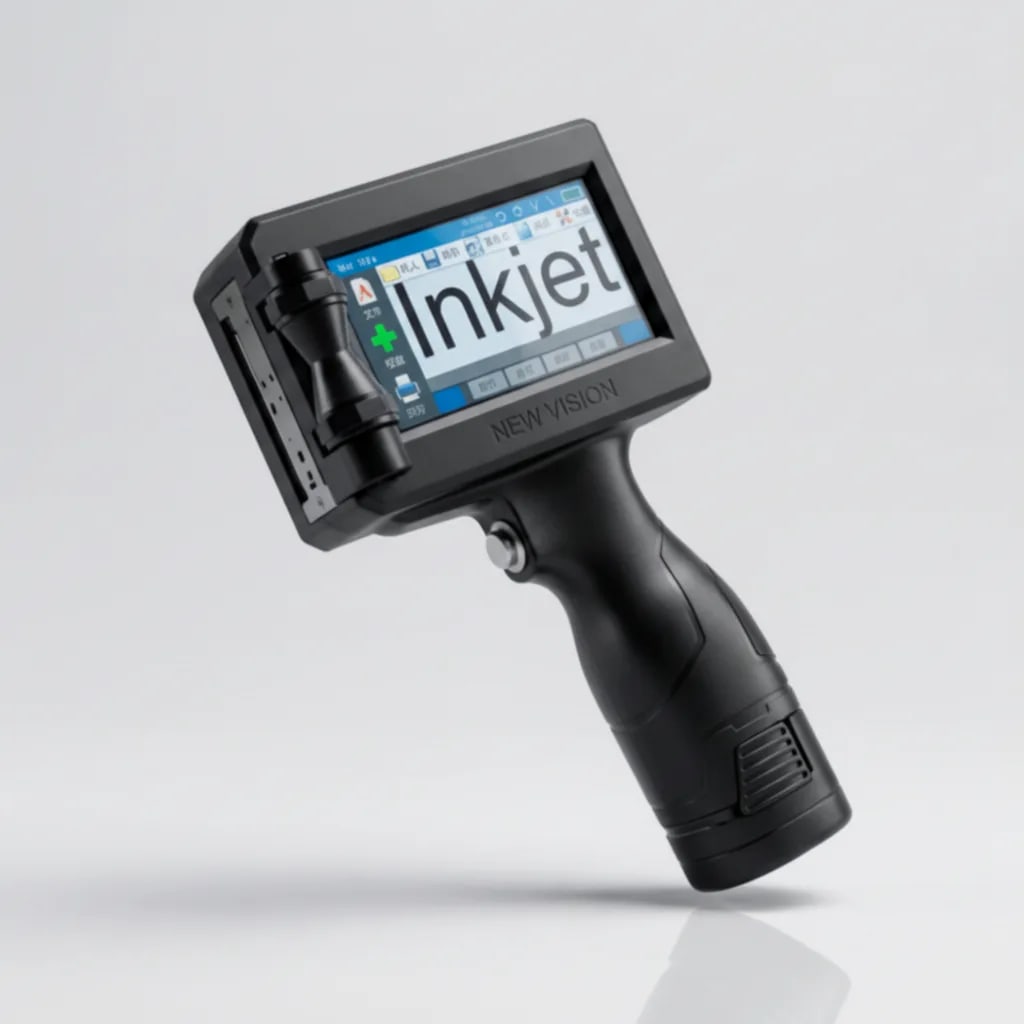
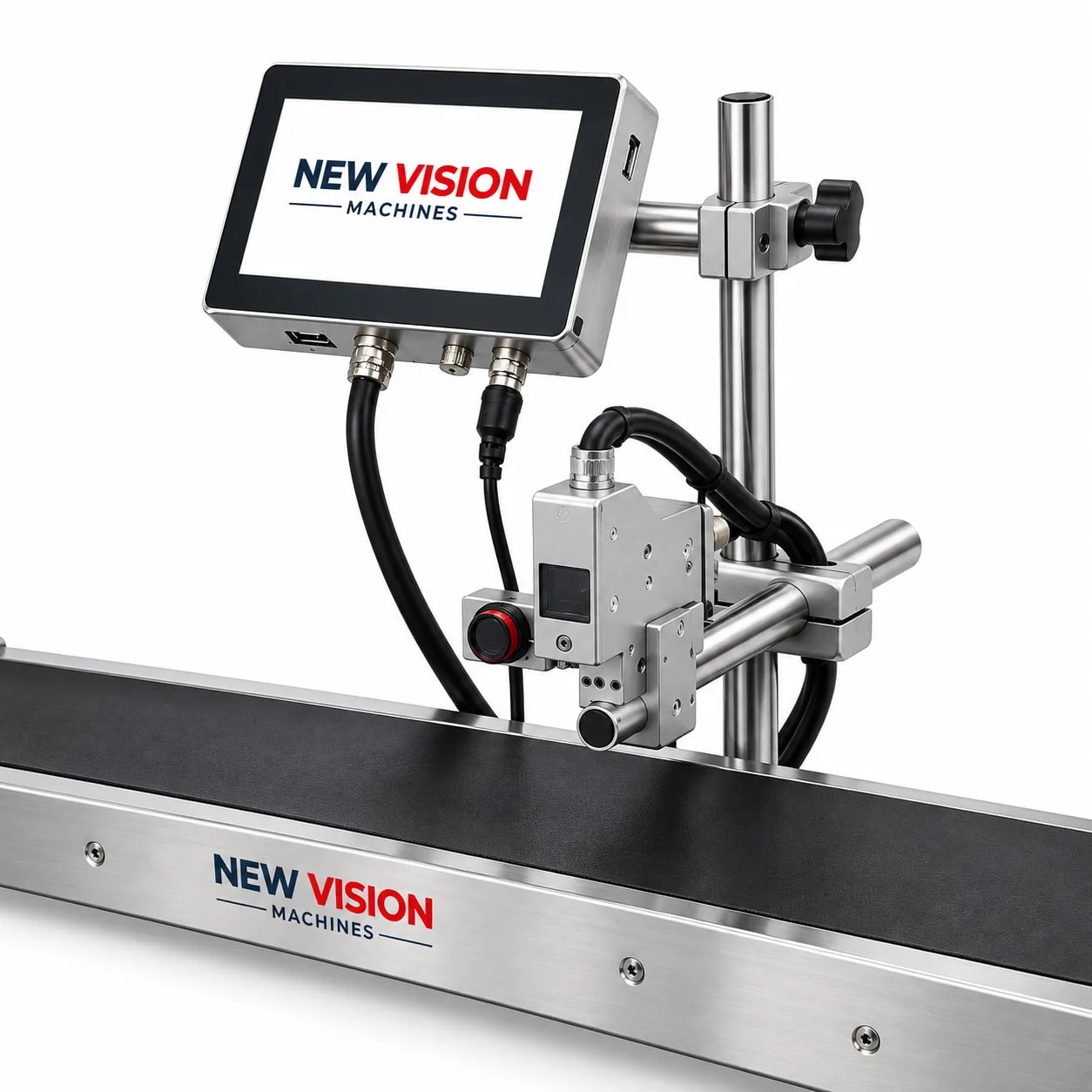
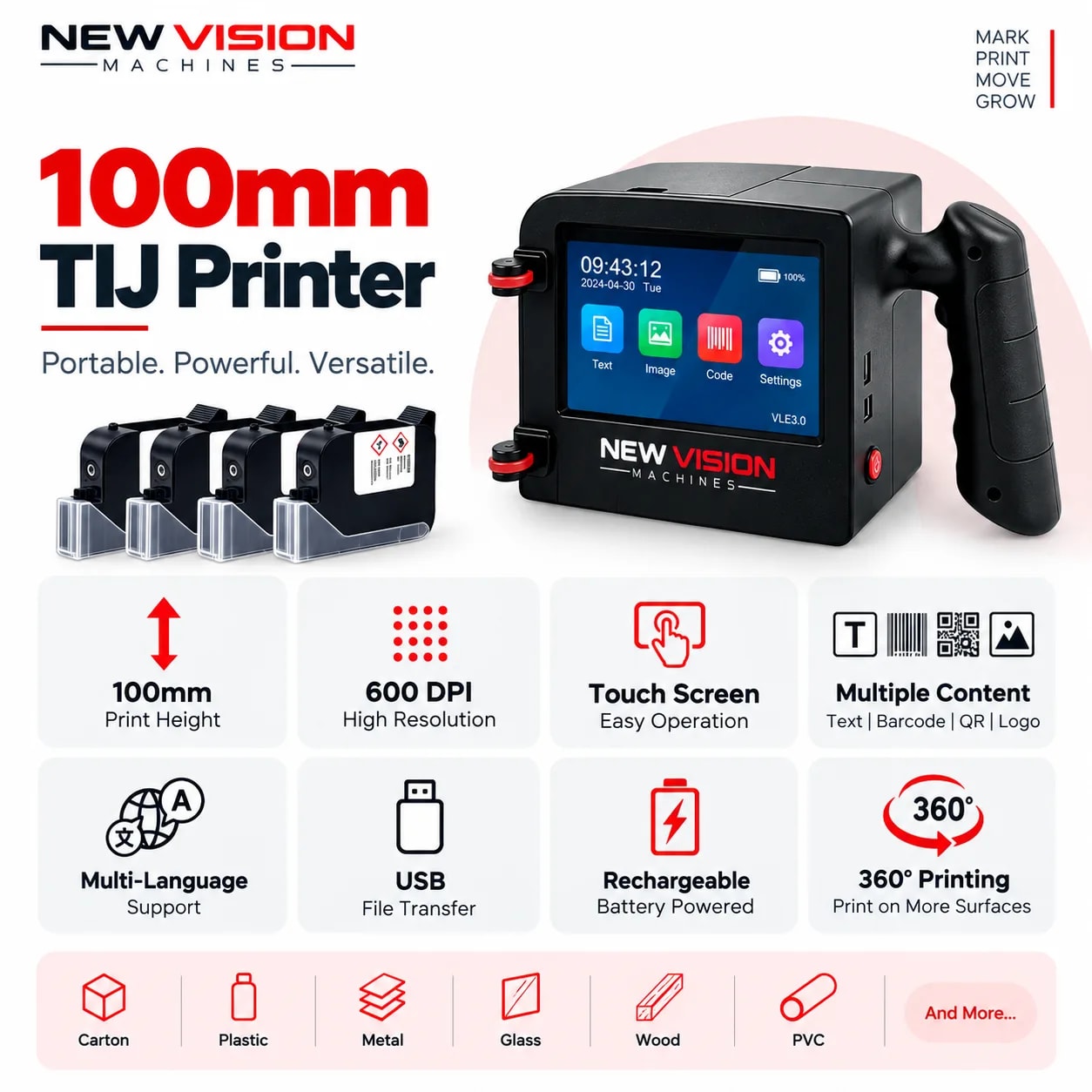
Handheld thermal inkjet printers differ in four measurable ways: the print head height (how tall one pass of printing is), the material of the body (plastic vs metal), the battery capacity, and the grade of the cartridge the machine ships with. Everything else on the box is marketing.
We rank the machines by matching the body and print height to the workload. A plastic-body 12.7 mm unit codes a hundred cartons a day happily; a metal-body or industrial model survives daily production runs and oil-mist environments that kill lighter guns.
The three tiers at a glance
| Criteria | Budget — plastic body | Everyday — metal body | Industrial — 25.4 mm |
|---|---|---|---|
| Starting price | ₹6,499 | ₹8,473 | ₹75,000 |
| Print height | 12.7 mm | 12.7 mm | 25.4 mm |
| Body | ABS plastic | Anodized metal | Metal, industrial duty |
| Battery | Swappable pack | Swappable pack | 7550 mAh |
| Best for | Date codes on cartons, low daily volume | Daily production runs, one shift | Larger logos, QR codes, all-day use |
What to check before you buy
Print height decides the job
12.7 mm prints a clean one-line date or batch code; 25.4 mm covers two-line text, QR codes, and small logos in one pass.
Body material predicts lifespan
Plastic bodies keep the price down; metal bodies survive drops, solvent contact, and daily plant use.
Cartridge grade is a running cost
Premium and ultra-premium solvent cartridges print further and fade less on non-porous plastic and gloss surfaces.
Battery capacity sets the shift
Industrial handhelds carry a 7550 mAh pack for full-shift printing; standard guns use smaller swappable packs — spares are cheap, keep one charged.